
Optimal Locations for Landscape Lighting Transformer Installation
Landscape Lighting: An Enlightening Journey
Landscape lighting is a transformative technique that augments the beauty of outdoor spaces, infusing them with an ethereal glow under the starlit sky. It can spotlight stunning architectural features of your home, etch out shadows among foliage, and craft radiant paths across your yard. At the heart of this luminous spectacle resides one essential component: the landscape lighting transformer.
Unveiling the Landscape Lighting Transformer
A landscape lighting transformer is an indispensable device that modifies mains voltage into a lower, safer voltage suitable for outdoor lights. In essence, it acts as a bridge between the high-voltage electrical supply and low-voltage landscape lights. This remarkable piece of equipment comes in various types that cater to different kinds of light fixtures and diverse property sizes.
The Powerhouse behind Enchanting Nights
Transforming high-voltage electricity to a level suitable for external lights prevents overheating and potential damage caused by power surges. The trajectory of this transformation sparks off with converting 120 volts from your household circuitry into either 12 or 24 volts for powering your landscape lights – ensuring they radiate beautifully without affecting the system.
Importance of Proper Installation
Perfect Position: The Key to Effective Lighting
To extract maximum functionality and aesthetic appeal from your landscape lighting system, appropriate installation of its transformer is paramount. Choosing an optimum location ensures efficient power distribution across all lights while preserving the visual charm by concealing this utilitarian device within your verdant oasis.
Functional Efficiency meets Longevity
Furthermore, correct placement protects it from weather elements and potential damage while providing easy access for maintenance – striking a delicate balance between durability and practicality. It lowers risks associated with electrical malfunctions and increases the lifespan of both the transformer and connected lights.
A Pivotal Step towards Safe Lighting
The significance of proper installation extends to the realm of safety as well. An appropriately installed landscape lighting transformer mitigates risks linked to electrical shorts, overheating, or power surges that may lead to fires or other life-threatening situations.
Remember: Beauty Lies in the Details
When tastefully positioned and ingeniously camouflaged, this vital component can fade into oblivion amid your thriving flora – leaving behind a breathtakingly lighted landscape that appears magical rather than mechanically lit. Thus, it is crucial not only for operational efficiency but also for maintaining the aesthetic integrity of your outdoor space.
A Foundation for Successful Landscape Lighting Projects
Understanding what a landscape lighting transformer is and appreciating its fundamental role in outdoor lighting sets the stage for successful installation projects. This indispensable knowledge paves the way towards creating enigmatic outdoor spaces that twinkle with captivating allure under a star-spangled sky.
Unraveling the Enigma of Landscape Lighting Transformers
A landscape lighting transformer is the heart of an outdoor lighting system. Its primary function is to convert high-voltage electricity from your home power line into a lower, safer voltage that powers your outdoor lights. Comprehending its role in outdoor illumination extends beyond its basic functionality. It not only ensures that your lights work smoothly but also prolongs their lifespan by preventing electrical damages due to overvoltage.
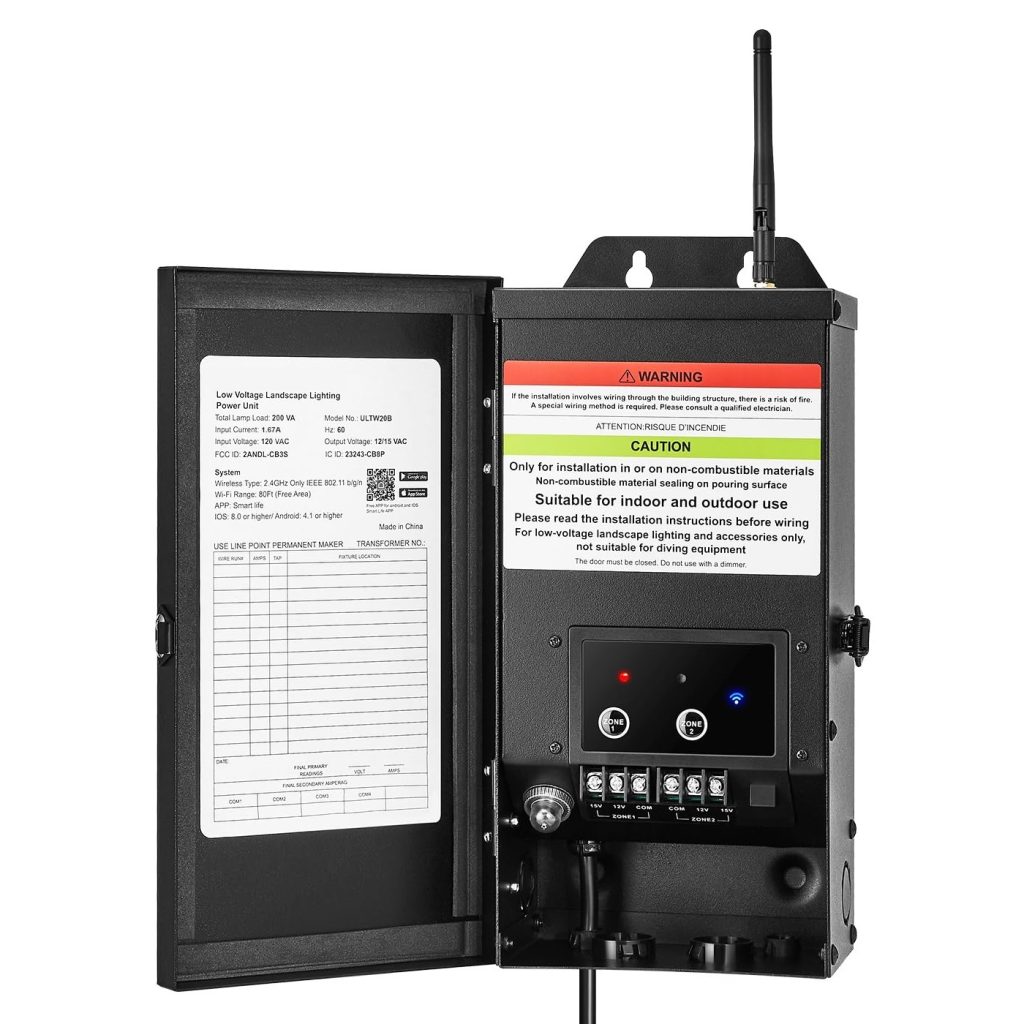
In addition to safeguarding your lights, they also offer a level of convenience through features like timers and photocells. A timer allows you to control when the lights turn on and off, while a photocell automatically turns your outdoor lighting on at dusk and off at dawn, saving energy while providing needed security and aesthetic appeal.
Decoding Different Types of Landscape Lighting Transformers
The two main types of transformers used in landscape lighting are low-voltage transformers and solar transformers. Understanding their features can help you decide which one suits your needs best.
The Powerhouse: Low-Voltage Transformers
Low-voltage transformers are the most commonly used type for landscape lighting systems. These devices step down the household current from 120 volts to a safer 12 or 24 volts, depending on your light fixtures’ requirements. They offer several benefits, including safety, energy efficiency, longevity of light bulbs, ease in modifying layout design, and compatibility with different light fixture types.
Additionally, low-voltage systems allow for more precise directional lighting control – perfect for highlighting specific areas or objects in landscapes. However, they require wiring installations that may be costly if not preexisting in the property’s infrastructure and may involve additional maintenance over time compared to solar options.
Eco-Friendly Luminary: Solar Transformers
Solar transformers harness sunlight’s power during daylight hours, converting it into energy stored within built-in batteries; this energy is then used to power lights after sunset. One of solar transformers’ most appealing features is their environmental friendliness. They significantly reduce carbon footprints by not drawing on grid electricity and eliminating the need for wires – making installation simpler and more flexible.
Despite their charms, they do have some limitations. The brightness and duration of the light provided depend heavily on the amount of sunlight received during the day. Thus, they may not be as effective in areas with less consistent sunlight or during certain seasons.
Conclusively, each type of landscape lighting transformer has its unique benefits and drawbacks. Determining which one best fits your landscape’s needs requires a careful balance between function, aesthetics, maintenance, cost efficiency, and environmental considerations.
Factors to Consider Before Installation
The Scope of Your Property
In the process of installing a landscape lighting transformer, the first consideration should be the size of your property. The expanse of your land plays a critical role in determining the reach and intensity of your lighting system.
A property with an extensive horizontal spread may necessitate multiple transformers, strategically placed to cover wide areas efficiently. Conversely, for vertically tall structures like trees or buildings, you might require transformers that can handle high-voltage lights, capable of casting a beam far and high.
Understanding your topography is another aspect not to be overlooked in this context. The contours and elevations can either hinder or enhance light propagation, dictating optimal placement points for transformers. Paying heed to these factors will help you avoid wastage of light energy and ensure maximum lighting where it is needed most.
The Number and Type of Lights
The second crucial aspect revolves around understanding both the number and type of lights that will connect to your transformer. Different types of outdoor lights, such as path lights, spotlights, or deck lights, have unique energy requirements that influence which transformer is best suited for them. Each one has its specific power rating measured in watts, which, when added up, should not exceed 80% capacity of your transformer for optimal functioning; it’s essential to balance safety with performance.

Remember also that LED lights typically require less voltage than traditional halogen lamps; thus they provide more flexibility in terms of how many you can connect without overloading your system. Your plan should allow room for any future additions too – this consideration pays off when you decide later on to add more light fixtures or improve existing ones.
Environmental Factors: Weather & Wildlife
Last but certainly not least are environmental influences such as weather conditions and wildlife activity around your property. Regions with heavy rainfall, snow, or high humidity require transformers that can withstand these conditions without compromising on safety or efficiency. Weatherproof or sealed transformers are an ideal choice in such scenarios.
Equally important is to consider the wildlife activity around your property. Locations with a higher possibility of wildlife interaction may make it advisable to install transformers at certain heights or in concealed places to avoid tampering. In addition, the transformer’s heat generation can attract insects; hence a well-thought-out installation plan can help mitigate such issues.
This could involve installing your transformer in an area where insects won’t pose a nuisance or using insect-resistant lighting fixtures. Understanding these factors – the size of your property, number and type of lights to be connected, as well as environmental elements – ensures not only an efficient but also a long-lasting outdoor lighting system.
Ideal Locations for Installing a Landscape Lighting Transformer
Near the Main Power Source
The landscape lighting transformer primarily functions as a tool to convert your home’s electrical current into a smaller, safer voltage, thereby making it the heart of your outdoor lighting system. Thus, situating it near the main power source is of utmost significance. This proximity not only simplifies the wiring process but also aids in reducing potential power loss that may occur over long distances.
This location choice has pragmatic implications. For instance, it facilitates easier access during power outages when you need to triage any issues expeditiously. Furthermore, it enables safe and efficient energy transfer from the main power line to the transformer itself. However, while considering this position for installation, one must also account for factors such as weather and wildlife interactions.
The transformer should be placed in an area that is shielded from inclement weather conditions and potential damage by animals or insects. Moreover, safety regulations often require some distance between transformers and flammable materials or surfaces accessible to children or pets.
So while being near the power source is advantageous for efficiency purposes, always ensure adherence to local safety codes and guidelines. Installing your landscape lighting transformer close to your main power source strikes a balance between functional efficacy and prudent safety measures.
Hidden Areas for Aesthetic Purposes
Maintaining the aesthetics of your outdoor setting is an equally important aspect when installing a landscape lighting transformer. An ideal location would be where utility meets beauty without any compromise on either side. Consider tucking away your device in an inconspicuous corner or behind vegetation – this allows you to leverage its functionality without tarnishing your yard’s visual appeal with unsightly electronic hardware.
Choose spots that are subtly hidden yet unobstructed to ensure the transformer functions optimally. Note that although hidden, these spots should not be hard to reach. A difficult access spot could cause inconvenience during setup or potential troubleshooting scenarios. Striking a balance between concealment and accessibility is thus critical.
Furthermore, placement in a hidden area may also protect your transformer from potential vandalism or theft. While these incidents are rare, they are still factors worth considering when choosing an installation location.
Detail on Camouflage Techniques
For those particularly concerned with preserving their yard’s aesthetics while implementing necessary lighting equipment, various camouflage techniques can be employed to conceal landscape lighting transformers. It’s about striking a delicate balance between functionality and visual appeal.
Natural materials like stones and plants can effectively disguise your transformers without hindering their function. For instance, you could place your transformer within dense shrubbery or construct a miniature rock garden around it. Both options provide adequate coverage without affecting its accessibility for maintenance purposes.
Apart from using natural elements for concealment, there are also decorative covers available in the market specifically designed for this purpose. These covers come in different shapes and sizes, resembling objects such as rocks or logs, thereby blending seamlessly into the surrounding landscape.
An alternate strategy is to paint the transformer box in colors matching nearby walls or fences. This way you integrate the device into your pre-existing space without creating an eyesore.
The Importance of Accessibility for Maintenance
Beyond being merely functional providers of beautiful outdoor illumination, landscape lighting transformers need regular maintenance to ensure continued performance and longevity; therefore, easy accessibility is paramount when deciding on an installation location.
Accessibility plays a significant role during both initial installation and future servicing instances – whether changing bulbs or diagnosing technical problems – which can help prevent unnecessary labor or potential damage to the landscape.

Moreover, an accessible transformer also enables easy monitoring of any issues like overheating or corrosion, both of which can be detrimental to the device’s lifespan. Immediate detection and rectification of such problems prevent them from escalating into major malfunctions.
While aesthetics and proximity to the main power source are important considerations when deciding on a location for your landscape lighting transformer, one should not overlook the practicality of easy access for routine maintenance and troubleshooting. The perfect spot is one that strikes a balance between all these factors while adhering to safety regulations.
Detailed Steps on How to Install a Landscape Lighting Transformer
Essential Tools for Installation
The installation of a landscape lighting transformer is not an overly complex task, but it requires the appropriate tools to ensure a seamless process. A screwdriver, an electric drill with bits of varying sizes, wire strippers, and pliers are fundamentally necessary. These tools help in attaching the transformer securely to its designated spot and connecting the cables correctly.
Unquestionably, personal protective equipment such as gloves and safety glasses should also be part of your toolbox to safeguard against potential hazards. Moreover, depending on your specific outdoor setup and transformer model, you might need additional tools.
For instance, conduit fittings or garden staples could be required if you plan to bury some parts of the wiring underground. Therefore, always refer to your transformer’s manual for any specific tool recommendations.
Preparation Before Installation
Before embarking on installing a landscape lighting transformer, certain steps must be undertaken to prepare effectively for this task. This preparatory phase ensures that potential issues are mitigated before they can cause significant problems during installation.
Importantly, safety measures should always take precedence in any electrical undertaking. Ensure that your main power source is switched off before starting installation – this simple step can prevent serious injuries or electrical faults from occurring.
Planning pathways for cable routes is also vital in this stage. Depending on individual preferences and outdoor layouts, these may run along fences or walls or be buried underground.
Safety Measures: Turning Off the Power Source
The risks associated with handling electricity cannot be overstated; hence, turning off the power source before commencing any work involving electrical installations is crucially essential. Ensure that all switches connected directly or indirectly are turned off – it’s better to take extra precautions rather than risk electrocution or sparking an electrical fire.
In addition to safeguarding your life, disconnecting the power source also protects your equipment. It prevents accidental power surges that can irreparably damage your new landscape lighting transformer or connected lights.
Planning Cable Routes
Strategic planning of cable routes is an integral part of the landscape lighting installation process. The aim is to place the cables in a way that does not obstruct movement, affect aesthetics negatively, or expose them to potential damage.

Routes should ideally follow the edges of your garden or lawn, along walls and fences, or any other places where they can be discreetly hidden from view. For safety and aesthetic reasons, you might want to bury the cables underground, following the manufacturer’s instructions carefully to avoid damaging them during this process.
Installation Process: Attaching Transformer and Connecting Cables
Once all preparations have been adequately addressed, proceed with the installation process. Start by securely attaching your transformer to a wall, post, or any other sturdy structure close to a GFCI outdoor electrical outlet using screws and an electric drill.
After it’s firmly in place, start connecting cables from your outdoor lights following the manufacturer’s instructions regarding polarity and connection types – some transformers will have screw terminals while others may use wire connectors.
Make sure all connections are tight and secure for optimal function. Remember always to double-check your work every step of the way – ensuring everything is correctly installed at this stage will save you future headaches associated with troubleshooting and constant maintenance.
Particular Cases: Unique Installation Locations & Challenges
The Challenge of Dampness: Installing in Areas with High Moisture Levels
Managing to install a landscape lighting transformer in high moisture areas can be compared to navigating treacherous waters, requiring an amalgamation of meticulous planning, adequate preparation, and judicious selection of equipment.
The first salient point is that transformers should never be placed directly on the ground, where they are susceptible to water exposure. Particularly in high moisture areas, a raised mount should be employed to keep the transformer elevated.
Outdoor waterproof enclosures can further safeguard your transformer from relentless rainfall or potential flooding. These enclosures are designed with robust materials impervious to water ingress, thus preserving the operational integrity of your transformer.
However, it’s crucial not to overlook ventilation requirements as well. Transformers generate heat during operation; therefore, adequate ventilation becomes necessary to prevent overheating.
There’s no gainsaying that using a low-voltage transformer would also be beneficial in such scenarios. Low-voltage units pose less risk in terms of electrical shock or short-circuiting when exposed to dampness or wet conditions.
Correspondingly, when choosing lights themselves for damp locations, always opt for those specifically rated safe for wet locations. But importantly, remember that wire connections must also be watertight.
Utilizing silicone-filled wire nuts or direct-bury splice kits will ensure that no moisture can infiltrate and compromise your connections. This step is paramount in fortifying your lighting setup against any inclement weather conditions you may face.
Negotiating Obstacles: Installing in Hard-to-Reach Places
Delving into another challenge – installing landscape lighting transformers in hard-to-reach places – one finds there are unique considerations and workarounds required here as well. To begin with this endeavor, one must select a suitable location, keeping accessibility for repairs and adjustments at the forefront of your deliberations.
The use of extendable mounting brackets is highly recommended for those hard-to-reach spots. These accessories allow a transformer to be installed securely while also providing the flexibility to move the transformer closer for maintenance or adjustments. This eliminates the need for potentially dangerous ladders or other equipment when servicing the transformer.
Another useful strategy is employing the use of longer lead wires on your lights. Longer leads provide flexibility in positioning your lights and allow connections to be made at more accessible locations. Additionally, using junction boxes can centralize connections, reducing the number of individual wires that need to run back to the transformer.
While it may seem expedient to place transformers in any remote location just to keep them out of sight, one must remember that transformers still require proper ventilation. Neglecting this can lead to overheating and premature failure.
Installing landscape lighting transformers in hard-to-reach places necessitates careful planning and strategic use of accessories and components designed for such challenges. Adhering closely to these guidelines will ensure a safer installation process while also guaranteeing long-term operability.
Troubleshooting Common Problems with Landscape Lighting Transformers
Unraveling the Knots of Overloading and Underloading Transformers
A landscape lighting transformer, despite its robust construction and acute design, is not immune to operational issues. One of the most common problems a homeowner may encounter is overloading or underloading their transformers. This happens when too many or too few lights are connected to a single transformer than it was designed to handle.
The first telltale sign of an overloaded transformer is often a circuit breaker that regularly trips off, interrupting the power supply to your outdoor lighting. In more severe cases, you might notice a significant reduction in the lifespan of your bulbs as they burn out prematurely due to excessive voltage.
On the other hand, underloading causes its own set of predicaments. When operating below their rated wattage for prolonged periods, transformers can produce excess heat that further diminishes their efficiency and longevity. Additionally, underloaded transformers may fail to provide sufficient voltage for all connected lights, resulting in dimmer illumination than expected.
The solution to both these problems lies in meticulous planning before installation. Ensure you have calculated the total wattage required by your outdoor lights and choose a transformer that can comfortably manage this load within its optimum capacity range.
Last but not least, remember that it’s always prudent to allow for future expansion when selecting your transformer’s capacity; this ensures you have ample room for adding more lights without risking overloading.
Shedding Light on Flickering Issues & Non-Operational Lights
Another prevalent issue encountered with landscape lighting transformers relates to inconsistent lighting – such as flickering bulbs – or even worse: lights failing to turn on at all.
Flickering lights are typically indicative of loose connections somewhere within the circuitry – from the cables attached directly into your transformer terminals through to each individual light bulb fitting. But fear not; the solution can be as simple as tightening all connections and ensuring they are secure. If your lights fail to turn on at all, there are several potential culprits.
One common cause is a faulty timer or photocell controlling your transformer’s operation – these components may fail over time, preventing the transformer from activating even when power is available.
Another possible reason might be a breaker tripping due to a short circuit somewhere in your lighting system. If this is the case, identifying and repairing the fault usually brings resolution.
It’s worth noting that not all issues manifest with clear symptoms; sometimes, transformers can fail internally due to factors like overheating or manufacturing defects. In such cases, professional diagnosis might be necessary unless you possess advanced knowledge of electrical systems and safety precautions.
While inconveniences with landscape lighting transformers are not uncommon occurrences, armed with some basic knowledge and proactive measures, you can ensure that your outdoor oasis remains brilliantly lit without interruption.
Maintenance Tips for Prolonged Lifespan & Efficiency
The Role of Regular Maintenance in Landscape Lighting Systems
As with any mechanical or electronic system, regular maintenance is integral to the prolonged lifespan and efficiency of a landscape lighting transformer. A well-maintained transformer will perform optimally, providing consistent and reliable power to your outdoor lighting setup. Furthermore, a periodical inspection schedule can preemptively identify potential problems before they escalate into more serious issues that could necessitate costly repairs or replacements.
Regular Cleaning: Ensuring Performance and Longevity
The first step towards ensuring the operational efficacy of your landscape lighting transformer is regular cleaning. Dust, debris, and moisture accumulation can cause corrosion and damage to the internal components of the transformer.
Regular cleaning mitigates these risks by keeping these harmful elements at bay. To clean your transformer effectively, it’s advisable to turn off the power source first to prevent electrical accidents. Use compressed air or a soft brush to remove dust from all accessible areas, including vents, if any are present.
In case of outdoor dust or grime, you may use a damp cloth for cleaning; however, ensure that the device is completely dry before powering it back on. It’s important to remember that while cleaning aids in maintaining your device’s functionality and aesthetic appeal, it also helps in spotting potential issues such as frayed wires or loose connections that could lead to future problems.
A Thorough Inspection: Detecting Issues Early On
Beyond simply cleaning your landscaping lighting transformer, conducting regular inspections is also crucial in detecting abnormalities and potential issues early on. This process involves checking various components, such as cables, for wear and tear or damage from external factors like wildlife nibbling on them.

You should also inspect circuit breakers for any signs of tripping as well as transformers’ voltage output, which should match its designated capacity. Any deviations or irregularities might indicate an underlying problem that requires immediate attention. It’s recommended to conduct these inspections at least twice a year, during spring and fall, when weather changes could impact the system.
Replacement Schedule for Bulbs and Parts
The Importance of Regular Replacement Schedules
Another key aspect of maintaining the efficiency and longevity of your landscape lighting system involves adhering to a regular replacement schedule for bulbs and parts. Over time, even high-quality components will undergo wear and tear, leading to decreased performance or even failure.
Setting a Replacement Schedule: A Proactive Approach
To preemptively address such issues, it’s advisable to set up a replacement schedule for all major components in your landscape lighting system. This includes bulbs, which can lose brightness over time due to lumen depreciation; cables that might fray from exposure to elements; and other related parts such as fuses or switches. The frequency of replacements will depend on several variables like the quality of the components used, weather conditions in your area, usage frequency, among others.
Generally speaking, LED bulbs should last between 30,000-50,000 hours, while incandescent ones may need replacing after every 1-2 years based on daily operation duration. It’s worth noting that it might be beneficial to replace certain parts before they fail completely, as preventive maintenance can often be less disruptive and more cost-effective than reactionary repairs.
Conclusion: Where to Install Landscape Lighting Transformer?
The strategic installation of a landscape lighting transformer can truly enhance the beauty and functionality of outdoor spaces. By understanding the function and types of transformers, considering the size of your property, type and number of lights, as well as environmental factors, you can make informed decisions about where to install your transformer.
Cleverly hiding it near the main power source or in other hidden areas not only maintains the aesthetic appeal of your landscape but also ensures easy accessibility for maintenance. Moreover, by following detailed steps on installation with necessary tools and safety measures, you ensure that you are setting up a system that is both effective and safe. In particular cases, such as areas with high moisture levels or hard-to-reach places, innovative solutions can be applied to overcome these unique challenges.
Troubleshooting common problems and regular maintenance also play a crucial role in prolonging the lifespan and efficiency of your transformers. Installing a landscape lighting transformer need not be an intimidating task.
With careful attention to detail at each step – from selection to installation to maintenance – it is possible to create an outdoor space that is brilliantly lit whilst maintaining its natural charm. Remember – every home tells a story; let yours shine brightly into every corner through well-chosen lighting facilitated by efficiently installed transformers.
You may also be interested in the following posts: