
Unveiling Landscape Lighting Transformers: A Detailed Guide
Lighting the Way: An Introduction to Landscape Lighting Transformers
The world of outdoor lighting is a fascinating vista where aesthetics and functionality combine in a harmony of light and darkness. It is within this realm that we find landscape lighting transformers, the unsung heroes that make our gardens, walkways, and outdoor spaces radiant once the sun sets.
A landscape lighting transformer, as its name implies, transforms the standard line voltage from your home’s electrical system down to a lower voltage suitable for most exterior lighting fixtures. This process is crucial as it allows for safe and efficient operation of outdoor lights.
Demystifying Electricity: What are Landscape Lighting Transformers?
Delving deeper into the subject matter entails understanding what exactly these devices are. In essence, landscape lighting transformers are specially designed pieces of equipment that modify electrical current’s voltage from a higher level to a lower one. The transformer achieves this through electromagnetic induction – an alternating current (AC) in one coil generates an induced alternating current in another coil.
In residential settings, the majority of landscape lighting systems operate on 12 volts rather than the standard household voltage of 120 volts. This reduction mitigates potential hazards associated with high-voltage systems, such as electric shock or overheating fixtures.
However, it’s not all about safety; operating at lower voltages also allows for greater flexibility in design and installation. For instance, low-voltage lights can be moved easily around your property without professional help or extensive rewiring efforts.
Understanding the Importance and Role of Landscape Lighting Transformers
Landscape lighting transformers play a critical role beyond merely reducing voltage levels – they breathe life into our external spaces after dusk. They offer us control over our exterior environment by dictating how much light is available at any given moment. They form an integral part of any outdoor lighting setup by supporting different types of lights simultaneously, from low-intensity path lighting to high-intensity security lights.
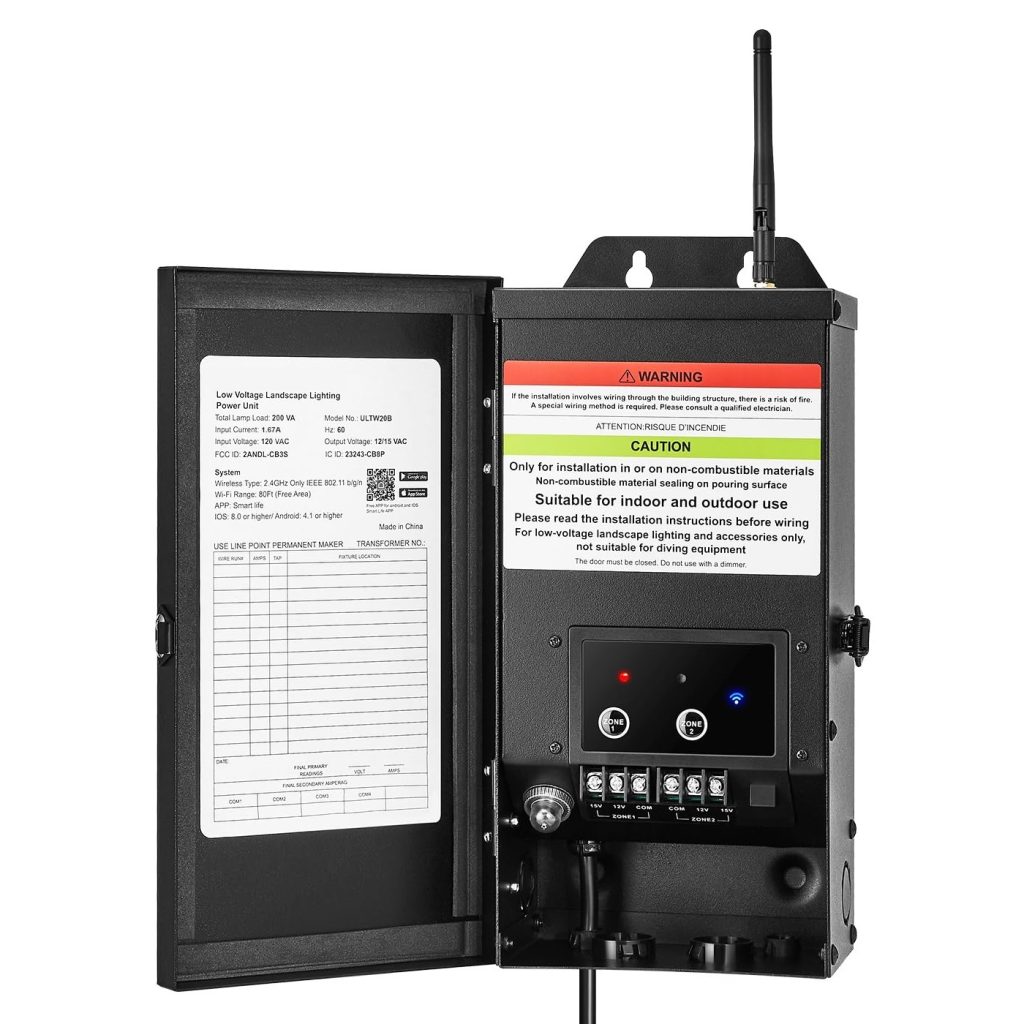
This versatility ensures that your outdoor spaces are not only attractive but also functional and safe. Furthermore, these transformers play a significant part in energy conservation. Running outdoor lights on reduced voltage saves significantly more energy than if they were operating on full line-voltage. This benefit becomes more pronounced when considering the potentially long operating hours of outdoor lights.
Landscape lighting transformers may not be the most visible part of an outdoor lighting system, but their role is undeniably important for creating safe, functional, and aesthetic lighting landscapes. In the forthcoming sections, we will explore deeper into understanding how these devices work, their types, and the installation process, among other vital points.
The Science Behind Landscape Lighting Transformers: Encoding Brilliance in the Dark
Unveiling the Veil: Basic Principles of Electricity Transformation
Transformers, as their name suggests, essentially transform electrical energy from one voltage level to another. At its most rudimentary level, a transformer employs electromagnetic induction to convert fluctuations in electrical current. This principle was first conceptualized by Michael Faraday during the 19th century. His experiments led to the significant discovery that changing magnetic fields give rise to electric currents.
A typical transformer consists of two coils, namely a primary coil and a secondary coil. These coils are wound around an iron core that enhances the magnetic field produced. When an alternating current flows through the primary coil, it creates a flux that is amplified by the iron core and induces a current in the secondary coil. The ratio of turns between these two coils determines whether the transformer amplifies or reduces voltage.
In landscape lighting transformers, this switch often occurs from high voltage (120 volts or more) to lower voltages (usually 12 volts). The purpose of this transformation is twofold – on one hand, it ensures safety by reducing potential electric shock risks; on another hand, it guarantees energy efficiency by only delivering necessary power amounts.
How Transformers Work in Landscape Lighting: Sculpting Shadows and Silhouettes
Landscape lighting transformers serve as diligent sentinels that regulate and distribute electricity throughout your outdoor lighting systems efficiently. Understanding their operation requires understanding how they apply basic transformation principles within this specific context.
Upon receiving electricity from your home’s main power supply, usually at 120 volts AC (alternating current), transformers step down this energy into a safer voltage ideal for outdoor use – commonly 12 volts AC for landscape lighting purposes. This process involves transferring electricity physically through coils wound around an iron core contained within the transformer.
The mainline incoming power applies to the primary coil, while the secondary coil’s turns dictate the outgoing voltage. Because most landscape lighting fixtures operate on low voltage, transformers typically utilize more turns on primary coils and fewer on secondary ones, resulting in a reduced output voltage.
Once transformed, this energy navigates a carefully designed network of cables to power individual light fixtures strategically dispersed across your landscape. Each fixture subsequently receives power proportionate to its brightness requirements. By this means, transformers not only minimize energy wastage but also contribute significantly towards shaping desired lighting effects.
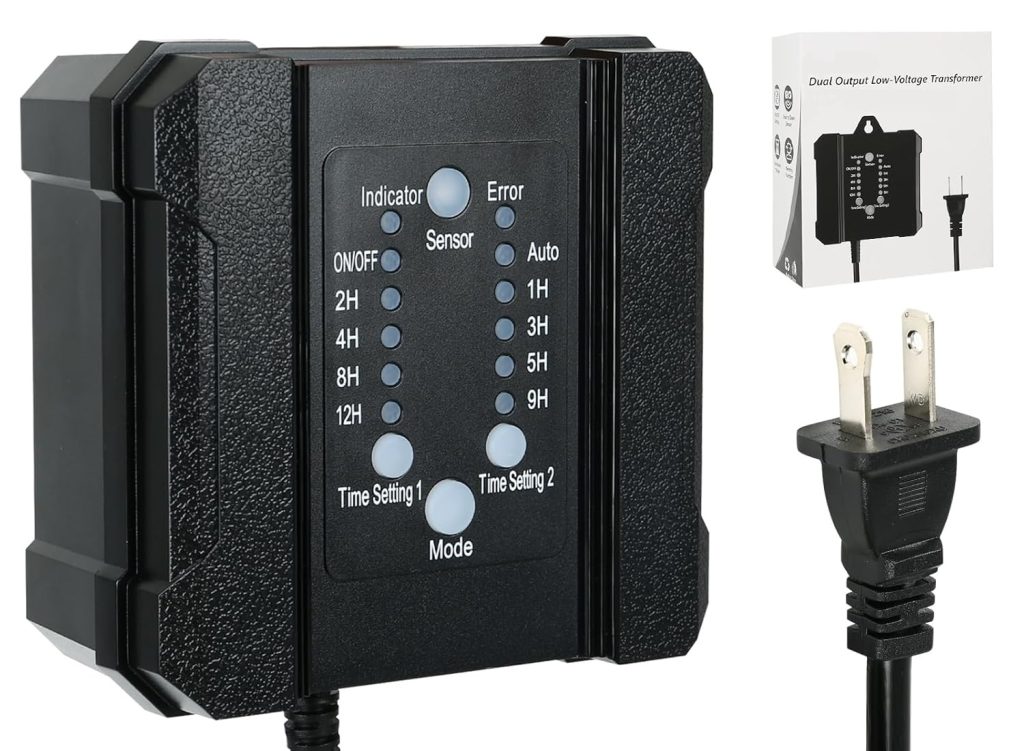
These transformers typically incorporate other smart features, facilitating increased control over your landscape’s lighting. Timers and photocells enable automated switching according to pre-set schedules or in response to natural light levels.
The above section expresses the essence of how transformers work in landscape lighting – they are not merely electricity converters but artistry enablers that illuminate beauty whilst cloaked under night’s dark mantle.
Types of Landscape Lighting Transformers
There exists a myriad of landscape lighting transformers, each contributing to the radiant glow that defines outdoor settings. Conceived to cater to diversified lighting needs, they range from low-voltage to high-voltage variants, with each group having its share of unique features and applications.
A Closer Look at Low-Voltage Transformers
Low-voltage transformers are cornerstones in landscape lighting due to their efficiency and safety. They reduce the standard 120-volt household current to a safer 12 or 24 volts, minimizing the risk of electrical shocks even when exposed wiring is accidentally touched during maintenance or installation.
Their use allows for smaller, lighter gauge cables, which not only makes installation easier but also less conspicuous in your garden design. Furthermore, they offer sufficient power for most outdoor lighting designs and are ideal for accentuating features, illuminating pathways, and highlighting specific points of interest in your landscape.

Low-voltage transformers also provide superior control over lighting effects. Through adjusting voltage output, designers can manipulate light intensity and create a diverse array of ambiances ranging from subtle romantic glows to strikingly brilliant displays.
The compatibility with various control systems like timers and photocells is another advantage associated with these types of transformers. This allows for automated operations – switching lights on at dusk or off at dawn – resulting in energy reduction and cost savings over time.
Digging Deeper into the Magnetic Transformer
A subtype within low-voltage transformers is the magnetic transformer, which employs a weighty iron core wrapped by two sets of coils. Known for their robustness and durability, these units have been a popular choice among professionals for years. The magnetic transformer’s simplicity lends it an edge in reliability.
It can handle higher loads without faltering under pressure while ensuring a steady voltage output regardless of load size. This stability makes it the preferred choice for complex and expansive landscape lighting designs.

Additionally, these transformers are compatible with a multitude of dimming control systems. As such, they can facilitate dynamic lighting scenes, adding depth and drama to gardens or outdoor spaces. Their longer lifespan also complements their larger upfront investment.
Another notable feature of magnetic transformers is their noiseless operation. Unlike their counterparts, they do not produce a humming sound during operation due to the higher-quality materials used in their construction.
Despite being more substantial and bulkier than electronic transformers, magnetic transformers offer reliable performance over an extended period warranting their investment returns over time.
An Overview of Electronic Transformers
The electronic transformer takes a different approach to voltage reduction, employing sophisticated circuitry instead of heavy iron cores. Notably more compact and lightweight than magnetic alternatives, they offer flexibility in installation, especially when space is constrained.
Electronic transformers operate using high frequencies rather than the standard 50/60Hz found in magnetic variants. This allows them to be smaller in size without sacrificing efficiency or output regulation.
Their unique method of operation brings about reduced power consumption compared to traditional magnetic transformer options, which can result in long-term cost savings for homeowners or business operators investing in extensive exterior lighting setups.
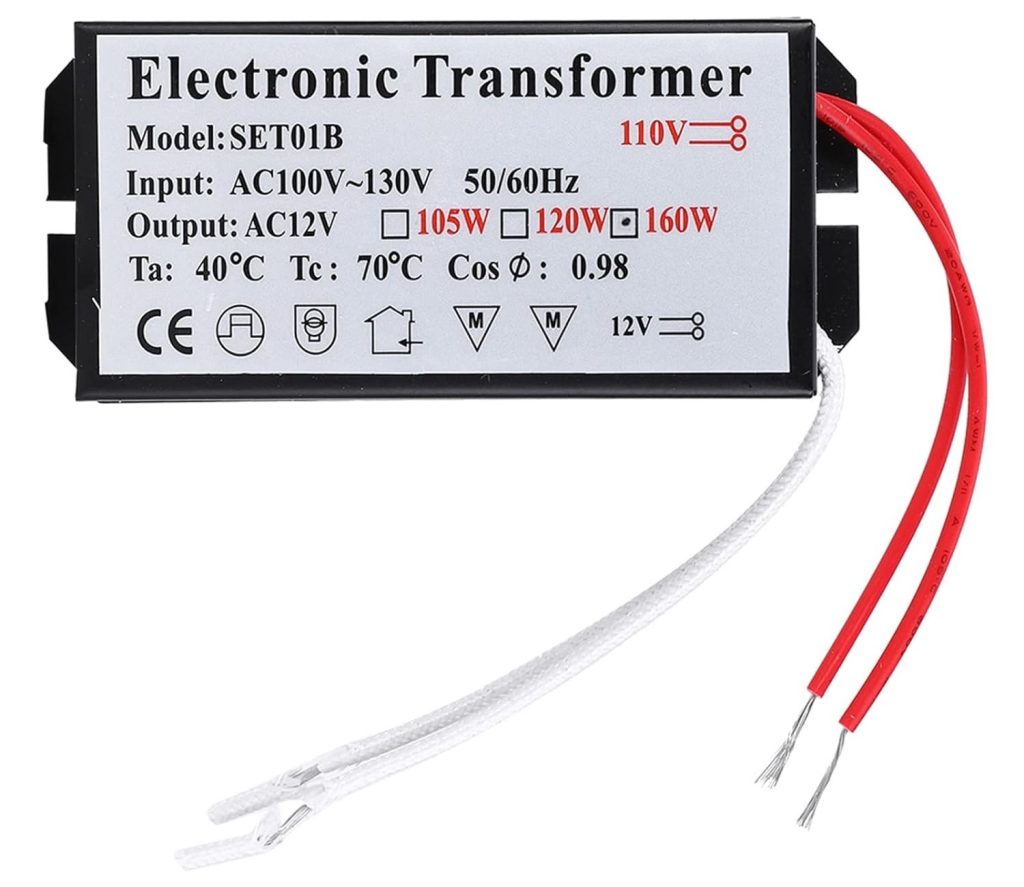
A significant advantage lies in its compatibility with low-voltage halogen lamps, which are well-known for superior color rendering and intensity control but require specific compatibility with their power sources.
However, one must note that these types may produce audible noise over time as part of the normal wear and tear process due to high-frequency vibration within the unit’s components.
Electronic transformers provide an innovative alternative for landscape lighting design and implementation but may not be suitable for every situation due to their limitations, such as a lower lifespan and incompatibility with certain dimmer types.
Exploring High-Voltage Transformers
Stepping up from low-voltage, high-voltage transformers come into play when there is a need for powerful lighting. Often used for commercial properties or large-scale residential landscape projects, these transformers are capable of managing voltages much higher than the standard 120 volts.
Their primary application lies in high-intensity discharge (HID) lighting systems such as metal-halide and high-pressure sodium-vapor lamps. These types of lights are favored for their strong luminosity, which can effectively illuminate substantial areas while maintaining an aesthetically pleasing light quality.
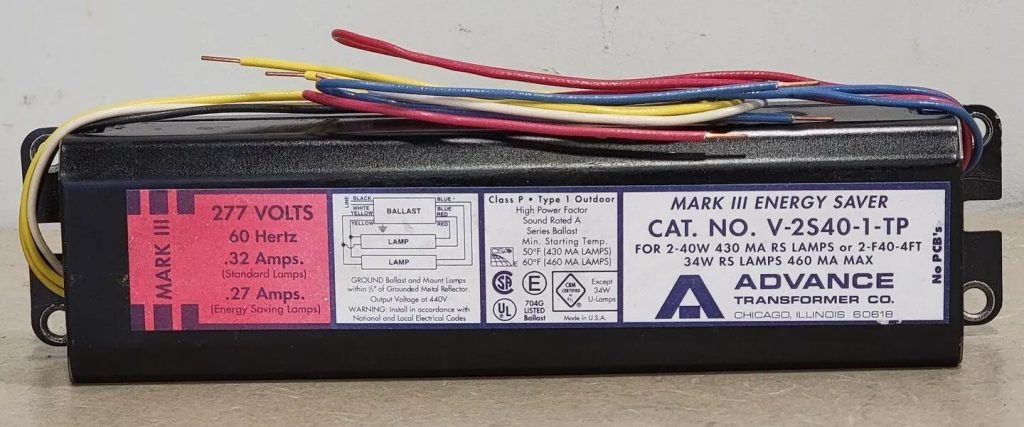
High-voltage transformers additionally enable longer cable runs without significant voltage drop, ensuring consistent light output over vast distances. This is particularly beneficial when lighting large properties or public spaces like parks or sports facilities.
These transformers incorporate safety features like circuit breakers to protect against electrical malfunctions and insulation to withstand outdoor elements, making them a robust choice for demanding outdoor lighting requirements.
The type of transformer chosen will depend on the specific requirements of your landscape lighting project, whether it’s a small garden pathway, a midsized residential landscape, or a large commercial property. The key is to understand the unique characteristics of each type to make an informed decision that will result in efficient and effective outdoor lighting.
Choosing the Right Landscape Lighting Transformer: Factors to Ponder
The Power of Choice: Understanding Power Requirements
A pivotal factor when selecting a proper landscape lighting transformer is discerning your power requirements. The first step here involves calculating the total wattage of your outdoor lighting system. This is achieved by adding up the wattage of each light bulb to be used. It’s essential to remember that your transformer should have a capacity higher than this cumulative figure to accommodate potential future expansions of your lighting system.
Your landscape may often demand different lighting moods – from subtle, soft lights for a relaxed evening to bright, robust lighting during festive occasions or social gatherings. Hence, it is prudent to choose a transformer that can accommodate diverse power needs without compromising on efficiency or safety.
Choosing an underpowered transformer may result in weak and ineffective lighting, while an excessively powerful one could lead to energy wastage and increased utility bills. Therefore, achieving the right balance is critical in determining power requirements.
One can also consider transformers with multiple voltage taps, which provide flexibility in managing voltage drop – a common issue in low-voltage landscape lighting installations due to long distances or high wattage loads. You must factor in the start-up energy requirement for certain types of lights, such as LEDs, which often require more power during ignition but sustain lower energy consumption afterwards.
Shedding Light on Your Needs: Types of Lights Used
The type of lights you plan on using will significantly influence your choice of transformer. Different types of lamps, such as LED (light-emitting diodes), incandescent, halogen, or fluorescent, have varying electrical specifications and require compatible transformers for optimal operation.
LED lights are rapidly gaining popularity owing to their superior longevity and energy efficiency compared with traditional light sources. However, they typically operate at lower voltages and thus prefer electronic transformers that convert alternating current (AC) to direct current (DC), making them suitable for low-voltage landscape lights.
Incandescent and halogen bulbs, on the other hand, are compatible with magnetic transformers. These bulbs operate at higher voltages and consequently require a transformer that can step down the line voltage to a safer level.
It’s also worth noting that some transformers are optimized for specific types of lamps, possessing embedded features like dimming capabilities or surge protection. Such specialized features further enhance the performance and lifespan of your landscape lights.
Mapping the Needs: Size and Layout of the Property
The size and layout of your property is another crucial variable when selecting a landscape lighting transformer. For smaller properties with compact layouts, you may be able to suffice with a simple, single-tap transformer.
However, larger landscapes or those with intricate lighting designs may necessitate multi-tap transformers that can cater to diverse voltage requirements across different areas. Distance plays an instrumental role in this regard; as electricity travels along wire from the transformer to each light fixture, it encounters resistance, leading to a voltage drop.

This phenomenon can cause lights farthest from the source (transformer) to appear dimmer than those closer by. To counteract this voltage drop issue in larger properties, you may opt for higher capacity transformers or even use multiple transformers stationed strategically around the premises.
Transformers are not just functional elements; they also have aesthetic implications for your landscape design. They should preferably be located where they remain unseen yet accessible for maintenance or adjustments. Considering this during the early stages of layout planning can save much effort later on.
Ultimately, aligning these three key factors – power requirements, type of lights used, and property layout – will guide you towards picking an appropriate landscape lighting transformer that not only illuminates but also adds charm to your outdoor spaces.
Installation Process for Landscape Lighting Transformers: The Genesis of Luminous Landscape
A landscape lighting transformer is not just an accessory to your outdoor illumination, but rather the heartbeat that powers it. As such, its installation process is quintessential and requires careful execution.
The first step in the installation process involves selecting an appropriate location for your transformer. It’s advisable to choose a location close to a ground fault circuit interrupter (GFCI) outlet for accessibility and safety. This proximity also reduces the length of cable runs from the transformer to the light fixtures, minimizing voltage drop and ensuring optimal performance.
After deciding on a suitable location, you need to mount your transformer using screws or bolts onto a sturdy surface such as a wall or post. Please note that transformers can be quite hefty; therefore, it’s essential to ensure that you secure them tightly.
Subsequent steps involve connecting your low-voltage cables from the lighting fixtures to the transformer. During this stage, pay close attention because incorrect polarity could lead to dysfunctional lighting systems.
You’ll need to strip about half an inch off each cable end before connecting them into their corresponding ports on the transformer. The final step in installing your landscape lighting transformer involves connecting it into an energy source – preferably a GFCI outlet – then testing all lights connected to ensure they are functioning correctly.
Step-by-Step Guide: From Novice to Expert Installer
Installing landscape light transformers may seem like an arduous task when faced with multiple wires and technical jargon, but fear not! Here is a comprehensive guide that will transform you into an expert installer:
- Select and prepare your preferred installation site.
- Mount your transformer securely.
- Plan cable run routes from each fixture back to the transformer.
- Connect one cable at a time from each fixture back into its corresponding port on the transformer.
- Strip approximately 0.5 inches off the end of each cable.
- Connect the stripped end of each cable to its corresponding terminal on the transformer.
- Plug in your transformer into a GFCI outlet and switch on all lights to test for correct operation.
Safety Precautions During Installation: Prioritizing Your Wellbeing
While striving for an aesthetically pleasing illuminated landscape, safety should never be compromised during installation. Always unplug your transformer before any form of maintenance or installation. This helps avoid potential electrical shocks.
Avoid installing transformers near water sources such as pools and ponds, as this may lead to electrocution if cables corrode over time or defective insulation occurs. Be mindful of other utilities when digging trenches for cables, such as gas lines, irrigation pipes, and telephone lines. Accidentally hitting these can lead to dangerous situations and costly repairs.
Routinely inspect your system for signs of wear or damage to cables or fixtures that may pose fire risks if left unchecked. By adhering strictly to these safety precautions during the installation process, you not only ensure a well-lit landscape but also a safe environment for you and your loved ones.
The Role of Landscape Lighting Transformers in Energy Efficiency
Contributing to Lower Energy Consumption
Landscape lighting transformers play a pivotal role in energy conservation, especially when used with low-voltage lights. The mechanism behind this centers on the basic principle that lower voltage equates to lower energy consumption. In essence, by stepping down the high-voltage power supply from standard electrical circuits to a more suitable level for your outdoor lights, transformers effectively reduce the demand for electricity.
This lowered energy requirement not only minimizes your property’s carbon footprint but also results in significant cost savings over time. Given that outdoor lighting often remains on for extended periods, particularly during the night, these savings can accumulate markedly. Thus, landscape lighting transformers serve as critical conduits towards sustainable energy management and financial efficiency.

Moreover, some modern landscape lighting transformers come equipped with smart features such as programmable timers or dusk-to-dawn sensors. These allow homeowners to further control their outdoor lighting usage and prevent unnecessary waste of electricity. For instance, programming your outdoor lights to switch off at dawn or during specific hours when no one is outside can substantially decrease your overall energy consumption.
The choice of light bulbs also impacts how much electricity is saved by a transformer. LED bulbs are highly recommended due to their superior efficiency relative to halogen or incandescent options. When paired with a proper transformer, LED landscape lights consume up to 80% less power while providing ample lighting for your outdoors.
A well-designed transformer contributes towards lower energy consumption by ensuring optimal power delivery and reducing instances of electrical losses through heat dissipation or electromagnetic interference.
Energy Saving Tips Related to the Use of Transformers
Your choice and use of a landscape lighting transformer can be optimized further with several strategies aimed at maximizing its potential for saving energy. Firstly, installing a transformer that matches your lighting system’s power requirements results in more efficient energy utilization. An overly high-capacity transformer for a modestly sized lighting network can lead to unnecessary energy wastage.
Secondly, regular maintenance of your transformer extends its durability and keeps its performance efficiency optimal. This includes periodic check-ups for signs of damage or wear and ensuring it is kept clean and free from dust or debris that could hinder its operation.
Thirdly, consider investing in transformers with advanced control features such as variable light intensity settings or motion detection capabilities to adjust the outdoor lighting according to actual need, thereby avoiding excess usage. Using LED bulbs with your landscape transformers not only leads to less energy consumption but also prolongs bulb life due to lower heat output compared to traditional light options.
This double benefit enhances the overall cost-effectiveness of your outdoor lighting setup. Utilizing landscape lighting transformers effectively in combination with smart practices can drastically lower the energy footprint of one’s outdoor lighting systems while simultaneously creating a charming and welcoming exterior space.
Advanced Topics: Smart and Programmable Landscape Lighting Transformer Features
The Art of Timing: Harnessing the Power of Timer Functions
The landscape lighting transformers of today are no longer just simple electrical devices. They have evolved, incorporating state-of-the-art features such as timer functions.
These timers serve a dual purpose. On one hand, they provide homeowners with the convenience of not having to manually switch on and off their outdoor lights. On the other hand, timers are an effective energy-saving tool that helps lower electricity consumption.
Timers in landscape lighting transformers work by allowing a pre-set schedule for when the outdoor lights will turn on and off. Homeowners can set up their lighting systems to illuminate at specific hours, such as during evening hours when additional visibility is required. This not only provides practical benefits but also creates aesthetics by highlighting certain features during optimal viewing times.
Furthermore, using timers extends the lifespan of your lighting fixtures by preventing unnecessary usage, thus reducing wear and tear. By ensuring that lights are only active when needed, homeowners can avoid premature bulb burnout or damage to LED circuits.
Yet another benefit offered by timer functions is enhanced security. A property that is well-lit gives a perception of occupancy, potentially deterring uninvited guests or trespassers from making any unwelcome visits.
Embracing Twilight: The Magic of Dusk-to-Dawn Sensors
Dusk-to-dawn sensors represent another smart feature in landscape lighting transformers that we should pay attention to. Also known as photoreceptors or photocells, these sensors detect changes in natural light levels and trigger an automatic response from your outdoor lights.
As twilight fades into darkness at dusk, the sensor picks up this change and signals your outdoor lights to switch on. Conversely, as dawn breaks and natural light intensifies again, your landscape lighting system automatically shuts down due to these clever mechanisms.
Interestingly, dusk-to-dawn sensors not only add an extra layer of convenience but also contribute to energy efficiency. Since the lights are activated and deactivated in response to natural light conditions, unnecessary energy consumption is minimized.
These sensors also offer a dynamic lighting experience as they adjust to seasonal changes. The shifting times of sunrise and sunset throughout the year are automatically taken into account, ensuring that your outdoor lights are always in tune with nature’s rhythm. Much like timers, dusk-to-dawn sensors also play a role in enhancing home security by ensuring consistent lighting of your property from evening to morning.
Power at Your Fingertips: Remote Control Capabilities
In our modern, technology-driven world, the power to control our environment often rests within the palm of our hand. This reigns true even for landscape lighting transformers, which have adopted remote control capabilities as one of their smart features.
With remote controls, homeowners can easily manipulate their landscape lighting without having to physically access the transformer. From switching lights on or off and adjusting brightness levels to changing colors (for RGB LED lights) or switching between different lighting modes – all these can be done with just a few taps on a remote control device.
Moreover, some advanced systems even offer smartphone app integration. This allows owners not only complete control over their outdoor illumination but also provides them with real-time updates about its status or any potential issues that may have arisen.
Remote control capabilities present clear benefits such as increased ease of use and enhanced versatility for customizing your outdoor ambiance. Moreover, it allows efficient troubleshooting by allowing direct interaction with the transformer’s settings from any part of your property.
These advanced features – timer functions, dusk-to-dawn sensors, and remote-control capabilities – are revolutionizing landscape lighting transformers by making them smarter and more adaptable than ever before.
Maintenance and Troubleshooting for Landscape Lighting Transformers
Common Quandaries in the Utilization of Landscape Lighting Transformers
A myriad of potential issues can arise during the use of landscape lighting transformers. One common problem involves the onset of suboptimal luminosity from the lights, often a direct consequence of an overloaded transformer. This issue arises when too many lights are connected to a single transformer, surpassing its power capacity.
Another frequently encountered issue pertains to inconsistent light intensity across different fixtures, primarily attributed to an uneven voltage distribution. Flickering lights also pose another challenge, and this is commonly linked to either incorrect wiring connections or fluctuating power loads within the electrical circuit.
In some instances, landscape lights may refuse to turn on entirely; this typically signifies blown bulbs or a malfunctioned transformer. Unexpected dimming or brightening of lights tends to occur due to voltage drops or spikes, respectively, which may be triggered by distance from the transformer or the introduction of a new load into the circuit.
Ensuring Longevity: Maintenance Tips for Landscape Lighting Transformers
The key to prolonging the lifespan and efficiency of your landscape lighting transformers lies in regular maintenance practices. Firstly, it’s crucial to periodically examine your outdoor lighting setup for any visible wear and tear, such as frayed wires or damaged fixtures, which could have consequential impacts on your transformer’s functionality.
Always replace blown bulbs promptly to prevent voltage overloading in the rest of the circuit. It’s also advantageous to verify that all wire connections are secure and properly insulated regularly, as faulty connections can cause significant power loss while posing safety hazards. Furthermore, performing sporadic checks on your circuit load calculations is beneficial in maintaining optimal functioning of your transformer.
The physical placement of your transformer deserves periodic attention too – ensure that it is sheltered from harsh weather conditions without obstructing its ventilation needs. Additionally, you should consider cleaning your transformer routinely, making sure that dust and debris are not clogging up any vents, as this can lead to overheating issues.
Navigating Transformer Troubles: A Comprehensive Guide
Troubleshooting landscape lighting transformers begins with identification of the underlying problem. If lights are dim or failing to emit light, a simple examination of the bulbs for any visible damage or expiration can often rectify the issue. Alternatively, these symptoms may be indicative of an overloaded transformer; you can counteract this by reducing the number of fixtures or increasing your transformer’s capacity.
However, if inconsistency in light intensity is observed across different fixtures, this could hint towards voltage drops. Consider installing a larger gauge wire or planning shorter cable routes to alleviate this problem. Flickering lights generally point towards loose wiring connections, which can be resolved by tightening them.
In instances where lights abruptly brighten or dim, it’s wise to investigate any newly introduced electrical loads that might cause disturbances in your circuit’s voltage. If, however, none of these approaches seem to resolve your issue, consulting with a qualified electrician might be necessary, as transformer malfunctions could signal more complex electrical issues that require professional intervention.
Mapping the Luminous Future: Technological Advancements Expected in Landscape Lighting Transformers
In this age of rapid digitalization, advancements in the landscape lighting industry are inevitable. As we approach a new era of technology, it is anticipated that landscape lighting transformers will undergo significant upgrades to cater to the evolving needs of consumers. For starters, we can expect more sophisticated and smartly enabled transformers.
These devices will incorporate advanced features such as wi-fi connectivity, allowing users to control their outdoor lights using mobile devices or smart home systems. Furthermore, it’s reasonable to predict an expansion of programmable landscape lighting transformers.

The development of these transformers will provide homeowners with enhanced functionality, including scheduling options and automatic adjustment based on environmental conditions like ambient light levels or weather patterns. Moreover, energy-efficient technologies are set to become more prevalent in future iterations of landscape lighting transformers.
With rising global consciousness towards energy conservation, manufacturers will be motivated to develop technologies that optimize power usage without compromising on lighting quality. This could include more efficient transformer designs that waste less electricity as heat.
There is a high probability for an increased implementation of solar-powered landscape lighting systems in conjunction with traditional electric transformers. These hybrid systems can reduce grid dependency during sunny days while providing ample light when solar power isn’t available.
The Enlightened Shift: Impact on Sustainability and Energy Conservation
As the world becomes increasingly aware of our environment’s fragility and the importance of sustainable practices, the impact future trends in landscape lighting transformations have on sustainability and energy conservation cannot be overstated. The emergence of more energy-efficient transformer designs is likely to have profound effects on overall energy consumption rates for outdoor lighting solutions.
By optimizing electrical usage and reducing waste heat generation, these technological advancements play a critical role in improving our environmental footprint. Additionally, integrating renewable sources like solar power into these systems speaks volumes about future sustainability efforts within this sector. Not only does this reduce our reliance on the grid, but it also contributes to lower greenhouse gas emissions.
The advancement of programmable and smart-enabled landscape lighting transformers will contribute significantly to energy conservation. By allowing homeowners to control and schedule their outdoor lighting, these are poised to eliminate unnecessary energy waste, further promoting sustainable practices.
In essence, the future of landscape lighting transformations is indeed bright. With a focus on sustainability and intelligent design, the industry is set on a path that promises increased efficiency and adaptability. These advancements have a clear potential to revolutionize our approach towards outdoor lighting while contributing positively towards global energy conservation efforts.
Appendix: Glossary of Key Terms Related to Landscape Lighting Transformers
A Guide to Terminology in the Landscape Lighting World
To further enhance your understanding of landscape lighting transformers, let’s delve into a glossary of key terms. Familiarizing yourself with these terminologies will aid in your comprehension and application of the subject matter.
- Voltage: This is the electrical force that drives an electric current between two points. It is measured in volts (V).
- Wattage: Wattage represents power or energy consumption and is measured in watts (W). Light fixtures and bulbs have wattage ratings that indicate how much electricity they consume when turned on.
- Ampere: Often shortened to ‘amp’, this term indicates the basic unit of electric current. When it comes to landscape lighting transformers, understanding amperes can assist in determining the right transformer for your needs.
- Transformer: A transformer is a device that changes or transforms voltage from one level to another, which can be high-voltage to low-voltage (step-down) or vice versa (step-up).
An Exploration into Transformer-Centric Terminology
- Magnetic Transformer: This type of transformer operates by using magnetic induction between its coils to convert high-voltage electricity into lower-voltage electricity. Most landscape lighting setups utilize this kind due to its efficiency and longevity.
- Electronic Transformer: Unlike magnetic transformers, electronic transformers utilize electronic components to decrease electrical voltage. They are less bulky than their magnetic counterparts but tend not to be as durable for outdoor uses.
Dipping into Essential Landscape Lighting Concepts
- Low-Voltage Lighting: This type of lighting uses a transformer to reduce the typical household electrical current of 120 volts down to 12 volts or 24 volts. It’s safer and more energy-efficient, making it a popular choice for outdoor and landscape lighting.
- Dusk-to-Dawn Sensors: These are light-sensitive switches that automatically turn your outdoor lights on at dusk and off at dawn. They contribute significantly towards energy-saving strategies with landscape lighting.
- Timer Functions: A feature in some transformers allows you to program when your landscape lights turn on and off. This automated system can also help save energy while providing convenience.
Understanding these key terms will fortify your knowledge about landscape lighting transformers, aiding in informed decision-making regarding their purchase, installation, and maintenance. The world of outdoor lighting is as intricate as it is enlightening – these words are your guideposts along the path of discovery.
You may also be interested in the following posts: