
Introduction to Plant Lighting
The Quintessential Role of Light in Plant Growth
The story of plant growth begins with a singular process: photosynthesis. This natural procedure, the green engine of life on earth, is driven primarily by light. Sunlight’s radiant energy catalyzes the transformation of basic elements – carbon dioxide and water – into glucose, a form of sugar that plants use as food.
Yet, it isn’t just any light that propels photosynthesis; specific wavelengths within the broad spectrum facilitate varying stages of plant growth. The Sun provides these in abundance, but how do we replicate this process indoors or in areas starved for natural light?
In indoor gardening and horticulture under controlled conditions (like greenhouses), replicating sunlight’s nourishing impact on plants poses a unique challenge. To emulate the Sun’s spectrum efficiently calls for a deep understanding of its constituent wavelengths and their influence on plant growth.
For instance, blue light is essential for promoting leafy growth while red light induces flowering and fruiting. Furthermore, not all sunlight reaches every part of the plant with equal intensity or consistency, depending on factors such as time of day, season, geographical location, and even atmospheric conditions such as cloudy weather or pollution.
Therefore indoor gardeners must strive to create an environment where each leaf receives uniform illumination to maximize photosynthetic efficiency. But despite these challenges faced by indoor gardeners worldwide, there exists a solution that not only mitigates them but also promises bountiful harvests: LED lights.
A Primer on LED Lights and Their Role in Indoor Gardening
LED stands for ‘light-emitting diodes‘, semiconductor devices that emit light when an electrical current passes through them. Invented over half a century ago, they’ve come to revolutionize various industries thanks to their energy efficiency, longevity, and compact form factor.
LEDs are incredibly versatile, capable of emitting light in a vast array of colors. However, what sets them apart for indoor gardening is their ability to provide a targeted spectrum of light. LEDs can be designed to emit specific wavelengths of light that cater directly to plants’ photosynthetic needs – mostly red and blue light.
By focusing on these key areas of the spectrum, LED lights ensure maximum absorption of light energy for photosynthesis while minimizing wasted energy dissipated as heat or unnecessary green-yellow light. Moreover, LED lights offer the indoor gardener unparalleled control over their plants’ growth process.

Variables such as intensity and duration can be finely tuned, leading to optimized growth cycles and even manipulation of plant characteristics such as size, shape, or flowering time. This level of control is simply unattainable under natural sunlight conditions or using traditional artificial lighting solutions.
The energy efficiency aspect cannot be overlooked either; LEDs typically consume less power per unit of light output compared to traditional lighting technologies like fluorescent tubes or incandescent bulbs – an essential factor considering artificial lights usually need to operate for extended periods, replicating day length in nature, thus influencing plants’ internal biological clock known as ‘photoperiodism’.
LED lights have carved out a vital role in modern indoor gardening practices by comprehensively addressing the challenge posed by inadequate natural sunlight whilst offering increased control over the plant growth process.
Understanding Light and Plant Growth
The Intricate Process of Photosynthesis
The process of photosynthesis is a marvel of Mother Nature’s intricate design. It involves the conversion of light energy into chemical energy that plants can utilize for growth and development. This incredible process begins when sunlight, or in indoor gardening scenarios, artificial light, strikes the chlorophyll molecules in plant cells.
These excited chlorophyll molecules trigger a series of electron transfer reactions that generate adenosine triphosphate (ATP) and nicotinamide adenine dinucleotide phosphate (NADPH). These compounds provide the required energy for the subsequent synthesis of carbohydrates from carbon dioxide and water.
This synthesis is known as the Calvin cycle. Carbohydrates produced during photosynthesis serve as the primary source of nourishment for plants. They provide the fuel necessary for growth, reproduction, and repair. Moreover, oxygen – a byproduct of photosynthesis – plays a vital role in maintaining life on Earth.
Thus, it becomes evident that light is not just necessary but indispensable to plant survival and productivity. The quality, duration, and intensity of this light can significantly impact plant health and yield.
The wavelength, or color spectrum, of light also plays an essential role in facilitating various physiological processes. Each color spectrum influences different aspects of plant growth, which makes understanding these spectrums crucial for indoor gardening success.
The Vital Role Played by Different Light Colors
Blue Light: A Key Player in Vegetative Growth
In natural sunlight or broad-spectrum artificial lighting settings, blue light typically falls within a wavelength range between 400-500 nanometers. This band is often associated with promoting vegetative growth in plants due to its correlation with chlorophyll production, which is pivotal for photosynthesis.
Blue light encourages strong, healthy leaves and stems by stimulating the opening of stomata – the tiny pores on leaves that absorb carbon dioxide for photosynthesis. This makes it indispensable during the early growth stages when establishing a robust plant structure is crucial.

The impact of blue light is more prominent in short-day plants such as lettuce and spinach, which typically grow in lower light conditions. However, overexposure to blue light can stunt plant growth, demonstrating that a balance is needed.
Blue light also regulates circadian rhythms in plants, similar to its role in human sleep-wake cycles. This regulation can influence flowering and other photoperiod-dependent processes. Therefore, understanding how to manipulate blue light exposure can be instrumental in controlling plant productivity.
Red Light: The Catalyst of Flowering and Fruit Development
Moving on to the warmer part of the spectrum, red light generally falls within a wavelength range between 600-700 nanometers. It has been found to significantly influence flowering and fruit development due to its role in triggering a response from phytochrome photoreceptors within plant cells.
These photoreceptors regulate physiological processes like seed germination, shade avoidance responses, and, most importantly, the transition from vegetative growth to flower initiation. For indoor gardening enthusiasts looking to yield bountiful harvests of fruiting crops like tomatoes or berries, optimizing red light exposure can prove highly beneficial.
However, like blue light, an excess of red lighting has potential drawbacks too, including elongated cell growth leading to leggy plants with weak stem structures. Therefore, striking an optimal balance between red and other wavelengths always yields better results.
Green Light: An Unsung Hero
The role played by green light (500-600 nanometers), often overlooked due to the green color of plant leaves, is starting to earn recognition in horticultural circles. While it’s true that chlorophyll absorbs less green light compared to blue and red, studies have shown that green light can penetrate deeper into the plant canopy.
This penetration can enhance photosynthesis rates in lower leaves that aren’t directly exposed to surface lighting. Thus, green light can be especially beneficial for dense, leafy crops or plants with a significant canopy structure.
Moreover, green light has been found to regulate plant height and leaf expansion and play a role in phototropism – the orientation of a plant or other organism in response to light. This makes its role more nuanced but no less crucial for successful indoor gardening.
LED Lights Overview: Lighting the Basics
To truly grasp the advantages of using LED lights for plant growth, one must comprehend their basic function and working principle. The term ‘LED’ is an abbreviation for ‘light-emitting diode’. These diodes are semiconductors that control the flow of electricity.
When a suitable voltage is applied to these diodes, they emit light as electrons combine with electron holes within the device. The principle operation behind LEDs is called electroluminescence – a phenomenon where a material emits light in response to an electric current or strong electric field passing through it.
This principle differentiates LEDs from traditional incandescent bulbs that use thermal radiation to produce light. The light produced by LEDs can be controlled in terms of color spectrum and intensity, which makes them ideal for a plethora of applications, especially indoor plant cultivation, where lighting conditions can be meticulously regulated.
Benefits of Using LED Lights for Plants: Harnessing Superior Technology
There are several compelling reasons why LED lights are considered beneficial for plants. The three primary benefits include energy efficiency, longer lifespan, and controlled light spectrum.
Energy Efficiency: An Economical Choice
LED lights stand out as paragons of energy efficiency among artificial lighting systems. They convert approximately 80-90% of electricity into usable light, contrasting starkly with conventional incandescent lights, which repurpose only about 5% of energy into light while the rest dissipates as heat.
This notable efficiency makes LEDs particularly desirable for indoor gardening setups, which often operate continuously over extended periods. Not only do they reduce the electrical cost significantly but also minimize the environmental burden by lowering carbon footprints.
Long Lifespan: An Investment that Endures
One salient feature that has propelled LEDs into popularity is their extraordinary longevity. Most quality LED lights promise a life span of 50,000 hours or more, far outliving the traditional high-pressure sodium (HPS) lights or metal halide bulbs commonly used in indoor gardens.
This extended lifespan reduces the frequency of light replacement, dramatically decreasing the long-term costs involved in maintaining a healthy indoor cultivation environment. Moreover, the consistent light output of LEDs over their lifetime ensures steady plant growth without unforeseen disruptions.
Controlled Spectrum: Tailored Light for Optimal Growth
Perhaps the most persuasive perk of LED lights is their ability to offer a controlled spectrum of light. Plants utilize different spectral regions for various growth phases – blue light for vegetative growth and red light for flowering and fruiting.
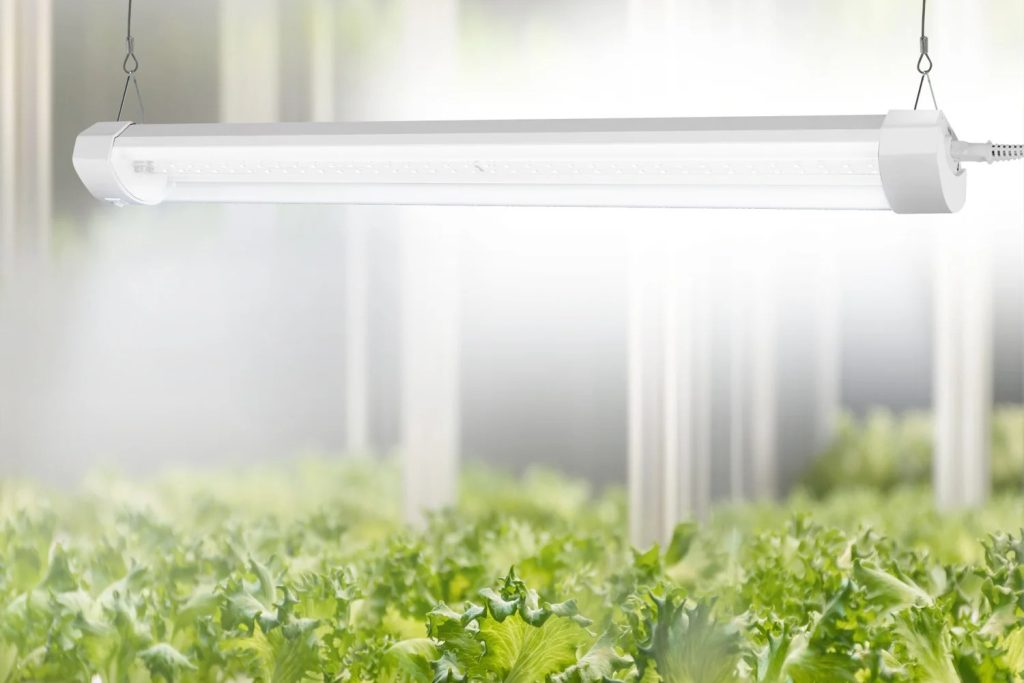
LEDs can be engineered to provide these specific wavelengths, enabling gardeners to cater optimally to their plants’ needs at each stage. Moreover, LEDs don’t emit ultraviolet or infrared rays that can potentially harm plants.
LED lights offer a trifecta of benefits – efficiency, longevity, and customizable spectrum – that make them an excellent choice for indoor gardening. By understanding these advantages as well as how LEDs function, cultivators can make informed choices about lighting setups that foster robust plant growth.
Optimal LED Light Wattage for Plant Growth
Determining the Best Wattage for Plant Development
The Paramount Importance of Wattage in Plant Lighting Systems
The role of light in plant growth cannot be overstated. It’s a vital element for photosynthesis, the process by which plants convert light energy into chemical energy to fuel their growth. One critical factor in this process is the intensity or wattage of the light, which can significantly impact a plant’s development.
Like most living organisms, plants require balance. Too little light intensity will leave your plants yearning for more energy, stunting their growth and potentially leading to wilting or discoloration. Conversely, too much intensity can overwhelm and damage your plants – imagine trying to bask in the midday summer sun without ample protection.
Wattage plays an essential role as it directly influences how much usable light is produced by your LED fixture. Therefore, selecting an appropriate wattage is paramount in maintaining optimal growing conditions and ensuring vigorous plant health.
A General Guide: Determining Wattage Needs Based on Plant Type and Growing Phase
The best LED wattage for plants varies depending upon multiple factors, including plant species, size of the growing area, desired yield, and, more importantly, the stage of growth. Each phase demands different lighting needs, similar to how our dietary needs change with age.
Thus understanding your plant’s lifecycle could significantly enhance its overall well-being. A general rule applied by experienced indoor gardeners suggests that seedlings require around 15-25 watts per square foot, whereas vegetative and flowering stages need approximately 30-50 watts per square foot, respectively.
Seedlings Stage: The Dawn of Life
At this initial stage of life, seedlings are particularly sensitive to their environment as they begin their journey from a tiny seed to a thriving organism. They do not need or tolerate high-intensity lights; instead, they require a gentle, nurturing source of light.
An LED light with a lower wattage – ranging from 15 to 25 watts per square foot – can create an ideal environment for seedlings. This energy input is sufficient to stimulate healthy growth without overwhelming the young plant. By providing this balanced environment, you nurture the seedlings’ transition into more mature plants.
Vegetative Stage: The Growth Spurt
As plants move into their vegetative stage, their need for light increases substantially. This phase is the equivalent of adolescence in humans – a period of rapid development and growth where nutritional demands are high.
For this reason, indoor gardeners should consider increasing the wattage during this phase to about 30-40 watts per square foot. This boost in energy provides plants with the stimulation they need for lush foliage growth and sturdy development while still being careful not to ‘burn’ them with excess intensity.
The Flowering Stage: The Crowning Glory
The final flowering stage is when your plants are ready to produce their crowning glory – their flowers or fruits. Similar to how adults require different nutrition than children or adolescents, mature plants demand higher intensity light to maximize yield.
During this period, it’s advised that you provide your blooming beauties with approximately 40-50 watts per square foot from your LED lights. At this level of intensity, you’re giving your indoor garden its best chance at an abundant and vibrant harvest.
Detailed Examination of Low-Wattage LED Lights (20-30 watts per square foot)
Optimizing Growth with Minimal Power: The Low-Wattage Effect
LED lights within the 20 to 30-watt per square foot range are considered low-wattage. These lights are ideal for smaller plants that require less light intensity, such as herbs and leafy green vegetables.
These minimalistic masterpieces of lighting offer the potential benefits of cost-effectiveness and energy efficiency. Provided they are used correctly, they can support healthy plant growth without overheating the plant or overly straining resources.
However, these lower-wattage LEDs also come with certain drawbacks. They might not provide adequate light for larger plants or those requiring high light intensity. Furthermore, their effectiveness can be limited if you plan on expanding your indoor garden beyond small plants.
In-Depth Examination of Medium-Wattage LED Lights (40-60 watts per square foot)
Finding the Middle Ground: Harnessing Medium-Wattage Lighting
Medium-wattage LED lights encompass a range between 40 to 60 watts per square foot and can be considered the jack-of-all-trades in horticultural lighting. These lights tend to strike a balance between intensity and coverage area, making them suitable for a wider variety of plants than their lower-watt counterparts. Medium wattages allow gardeners to cultivate crops that require moderate sunlight conditions, such as tomatoes, cucumbers, and peppers, among others.

The advantages here lie in versatility – medium wattages can cater to both smaller plants and more substantial vegetation requiring stronger lighting. However, medium-wattage LED lights might not be powerful enough for certain high-light crops or may provide excessive light for low-light plants – hence presenting potential pitfalls in energy use and plant health, respectively.
Extensive Analysis on High-Wattage LED Lights (70 watts per square foot and above)
Plant Lighting Power: High-Wattage LED Lights
LED lights with 70 watts per square foot and above are considered high-wattage lights. These are typically ideal for plants that require a lot of light, such as cannabis, or larger indoor gardens where strong lighting is needed across a broader area.
The primary benefit of high-wattage LEDs is their ability to provide intense light over a large area. This makes them ideal for indoor gardeners seeking to maximize crop yield or cultivate plants traditionally grown in intensely sunlit conditions.
However, these LEDs come with their own potential disadvantages. They consume more electricity than lower-wattage options and can lead to higher temperatures in the growing area – both factors that need careful management to avoid negative impacts on plant health and energy costs.
Case Studies: Successful Indoor Gardens Using Various Wattages
Delving into the practical applications, we present three case studies that demonstrate the effectivity of varying wattages in indoor gardening. These scenarios will provide a tangible understanding of how LED light wattage impacts different plant species, growth stages, and overall yield.
A Journey to Jade: Low-Wattage Usage
The first case study revolves around the nurturing of a jade plant (Crassula Ovata), a succulent typically native to South Africa. Given its low light requirements, an LED system with low wattage was selected for this particular endeavor.
In the initial phase, a 20-watt-per-square-foot LED light was used for seven hours daily. This provided sufficient illumination for seed germination without overheating or causing moisture loss. The modest energy consumption attributes to its cost-effectiveness over time.
As weeks passed and the jade plant entered its vegetative phase – characterized by flourishing leaves and stems – the same low-watt LED lamp continued illuminating it for ten hours each day. Remarkably, this consistent practice led to robust growth without any signs of distress from excessive lighting.
Once transitioned into the blooming stage, where jade plants produce beautiful star-shaped pink or white flowers, the lighting duration was reduced to six hours daily under 25 watts per square foot. Throughout these periods, there were no indications of leaf burn or wilting – common signs of overexposure or inadequate lighting conditions, respectively.
The entire process proved effective in cultivating a healthy jade plant through various growth stages using minimal electrical power. Thus, it reaffirms that certain plants can thrive optimally under low-wattage LED lights when appropriately managed.
The Tomato Triumph: Medium-Wattage Usage
Moving onto our second case study, which involves the indoor cultivation of a tomato plant, known for its relatively higher light requirements. The choice of LED wattage was crucial to ensure robust growth and a bountiful harvest.
The journey commenced with a 50-watt-per-square-foot LED light during the seedling stage, ensuring an ample amount of energy for proper germination. This medium wattage provided the required warmth, mimicking springtime sun exposure, favoring tomato seedlings.
Growth Phase: Increasingly longer periods of lighting were introduced as the plant approached its vegetative phase. A slight increase in wattage from 50 to 55 watts per square foot fostered vigorous greenery without causing leaf scorch – an issue often encountered with higher wattages.
As flowering began, the duration was reduced, but wattage increased to about 60 watts per square foot. This played a pivotal role in promoting flower formation and subsequent fruit setting, leading to luscious tomatoes within weeks.
The result was an abundant harvest of ripe, red tomatoes achieved under controlled conditions using medium-watt LED lighting. This case study demonstrates that indoor gardening can indeed produce fruits, literally and metaphorically speaking, when executed skillfully.
Rising through Rhododendrons: High-Wattage Usage
In our third case study, we explore high-wattage usage for nurturing Rhododendron plants indoors. Known for their flamboyant flowers and sunlight-loving nature, these plants present an exciting challenge for indoor gardening enthusiasts.
Given this species’ requirement for abundant sunlight outdoors, a high-powered LED system seemed most appropriate. At the germination stage, a high-intensity 80-watt-per-square-foot LED lamp facilitated healthy sprouting without causing any detrimental effects often associated with such powerful lighting techniques.
Once into its growth phase, characterized by expanding foliage and budding flowers, intense lighting was maintained using a 90-watt-per-square-foot LED light. This, coupled with careful monitoring of soil moisture and ambient temperature, ensured the rhododendron’s successful transition through this critical period.
As the blooming phase approached, flowering was encouraged by further tuning up the LED system to 100 watts per square foot. A spectacle of vibrant blooms affirmed that Rhododendron can indeed adapt to indoor conditions under high-wattage LED lighting.
This case study attests that even sunlight-intensive plants can be acclimatized indoors with high-powered LED lights. However, it also underscores the importance of vigilance in maintaining optimum growing conditions when handling such potent luminaires.
Tips for Choosing the Right LED Light Wattage for Your Plants
Successfully cultivating plants indoors requires diligent attention to providing the proper light conditions, which includes selecting the right LED Light wattage. One of the essential tips is to identify your specific plant’s light requirement.
Different species have varying needs: vegetables tend to require higher wattages, while herbs and leafy greens can thrive under lower wattages. Understanding your plant’s natural habitat and simulating those conditions as closely as possible will yield incredible results.

It’s also paramount that you adjust the lighting system as per different stages of plant growth. The seedling stage might only need 15-25 watts per square foot, while during the flowering stage, it can go up to 50-75 watts per square foot. Always remember what might be good for one phase could potentially harm another phase.
Furthermore, consider investing in an LED light with a dimmable option or an adjustable wattage feature. This provides you with flexibility and allows you to respond more readily to your plants’ unique needs or unexpected changes in their health or growth speed. Always remember that while wattage is crucial, other factors such as distance from the light source and duration of exposure also play pivotal roles.
A balance must be struck between these elements to ensure optimal photosynthetic efficiency without causing undue stress on your plants. Bear in mind that these are general guidelines and not infallible rules; hence, feel free to experiment within reason based on careful observation of your plant’s condition.
Conclusion: What is the Best LED Wattage for Plants?
Determining the best LED light wattage for your indoor garden involves understanding both science and art – understanding the photosynthesis process and identifying subtle signs from your plant life, respectively. The journey into indoor gardening with LED lights offers the chance to hone your horticultural skills while also reaping the benefits of fresh, homegrown produce or vibrant houseplants.
It’s a dynamic field that continually evolves as technology improves and our understanding of plant biology deepens. With the right wattage, LED lights can furnish your plants with an ideal environment for growth. So, here’s to bright futures – both for you and your plants!
You may also be interested in the following posts: