
Prime Locations for Landscape Lighting: A Comprehensive Guide
An Insightful Introduction to Landscape Lighting
Landscape lighting, or outdoor lighting as it is alternatively known, is a broad field within the realm of exterior design. Outdoor landscape lighting harmoniously blends aesthetics and function to enhance the ambiance of outdoor spaces while simultaneously enhancing their security and safety.
From enchanting garden paths gently bathed in soft light to architectural features dramatically accentuated by spotlights, landscape lighting can transform your backyard into an enchanting haven that extends your living space beyond the confines of your home. But there’s more to landscape lighting than mere beautification.
It also plays an instrumental role in safety and security measures for residential and commercial spaces alike. Effective landscape lighting eliminates shadowy corners where intruders might lurk, guides visitors along walkways after dusk, and prevents accidents by lighting steps and tripping hazards.
While it may not be as widely acknowledged compared to other forms of interior design or architecture, landscape lighting is slowly but surely gaining recognition for its ability to imbue outdoor settings with warmth, life, elegance, or drama depending on how it’s applied.
Shedding Light on Landscape Lighting
At its core, landscape lighting refers to the use of outdoor illumination for enhancing or improving the aesthetic appeal, safety, accessibility, and usability of an area. This can include private gardens and public landscapes such as parks or town squares.
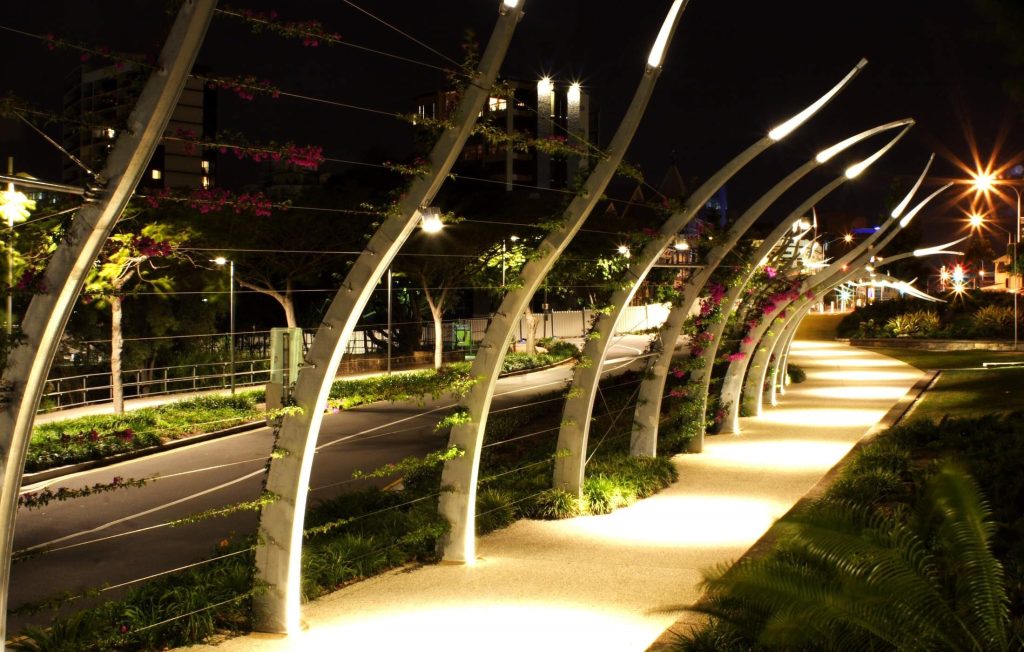
Such lights are typically installed in strategic places like pathways, driveways, and staircases, or around architectural features like fountains or statues, where they serve multiple purposes, such as guiding visitors during nighttime hours while adding another layer of beauty during daytime.
However simple it may seem on the surface – installing a couple of lights here and there – there’s actually quite a detailed process behind creating effective landscape light displays that contribute positively towards setting up pleasant atmospheres without compromising security aspects.
A Bright Boost: The Benefits & Importance of Landscape Lighting
Perhaps one of the most compelling arguments for installing landscape lighting is its ability to dramatically transform outdoor spaces. Whether it’s a simple solar-powered lantern at the edge of a garden path, an elaborate network of spotlights highlighting a historic building, or soft lighting around a patio creating an intimate outdoor dining experience, landscape lighting adds depth and dimension to exterior spaces.
It allows features that might go unnoticed in the daytime to shine after dark, extending the visual enjoyment of your property round-the-clock. Moreover, landscape lighting can also significantly increase safety and security.
A well-lit exterior is less likely to attract potential intruders and reduces risks associated with walking in poorly lit areas that could have hidden obstacles or hazards. The thoughtful placement of lights along walkways and driveways not only guides people safely around your property but also deters unwelcome visitors by eliminating hiding spots.
Additionally, from a practical standpoint, installing landscape lights can also contribute towards increasing the value of your property. Homes with well-thought-out and effectively implemented landscape lighting have been found to attract potential buyers more than those without, as they tend to highlight features like architectural details or mature trees that homeowners take great pride in.
Understanding the definition and importance of landscape lighting is vital for anyone considering enhancing their outdoor space. The benefits extend beyond aesthetics to cover aspects such as safety, security, and even increased property values, making it an essential consideration when planning out your exterior design scheme.
Understanding the Basics of Landscape Lighting
The world of landscape lighting is a fascinating one, brimming with a myriad of possibilities that can transform any outdoor space into a mesmerizing spectacle once night falls. However, to maneuver this realm successfully, one must grasp certain fundamental aspects.
Landscape lighting involves more than just affixing lamps to your exterior. It requires thoughtful planning and an understanding of the types of lights and power sources available to meet your specific needs. This post will delve into these basic elements with the aim of equipping you with the information necessary for an informed decision-making process.
The Lighting Array: Types of Lights Used in Landscaping
Landscape lights come in various forms, each serving a distinct purpose and adding a unique dimension to your outdoor décor. The choice you make will depend on what you hope to achieve with your lighting setup – be it security, aesthetics, or practicality.
Guiding Lights: Path Lights
Primarily used for safety purposes, path lights are installed along walkways, driveways, or garden paths to provide illumination and guide movement after dark. They are typically low-level fixtures that cast light downward onto the ground. The result is an inviting glow that not only improves visibility but also enhances your landscape’s aesthetic appeal.
Dramatic Highlights: Spotlights
If there are features in your garden or architecture that you’d like to highlight – say, trees, statues, or buildings – the spotlight is your best bet. Spotlights create intense beams of light aimed at specific points, creating focal areas that draw attention and create visual interest.
Area Guardians: Floodlights
Floodlights are usually used as security fixtures because they can illuminate large areas with their wide beam angle. They’re excellent for discouraging unwanted trespassers and illuminating potential tripping hazards, making them ideal for large yards or dimly lit corners of outdoor spaces.

Subtle Accents: In-Ground Well Lights
Well lights provide a subtle way to accentuate features without drawing attention to the light source itself. Also known as in-ground lights, they are installed below ground level and cast light upwards. This makes them perfect for uplighting trees, walls, or other vertical elements within a garden.
Safety Lighting: Step Lights
Last but not least are step lights. These are small fixtures that are installed directly into stair risers or the surrounding walls to provide lighting for safety on steps and staircases. They not only prevent potential accidents but also add a charming touch to your outdoor living space.
The Lifeline of Landscape Lighting: Power Sources
The effectiveness of landscape lighting is significantly determined by its power source. This not only influences the brightness and longevity of your lighting system but also affects installation costs and maintenance requirements.
Sun-Kissed Beacons: Solar-Powered Lights
For those seeking an eco-friendly alternative that’s easy on the pocket, solar-powered lights may be the solution. These units harness energy from sunlight during the day and store it in built-in rechargeable batteries, which power them once darkness falls. Not only do they reduce electricity consumption, but they’re also easy to install due to a lack of wiring requirements – making them a popular choice for many homeowners.
Balanced Radiance: Low-Voltage Electric Lights
Low-voltage electric systems use transformers to reduce household electricity (generally 120 volts) down to 12 volts – a safer option for wet environments like gardens. With their exceptional brightness, longevity, and variety, low-voltage electric lights are ideal for those seeking a high-quality, stable source of outdoor lighting. However, they do require professional installation due to the complex nature of their wiring systems.
Powerful Luminosity: Line-Voltage Electric Lights
Line-voltage electric lights operate directly on standard household electricity without the need for transformers. Offering superior brightness and capable of supporting larger lamps, these systems are perfect for large-scale and commercial landscape lighting applications. However, due to their high energy consumption and potential safety risks in wet environments, they necessitate careful installation by certified professionals.
Understanding these basics is instrumental in creating an effective landscape lighting design that caters to your specific needs and preferences. Whether accentuating architectural features or enhancing security, your choice of light type and power source sets the tone for the end result.
Planning Your Landscape Lighting Design
Outdoor Space Assessment: Unveiling the Potential of Your Terrain
Before embarking on the glorious journey of landscape lighting design, one must delve into a meticulous evaluation of their outdoor space.
Firstly, consider the size and layout of your yard, garden, or patio. This will determine the quantity and types of lights needed to create an alluring visual tapestry at nightfall.
Secondly, assess the structures present – be it ornamental trees, statues, or water features. These entities could serve as splendid focal points when lit appropriately.
In addition to this, analyze existing shadows and dark spots in your yard that could potentially pose safety hazards in low light conditions. These areas will be prime targets for enhanced lighting.
Also, ponder upon the unique features of your yard – a quaint rock garden or an intricate gazebo, perhaps? Such elements should not lurk in darkness but dazzle under strategic lighting.
Determining the Purpose of Your Lighting: Navigating the Triad of Aesthetics, Safety, and Security
Determining why you want to install landscape lighting is a pivotal part of planning your design. For some homeowners, safety may be paramount – ensuring that walkways and steps are well-lit can significantly reduce tripping hazards and ensure easy navigation after dark. For others, security may be the driving factor – bright entrances and potential hiding spots can deter unwanted intruders while simultaneously providing peace of mind for residents.
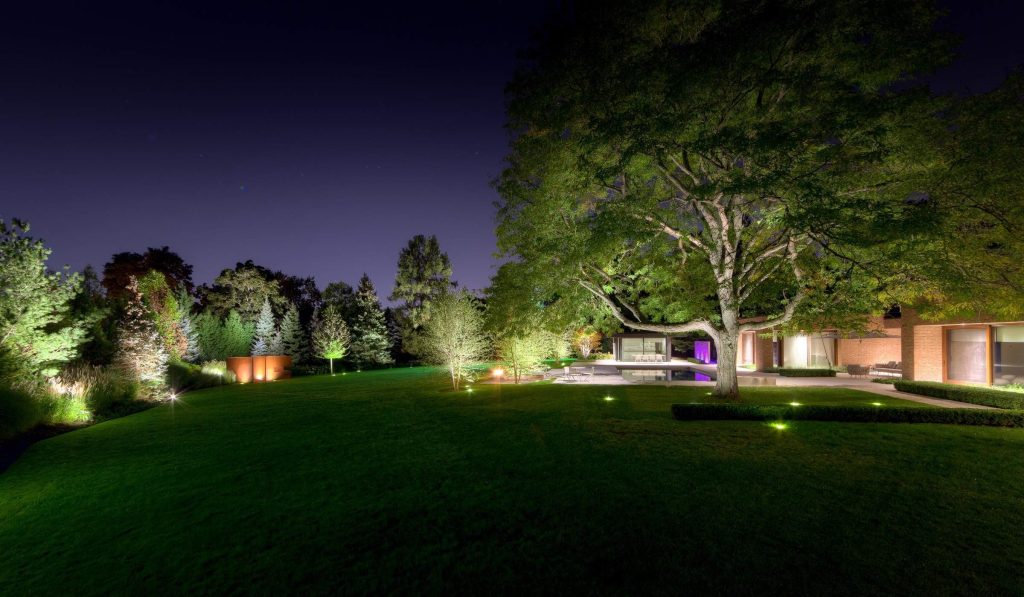
If you’re someone who seeks to elevate their outdoor space into a realm of enchantment when dusk falls, aesthetics would guide your purpose for lighting. Understanding whether safety, security, or aesthetics (or perhaps all three) guides your goal for outdoor lighting would shape every subsequent decision – from types of fixtures used to their placement.
Where to Install Landscape Lighting for Optimal Effectiveness
Pathways and Walkways: Guiding Lights towards Safety
Ensuring your pathways and walkways are well-lit is a fundamental aspect of landscape lighting. Not only does it enhance visibility for safe navigation after dark, but it also adds an inviting allure to your home. For optimal safety, avoid creating pools of light and shadow. Instead, aim for gentle, even lighting along the entire path.
Strategic placement is crucial for pathway lighting. A common method is to place lights on either side of the path in a staggered pattern to create a sense of balance. The fixtures should be spaced consistently so that as one pool of light begins to fade, the next one brightens. This creates an aesthetic yet practical ‘runway’ effect along the pathway.
Steps and Staircases: Securing Footsteps with Radiance
One cannot undermine the importance of effectively lighting steps and staircases in landscape design, for it plays a pivotal role in preventing accidents when darkness descends. Step lights need not be glaringly bright but should illuminate each tread sufficiently such that distance and depth perception aren’t jeopardized.
The best practice while installing step lights would be ensuring they cast light downwards to enhance tread visibility without causing distracting glare or shadows. These fixtures can either be installed directly into stairs or beneath adjacent handrails – offering subtle yet effective radiance.
Driveways and Entrances: Crafting Welcoming Beacons
Enhancing visibility and security with driveway lighting not only ensures safer navigation but also deters potential intruders by eliminating hiding spots. Installing lights along the length of driveways – perhaps interspersed with landscaping features – can create an inviting pathway leading guests towards your home.
Entrances are pivotal points where you get to make an impression on your guests – what better way than welcoming them with warm, captivating light? Whether it’s extravagant chandeliers or understated wall sconces, the right fixtures highlighting your entrance can amplify your home’s visual appeal, acting as an enticing beacon to all who approach.
Patios, Decks, and Outdoor Living Spaces: Conjuring an Ambient Haven
Landscape lighting within patios and decks enhances functionality while creating an ambient setting for evening relaxation or social gatherings. Soft, diffuse lights work best in these areas – lighting the space without being overbearing.
When it comes to selecting appropriate light fixtures for outdoor living spaces, consider ones that complement your decor style and are rated for outdoor use. From chic pendant lights suspended above a dining area to discreet deck lights installed into railings or floors, there are myriad ways to conjure an enchanting haven under the stars.
Gardens, Trees, and Focal Points: Showcasing Nature’s Artistry
Garden lighting is an art where manipulation of shadows and highlights can create breathtaking visual narratives after sunset. Techniques such as uplighting (lights placed at ground level shining upward) and downlighting (lights placed high up shining downward) can be used on trees to create dramatic effects – revealing intriguing patterns of branches and leaves against the dark sky.
Spotlighting gardens allows you to highlight feature plants or flower beds that would otherwise fade into obscurity post-sunset. By directing a concentrated beam of light onto these elements, they emerge from the darkness – their textures, colors, and forms rendered radiant amidst a darkened landscape.
Conclusion: Where to Install Landscape Lighting?
Embarking on a journey of landscape lighting design may seem daunting initially, but with careful planning and consideration for safety, security, and aesthetics, one can transform their outdoor space into a nocturnal paradise. Remember that every yard is unique – hence there is no one-size-fits-all approach. Experiment with different types of fixtures and techniques until you discover your own lighted Eden.
Landscape lighting is not just about visibility post-sunset but the creation of an enchanting realm where light dances with darkness in a visual spectacle. And isn’t that a truly delightful prospect to look forward to?
You may also be interested in the following posts: