
Which LED Light Color Reigns Supreme in Efficiency?
Introduction: Shedding Light on LEDs
A Brief Explanation of LED Lights and Their Growing Popularity
The acronym LED is short for Light-Emitting Diode. Initially invented in the early 1960s, these petite powerhouses of light have seen an astronomical surge in popularity over the past few decades. Not only are they remarkably versatile, able to produce an extensive spectrum of colors with clarity and intensity, but they also possess an astounding longevity that significantly exceeds that of traditional incandescent or fluorescent lighting.
LED lights operate on straightforward principles. When subjected to electrical current, electrons move through a semiconductor material integral to the LED construction, causing it to emit light. The intensity and color of this emitted light can be altered by adjusting the current and by modifying the material properties of the semiconductor.
Across many sectors – residential households, vehicular lighting systems, street lighting, digital displays – LEDs are steadily usurping older forms of lighting technology because they offer superior energy efficiency and durability. Furthermore, as our societies continue to make strides towards more eco-friendly solutions and sustainable practices in energy use, LEDs have become a beacon for green innovation.
The Importance of Efficiency in Energy Consumption
In today’s global climate – with environmental concerns looming large – the importance of efficiency in energy consumption has never been more pivotal. The need for technologies that can help us reduce our carbon footprints while optimizing functionality is not merely desirable – it has become crucial.
Efficiency refers to how effectively a device can convert its input (in this case electricity) into its desired output (light). Inefficient devices waste much energy as heat rather than useful output – a problem commonly encountered with traditional incandescent bulbs that spend approximately 80% of their consumed energy on generating heat rather than lighting.
In contrast, LEDs utilize their consumed power far more efficiently, emitting less heat and thus saving significant amounts of energy over time. This energy efficiency not only has positive implications for our environment – reducing carbon emissions – but also for our wallets, slashing electricity bills.
Overview of the Topic: What Color LED Light is the Most Efficient?
Delving deeper into the efficiency of LED lights, a question arises: do different-color LEDs differ in their efficiency? And if so, which color LED light is the most efficient? The answer to this question isn’t as simple as one might imagine.
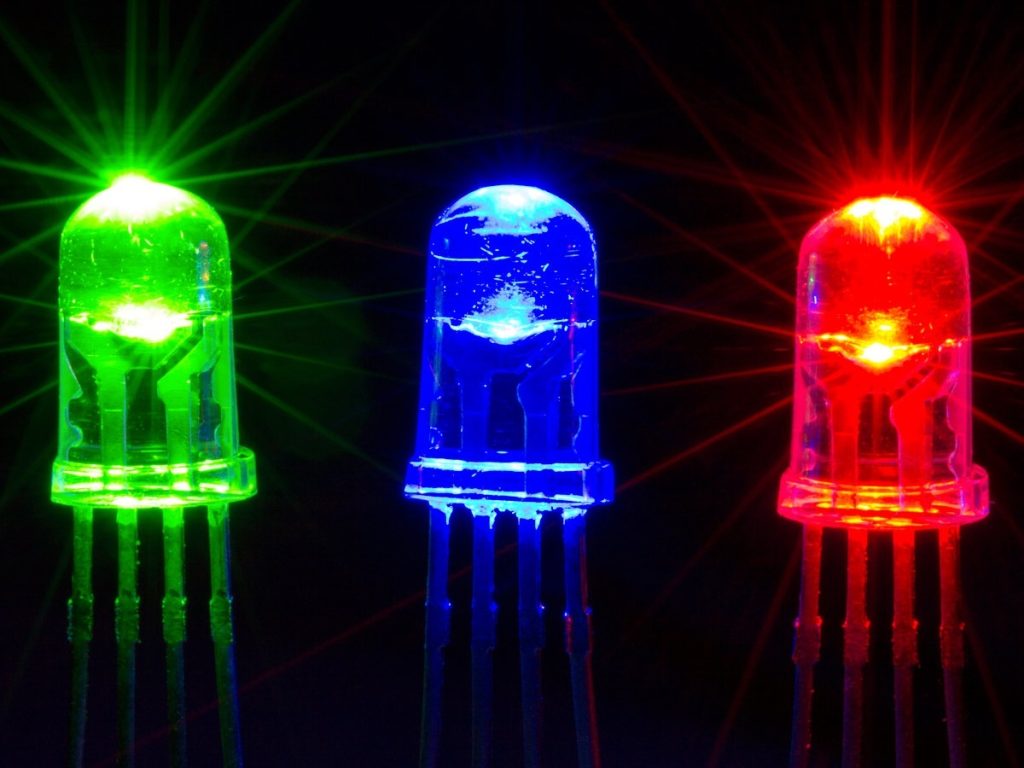
It involves a complex interplay of physics and engineering that determines an LED’s color and how efficiently it operates. The quest to identify the most efficient color of LED light requires us to delve into the intricacies that define how these luminous devices work.
We will navigate through scientific concepts like voltage requirements, heat dissipation issues, lifespan considerations, and even specific applications. In embarking on this lighting journey into understanding more about LEDs and their different colors, we not only widen our knowledge but also empower ourselves to make better decisions when investing in lighting solutions – whether that be for domestic use or larger-scale commercial applications.
Shedding Light on the LED: A Simple Explanation
Light-emitting diodes, often abbreviated as LEDs, are tiny marvels of technology that have revolutionized the way we light our world. At their essence, LEDs are semiconductors – substances that have a conductivity level somewhere between insulators and typical conductors.
When an electrical current is applied to the semiconductor material in an LED, it emits light through a process known as electroluminescence. This phenomenon includes electrons moving through a semiconductor, resulting in the release of photons of light and causing the LED to glow.
LEDs offer superior functionality compared to conventional lighting methods because they do not burn out instantly or fail. The degradation process is gradual, leading to a dimming over time instead of abrupt failure; this attribute makes them highly reliable for a wide array of applications. Additionally, they utilize less energy compared to conventional lights and emit much less heat.
Painting with Light: The Science Behind Colors in LEDs
The color emitted by an LED is determined by the specific semiconductor material used in its construction and not so much by using colored lenses or filters as is typical with other lighting forms. Every element emits energy at different frequencies when excited by electricity.
These frequencies correspond to different colors in the visible light spectrum – red needs a lower frequency while violet requires a high frequency. Compound semiconductors made from elements such as gallium arsenide (GaAs), gallium phosphate (GaP), or indium phosphide (InP) each emit light at distinct wavelengths within the visible spectrum when subjected to electric current, leading to various colors emitted by LEDs we’re familiar with today.
A Temperate Tale: Understanding Color Temperature
Color temperature provides us with an analytical method for measuring and describing how ‘warm’ or ‘cool’ a particular source of light appears. Unlike what the term might suggest, color temperature actually has nothing to do with the heat produced by a light source.

Instead, it refers to the perceived color of light produced by a light source and is measured in units of absolute temperature, known as Kelvin (K). A lower Kelvins rating indicates ‘warmer’ colors that trend towards reds and yellows, such as candlelight or sunrise. Conversely, higher Kelvins denote ‘cooler’ or bluish hues akin to a clear midday sky or an overcast winter day. Understanding this subtle gradation in lighting effect is vital for making informed decisions about LED applications.
Coloring Inside the Lines: How Colors are Produced in LEDs
In addition to the monochromatic light produced by LED’s due to their specific semiconductor material properties mentioned earlier, white and other colored lights can be achieved through clever design tricks. White LEDs typically use a blue LED chip encased in phosphor coating that partially transforms the blue light into red and green lights through a process called Stokes shift.
The resultant combination of red, green, and unaltered blue produces an overall white appearance. It’s quite fascinating how engineers can manipulate these tiny devices into generating virtually any color imaginable despite each individual LED only being capable of producing a single color of light.
Factors Sculpting the Efficiency of LED Lights
When we delve into the intricacies of light-emitting diodes (LEDs), understanding their efficiency is paramount. This involves a multifaceted approach, examining several key factors that directly influence the performance and practicality of different colored LEDs.
Current and Voltage: The Power Behind Color
The first factor playing a pivotal role in determining LED efficiency is the current and voltage requirements of different colors. Each color variant necessitates unique electrical input for optimal operation. For instance, red LEDs typically operate at lower forward voltages, around 1.8 to 2.2 volts, compared to blue or white LEDs, which require approximately 3 to 3.3 volts.
This variation has direct implications on energy consumption and overall efficiency; lower voltage requirements translate to less power consumption, making certain colors potentially more efficient than others under identical conditions. Moreover, it’s essential to remember that overpowering an LED can lead to ‘thermal runaway’, a destructive cycle where elevated temperature increases current flow leading to further heating – an undesirable scenario demonstrating the critical balance between supply voltage, current, and color in LEDs.
Unravelling Heat Dissipation
As we venture further into our exploration, we encounter another crucial component impacting LED efficiency: heat dissipation. All electric devices emit some amount of heat during operation; however, how this heat is managed within an LED can have profound effects on its performance. Irrespective of color, poor heat management can lead to rapid degradation, affecting light quality and reducing lifespan significantly.
However, it’s noteworthy that different colors exhibit disparate thermal characteristics: blue or white LEDs are typically more prone to heating issues compared with red or green counterparts due predominantly to their higher operating voltages. Factoring in thermal management when designing systems using these color variants can therefore elevate operational efficiency by improving durability and maintaining consistent light output.
Lifespan and Durability: The Longevity Quotient
The third facet influencing LED efficiency revolves around their lifespan and durability. These elements are intrinsically tied to both the electrical and thermal characteristics we’ve previously discussed, but they also bear relevance in their own right.
LEDs are renowned for their longevity, often rated to last tens of thousands of hours. However, this lifespan can differ dramatically depending on the color of the LED. For example, red LEDs tend to outlast blue or white LEDs under similar conditions due primarily to their lower voltage requirements and favorable thermal characteristics.

Durability, too, is a critical feature as it encapsulates an LED’s ability to withstand environmental factors such as temperature fluctuations or physical trauma. Once again, different colors can present varying levels of durability; blue LEDs often demonstrate superior resistance to temperature extremes over other colors, thus augmenting their overall efficiency in certain applications.
LED light efficiency is a complex narrative woven through threads of electrical requirements, heat dissipation practices, and lifespan considerations. Appreciating these intricacies can empower us to harness the full potential of this exceptional technology across its radiant color spectrum.
Analysis of Efficiency for Different Colored LEDs
Red LEDs: A Beacon of Efficiency
The incandescent radiance of red LEDs has been associated with a high degree of efficiency. Predominantly, they operate at a lower voltage compared to their colorful counterparts, which directly correlates to decreased energy consumption. The electrons in red LED lights work diligently, emitting light at longer wavelengths, which essentially exerts less energy. Moreover, red LED lights serve an array of applications due to their efficient nature.
Their utilization is broad and includes traffic lights, automotive tail lights, and alarm systems. This is also why they are extensively used in power-focused industries such as telecommunications and computing, where the emphasis on power conservation remains paramount.
In terms of benefits, the robustness and low-light pollution characteristics feature prominently for red LEDs. They emit less blinding light, making them suitable for nighttime environments where preserving night vision is crucial.
Another benefit lies in their lifespan, which often surpasses that of other colored LEDs due to lower degradation over time – a direct consequence again stemming from its low energy consumption characteristics.
The cost efficiency associated with red LEDs cannot be overstated. Given their prolonged lifespan coupled with lower energy usage, this translates into significant savings over the life-cycle of these illuminators.
Blue LEDs: Innovation meets Efficiency
Blue LEDs have captivated the attention of many due to their innovative applications despite requiring higher voltage operations compared to their red or green counterparts. The higher voltage requirement is a result of shorter wavelengths requiring more energy per photon emitted.
Despite this evident drawback on paper, blue LED lights still maintain admirable efficiency levels, thanks mostly to technological advancements made in recent years aimed at improving this aspect. One primary application that capitalizes on blue LED’s efficiency is in white-light generation, specifically within phosphor-based white light-emitting diodes (LEDs). In these cases, a blue LED is used to excite yellow-emitting phosphor. The combined emission appears white to the naked eye.
Blue LEDs also have scientific benefits associated with their use. For instance, they are instrumental in phototherapy for neonatal jaundice treatment. Their specific light wavelength can break down bilirubin, which is most efficiently absorbed by infants in the blue spectrum. The efficiency of blue LED lights is not simply limited to their operational capacity but also extends into areas of health science and cost reduction due to their versatile applications.
Green LEDs: The Power Balance
Green LED lights sit on an interesting fence when it comes to efficiency. They do require more voltage than red LEDs but less than blue ones. This midpoint offers a balance between power consumption and output efficiency, making them relatively efficient in their own right. Applications for green LEDs are wide-ranging, from traffic signals to electronic devices and even horticultural uses, owing much of their popularity to this operational efficiency.
Another unique benefit that green LEDs offer stems from their visibility factor. Green light has been found to be more visible to the human eye in certain conditions compared to other colors, explaining why they are widely used in safety signs and emergency lighting systems.
In terms of lifespan, while not quite reaching the durability benchmark set by red LEDs, green ones still boast a respectable lifespan that exceeds many traditional forms of lighting solutions on the market today. Green LEDs also offer cost benefits over time due to these favorable characteristics, which ultimately contribute towards lower replacement costs.
White LEDs: An Efficiency Marvel
White LED lights often take the limelight when discussing efficiency – for good reasons too. While they operate at higher voltages, like Blue LEDs, technological advancements have drastically improved their overall energy efficiency levels over time. White LED lights find usage almost everywhere – from homes and offices, streetlights and architectural lighting, automotive headlights, and more. The sheer dominance of white LEDs in various sectors speaks volumes about their efficiency credentials.
One of the key benefits of white LED lights is their color rendering index (CRI). A high CRI allows for colors to appear more true-to-life under the lighting. This makes them ideal for environments where accurate color perception is crucial. Furthermore, white LEDs offer an impressive lifespan that can range from anywhere between 30,000 and 50,000 hours – a clear testament to their durability and efficient operation over an extended period.
A major advantage contributing towards lowering overall operational costs lies in the heat dissipation characteristics of white LEDs. They are designed to produce less heat, thereby reducing energy waste, which, when combined with their long lifespan, equals significant cost savings in the long run.
Efficiency Comparison: Which Color Reigns Supreme?
An Interesting Graphical Representation of Efficiency
In a quest to unveil the most efficient color of LED light, the comparison chart assumes paramount importance. It serves as a visual compendium of data, where different colors of LEDs – red, blue, green, and white – are juxtaposed based on their efficiency.
This comparison delineates each color’s operating current, forward voltage, luminous output (in lumens), and finally the amount of heat generated. Red LED lights typically operate at a lower current and voltage, which makes them highly efficient in terms of power consumption. The luminous output for red LEDs is also commendable despite their lower energy usage.

Blue LEDs, however, require a higher voltage for operation, thus consuming more power, but manage to produce an impressive luminous output. Green LEDs strike a balance between red and blue with moderate voltage requirements and good lumen output, while white LEDs are essentially blue LEDs with an additional phosphor layer that converts blue light to white; this process results in some energy loss, making them somewhat less efficient.
The data graphically presented on the efficiency graph demonstrates that while there may not be drastic differences in efficiency among LED colors at first glance, careful analysis reveals subtle variances that could impact long-term energy usage.
Interpreting Shades: Why One Color May Outperform Others
Unearthing why one color may be more efficient than others requires us to delve into intricate details on how these semi-conductor devices work. The primary determinant here is the bandgap energy, or the energy required to push an electron from its rest state to its conduction state. In simple terms, it’s this bandgap energy that decides what color (or wavelength) will be emitted by an LED when powered up.
It’s interesting to note that each color has its own unique bandgap energy requirement, with red being at the lower end of the spectrum and blue at the higher end. This essentially means that red LEDs can be activated with less energy, thereby placing them at a pedestal in terms of efficiency.
However, when we factor in lumens per watt, which indicates how much visible light is produced for a given amount of electricity, things shift. Green LEDs possess an inherent advantage due to human eye sensitivity; our eyes are more sensitive to green light, making them appear brighter for the same power consumption.
White LEDs, despite showcasing lower efficiency due to their mechanism of producing white light as mentioned earlier, have found widespread application owing to their more natural and uniform lighting. Therefore, from an application perspective, one could argue that white LEDs are more ‘efficient’ in fulfilling lighting needs across diverse situations.
While red LEDs surpass others on a pure energy consumption basis and green has an edge due to human eye sensitivity, each color has its specific advantages and applications where it might be considered most efficient. The narrative thus evolves from simplicity to complexity as we delve deeper into the realm of LED efficiency based on color.
The Role of Application in Determining Efficiency
Determining Efficiency through Intended Use
While it’s useful to understand the intrinsic efficiency of different colored LEDs, perhaps more important is the role that application plays in determining efficiency. The light color required for an application not only influences visibility and aesthetics but also can have a profound impact on energy consumption and overall system effectiveness.
For instance, red LEDs, despite being less power-intensive than other colors, may be considered inefficient if used in an application where high visibility under bright conditions is necessary. The efficiency of a lighting system should not only be evaluated based on the energy consumed by the LED but also how well it fulfills its intended purpose.
A green LED used for traffic signals could be more efficient than a white LED if we consider its superior visibility during daylight hours and foggy conditions. However, this same green LED might not serve efficiently as an indoor lamp due to its lack of brightness when compared to white or yellow LEDs.
Color Preference Based on Application
The choice of LED color can drastically impact the performance and energy efficiency based on specific applications. For example, blue LEDs are often used in electronic devices due to their cool temperature output, which reduces heat-related issues, thereby improving overall device longevity and reliability.
Conversely, red LEDs are frequently employed in nighttime applications such as astronomy or wildlife observation due to their low light pollution levels while effectively illuminating objects without disturbing nocturnal creatures or human night vision. In these cases, despite having lower luminous efficacy than other colored counterparts like white or green LEDs, red ones perform exceptionally well, making them an efficient choice.
Examples of Color-Specific Applications
In photography and cinematography, where accurate color representation is vital, natural-looking light sources like white LEDs are preferred over colored ones despite their relatively higher power consumption. This is because their broad spectrum of color rendering promotes rich, lifelike hues in captured images, making them more effective and efficient for this specific application.
In horticulture and indoor farming, on the other hand, a combination of blue and red LEDs has been found to be most efficient. These particular light colors provide the required wavelengths for photosynthesis, promoting plant growth while minimizing energy usage.
Color Selection in Architectural Lighting
In architectural lighting design, choosing the right color LEDs can make a significant difference in energy efficiency. For example, using warm-color LED lights (like red or amber) can create a cozy ambience with lower power consumption than cooler colors (like blue or white). However, if visibility and brightness are the priority, as is often the case in commercial spaces or public safety areas, cooler colors that emit more lumens per watt may prove to be more efficient despite their higher energy requirement.
LED Color Efficiency: A Matter of Context
Ultimately, when it comes to determining the most efficient LED color, context is key. While some colors may inherently consume less power than others, their efficiency can only truly be evaluated based on how effectively they serve their intended purpose within an application. Consequently, making an informed choice about LED color involves consideration of not just inherent efficiencies but also factors like brightness requirements, visibility conditions, and even aesthetic preferences.
The Dawning Horizon: Future Trends in LED Light Efficiency
As we stand at the precipice of the future, advancements in LED light efficiency grow ever more promising. Just like every other technological field, LED lighting is not immune to the fast-paced changes brought about by relentless research and innovation. The race to create more efficient LED lights is a fascinating quest that leads scientists to uncharted territories, pushing for breakthroughs that could revolutionarily modify our comprehension of efficiency.
One key prospect lies in the domain of quantum dots. These minuscule particles have the potential to transform electrical energy into light with extraordinary efficiency. What’s riveting about this technology is its ability to precisely tune the emission color merely by altering the size of the quantum dots. This could potentially redefine which color of LEDs can be most efficiently produced.

Beyond quantum dots, there lies another possibility within nanowire LEDs. Nanowires, with their increased surface area and superior material quality, could significantly elevate light extraction efficiency. Moreover, they allow for a potential reduction in energy loss during electron-hole recombination – an essential process in creating light within an LED – and thus may shift our understanding of color-specific efficiency.

Furthermore, perovskite materials are gaining momentum due to their exceptional properties, such as broad absorption spectrum and high charge carrier mobility, that facilitate superior conversion efficiencies. With tunable bandgaps enabling diverse emission colors, perovskite LEDs might hold unprecedented efficacy across various color spectrums.
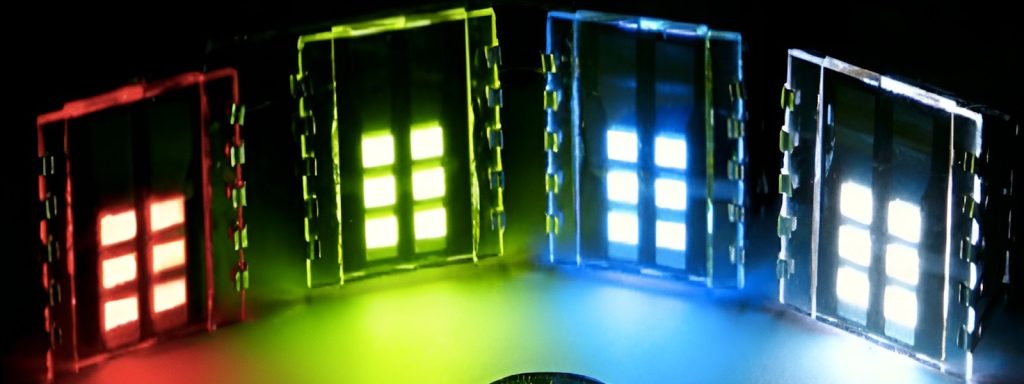
These burgeoning technologies have enormous potential for reshaping our understanding of which color LED holds superior efficiency credentials. As science progresses unfettered towards these exciting new frontiers, it’s vital we keep a keen eye on these developments.
A Beacon of Progress: Impact of Ongoing Research into Improving Overall LED Light Efficiency
Ongoing research into LED light efficiency holds immense potential, not just in regards to color-specific output but also overall energy utilization. The global push for greater energy efficiency and reduced carbon emissions drives much of this relentless pursuit of knowledge.
Research endeavors are underway to optimize the design and materials used in LEDs, aiming to enhance their light extraction efficiency and, consequently, their overall efficacy. This could result in substantially less energy wastage, lower heat dissipation levels – which is often a challenge with certain color LEDs – and an extended lifespan.
A field gaining substantial traction is the exploration of Organic LEDs (OLEDs). OLEDs offer a raft of benefits, including higher brightness levels, more extensive viewing angles, faster response time, and the potential for flexible substrate implementation. The ongoing research could revolutionize not just how efficiently we can make these lights across different colors but also the very way we use them.

In addition to material advancements, ongoing research into smart control systems that regulate LED lighting based on external conditions like natural light availability or room occupancy can significantly augment overall energy savings beyond individual LED efficiency improvements.
Overall, it’s important not to lose sight of the larger canvas while delving into color-specific efficiencies. Ongoing research promises a future where LED lights could be significantly more efficient than they currently are, irrespective of their color, paving the way towards a more sustainable planet.
Bringing Light to Efficiency: Final Thoughts
As we draw our discourse to a close, it becomes apparent that determining the most efficient LED color is not a simple black-and-white answer. It’s a colorful spectrum that hinges on numerous factors, including current and voltage requirements, heat dissipation, lifespan, and most importantly, the specific application it is intended for.
From the scientific perspective, red LEDs have an upper hand in terms of raw efficiency as they require less energy to illuminate. Their benefits extend to various applications, such as darkroom illumination, where their minimal light pollution offers significant advantages.
However, shifting our perspective to practical uses and aesthetic appeal, white LEDs are often deemed superior. Their ability to replicate daylight conditions makes them highly appealing for residential and commercial lighting needs. Moreover, advancements in technology have resulted in better heat management strategies that prolong their lifespans significantly.
The Role of Adaptive Applications: Efficiency in Real-Life Usage
The intended application plays an instrumental role in defining efficiency. For instance, while blue LEDs may fall short when we consider raw energy consumption data alone, they prove indispensable in medical applications for their antibacterial properties and are thus considered efficient.
Green LEDs too find themselves under the efficiency spotlight due to their unique visibility characteristics, which make them ideal for traffic lights or emergency lighting systems, even though they might not be as energy-efficient as their red or blue counterparts. Furthermore, color-mixing – creating different hues using primary colored LEDs – adds another layer of complexity since some colors require more power than others.
A Brighter Future: Upcoming Trends and Research
Keeping our gaze fixed on the horizon of innovation reveals promising trends that could potentially alter our current perception regarding LED color efficiency. Ongoing research strives towards creating more efficient white LEDs by improving phosphor conversion methods, thereby reducing thermal degradation issues associated with them.
Another exciting avenue is organic LEDs (OLEDs), whose flexible and thin structure allows for uniform light emission across a wide range of colors. This could further blur the lines when we discuss color efficiency in the context of LED lights.
Conclusion: What Color LED Light Is The Most Efficient?
It is safe to say that the most efficient LED light color cannot be determined in isolation. It is an intricate interplay of scientific principles, practical applications, and innovative advancements. As users or consumers, it’s crucial we embrace this colorful complexity and focus on finding the right balance between efficiency and application requirements.
The future holds immense promise as we continue to push boundaries in our quest for brighter, more sustainable lighting solutions. With every flicker of progress, one thing remains certain: whether it’s red, blue, green, or white, our world is set to shine even brighter with LED lights.
You may also be interested in the following posts: