
What Makes LED Tubes Stay On When the Power is Off?
The Bright World of LED Tube Lights
In the realm of lighting, LED tube lights have carved out a prominent place for themselves due to their energy efficiency and long lifespan. A tube light using light-emitting diode technology is a modern version of standard fluorescent tube lights. Unlike their traditional counterparts, however, these LED tube lights generate illumination by allowing electrons to recombine with electron holes within the device, releasing energy in the form of photons – a process known as electroluminescence.
The diversity within this category of lighting is truly remarkable, ranging from smart LED tube lights that offer customization and control at your fingertips to LED tube retrofit lights that provide enhanced luminosity while conserving energy. Moreover, advancements in LED technology have given birth to an array of specialized lighting solutions, such as RGB LED tube lights, renowned for their ability to produce a spectrum of vibrant colors.
There are also specific variants like LED tube grow lights that favor plant growth by emitting wavelength-specific rays conducive to photosynthesis and UV LED tube lights used widely in applications necessitating sterilization or disinfection.
Embracing the Radiance: Prevalence and Importance of LED Tubes
In contemporary times, the importance and prevalence of LED lighting cannot be overstated. Landscape lighting has seen a shift towards solar LED tube lights, creating sustainable and attractive outdoor spaces, while interiors witness widespread use of LED tubes – from ambient mood lighting created by LED tube string lights to focused task illumination provided by LED strip tubes.
Furthermore, owing to their longevity, higher lumen output per watt, lower heat emission, and overall environmental friendliness compared to conventional counterparts, LED tubes are steadily transforming into indispensable elements not only in residential settings but also in business environments. Be it vintage-inspired restaurants using LED tube vintage lights for evoking nostalgia or tech-driven offices exploiting smart LEDs’ potential for enhancing productivity through human-centric lighting design, LEDs truly light up our world.
Unraveling the Enigma: LED Tubes That Glow When Switched Off
While LED tubes are generally recognized for their advantageous features, they sometimes display a peculiar propensity to stay lit even when the switch is turned off. This fascinating yet perplexing phenomenon has intrigued consumers and scientists alike, leading to numerous discussions and investigations into its cause. For most users, a faintly glowing LED tube light in a dark room isn’t merely puzzling – it’s also disconcerting. It brings forth concerns about wasted energy and potential fire hazards.
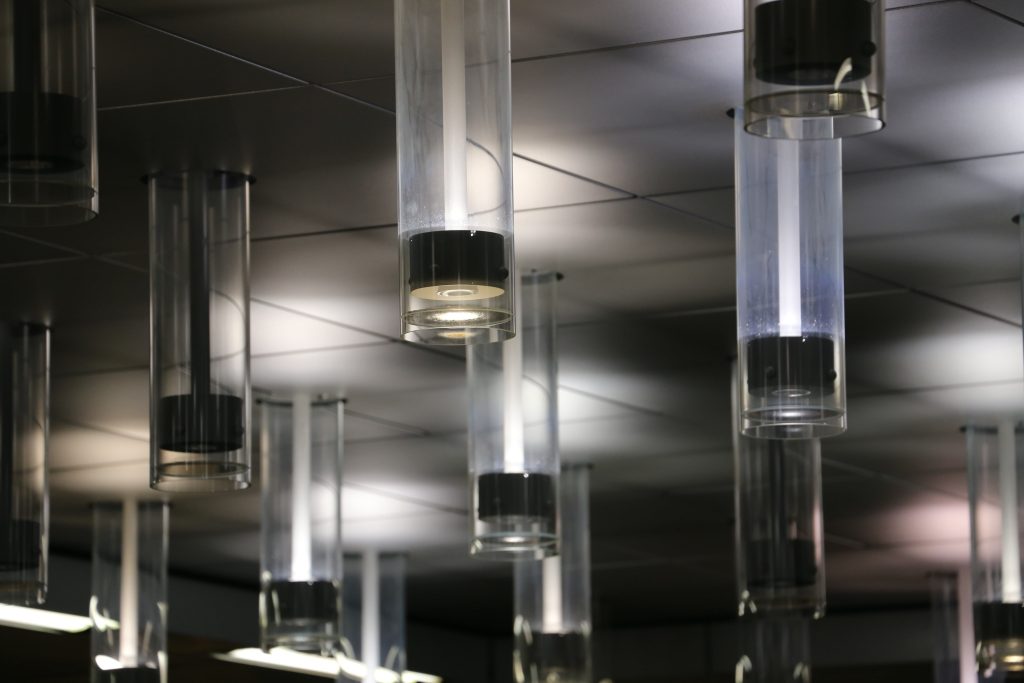
Many wonder if their LED tube strip lights or those ambient LED tube string lights should retain an ominous glow even after being switched off. This intriguing circumstance of LED lights is not limited to any particular type or design; be it smart LED tube lights with their advanced features or simply crafted solar LED tube lights, this tendency to stay ‘on’ seems to cut across different variants, making it all the more bewildering and interesting to delve into.
Understanding the Basics of LED Tube Lights
The Essence of LED Tube Lights Functioning
LED tube lights, whether they are used as retrofit solutions, grow lights for plants, or solar-powered outdoor fixtures, operate on a fascinating blend of physics and engineering. At their core is a simple yet effective component: the diode.
To understand how LEDs work, it is necessary to delve into the intricate world of diodes. Diodes are semiconductor devices that allow current to flow in only one direction – from the anode (positive side) to the cathode (negative side). In a light-emitting diode system such as LED tube retrofit lights or LED tube grow lights, these diodes are designed to emit light when current passes through them.
The Role of Diodes in LED Tubes
In essence, a diode transforms electrical energy into light energy. This occurs because diodes are made from materials like gallium arsenide that have unique properties allowing them to emit photons – particles of light – when an electric current is applied. This process is at the heart of everything from smart LED tube lights that can be controlled remotely to UV LED tube lights used for sterilization purposes.
In LED systems such as RGB LED tube lights or solar LED tube lights, multiple diodes may be combined together in elaborate arrangements, allowing for different colors and intensities of light to be produced. The ability of LEDs to produce colored light without filters makes them particularly valuable in applications like landscape lighting and aesthetic indoor lighting design.
The Process of Electroluminescence
The emission of light from an LED occurs through a process known as electroluminescence. When voltage is applied across an LED’s terminals, electrons gain enough energy to move across the device’s semiconductor material towards its positively charged end, or ‘hole’. As these high-energy electrons collide with positively charged holes, they drop down to a lower energy level and release their excess energy in the form of photons – light.
This process is remarkably efficient and produces very little heat, which is why LED tubes like LED tube strip lights and LED tube string lights are perfect for applications where low heat emission is desirable. That’s why you commonly see LED technology in sensitive environments like art galleries or museums, where traditional lighting could damage precious artifacts.
Key Components and Their Functions Within an LED Light System
Each LED system, whether it be LED tube vintage lights or other variants like RGB LED tube lights used for colorful display lighting, comprises several key components. These include a power supply or driver that transforms incoming electricity into the correct voltage and current levels for the LEDs.
Another critical component is the heat sink. Despite being markedly more efficient than traditional light sources, LEDs still produce some amount of heat. The heat sink serves to dissipate this thermal energy away from the diode itself, thereby preserving its longevity. The case or housing of an LED light not only provides mechanical protection but also serves to focus and direct the produced light effectively.
A well-designed case, such as those found in landscape lighting can dramatically enhance an LED light’s effectiveness by guiding its emitted light precisely where it’s needed. Overall, understanding these fundamental aspects enriches our grasp on how LED systems work – from smart LED tube lights controlled via smartphone apps to solar LED tube lights illuminating our gardens at night.
The Science behind Light Switches and Electrical Circuits: Unraveling the Lighting Mysteries
In the captivating arena of modern lighting, such as smart LED tube lights and solar LED tube lights, understanding the fundamental science behind light switches and electrical circuits lays a robust foundation. The principle is surprisingly simple: a light switch controls an electrical circuit that powers a light source. When you flip a switch ‘on,’ you’re completing an electrical circuit, permitting electricity to flow into the light source, be it traditional bulbs or LED tube strip lights. Conversely, flipping the switch ‘off’ breaks this circuit, cutting off the electricity supply and extinguishing the light.
Open Circuits vs Closed Circuits: A Tale of Two States
Think of an electrical circuit as a circular racetrack, with electrons racing from point A to point B. In a closed (or complete) circuit – akin to a seamless racetrack – electrons can dash unimpeded from their starting point (the power source), through conductive material (wiring), into various devices like landscape lighting or LED vintage tube lights that utilize that energy, before returning to their origin.
An open circuit is essentially a disrupted racecourse where some unforeseen element has interrupted part of the track, creating an insurmountable gap in our electron race. This hurdle could be anything from a blown fuse to simply flicking off an ordinary light switch – it’s all designed to stop electrons in their tracks.
A variety of smart controls are available today for managing closed and open circuits at will – from remote control via apps for RGB LED tube lights to automated sensors for UV LED tube lights. These advanced technologies make manipulating electrical circuits efficient and user-friendly.
Switches: The Gatekeepers of Electrical Flow
The humble light switch is an unappreciated hero in our daily lives – a gatekeeper that commands the flow of electrical energy. In its most basic form, the switch simply opens and closes the circuit to LED tube lights or any other light source attached. Flipping it ‘on’ provides a pathway for electrons to flow freely (closed circuit), lighting up your LED tube retrofit lights or even an array of LED tube string lights.

Flip it ‘off,’ and you introduce a chasm into the circuit (open circuit), halting the electron dash and plunging your smart LED tube lights or solar LED tube lights into darkness. Through these switches, we have complete control over our environment’s lighting – flicking them on for bright illumination during late-night book readings, dimming them for a movie night with RGB LED tube lights, or turning them off entirely before heading to bed.
The Ghostly Presence of Residual Voltage
Now that we’ve explored circuits and switches, let’s turn our attention to another intriguing player in electrical science – residual or “phantom” voltage. This term refers to the small amount of electricity that can remain in an open circuit – essentially voltage seeking but failing to find a path for continuous flow. While this might sound alarming, rest assured: phantom voltage is generally harmless.
It’s typically too weak to power anything substantial – your solar LED tube lights won’t shine brighter at night due to it, nor would UV LED tube lights suddenly emit their characteristic glow because of residual voltage. However, under specific circumstances – such as those involving sensitive LED technology – this phantom power may manifest in unusual ways.
For instance, after switching off your landscape lighting system equipped with modern LED lights, you might notice that some tubes continue emitting faint light. This enigma brings us back full circle: why do LED tube grow lights (or any LED lights for that matter) sometimes stay on when the switch is off?
The Enigmatic Phenomenon: Why Some LED Tube Lights Stay On When Switched Off?
The enigma of LED tube lights remaining faintly lit even when the switch is off has piqued the curiosity of many. While it may seem magical to some, rest assured that this phenomenon can be explained through the physics of electricity and lighting technology.
Unmasking the Invisible Player: The Role of Residual Voltage
Residual voltage, often referred to as ‘phantom’ or ‘stray’ voltage, plays a significant role in this peculiar behavior of LED tube lights. This voltage usually lurks unnoticed in our electrical circuits, having little to no effect on conventional incandescent or fluorescent bulbs due to their higher power requirements. However, LED tube lights – whether they are smart LED tube lights or LED tube retrofit lights – operate differently.
Famed for their energy efficiency, LED tube lights require considerably less power to function compared to traditional lighting options. This low power requirement makes LEDs sensitive enough to respond even to minimal levels of residual voltage, causing them to glow dimly even after the light switch has been turned off.
In addition to regular LED tube lights, other variations such as RGB LED tube lights and UV LED tube lights also exhibit this phenomenon due to their minimal power needs and sensitivity towards residual voltages. Even solar LED tube lights used in landscape lighting setups can display these characteristics if they are wired into a circuit with other electrical devices that might induce residual voltages.
Pathways Through Time: How Older Switch Designs Contribute to the Issue
In the labyrinthine network of wires that constitutes our home’s electrical system, older switch designs often provide inadvertent pathways for residual voltages. Most traditional switches were designed with incandescent or fluorescent bulbs in mind and simply interrupt the ‘hot’ wire when switched off, leaving a possible path for residual voltage through the ‘neutral’ wire. This older design is usually the culprit behind LED tube strip lights, LED tube vintage lights, or even LED tube grow lights staying on when they should be off. When paired with sensitive LED technology, these older switches can result in unexpected lighting.
Case Studies: Shining a Light on the Real World
A myriad of real-life examples highlight this phenomenon in action. Many homeowners have reported their smart LED tube lights glowing faintly while switched off, causing them to question if they are witnessing a paranormal activity or if there’s something amiss with their electrical system.
In commercial settings too, businesses using LED lighting solutions such as RGB LED tube lights for decorative purposes or solar LED tube lights for outdoor landscape lighting have noticed their fixtures emitting a faint glow after closing hours. This can be particularly noticeable and puzzling in darker environments where even a weak light stands out prominently.
Such instances highlight the importance of understanding the underlying principles of modern LED technology and how it interacts with existing electrical infrastructure in homes and businesses. They also demonstrate why it’s vital to consider these factors when choosing and installing LED lighting systems – whether you’re selecting smart LED tube lights for your connected home, opting for UV LED tube lights for sterilization purposes, or decorating your garden with solar LED landscape lighting.
Energy Consumption and Efficiency: Revealing the Shadows
The Power Behind the Glow: Does the Phenomenon Affect Energy Usage?
Despite the uncanny ability of LED tube lights to remain subtly aglow when switched off, one might posit that this phenomenon has a negligible impact on energy consumption. LED tube lights, including specialized ones such as UV LED tube lights and LED tube grow lights, are renowned for their energy efficiency. Even a full-powered LED light consumes significantly less energy compared to traditional incandescent or fluorescent bulbs.
Nonetheless, it is crucial to remember that LEDs illuminate via electroluminescence – a process where electricity is converted directly into light. When an LED stays faintly lit due to residual voltage, it continues this conversion, albeit at a much-reduced rate. It’s akin to landscape lighting softly glowing in twilight hours – they’re not at full power, but they’re still drawing some amount of energy. However miniscule this residual power draw may be, considering it from a broader perspective brings its significance into view.
Imagine thousands of smart LED tube lights or LED tube retrofit lights across residential and commercial settings globally exhibiting this phenomenon. Cumulatively, their collective power draw could equate to more than mere fractional units of electricity. Thus, while individually insignificant, on a macroscopic scale over time there could be measurable impacts on overall electrical usage due to these seemingly spectral glows in our LED technology.
A Flickering Life: Do Residual Glows Impact Lifespan or Performance?
As we delve deeper into the ethereal world of subtly glowing LEDs post-switch-off and consider whether such occurrences affect their lifespan or performance, we must first understand that LED tubes operate differently than traditional bulbs. Unlike incandescence-based bulbs, which burn filaments, LED tubes rely on diodes, which allow them unprecedented longevity with appreciably lower maintenance.
Whether we consider smart LED tube lights, LED tube strip lights, or even LED tube vintage lights, these devices typically enjoy an extended lifespan due to their solid-state nature, which lacks filament or glass to break. However, the persistent low-level electroluminescence produced by residual voltage could potentially pose a concern for the longevity of these devices.
Over time, continuous exposure to electricity – even at reduced levels – can generate heat within the LED system. This heat can lead to gradual degradation of light quality and intensity – much like what happens in RGB LED tube lights when one color starts to dim before others. The decreased brightness and change in light temperature may be especially noticeable in solar LED tube lights or LED tube string lights that are used outdoors, where they are exposed to elements that can further exacerbate this degradation.
To bring this into perspective, think of an LED as a marathon runner. A runner who never stops running – even slowly – will tire faster than one who rests between races. Similarly, an LED constantly exposed to electricity might experience reduced performance over time.
While it’s clear that LEDs’ “ghost illuminations” do not drastically impact energy consumption or significantly shorten their lifespan on an individual scale, on a macroscopic level over prolonged periods these effects may be more pronounced. As such, this phenomenon warrants further consideration both from an energy efficiency standpoint and for the optimization of product performance.
Technical Solutions to Prevent LED Tubes from Staying On
The Advent of Modern Switch Designs
The evolution of switch technologies has brought forth advanced solutions to tackle the persistent glow of LED tube lights. One such remedy lies in the use of modern switch designs. The crux of this issue can be boiled down to the fact that conventional switches may allow for a residual or “phantom” current to pass through, even when turned off, thus stimulating the diodes in the LED lights and causing them to emit a faint glow.
However, modern switches are crafted with precision and intricate technology that mitigates this problem. Over five decades ago, when incandescent bulbs ruled the lighting landscape, switches did not require a neutral wire. These antiquated switches worked just fine with old-fashioned light bulbs but are ill-suited for the needs of today’s energy-efficient LED tube lights. Today’s modernized switch designs incorporate neutral wires into their systems, thereby eradicating any residual voltage issue.
A Close Examination: Switches with Neutral Wires
Fundamentally speaking, a neutral wire serves as a pathway for electricity to complete its circuit back to your home’s electrical panel. Traditional switches bypassed this feature, but contemporary models now feature these essential neutral wires.
Switches replete with neutral wires present an effective solution against LED tubes staying lit even when switched off because they provide a direct route for electricity, which eliminates any residual voltage that might still exist on the line after being switched off. Consequently, smart LED tube lights connected via such pathways entirely shut off without experiencing any traces of unwanted ghost light.
Exploring Other Advanced Switch Technologies
Beyond neutral-wired switches are an array of other advanced technologies designed specifically to address this perplexing phenomenon faced by many users of RGB LED tube lights and other forms alike.
Among these innovative contrivances are smart switches and dimmers. Smart switches work in harmony with your home’s Wi-Fi to deliver enhanced control over your LED tube grow lights or any other type of LED lights you may have installed.
Meanwhile, dimmers adjust the voltage supply, ensuring LED tubes turn off completely when required. Other technologies like LED tube retrofit lights and retro-styled LED tube vintage lights are designed with integrated solutions that prevent residual current leakage.
Conclusion: Why Do LED Tube Lights Stay On When the Switch is Off?
As we continue to move towards a world lighted by solar LED tube lights, UV LED tube lights, or any form of energy-efficient light sources, it is paramount that our understanding and technology evolve concurrently. The residual glow emitted by switched-off LED tubes might be perplexing and even disconcerting to some; however, the advent of modern switch designs gives solution for this concern.
As we make our way into a future where landscape lighting is dominated by smart LED technologies, including LED tube strip lights and LED tube string lights, understanding these nuances can help us truly harness the potential of this incredible lighting solution. With a bit of technical knowledge and the right equipment, you can ensure that your LED tubes only shine when they’re intended to.
You may also be interested in the following posts: