
A Simple Tutorial to Optimal LED Strip Light Installation Locations
Exploring the World of LED Strip Lights
In the world of lighting and decor, LED strip lights have emerged as a revolutionary player. These flexible circuit boards populated by surface-mounted light-emitting diodes and other components, which can be affixed almost anywhere, are not only aesthetically pleasing but also highly efficient, versatile, and durable. The beauty of these lights is that they’re compact yet powerful, providing bright illumination for various applications from residential to commercial settings.
LED strip lights offer a radiant solution that combines the efficiency of conventional tube lights with the convenience and elegance of decorative lighting. They come in an array of colors and brightness levels, making them suitable for all sorts of environments. Whether you wish to create a subtle ambience in your living room or high-intensity lighting in your workspace, LED strip lights can cater to these diverse needs.
The use case scenarios for these innovative light strips are virtually endless, encompassing landscape strip lights for gardens or patios to accent lighting for retail displays or architectural highlights on building exteriors. Moreover, because they’re easy to install and require minimal maintenance compared to traditional forms of lighting, LED strip lights have gained popularity among homeowners and business owners alike.
The Importance: Why Consider LED Strip Lights?
The importance of LED strip lights stems from their myriad benefits over conventional types of lighting. First off, unlike incandescent bulbs or fluorescent tubes, which scatter light all over the place, LEDs provide focused light in one single direction, ensuring optimal utilization without waste.
This unique characteristic makes them excellent choices for targeted applications such as under-cabinet kitchen lighting or highlighting specific architectural features with landscape strip lights. Furthermore, due to their compact size and flexibility, these LEDs give users an unprecedented level playing field when it comes to designing customized lighting solutions.
Secondly, energy efficiency is another significant factor that escalates the importance of LED strip lights. They employ a fraction of the energy consumed by traditional lighting systems, which translates to significant savings on your electricity bills. Moreover, they have an impressive lifespan and can last for up to 50,000 hours, which is approximately five times longer than conventional lights.
Benefits: The Allure of LED Strip Lights
The benefits of LED strip lights extend beyond their energy efficiency and longevity. Their versatility in terms of color options and dimmability allows users to create desired moods or ambiances in various settings – from soothing warm tones for a cozy living room atmosphere to cool white light for a productive work environment.
Due to their slim profile and adaptability, LED strip lights can be installed in places where traditional lighting solutions would not fit – think tiny alcoves, under kitchen cabinets, or along staircases. Such versatility opens up an array of decorative possibilities that were previously unimaginable with traditional lighting.
LED strip lights also offer the advantage of being safe and environmentally friendly. They do not emit heat in the way that incandescent bulbs do, reducing the risk of fires or burns. Furthermore, they do not contain harmful substances such as mercury prevalent in older types of lighting.
But certainly important is their role as a vital component in landscape lighting – from illuminating pathways to accentuating water features, these versatile strips work wonders in enhancing outdoor aesthetics while also improving nighttime safety around your premises.
Whether you’re looking at them from the perspective of versatility & aesthetics or efficiency & sustainability, it’s clear that LED strip lights bring numerous advantages to the table that make them an excellent choice for all kinds of lighting needs, including landscape strip lights.
Demystifying the Luminary Brilliance: Understanding LED Strip Lights
LED strip lights, also known as tape lights or ribbon lights, are flexible circuit boards populated by surface-mounted light-emitting diodes (SMD LEDs) and other components. They are typically characterized by their versatility, as they can be cut to custom lengths and installed in a variety of locations. Thanks to their design, these strip lights diffuse the lighting evenly, providing a smooth and consistent light output, ideal for numerous decorative or functional lighting applications.
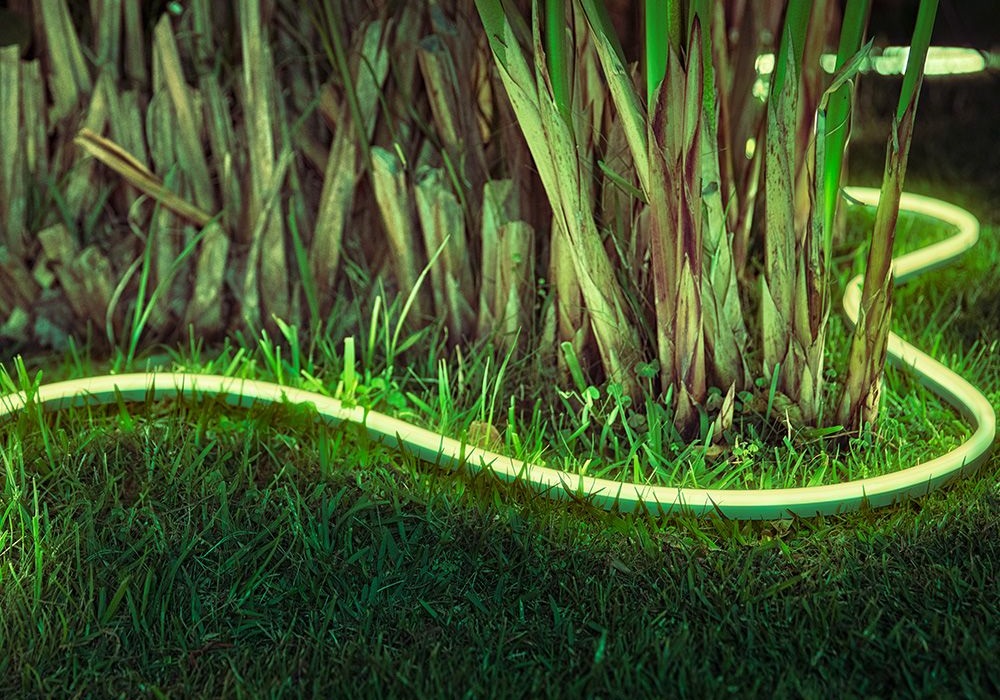
The beauty of LED strip lights lies in their simplicity. With an adhesive backing for easy installation, these strips can adhere to most surfaces to provide beautiful and efficient lighting solutions. The LEDs on the strips are tiny semiconductor devices that emit visible light when an electrical current is passed through them.
Unlike traditional incandescent bulbs, which use heat to produce light – thereby wasting energy – LEDs convert almost all energy into light, making them incredibly energy efficient. Moreover, one pivotal advantage these LED strip lights hold over traditional lighting solutions is their longevity. These luminaries have an impressive lifespan that extends thousands of hours beyond that of standard incandescent or fluorescent bulbs.
The Radiant Spectrum: Different Types of LED Strip Lights
In terms of diversity in the market, LED strip lights have made significant advances. These come in various types catering to distinct requirements and preferences. Firstly, we have single-color LED strips that emit a fixed color like warm white or cool white; they’re used predominantly for general-purpose illumination or task lighting but can also be employed for accenting interior decor elements.
Next up are RGB (red, green, blue) strips, which combine three primary colors at varying intensities to produce a wide array of hues – perfect landscape strip lights that allow you to set the mood with the desired color palette at will.
For those seeking finer control over color rendering with more sophisticated controls, we have the RGBW strips that add a pure white LED to the mix, and finally, there are addressable LED strips where each individual LED on the strip is programmable, allowing you to create stunning visual effects and animations.
Gleaming Considerations: Factors to Consider When Choosing LED Strip Lights
Choosing the right type of LED strip light can be like navigating through a labyrinth. However, a few key factors can guide you towards making an informed decision. The foremost consideration should always be your specific lighting needs: Are you aiming for soft ambient lighting, or do you require bright task illumination?
Once your goal is clear, it becomes easier to choose between high-output versus low-output LEDs. Other important aspects include color temperature (measured in Kelvins), where a lower number implies a warm yellowish glow while higher values represent cooler, blue tones. For those seeking vibrant landscape lighting options, RGB or RGBW strips will prove ideal.
Importantly, look at the IP rating of the strip lights – this determines their suitability for different environments, especially crucial when considering outdoor applications such as landscape strip lights. Low IP ratings indicate dust and moisture resistance suitable for indoor use only, while higher IP ratings denote resistance against water jets and immersion – particularly practical for outdoor or bathroom installations.
Achieving mastery over LED strip lights necessitates a comprehension of what they are at their core, recognizing their diverse manifestations in the market, and lastly, understanding how varied factors culminate into influencing your final choice.
Embarking on the Journey: Preparation for Installation
The first vital step before delving into the actual installation of LED strip lights is proper preparation. An effective preparation process essentially sets the stage for a smooth and successful installation. One must remember that this process is not merely about gathering tools and devices, but it also encompasses understanding the intricacies of LED strip lights, including their alignment, power requirements, controllers, and suitable adhesives.
The preparation phase requires thoughtful consideration of the intended look you want to create with your landscape strip lights or any other type of lighting. It includes deciding on the correct length of strips required, figuring out optimal placement for achieving desired effects, arranging appropriate power sources, and understanding controller options to ensure seamless operation.
Safety should also be a paramount concern during this stage. It’s crucial to analyze potential risks associated with electrical connections, outdoor installations, and heat management systems. Adhering to safety guidelines will not only prevent accidents but also ensure longevity and efficient performance of your lighting system.
The Craftsman’s List: Tools Needed for Installation
Once you’ve mapped out an action plan in your mind or on paper, let’s venture towards gathering essential tools needed for installing your LED strip lights effectively and safely. The fundamental toolset includes a pair of scissors – preferably one with a fine serrated edge – to cut the strips at designated cutting points accurately.
A soldering iron is necessary if you choose to opt for solder connectors over simpler clip-on ones. Solder connectors provide firmer connections between light strips but require more effort in handling them safely. Furthermore, you might need a multimeter if you plan on testing voltage levels in your installation process.
For landscape strip lights or other outdoor installations specifically, waterproof silicone glue or sealant could be required to provide additional water resistance at connection points. Yet importantly, wire strippers could come in handy when dealing with power cables.
Forging Safety Shields: Measures to Consider Before Installation
When it comes to electrical installations, safety should never be a secondary consideration. Prior to the installation of your LED strip lights, ensure all power sources are switched off to avoid any accidental electric shocks during the process.
While handling a soldering iron, use protective gloves and goggles since the heat can cause severe burns. Also, keep it out of reach from flammable materials and children.
When working with landscape lighting or outdoor installations specifically, pay special attention to weather conditions. Avoid installing during rain or wet conditions, as water conducts electricity and can create potential hazards.
Furthermore, always follow the manufacturer’s instructions carefully when installing LED strip lights. Different products may have unique features or specifications that need specific handling measures for safe installation.
Ensure that all your installations comply with local building codes and regulations if any exist. A bit of research at this stage can potentially save you from future legal issues or penalties.
Where to Install LED Strip Lights: An Easy Guide
LED strip lights truly shine in their versatility, enabling users to transform both residential and commercial environments. In a domestic setting, they can invigorate and brighten spaces, adding depth and dimension with every gleaming strip.
Commercially, LED strip lights have the potential to influence customer behavior, accentuate products or architectural features, and create an unmatched atmosphere. For interior application, this flexible lighting solution allows for an intimate level of customization within home interiors.
The possibilities are nearly endless when it comes to outdoor implementation too. Landscape strip lights imbue gardens with a touch of magic at dusk while providing much-needed illumination for pathways or highlights on architectural exteriors.
The Domestic Lighting Layout: A Guide on Where to Install in Residential Areas
The kitchen is often the core of a home. Strategic placement under cabinets can drastically enhance the functionality of your workspace while casting an inviting glow that transforms midnight snacks into culinary adventures.
If you prefer subtler lighting effects inside cabinets or drawers, keep contents visible without being obtrusive. Installing them above kitchen islands or counters creates both ambient and practical lighting.

The living room is where we retreat for rest and relaxation; thus, soothing lighting here is crucial. Imagine installing LED strips behind your TV or other entertainment units – the resultant backdrop light not only reduces eyestrain but also adds an invigorating modern aesthetic appeal.
Additionally, mounting them along shelves or bookcases emphasizes decor items while creating a soft, comforting environment. In bedrooms these versatile luminaries are ideal around headboards for relaxing bedtime reading sessions without harsh overhead glare disturbing your partner’s slumber.
Inside wardrobes or closets, they transform dark recesses into easily navigable spaces, ensuring no garment goes unnoticed. Bathrooms present unique opportunities too; around mirrors they provide optimal lighting conditions for daily grooming routines, while under sinks they offer subtle nightlight functions.
Commercial Luminosity: A Guiding Light for Business
In restaurants and cafes, LED strip lights can play a pivotal role in creating an enticing atmosphere. Accent lighting for bar areas can draw customers like moths to a flame, while ambient lighting for dining areas creates a comfortable environment that encourages patrons to linger longer. Highlighting artwork or architectural features with these versatile lights can add an artistic flair, making your locale memorable.
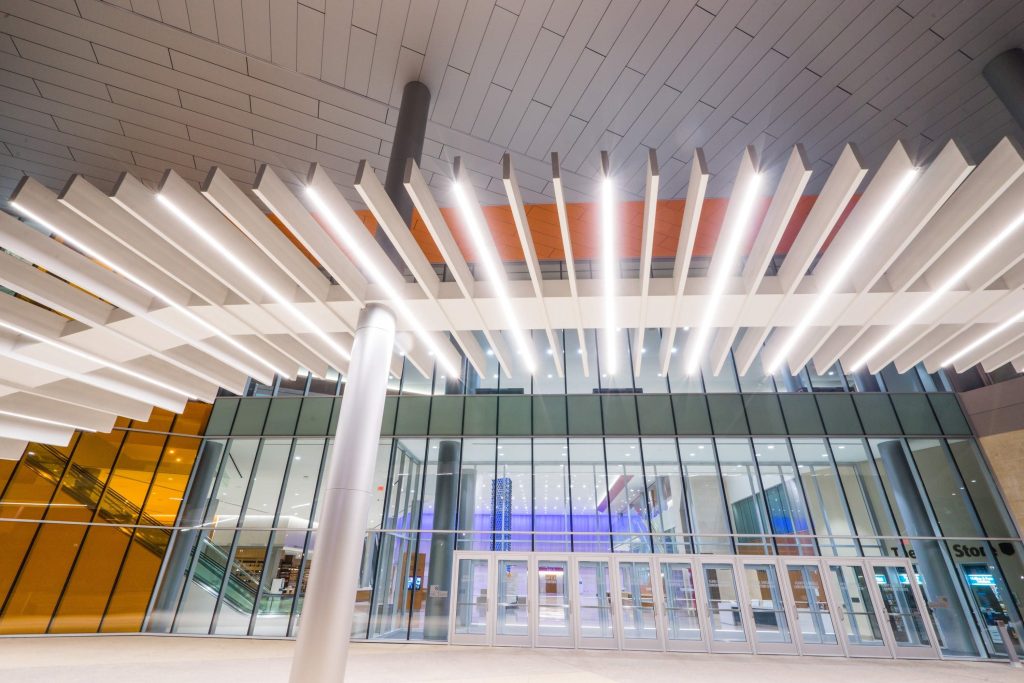
Retail stores stand much to gain from strategic lighting. Window display lighting has the ability to lure in customers from afar, making products appear more attractive and inviting. Product showcase lighting intensifies this appeal further by placing the spotlight where it’s most needed – on your merchandise.
The Great Outdoors: Unleashing Potential with Landscape Lighting
Gardens and patio areas spring into life after sunset with landscape strip lights providing pathway lighting – a practical yet enchanting feature that guides visitors safely around your property. For those with creative inclinations, accentuating landscape features such as statuary or water fountains adds drama and depth to nighttime views.
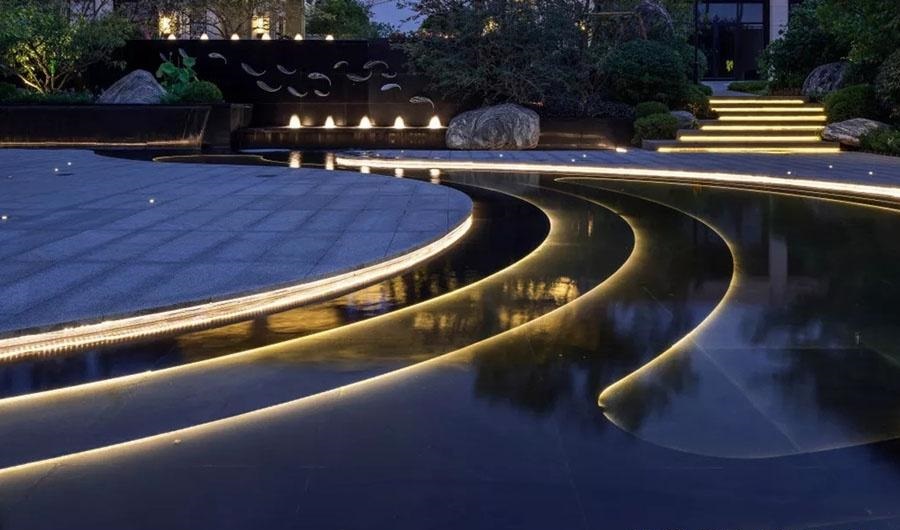
Architectural highlights on building exteriors are another opportunity for innovative illumination; casting light upwards onto textured surfaces creates dramatic shadows and can showcase architectural detail missed during daylight hours.
As we have seen throughout this guide, LED strip lights offer a flexible, efficient solution for both functional and decorative lighting across various environments – be it residential spaces imbued with warmth or commercial establishments sparking intrigue, indoor relaxation spots or outdoor landscapes injected with nocturnal vivacity. So let’s harness the power of these versatile luminaries on our quest towards creating spaces that are not only visually stimulating but also energy-efficient and environmentally friendly.
You may also be interested in the following posts: