
Optimal Placement for Landscape Lighting Transformers
In the radiant realm of outdoor lighting, the landscape lighting transformer stands as an unseen hero that fuels the enchanting spectacle of light. It is more than just an accessory in your landscape lighting setup – it is the invisible powerhouse that drives the life and vibrancy of your outdoor spaces under cover of darkness.
Landscape lighting transformers serve a pivotal role in ensuring not only that your outdoor lights shine brightly but also providing them with a safe and efficient supply of power. They are essential for low-voltage outdoor lighting systems, converting standard household voltage into a lower, safer voltage that can be used by landscape lights.
The Spark that Lights the Garden: Understanding Landscape Lighting Transformers
Delving into the heart of a landscape lighting transformer, we unveil its primary function as an electrical device that transforms voltages from one level to another. In simpler terms, it takes the high voltage from your home’s electrical system (usually 120 volts) and transforms it into a lower voltage (typically 12-24 volts). This reduced voltage is ideal for powering garden lights and significantly increases their longevity while reducing potential safety hazards.

There exists a wide constellation of transformers designed for landscape lighting in today’s market. From those that simply convert power to multi-tap transformers with multiple voltage output options to accommodate longer runs of lights or different types of fixtures. There are even smart transformers that can be controlled remotely or programmed to turn on and off at specific times.
The Right Place for the Powerhouse: Why Placement is Paramount
While it might seem like a minuscule detail in the grand scheme of things, where you place your landscape lighting transformer is indeed critical for optimal performance and longevity. Its placement dictates its efficiency as well as safety, two factors you cannot afford to compromise on when dealing with electrical equipment.
Positioning near an appropriate power source is crucial as the transformer needs a stable and reliable source of electricity. The distance from the lights themselves also matters, as excessive distances can lead to voltage drop – a decrease in electrical power that can affect the performance of your lights.
Safe and Sound: The Safety Aspect of Transformer Placement
Besides efficiency and performance, safety is another paramount factor when considering where to place your landscape lighting transformer. It should be positioned away from water sources or areas prone to flooding. Consider also its accessibility to children and pets – transformers can overheat and pose a risk if tampered with by curious hands or paws.
Ultimately, the placement of your landscape lighting transformer requires a blend of practicality, foresight, and respect for safety norms. In our quest for aesthetic brilliance in our backyards or gardens, we must always remember that proper placement is not just about maximizing visual impact but ensuring long-term functionality and safety as well.
The Intricate Element: Unraveling the Landscape Lighting Transformer
Definition and Function of a Landscape Lighting Transformer
A landscape lighting transformer is an integral yet often unheralded component in the vast realm of outdoor illumination. Essentially, its role is to convert the standard 120-volt house current into a lower, safer voltage suitable for landscape lights, typically 12 or 24 volts.
The transformer’s primary function is to ensure that your landscaping lights have access to an appropriate and constant power source. In addition to providing power, landscape lighting transformers also contribute to maintaining the longevity and performance of your outdoor lighting fixtures.
By reducing the voltage from its original state, transformers help prevent potential damages caused by electrical overloads. This safeguards your investment in landscape lighting from premature burnout or failure.
Furthermore, transformers also provide an element of safety within your outdoor spaces. The reduced voltages are significantly less dangerous than typical household currents should a mishap occur, such as a cut wire or damaged fixture.
A Spectrum of Choices: Different Types of Landscape Lighting Transformers
Landscape lighting transformers come in various shapes and sizes, each designed to suit diverse requirements and preferences. It’s crucial to understand these different types before settling on one for your outdoor spaces.
The most common type is the single-tap transformer, which provides one output voltage – usually 12 volts – ideal for small-scale landscape designs with limited light fixtures close together.
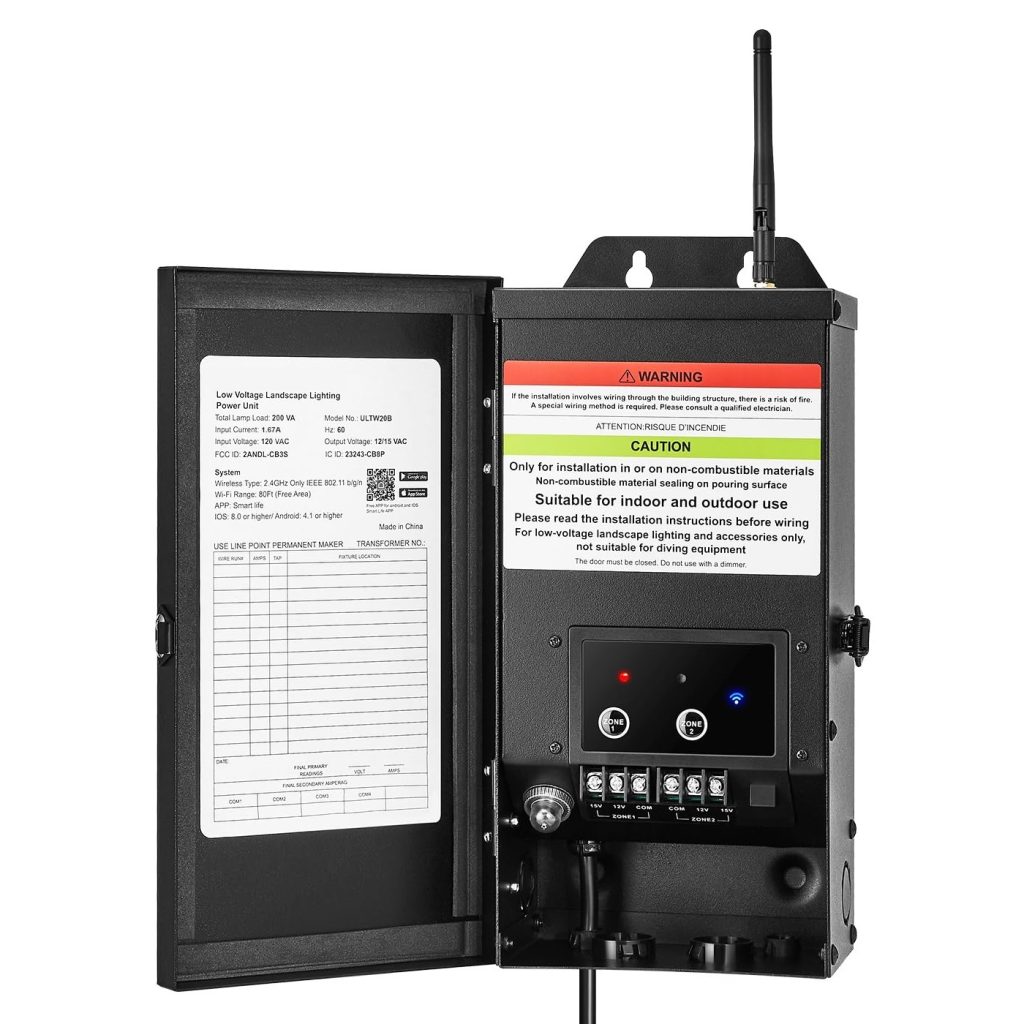
In contrast, multi-tap transformers provide multiple output voltage options ranging from 12 volts up to 24 volts depending on the model. These are highly versatile and well-suited for larger landscapes with extended wiring runs where voltage drop can be an issue.
But certainly not least are smart transformers, which incorporate technology such as timers or photocells for automation capabilities. Some even offer smartphone connectivity for remote control and scheduling flexibility.
Beyond the Surface: How a Landscape Lighting Transformer Works
At the heart of a landscape lighting transformer’s operation is a relatively simple yet fascinating process. It uses principles of electromagnetic induction to alter the electrical voltage from its source.
As the 120-volt household current enters the transformer, it runs through a coil of wire known as the primary winding. This creates a magnetic field that induces an electric current in the adjoining secondary winding. Depending on how many windings there are on this secondary coil, it will produce an output with significantly lower voltage suitable for your landscape lights.
The real beauty of this process lies in its simplicity and efficiency. The transformer does not have any moving parts and consumes minimal energy, making it both reliable and cost-effective.
The control system integrated within some transformers provides further ease-of-use by allowing you to automate when and how your lights operate. Whether using basic timers or sophisticated light sensors, these smart features offer both functionality and convenience as part of your outdoor lighting solution.
Factors to Consider when Placing a Landscape Lighting Transformer
The Imperative Proximity to the Power Source
The placement of your landscape lighting transformer relative to your power source is a quintessential element that requires thoughtful consideration. The transformer’s primary function is to lower the voltage from a standard 120 volts down to 12 volts, which is more suitable for outdoor lighting. Therefore, it needs to be plugged into an existing electrical outlet.
Installing the transformer close to the power source minimizes the need for long runs of high-voltage wiring, thereby reducing potential safety risks and material costs. However, one should bear in mind that according to National Electric Codes (NEC), transformers must be located at least one foot away from an openable window or door.
The proximity also becomes crucial when considering ease of access for maintenance or troubleshooting purposes. It’s favored that you position your transformer where it can be easily reached if any issues arise.
Assessing Distance from Lights
Coupled with proximity to the power source, another paramount factor is gauging how far your lighting fixtures are from the transformer. In order for your outdoor lights to perform optimally and efficiently, they rely on receiving an adequate supply of power without significant voltage drop.
With low-voltage lighting systems such as these, distance matters considerably because as electricity travels along copper wire, resistance increases and voltage decreases – this phenomenon is known as ‘voltage drop‘.

As such, if the lights are too far away from the transformer, they may appear dim or not work at all. To alleviate these potential issues and obtain optimal lighting performance, strive for a balance between placing your transformer too close (which could result in overly bright lights due to overvoltage) and too far (which results in dimmer lights due to a substantial voltage drop).
Safety Considerations: Weather and Water Exposure
Outdoor electrical installations are inevitably exposed to environmental elements, making the consideration of weather and water exposure inexorable. Landscape lighting transformers are constructed to withstand outdoor conditions, but they must still be placed in areas that offer protection from excessive moisture or water exposure.
The transformer should never be positioned in a spot where it could potentially become submerged in water due to poor drainage or flooding. This also includes protection from regular sprinkler systems, which can cause continuous exposure to water over time.
Rain, snow, and other forms of precipitation can lead to premature aging and malfunctioning if the transformer is inadequately protected. Even though most transformers have a built-in rain shield, it is still prudent to locate your transformer under an eave or within a weatherproof enclosure for additional security against inclement weather.
Safety Considerations: Accessibility to Children and Pets
Yet another crucial aspect lies within the accessibility of the transformer unit by children or pets. The landscape lighting transformer should be situated in an area where it cannot easily be tampered with by young children who might not understand potential hazards.
In addition, extra thought should go into protecting the transformer from any possible damage inflicted by pets. Some animals might be drawn towards these units out of curiosity or use them as chew toys or scratching posts, which could result in serious safety concerns. Therefore, contemplate placing your transformer higher up on a wall where it’s out of reach for children and pets but still easily accessible for adults for any necessary maintenance tasks.
Safety Considerations: Risk of Overheating
When positioning your landscape lighting transformer, keep in mind that these units can generate heat during operation due to electrical resistance. Therefore, they face a risk of overheating if not given ample ventilation space.
Avoid placing your transformer inside closed-off boxes without proper venting facilities or nestled too closely among plants that could potentially catch fire. The transformer should not be enclosed in a way that prevents air circulation.
While considering all these factors may seem overwhelming, taking the time to properly site your landscape lighting transformer can save you from unnecessary complications later on. By prioritizing proximity to the power source and lights and factoring in various safety considerations, you’ll ensure the longevity of your outdoor lighting system and create a safer environment for everyone.
Ideal Locations for Landscape Lighting Transformers: Balancing Accessibility and Aesthetics
Deciding where to position a landscape lighting transformer requires a careful balance of aesthetic considerations, practical aspects, and safety. One of the most common locations for placing transformers is inside a garage or utility room. This location provides easy access to power and protects the equipment from extreme weather conditions. However, keep in mind that the transformer should be mounted at least 12 inches above ground level to prevent potential flooding issues.
Outdoor placement options present another viable solution. Concealing your transformer within the verdant foliage of your landscape is an astute way of maintaining its functionality while not detracting from your home’s exterior aesthetics. The transformer can be camouflaged among plants or placed subtly behind outdoor structures such as walls or sheds. On the other hand, mounting it on an exterior wall near your main power source is another methodical approach that offers easy maintenance and accessibility.
The Installation Process: Essential Tools & Step-by-Step Guide
Installing a landscape lighting transformer doesn’t demand professional expertise but does require some rudimentary knowledge and tools; these include screwdrivers, wire strippers, electrical tape, a multimeter, and safety gloves. The initial step demands securing the transformer at your chosen location following local building codes for height requirements – typically around 12 inches above ground level if located outdoors.
After making sure it’s securely mounted using suitable hardware provided by manufacturers, connect it to the main power supply line, ensuring that all wiring follows prescribed color-coding conventions – usually black wires connect to black or gold screws, whereas white wires connect to silver screws. Next comes connecting individual low-voltage cables from each light fixture back to the transformer while strictly adhering to manufacturers’ instructions regarding maximum permissible wattage loads per cable run.
Common Mistakes: Identifying Pitfalls for Better Placement
Despite the straightforwardness of placing landscape lighting transformers, some common errors can diminish its efficacy and lifespan. One notable mistake is inadequate protection from weather conditions. While most transformers are designed to withstand outdoor climates, extreme precipitation or temperatures might cause premature wear and tear; thus, providing additional shelter or insulation is paramount.
Another common misstep is positioning the transformer too far from the light fixtures. This can result in voltage drops leading to dim lights or complete lighting failure. Therefore, strategically placing your transformer closer to a collection of light fixtures while respecting load limits per cable run ensures optimal system functionality.
Overlooking local building codes and regulations during installation could result in non-compliance penalties; hence, always review your local guidelines before installation.
Advanced Tips for Optimal Placement: Unleashing Full Potential
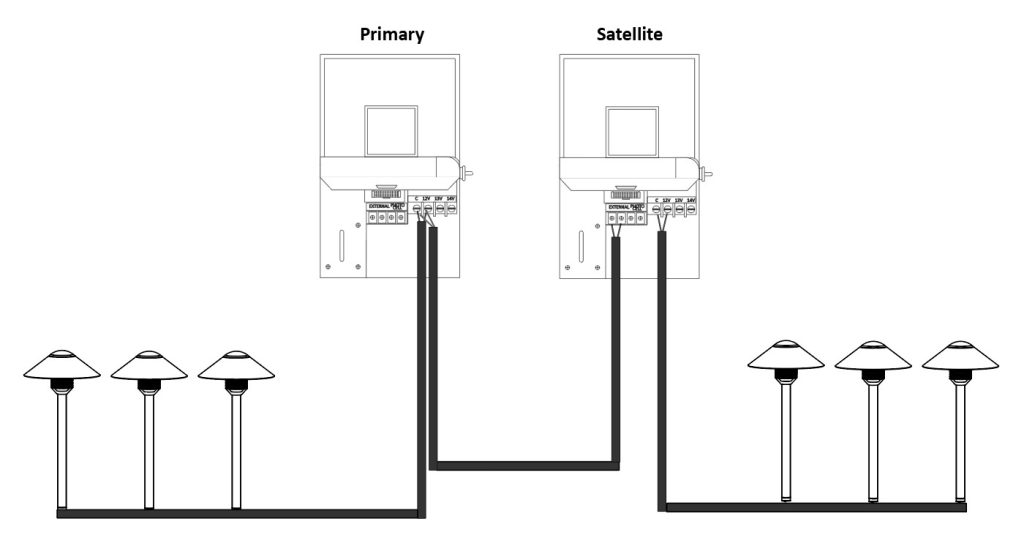
For larger landscapes necessitating multiple fixtures spread across vast spaces, employing multiple transformers can help circumvent voltage drop issues while allowing for more flexible lighting designs. Furthermore, understanding the role of voltage drop in determining placement helps optimize transformer efficiency. Keep in mind that long wire runs and high-wattage loads contribute significantly to voltage drops – so distribute the loads evenly across multiple wires or use thicker gauge wires for long distances.
Conclusion: Where Should a Landscape Lighting Transformer Be Placed?
Landscape lighting placement demands a blend of aesthetics with practicality coupled with respect for safety and regulations – achieving this delicate balance not only brightens our beloved spaces but also adds longevity to our equipment, thus saving costs in the long run. Armed with these insights and tips, you’re now ready to light up your outdoors with precision!
You may also be interested in the following posts: