
Master the Art of Hanging String Lights!
The Enchanting Glow of String Lights
The essence and charm of string lights cannot be overstated. These tiny luminous jewels are a simple addition to any space, but their impact is profound, creating an ambiance that blends gentle warmth with a sprinkling of whimsy. From adorning festive holiday decorations to adding depth and dimension to landscape lighting, string lights have become an integral part of our visual narrative.
Perhaps the most compelling aspect is their versatility; they can transform the ordinary into the extraordinary with just a few swags or twists. For instance, landscape string lights have the power to morph your garden into a magical nighttime wonderland, adding an ethereal quality that’s nothing short of mesmerizing.
A Touch of Twinkle: The Many Uses of String Lights
Over time, the use of string lights has transcended beyond just holiday décor. From brightening up patios and decks for relaxed outdoor soirees to casting an enchanting glow over romantic weddings or tranquil dinner parties – the uses are as diverse as one’s imagination. They can add sparkle to indoor spaces too; imagine them draped over mirrors or picture frames, enhancing your cozy reading nook or even serving as soft bedroom lighting.
Moreover, landscape lighting has seen the innovative application of string lights – a concept borrowed from professional lighting designers now easily replicated in homes. Whether it’s illuminating a backyard haven with landscape string lights woven through pergolas and trees or lining pathways for added safety – these twinkling strings bring an element of enchantment to the ordinary.
The Art and Science behind Hanging String Lights
Yet behind this dazzling spectacle lies practicality – an understanding that hanging these munificent orbs is not merely about aesthetics but also about safety. The placement pattern must be visually pleasing, yes, but also conscientiously designed to avoid any potential hazards.
Employing proper hanging methods is essential for both safety and aesthetics. It ensures the longevity of your lights, preventing them from being damaged by weather or tension. Moreover, it also guarantees that the lights do not pose a risk to people or property due to improper installation.
String Lights: A Balance between Beauty and Safety
Without a doubt, string lights add an exquisite touch to any setting. They have the unique ability to flatter any space unconditionally, whether it’s illuminating a quaint garden walkway with landscape string lights or creating soft indoor lighting accents.
As we unravel the art of hanging these delightful dewdrops of light effectively and safely in subsequent sections, remember – the objective is a balance between beauty and safety. After all, what good is a stunning display of light if it’s potentially hazardous?
And similarly, why bother hanging lights if they don’t enhance the beauty of your space? The harmony between aesthetics and safety forms the foundation for successful string light installation.
Choosing the Right String Lights: Lighting Options
In the realm of landscape lighting, string lights bring a distinctive allure that few can resist. However, their beauty may be transient if not chosen wisely. The first step to creating a mesmerizing space with string lights involves selecting the right type.
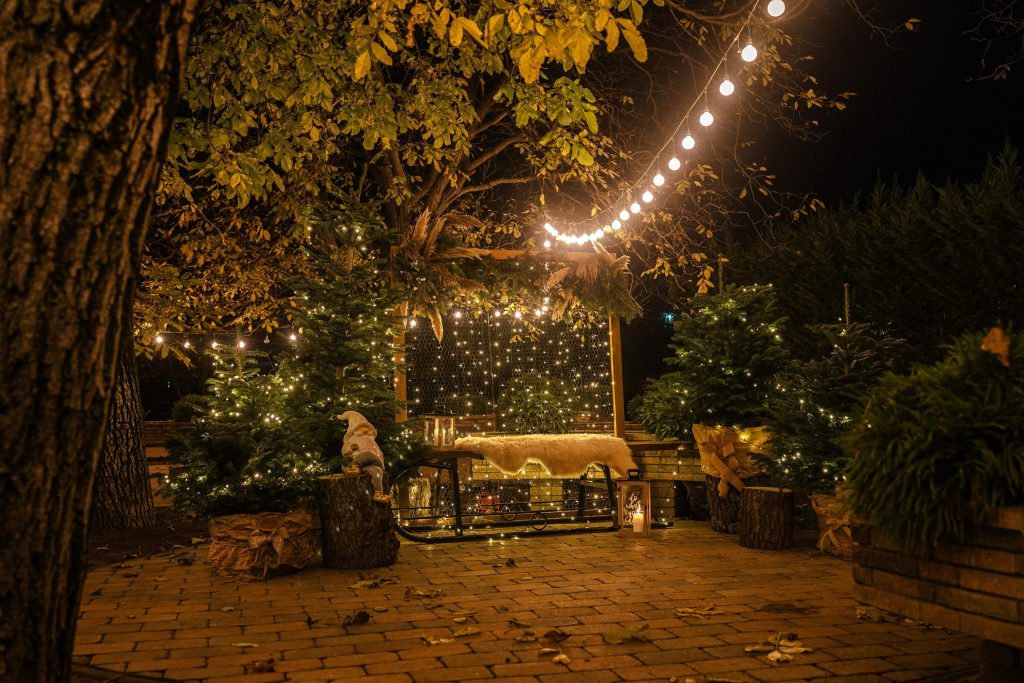
String lights come in various types – LED, incandescent, and solar-powered being amongst the most popular ones. Each kind has its unique characteristics that cater to different needs and preferences. The key to making an informed decision is understanding these nuances.
Different Types of String Lights: A Spectrum of Options
The LED variety has gained immense popularity in recent times because of its energy efficiency and durability. These tiny diodes emit intense light without consuming much electricity, making them an eco-friendly choice for landscape string lights. Furthermore, they have an outstanding lifespan, which ensures your space will remain lit for years without needing frequent replacements.
Incandescent lights lend a classical feel to your décor owing to their warm glow reminiscent of traditional filament bulbs. Their main advantage is their color quality – they produce a wider spectrum of colors compared to LEDs and give out an inviting glow, which makes environments more welcoming.
Solar-powered string lights are another intriguing option for those who wish to go green completely or do not have accessible power outlets outdoors. These types harness the power of sunlight during the daytime and provide lighting when it gets dark without any additional electricity costs.
Pros and Cons: Weighing the Options
LED string lights’ primary benefits include energy efficiency, longevity, versatility in design (due to small bulb size), and better safety profile since they emit less heat than other types. However, some people find their light too harsh or ‘cold’, especially when used indoors or for cozy settings. Moreover, their upfront costs are higher than incandescent bulbs.
Incandescent lights shine with their superior color rendering and warm glow. They are also more affordable upfront. However, they consume more energy than LED lights, which can lead to higher electricity bills over time. Furthermore, they have a shorter lifespan and emit more heat, which can be a safety concern if not managed properly.
Solar-powered string lights eliminate electricity costs altogether and are an environmentally friendly choice. They also offer flexibility as they can be placed anywhere with sufficient sunlight exposure. But their downside is that they depend entirely on sunlight for charging, making them unreliable during cloudy days or in shaded areas.
Environmental Considerations: Setting the Stage Right
The environment where you plan to hang your string lights is a crucial aspect to consider before making your choice. Landscape lighting requires fixtures that can withstand the rigors of outdoor conditions such as rain, snow, or intense Sun rays.
If you’re planning to use the string lights indoors for adding charm to your living room or jazzing up special events like parties or weddings, opting for LED or incandescent lights would work well due to their versatility in designs and color options.
If you’re looking to illuminate outdoor spaces like patios, gardens, or walkways with landscape string lights, then LEDs or solar-powered types would serve better because of their weather resistance and energy efficiency, respectively.
Choosing the right type of string light requires careful evaluation of your specific needs, including aesthetic preferences, intended purpose (task lighting vs decorative), budget constraints, and environmental conditions. By understanding these various aspects, you’ll be able to transform any space into a magical spectacle with the sheer power of light!
Planning Your Design: Enlightening Concepts
The first step in creating an entrancing environment with your landscape string lights is to determine the purpose they will serve. This could range from mood lighting and task lighting to decorative lighting. Mood lighting, often involving softer or colored lights, sets a particular ambiance – perhaps romantic, festive, or tranquil.
Task lighting is more functional, illuminating areas for safety or specific activities such as outdoor dining or reading. You may wish to combine these purposes: task lighting for a pathway that simultaneously provides a serene mood for evening strolls and symbolically leads guests towards your beautifully lit home.
Decorative landscape lighting is primarily aesthetic, designed to enhance and highlight certain features of your surroundings. Decorative lights can add fairytale charm to trees while offering soft lighting below. Understanding the purpose of your string lights will guide you in selecting the right types and arranging them most effectively.
Sketching Your Design: Masterpiece in Lighting
Once you have identified the purpose of your landscape string lights, it’s time to sketch out your design plan on paper. Visualizing your idea can help you identify potential challenges and solutions beforehand. You’ll be able to decide whether straight lines or curves would better suit your space and purpose.
Straight lines offer an elegant simplicity that works well in more modern and minimalist settings but also adds a touch of sophistication to any style. They provide clear guidance when used as task lighting along paths or against architectural structures like pergolas.
Curves lend a whimsical feel reminiscent of twinkling stars draped across the night sky – perfect for setting an enchanting mood or showcasing a centerpiece in your garden with decorative sparkle.
Single Layer vs Multiple Layers: Adding Depth with Light
In addition to deciding between straight lines or curves, you should consider whether to use a single layer or multiple layers of landscape string lights. A single layer can provide a breathtakingly simple glow, while multiple layers contribute to depth and drama, transforming your outdoor space into an ethereal wonderland after sunset.

While more complex, the luminous result of carefully layered lights can be worth the extra effort. Layered lighting not only adds visual interest but can manipulate perception of space – making your garden appear larger or more intimate depending on arrangement.
Highlighting Specific Features: The Artful Spotlight
Don’t forget about highlighting specific features in your space. This is where decorative landscape lighting really shines – no pun intended. You might want to emphasize a majestic tree, an intricate window design, or an artistic sculpture.
When it comes to trees, uplighting is a popular choice for showcasing their grandeur and providing mesmerizing shadows. For windows or architectural details, try using string lights as a frame to draw attention towards these elements.
For sculptures or other standout pieces in your garden, strategic lighting can transform them into nighttime focal points that steal the show. The beauty of landscape string lights lies in their versatility and potential for personal expression; they are brushes for painting with light upon the canvas of night.
Abiding by the Law of Prudence: Safety Precautions before Hanging String Lights
When it comes to installing landscape string lights or any form of landscape lighting, safety should be your foremost priority. Neglecting to attend to precautionary measures can result in unfortunate circumstances like accidents, fires, or damage to your property. By adhering strictly to recommended safety protocols, you do not only protect yourself and your property but also ensure the longevity of your string lights.
The Silent Saboteur: Checking for Damaged or Frayed Wires
The first step in ensuring a safe hanging of string lights is examining each set for damaged or frayed wires diligently. This preliminary inspection is crucial as damaged wires can pose a high risk of electrical shock and fire outbreaks.
It’s necessary not just when installing new lights but also when reusing older sets that have been stored away. Damaged wires might appear minor, with only slight discoloration, nicks, or cracks on the surface; however, they can lead to significant issues if left unchecked.
They expose the wiring within to harsh environmental conditions and increase the possibility of short circuits occurring. To mitigate such risks while enhancing your landscape lighting efforts with decorative string lights, make sure you check every wire meticulously before installation.
It’s always advisable to replace any string light set with visible wire damage immediately – no matter how insignificant it may seem. Doing this preventive measure regularly and conscientiously before hanging your landscape string lights ensures a safer environment for everyone.
Ensuring Fortress-Like Security: Electrical Outlets and Load-Bearing Capacity
In addition to checking for wire damages, another fundamental safety precaution is ensuring that all electrical outlets involved are safe and capable of handling loads exerted by your planned landscape lighting setup. Excessive load on an outlet could lead to circuit overloads that present significant fire hazards.
Before you commence the intricate process of creating an enchanting illumination with your string lights, take a moment to verify that your electrical outlets are in excellent shape, have the appropriate weather protection features (especially for outdoor landscape lighting), and are capable of handling the combined wattage of all your string lights without any trouble.
Landscape lighting can require plugging several strands into a single outlet, which might put stress on it if it’s not rated for such a load. Make sure you understand the specifications of your electrical outlets and calculate the total power demand of your string lights before installation.
Maintaining an Invisible Shield: Importance of Insulated Holders over Nails or Tacks
As you prepare to adorn your home with glowing landscape string lights, there is another safety aspect that requires careful consideration – the use of insulated holders instead of nails or tacks during installation.
Nails and tacks may seem sturdy and reliable at first glance; however, they can potentially puncture or damage light wires over time, causing dangerous electrical issues. On the other hand, insulated holders designed explicitly for hanging string lights provide better support while protecting wires from abrasion.

In addition to their protective qualities, these specialized clips also make hanging and adjusting your landscape lighting much simpler as compared to conventional methods. They allow easy removal for adjustments or replacements without risk of damaging either the light cables or surfaces where they are attached.
Investing in quality insulated holders will not only ensure that the splendorous glow from your carefully hung landscape string lights is unhindered but will also safeguard against potential accidents, thus creating a safe haven for you to enjoy these beautiful, radiating jewels in peace.
Essential Tools for Your Luminous Adventure
Before you can embark on your journey to create a radiant wonderland with your landscape string lights, it’s crucial to gather all the necessary apparatus. The first tool you’ll need is a sturdy ladder. Ensure that it’s in good condition and safe for use, and always remember to follow best safety practices when utilizing it.
The next essential item is a measuring tape. This simple tool will aid you in determining the distance between each light, ensuring an evenly spaced and symmetrical display. Keep in mind that this isn’t merely about aesthetics – maintaining appropriate distance helps reduce strain on the string lights, preserving their lifespan and functionality.
You’ll also require light clips or hooks designed specifically for hanging landscape lighting. These easy-to-use devices safely secure your string lights without damaging them or the surfaces they’re attached to. Avoid using nails or tacks, as these can potentially pierce the wire insulation and pose a fire risk.
The Luminous Path: Hanging Your String Lights
Measuring your space accurately is the initial step towards creating an enchanting ambiance with your string lights. By ascertaining the precise area that needs lighting, you can determine how many strings of lights are required.
Once measurements are taken care of, proceed with attaching clips or hooks at predetermined points along your chosen lighting path. Doing so ensures an organized and aesthetic setup while minimizing potential wire damage from stretching.
Now comes the most gratifying part: hanging your landscape string lights! Remember to begin from one end of the strand, slowly progressing towards the other without pulling too much on individual bulbs or sections of wiring.
Mastering Lightscaping: Advanced Techniques
If you wish to add an extra layer of sophistication to your landscape lighting design, consider varying colors among different sections; this creates captivating patterns that truly make your space shine.
Moreover, integrating dimmers or timers into your setup enhances control over the lighting effects. A dimmer allows you to adjust brightness levels to fit different moods, while a timer ensures that lights automatically turn on and off at predetermined times.
For those tech-savvy individuals, incorporating smart home systems with your string lights takes things a notch higher. Imagine being able to adjust the color, brightness, and timing of your landscape lighting right from your smartphone!
Preserving the Glow: Maintenance and Troubleshooting
With string lights, regular maintenance is as important as the initial setup. Always ensure that all bulbs are functioning correctly and replace those that aren’t promptly. If a problem arises that cannot be remedied by bulb replacement – like flickering or non-functioning sections – consult with an electrician rather than attempting complex repairs on your own.
Conclusion: What Is The Best Way to Hang String Lights?
Creating an ethereal environment with landscape string lights involves more than merely hanging bulbs carelessly. It requires careful planning, proper tools, adherence to safety guidelines, creativity in design elements such as patterns or colors, technical enhancements like sensors, timers, or smart home integrations, and consistent maintenance. And yet, despite these intricacies, remember – every radiant bulb adds up to create not just light but an experience, one that offers warmth on chilly nights and a soft twinkle that makes any ordinary space extraordinary!
You may also be interested in the following posts: