
An Enlightening Journey into Plant Growth
The Prismatic Lifeforce: The Importance of Light for Plant Growth
In the grand spectacle of life, light plays a lead role. Its significance is particularly pronounced in the realm of plant growth, where it acts as the very lifeblood driving crucial biological processes.
Light is more than mere brightness for plants; it is the radiant energy that fuels their existence. Photosynthetic organisms harvest this energy from light, using it to convert simple inorganic compounds into complex organic ones. This remarkable process forms the backbone of life on Earth, powering everything from tiny algae to towering trees. The absence or deficiency of light can considerably stifle plant growth, leading to stunted development or even death.
A closer examination reveals a fascinating interplay between different colors within the light spectrum and various stages of plant growth. Each color has its own unique role and influence, much like different instruments within an orchestra; they contribute individually yet harmoniously towards creating a symphony – in this case, a symphony of life.
The intensity, quality, and duration (photoperiod) of light influence myriad aspects such as germination rates, vegetative growth vigor, and flowering time, among others. Thus, understanding this intricate relationship between plants and lights can unleash our potential to cultivate them more effectively.
Photosynthesis: A Symphony Inspired by Light
Photosynthesis stands tall as perhaps one of nature’s most magnificent ballets – a cosmic dance where light imparts rhythm and vitality to every movement. This dance spins an intricate web connecting sunlit skies with thriving greenery below; each photon becomes part of a narrative that ultimately breathes life into our world.
At its core, photosynthesis engages in what could aptly be termed alchemy – turning sunlight into sustenance through an elegant sequence of chemical reactions within plants’ chloroplasts. When light strikes the chlorophyll molecules in the plant, it excites their electrons, triggering a cascade of events that leads to the production of ATP (adenosine triphosphate) and NADPH (nicotinamide adenine dinucleotide phosphate).
These are high-energy molecules that power the synthesis of glucose from carbon dioxide and water – a sweet end-product from sunlight’s radiance. The dance of photosynthesis is not a waltz with just any light. Plants are choosy dancers, preferring partners from specific sections of the electromagnetic spectrum.
The absorption spectrum of chlorophyll reveals this preference: it primarily absorbs blue-violet and red light while reflecting or transmitting green light, which accounts for the verdant hues we associate with plants. Understanding this preference leads us into a deeper exploration of how different colors within the spectrum affect plant growth and development.
It unveils crucial insights into optimizing growth conditions in environments where natural sunlight may not be freely available, such as indoor gardens or space stations, thereby highlighting our move towards an increasingly technologically-aided future in cultivation.
So let us embark on this journey together – a journey exploring how plants bask not just in light but in color and glean insights about nature’s most intricate ballet lighted by these radiant dancers – photons.
Understanding the Light Spectrum
The Intricacies of the Light Spectrum
As we delve into the world of plant growth and development, it is crucial to understand the light spectrum – a fundamental concept that intertwines both physics and botany. Essentially, the light spectrum is a spectrum that encompasses all possible wavelengths of electromagnetic radiation, ranging from gamma rays to radio waves.

However, for our current discourse, we are particularly interested in visible light – the segment of this spectrum that human eyes can see – which lies between ultraviolet (UV) and infrared (IR) radiation. Visible light is not merely a singular entity but rather a blend of multiple colors – each denoting a specific wavelength.
The interior structure of an atom – electrons revolving around their nucleus – determines these wavelengths when they jump between energy levels. This occurrence induces the emission or absorption of photons with distinct energies equivalent to various color wavelengths.
Colors Within the Light Spectrum: A Colorful Symphony
Within this spectacle called visible light resides an array of colors, each with its own unique wavelength. The seven core components are red, orange, yellow, green, blue, indigo, and violet – collectively remembered by many through the whimsical acronym ROYGBIV. Each color denotes a particular range on the wavelength scale; red has the longest wavelength and least energy, while violet sits at the opposite end with the shortest wavelength yet highest energy level.
Between these two resides other colors in decreasing order of wavelengths but increasing energy: orange follows red, then yellow, after which comes green, followed by blue, and finally indigo before reaching violet at the other end. This rainbow within our daily white light delineates its hidden depth going beyond its mere brightness or dimness – parameterized as intensity – to incorporate color as another pillar shaping its nature – a factor often overlooked yet pivotal when it comes to plant growth.
Perception and Utilization of Light Spectrum by Plants
Under the apparent stillness, plants lead an active life, incessantly interacting with their environment – air, soil, water, and light. In this intricate interplay, light holds a distinctive role dictating the plant’s photosynthesis process – the cornerstone of its survival and growth. Plants have evolved to perceive different colors in the visible light spectrum quite discerningly.
They employ specialized pigments – the most notable being chlorophyll A and B, which mainly absorb blue (around 430-450 nm) and red (around 640-680 nm) light while reflecting or transmitting green light – the reason behind their characteristic green appearance. This seemingly biased absorption is no accident of nature but a strategic adaptation for optimizing energy harnessing.
The absorbed blue and red lights are vital in driving photosynthesis – fueling electron transport chains or inducing stomata opening for gas exchange, respectively. On the other hand, green light – though less utilized – enhances plants’ depth penetration to reach lower leaves, ensuring that no leaf is left in total darkness – a testament to nature’s ingenuity.
Color Perception: A Complex Mechanism
Apart from chlorophylls, plants harbor other pigments known as accessory pigments – like xanthophylls or carotenoids – that absorb wavelengths not captured by chlorophyll, thereby complementing their absorption spectrum – all strategically designed towards maximizing energy intake.
Additionally, plants use certain photoreceptors, like phytochromes sensitive to red/far-red lights and cryptochromes receptive towards blue/UV-A lights, for processes beyond photosynthesis such as seed germination or circadian rhythm maintenance, revealing yet another layer of complexity in how they perceive and utilize different colors within the visible light spectrum.
Through this deeper understanding of the light spectrum and the plant’s interaction with it, we find ourselves better equipped to explore how altering these variables can potentially optimize plant growth – a topic we shall elaborate on in subsequent sections of this discussion.
The Quintessence of Blue Light in Plant Growth
Unveiling the Role of Blue Light in Plant Morphogenesis
Delving into the cosmic world of plants, one realizes that light is not merely a source for vision but a potent determinant in plant growth and development. Amongst the spectral colors, blue light merits a substantial mention for its crucial role in plant morphogenesis, spatial navigation, and various physiological processes. It acts as an environmental signal guiding process such as stem extension, leaf expansion, and stomatal opening – regulating evapotranspiration and gas exchange.
The complex process of photomorphogenesis, where plant growth patterns are influenced by the light spectrum, is significantly directed by blue light. It instigates phototropic responses (directional growth towards the light source), thereby ensuring optimal utilization of available light for photosynthesis.

Notably, it’s also involved in cryptochrome regulation, affecting circadian rhythms and flowering time. In addition to shaping overall morphological characteristics, blue light also assists plants to respond to environmental stressors such as drought or high salinity. By modulating stomatal density and aperture size, it helps plants optimize water use efficiency under dry conditions.
Indoor gardening has been particularly benefitted from this understanding about blue light’s influence on plant growth. Cultivators can now manipulate grow lights to reproduce these effects artificially, thus ensuring healthy crop yield regardless of natural lighting conditions. In essence, blue wavelength serves as a critical element interpreting environment cues for appropriate biological responses, thereby fostering vitality and virility among flora.
The Chlorophyll Connection: How Blue Light Orchestrates Photosynthesis
No discussion around plant life can be complete without mentioning photosynthesis – a fundamental biochemical mechanism through which plants convert sunlight into chemical energy, powering their growth cycle. The heart of this process lies in chlorophyll, the green pigment responsible for light absorption.
Intriguingly, chlorophyll exhibits a preferential absorption towards the blue light spectrum (430–450 nm) and the red light spectrum (640–680 nm). Under the influence of blue light, there is a significant uptick in chlorophyll production.
Blue photons are highly energetic and can invigorate photosynthetic activity by pumping electrons to higher energy states during photosystem reactions. This consequently leads to the synthesis of ATP molecules – the energy currency powering cellular activities.
Research has suggested that blue light also augments absorption efficiency, reducing the time for the electron transport chain during photosynthesis. This allows plants to produce more energy within short time spans.
Apart from regulating primary metabolism, blue light also modulates secondary metabolism pathways involved in the production of plant defensive compounds or antioxidants that contribute to plant health and survival. Therefore, it is safe to conclude that blue wavelength not only bolsters photosynthetic yield but also boosts overall plant health through robust metabolic regulation.
Empirical Evidence: Studies Elucidating Impact of Blue Light on Plant Species
Numerous studies have been conducted over years to measure blue light’s tangible effect on different types of plants, throwing fascinating insights into its profound influence on their growth pattern and productivity. Let’s take a quick tour through some pertinent examples.
A study published in the ‘Photosynthetica’ journal demonstrated how exposure to supplemental blue light was able to enhance leaf size among lettuce saplings, leading them towards accelerated maturity. It is suggested that this could be attributed to enhanced chloroplast development fostering improved rates of carbon fixation.
In another study focusing on orchid seed germination under various spectral lights, seedlings exhibited superior growth performance under blue wavelengths as compared to white or green light. The study concluded that such light spectrum manipulation might prove beneficial for mass propagation of commercially important plant species.
Blue light’s influence has also been observed on enhancing anthocyanin accumulation in red lettuce, a key antioxidant compound. This implies potential use of blue-light technology in not just improving crop yield but also its nutritional quality.
A report studying the variations in photosynthetic parameters under different monochromatic lights noted that blue light excelled in inducing higher rates of stomatal conductance, transpiration, and net photosynthesis among pepper leaves as compared to other wavelengths.
Empirical evidence firmly establishes the pivotal role the blue light spectrum holds within the realm of plant physiology and productivity across a wide array of species. Pioneering this understanding can lead us towards more sustainable and efficient agricultural practices both indoors and outdoors.
The Role of Red Light in Plant Growth: Revealing the Unsung Hero
Introduction to Red Light’s Influence on Plant Development
Red light, with wavelengths ranging from 630 to 740 nanometers, has a profound impact on plant development. Unlike blue light, which primarily influences vegetative growth, the role of red light is multifarious. In fact, it can be best described as the catalyst that propels plants into their mature stages.
Plants perceive red light through a specialized set of photoreceptors known as phytochromes. These unique proteins absorb red and far-red light, triggering a plethora of physiological responses that essentially define the plant’s life cycle. The influence of these photoreceptors under red light is remarkable.
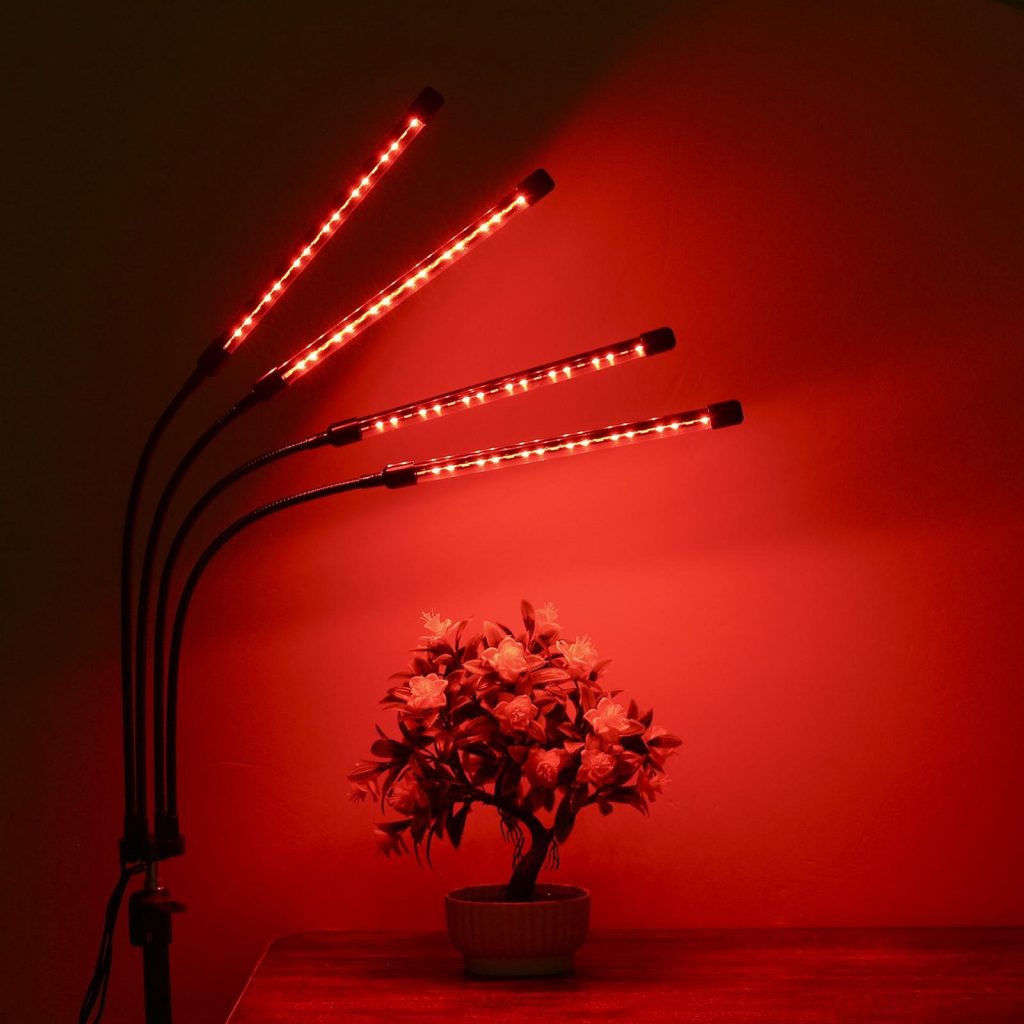
It promotes cell expansion and modulates flowering time based on day length, or photoperiodism – an integral part of plant biology that regulates their transition from vegetative growth to flowering. So potent is its influence that even under different other color lights, an absence or scarcity of red light could stunt normal plant development.
This indicates that while other colors may aid in vegetation or specific aspects such as chlorophyll production, it is ultimately the dominion of red light that brings about complete fruition. This botanical fascination with the color red may seem peculiar at first glance, but delving deeper into understanding its importance unveils mysteries hitherto unknown to many home gardeners and hobbyists alike.
A Scarlet Symphony: How Red Light Affects Flowering and Fruiting Stages
Diving deeper into how exactly red light takes charge during the flowering and fruiting stages paints a captivating story. As mentioned earlier, plants are capable of discerning day length; this ability allows them to ‘know’ when it’s time for reproduction based on the relative periods of light and darkness they experience.
In long-day plants, red light acts as the conductor of this floral symphony by extending day length. It stimulates the phytochrome system to activate genes responsible for flowering. In contrast, short-day plants require more hours of darkness (or less red light) to flower.
Additionally, this crimson glow further modulates fruit ripening. Red light irradiation has been linked with enhanced ripening in several fruits like tomatoes and strawberries, encouraging a faster transition from immature green fruits to their final ripe state.
Interestingly, experiments have also demonstrated that red LEDs can improve fruit quality by boosting parameters such as sugar content, color development, and even vitamin C concentration – elevating not just the visual appeal but also the nutritional value of the product. The role of red light is indeed pivotal during these life stages.
However, it is important to understand that effective plant growth requires a balance. A continuous exposure or overexposure to only one kind of wavelength could disrupt plant health, which lends credence to the importance of using a combination spectrum when growing plants, especially indoors.
Case Studies Highlighting Red-Light-Induced Changes in Certain Plant Species
Certain case studies provide insight into how different plant species respond uniquely under red lighting. One such study observed how lettuce grown under only red LEDs had a lower fresh weight and smaller leaf area compared with lettuce plants grown under white or mixed lights.
A similar study evaluated spinach growth under different colored lights; here too, spinach grown solely under red LED lights displayed less fresh weight than those cultivated under mixed colors, suggesting varied responses based on plant species and their inherent metabolic frameworks.
A fascinating series of experiments conducted on petunia cuttings revealed that supplementing daylight with low-intensity far-red light resulted in a marked increase in shoot length. This clearly demonstrated how manipulating the light spectrum can impact plant morphogenesis.
Another study on chrysanthemums and geraniums highlighted how red light, when compared to blue or white lights, significantly delayed flowering, indicating the potent effect this range of the spectrum has on photoperiodic responses. These investigations underscore the power wielded by red light in influencing plant growth.
With increasing adoption of artificial lighting for indoor and commercial cultivation, understanding these nuances becomes crucial to optimizing plant yield and quality. In essence, it is an invigorating exploration that celebrates not just the beauty of plants but also their inherent intelligence hidden within each photon they absorb.
The Unseen Players: Green and Yellow Light
An Examination of the Absorption of Green and Yellow Light by Plants
Plants, in their incredible biological complexity, interact with light in a manner that is both fascinating and intricate. The absorption rates of different color lights by plants are not uniform.
Contrasting to the popular belief that plants absorb all colors equally, green and yellow light are less absorbed by plants. This is due to the nature of chlorophyll, the molecule responsible for photosynthesis, which absorbs blue and red light more effectively, leaving green and yellow wavelengths largely unused.
The reason behind this photosynthetic preference is nestled within the structure of chlorophyll itself. Its molecular configuration allows it to optimally absorb light at wavelengths corresponding to blue (around 450 nm) and red (around 660 nm) regions of the spectrum.

Consequently, green-yellow light (approximately between 500 and 600 nm) falls into a range where chlorophyll absorption is minimal. This phenomenon is also visually evident since plant leaves predominantly appear green to our eyes.
The unabsorbed green light is reflected or transmitted back from the leaves, causing them to seem green. Yellow light follows a similar pattern due to its proximity in wavelength range with green light, making it another underutilized wavelength open for transmission or reflection.
However, before dismissing these less utilized spectrums as irrelevant for plant growth, one must understand that inefficient absorption does not equate non-essentiality in plant physiology. It’s worth noting that these ‘leftover’ wavelengths play unique roles in certain specific circumstances, which we shall now consider.
The Understated Contribution of Green and Yellow Light to Photosynthesis
Green-yellow radiation’s role in photosynthesis may not be as direct as those played by blue or red lights, but they contribute significantly nonetheless, particularly under high-intensity botanic environments. In dense plant canopies, where light has to travel through several layers of leaves before reaching the lower foliage, green-yellow lights play a crucial role.
When high-intensity sunlight penetrates the upper canopy layers, chlorophyll in these upper leaves absorbs most of the red and blue light. The unabsorbed green and yellow light then has a chance to penetrate further down into the plant canopy, where it can be absorbed by deeper tissues and utilized in photosynthesis. This increases overall leaf photosynthetic efficiency in such environments. Additionally, some studies suggest that a small proportion of chlorophyll does absorb light within the green-yellow region.
A specific type of chlorophyll known as chlorophyll B absorbs light slightly towards the green spectrum from chlorophyll A and can help with energy transfer to chlorophyll A molecules when they are low on energy. Despite their limited absorption rates, both green and yellow lights interact with other pigments present in plants, such as carotenoids.
Carotenoids absorb well within this range, but they typically present in much smaller quantities than chlorophyll. They protect plants from photo-oxidative damage under excess light conditions by dissipating extra energy as heat, thereby preventing potential harm to vital plant structures.
While not absorbed as readily or directly contributing substantially to photosynthesis under normal conditions, both green and yellow wavelengths have their unique place within plant physiology. Their roles become more pronounced under certain specific circumstances, making them subtle yet significant players in orchestrating an intricate symphony of life that we commonly refer to as ‘plant growth’.
The Impact of White (Full Spectrum) Light on Plants
Exploring the Multitude of Benefits: Full-Spectrum Lights in Indoor Gardening
White light, often referred to as full-spectrum light, contains all the colors of the rainbow, from red to violet. For indoor gardening enthusiasts or those seeking a comprehensive solution for their plant’s light requirements, full-spectrum lights can offer a significant advantage.
The true value of these lights lies in their ability to closely mimic natural sunlight. The sun provides all wavelengths necessary for plant growth, which is replicated by white lights. This inclusive spectrum allows plants under these conditions to undergo photosynthesis effectively while supporting various other metabolic activities.

One notable attribute of full-spectrum lighting is how it caters to diverse stages of a plant’s life cycle. As plants progress from the seedling stage through vegetative growth and finally to blossoming or fruiting, they require different wavelengths at each juncture. A balanced combination of blue and red lights within the full spectrum satisfies these changing needs seamlessly.
Another key benefit relates to the visual perception of your plants under this type of light. Full-spectrum lighting allows you to see your plants in their natural color and spot any potential issues, such as disease or nutrient deficiencies, accurately.
Many indoor gardeners have observed improved aesthetic appeal and overall well-being in several ornamental species grown under white lights. Succulents show off richer coloration; foliage plants grow denser leaves while certain flowering species bloom more prolifically.
Natural Sunlight vs Artificial Full-Spectrums Lights: Drawing Comparisons
Despite our technological advancements in artificial light sources, it remains undeniable that the sun serves as an unparalleled powerhouse for plant growth. Natural sunlight offers an optimal balance of intensity and color spectrum crucial for healthy plant development.
However, when moving our gardening endeavors indoors due to constraints such as space limitations, climate circumstances, or specific plant requirements, we must replicate this natural light source. This is where full-spectrum lights come into play.
First and foremost, it’s important to note that not all full-spectrum lights are created equal. While some offer a balanced distribution of wavelengths across the visible light spectrum akin to natural sunlight, others may lean more heavily towards certain colors. Therefore, gardeners must carefully select products based on their specific needs.

The intensity of artificial lights can be controlled much more precisely than sunlight. This provides indoor gardeners with a significant edge in creating an ideal growing environment tailored to the unique needs of their plants.
Although artificial lighting involves operational costs and requires initial investment for setup, it grants us the flexibility and control often lacking in outdoor gardening scenarios. We can manipulate photoperiods (lighting duration), intensity, and even spectral output in indoor environments with relative ease thanks to full-spectrum lighting solutions.
While natural sunlight remains the gold standard for plant growth due to its perfect blend of light intensity and spectrum distribution, artificial full-spectrum lights emerge as a formidable alternative for indoor gardening applications, providing comprehensive coverage across all key wavelengths vital for plant development.
The Role of Ultraviolet and Far-Red Lights in Plant Growth
Ultraviolet Light: A Double-Edged Sword
The domains of ultraviolet (UV) and far-red lights in the light spectrum are often considered ancillary in the context of plant growth. However, they influence several aspects of plant behavior and development.
UV light is known for its dual nature – both beneficial and harmful to plants. On the positive side, it can stimulate plant stress responses, resulting in enhanced production of secondary metabolites like flavonoids, which protect plants from herbivores and diseases.

Nonetheless, an overexposure to UV radiation can lead to deleterious consequences for plants. Excessive UV can damage plant tissues and impede growth by affecting photosynthetic efficiency. It has a particular penchant for damaging DNA molecules within cells, causing mutations that may harm the overall health and vitality of the plant.
Veils of the Far-Red Spectrum
Turning our attention further down on the spectrum lies far-red light (700–800 nm). This reddish segment plays its part subtly yet significantly by influencing photoperiodic responses – developmental reactions that depend upon day length, such as flowering initiation in numerous species.

Far-red light is primarily absorbed by a class of proteins called phytochromes that act as switches regulating various aspects of development based on red/far-red ratios. For instance, high far-red ratios can promote stem elongation or delay flowering time, while lower levels contribute to seed germination in certain species.
Unraveling the Effects of Ultraviolet and Far-Red Lights: Current Research
Scientific exploration into how different wavelengths affect plant growth has begun to shed more light on these less-understood segments of the spectrum. A study conducted by scientists at Wageningen University found that lettuce plants grown under LEDs with UV light supplementation produced more antioxidants, hinting at UV light’s potential application in cultivating nutritionally enhanced crops.
In the realm of far-red light, recent studies suggest a more nuanced role than previously thought. An investigation published in “Plant Physiology” concluded that strategic use of far-red radiation could manipulate plant architecture in commercial settings. Enhancing crop density without compromising yield or quality could be a potential game-changer for indoor farming.
A Future Bright with Research
There is enormous potential in exploring and exploiting these spectral regions to optimize plant growth and development. The complex interplay between different wavelengths and their effects on myriad physiological processes necessitates rigorous scientific exploration. As our understanding advances, these spectral regions might hold keys to innovative agricultural technologies and practices that can help us meet increasing food demand while mitigating the impact on our environment.
The Symbiotic Spectrum: Light Color Combinations for Optimal Plant Growth
Plant lighting is not exclusively about single hues; rather, it’s a symphony of multiple wavelengths working in harmony. This chromatic concert is crucial to effectively stimulating and nurturing plant growth in all stages. Understanding the art of combining different light colors can significantly enhance the productivity of your indoor garden.
In nature, plants are exposed to full-spectrum sunlight, which includes all colors of light from violet to red. Each color plays a unique role and complements others in the processes of photosynthesis, cellular development, and triggering various biological responses. Despite blue and red lights being paramount, other colors also contribute to plant health and vitality.

A powerful combination that many botanists swear by is the integration of blue and red lights. Both of these colors have shown promising results for promoting lush leafy growth and inducing flowering, respectively. The blend replicates key sunlight components that drive photosynthesis effectively without overwhelming or burning plants as intense direct sunlight can.
White or full-spectrum light also holds its ground by mimicking natural sunlight as closely as possible indoors. It couples the benefits derived from individual light colors into a holistic solution beneficial for all phases of plant life – germination, vegetative growth, flowering, and fruiting.
This doesn’t mean you should disregard other hues like green or far-red light entirely. These too play their part; green light penetrates leaves deeply, aiding lower leaf photosynthesis, while far-red influences seed germination and leaf expansion substantially, proving every color has its own song in this harmonious spectrum melody.
Conclusion: What Color Light is Best for Plant Growth?
To nurture your plants optimally entails more than just watering them regularly; understanding their unique spectral needs forms an integral part towards successful indoor gardening. Although science has made significant strides in comprehending plant-light interactions, there is still much to explore and understand.
The value of light in plant growth is undisputedly immense. As we continue delving into the fascinating world of botany, we uncover new possibilities that will allow us to grow our plants healthier and better. It’s an exciting time to be a part of this verdant voyage as science sheds light on horticulture’s future.
In the end, let us remember that the sun doesn’t shine for a few trees and flowers, but for the wide world’s joy. The same should apply for indoor lighting solutions – they should not just benefit a few plants but create flourishing ecosystems under our very own roofs.
You may also be interested in the following posts: