
Landscape Lighting Business: A Profitable Venture
Introduction to the Landscape Lighting Industry
As the sun sets and darkness cloaks the world, a myriad of lights brighten our surroundings, casting enchanting shadows and highlighting architectural wonders. Among these, landscape lighting holds a special place.
It enhances outdoor environments like gardens, patios, and walkways by providing an aesthetic appeal along with safety and security. Over recent years, the business of landscape lighting has experienced significant growth, undeniably establishing its integral role in today’s market.
A Nightscaper’s Canvas: The Landscape Lighting Business
At its core, the landscape lighting business revolves around designing, installing, and maintaining outdoor lighting systems for residential and commercial properties. These systems aim to transform ordinary spaces into well-lit areas that simultaneously secure properties from intruders and provide aesthetically pleasing environments for evening relaxation or entertainment.
Much like how an artist uses different shades of color to bring life to their canvas, a landscape lighting professional employs various types of lights to create unique mood settings. Fundamentally though, it transcends mere installation processes – this occupation demands creativity along with technical expertise.
The challenge lies not only in understanding electrical systems but also in having a keen eye for design – discerning where light should fall or where shadows should dance to best accentuate the property’s features. Furthermore, every project is intrinsically different as each client’s taste varies – some prefer subtle warm glows that provide elegance while others seek dramatic statement pieces that command attention.
Henceforth emerges the necessity for custom-made solutions tailored according to individual preferences. Then, being engaged in the landscape lighting business can be likened to being a nightscaper – painting nocturnal landscapes with light through an intricate blend of artistic vision coupled with technical prowess.
The Luminous Relevance: Landscape Lighting in Today’s Market
The importance of landscape lighting cannot be understated in today’s market. Primarily, it enhances a property’s visual appeal by highlighting its best features. It becomes the visual extension of a property under the cloak of darkness – the difference between an inviting, comfortable estate and an unwelcoming, disconnected one.
Moreover, landscape lights provide a functional benefit by improving safety and security around premises. They illuminate dark corners and pathways, reducing hazards, deterring trespassers, and increasing overall visibility. This aspect further fuels their demand as safety remains an ever-present concern for homeowners and businesses alike.
From a broader perspective, the rise in real estate development and a growing inclination towards outdoor living spaces have led to an increased need for landscape lighting. As such spaces become focal points for relaxation or hosting events, ornamental lighting systems have emerged as key components in complementing their utility.
Additionally, trends indicate that consumers are increasingly willing to invest in high-quality outdoor aesthetics, making this business more relevant than ever before. This is reflected particularly well in situations where potential buyers or renters perceive well-lit landscapes as a value addition to the property.
All these factors combined highlight why landscape lighting holds great significance in today’s market – drawing attention not just to its commercial potential but also its influence on modern lifestyle trends.
Understanding Landscape Lighting
The Definition and Scope of Landscape Lighting
Landscape lighting pertains to the use of outdoor illumination for both public landscapes and private gardens. Its primary purposes range from enhancing nighttime aesthetics, improving safety and security, to increasing accessibility. It’s an art and a science, with careful consideration given to fixtures’ placement, intensity, color temperature, and directionality.

In terms of scope, landscape lighting encompasses residential properties – adding beauty to homes after dusk – and commercial spaces – highlighting architectural details on buildings or illuminating pathways in parks. Besides aesthetic enhancement and functional lighting, it also plays a crucial role in creating a comfortable ambiance for outdoor events or dining.
Different Types of Landscape Lighting
To fulfill various functions and achieve different effects in illuminating landscapes, various types of lighting are used. Each type has its own unique features designed for specific applications.
Path Lights
Path lights are quintessential components of landscape lighting. Positioned along walkways, driveways, or flower beds, these fixtures provide soft yet effective lighting that guides steps after sunset. They not only ensure safety by illuminating potential tripping hazards but also add an element of charm to the landscape by highlighting ground-level features.
Spotlights (Uplights & Downlights)
Spotlights cast a focused beam of light, which can be used as uplights or downlights depending on their placement. As uplights, they are positioned at ground level and projected upwards to highlight vertical features like trees or statues. Conversely, as downlights, they are mounted high above ground level, like on rooftops or tree branches aimed downwards, simulating the natural moonlight effect.
Floodlights
Floodlights emit powerful wide-beam light generally used for security purposes due to their ability to illuminate extensive areas brightly, such as yards or parking lots. They can also be used to showcase wide facades of buildings or large trees.
Well Lights
Also known as in-ground lights, well lights are installed below ground level. Their design allows them to blend seamlessly with the landscape during daylight hours, thus maintaining the integrity of the landscape design. At night, these fixtures provide dramatic uplighting effects on walls, trees, or architectural features.
Deck & Step Lights
Deck or step lights are installed directly into outdoor stairs or deck posts. These low-profile fixtures brighten steps and edges for safe movement around decks and patios while subtly enhancing outdoor living spaces with warming glows.
The Market for Landscape Lighting Business: An Expansive Overview
As we delve into the crux of the landscape lighting business, it is critical to understand its market dynamics. The current market size for landscape lighting is expansive and continues to flourish, owing to the increasing awareness about outdoor aesthetics and safety. According to industry reports, the global outdoor lighting market size was valued at USD 10.6 billion in 2020 and is expected to expand at a compound annual growth rate (CAGR) of 5.5% from 2021 to 2027.
Predominantly steering this multi-billion dollar industry are key players who have established their mark with exceptional products and services in landscape lighting. Renowned names such as Signify (Philips), Kichler, Eaton, Hubbell, and Coastal Source are some significant contributors driving innovations in this sector.
Unsurprisingly, the appeal of landscape lighting transcends beyond commercial projects, finding value among residential property owners who wish to enhance their homes’ visual appeal or secure their premises better. Hence, it can be concluded that the target audience for a landscape lighting business comprises homeowners, commercial property owners and managers, architects, and designers.
Why Landscape Lighting is a Profitable Business Venture: The Tangible Advantages
Several factors contribute towards making a venture profitable; in the case of landscape lighting businesses, a few stand out distinctly:
Firstly, the rising trend of outdoor living spaces has significantly contributed towards boosting demand for landscaping services, including but not limited to garden design planning and implementation where ambient or accent lighting plays a pivotal role.
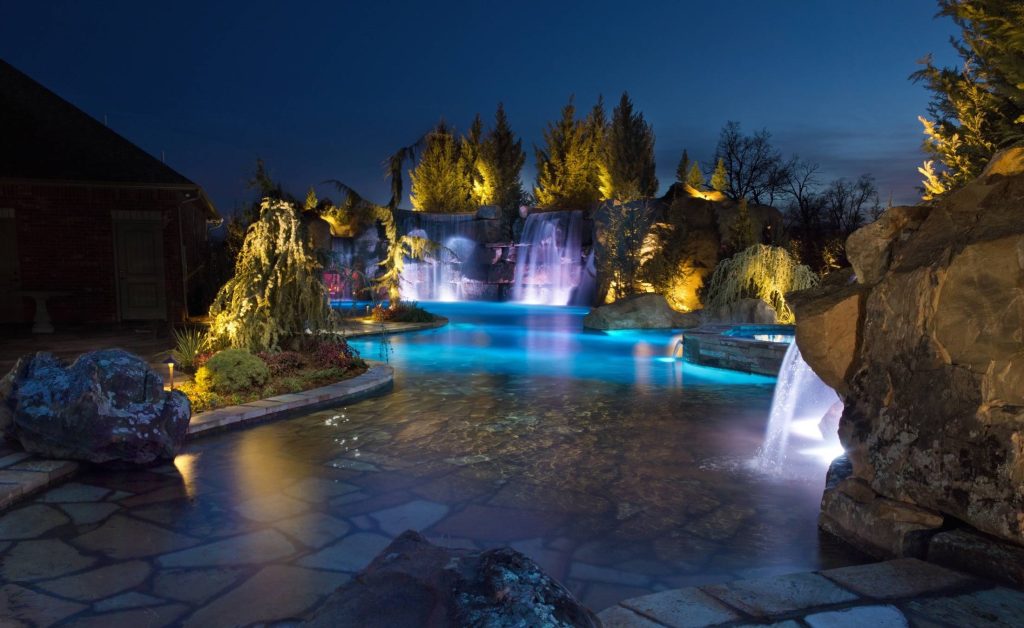
Secondly, the increased focus on safety and security measures has heightened homeowners’ demand for proper exterior lighting – providing visibility during darker hours of day while deterring potential intruders simultaneously.
Thirdly, a beautifully lit house with tasteful exterior lighting enhances property aesthetics exponentially; this not only makes the house look appealing but also attributes to increasing the property’s overall value, a factor highly considered in the growing real estate sector.
Starting a Landscape Lighting Business: Steps and Requirements
Embarking on the journey of starting a landscape lighting business requires careful planning and execution. The initial step involves developing a robust business plan that encapsulates your service offerings, marketing strategy, financial projections, and growth plan.
Obtaining necessary licenses and permits is another critical step that ensures your business operates within legal frameworks. This process may vary based on local regulations and requirements but remains an essential criterion for all businesses. Then comes the operational part of setting up the business: purchasing top-notch equipment and supplies to deliver quality services.
At this stage, identifying reliable suppliers or manufacturers for lights and other necessary materials is vital for smooth functioning. Hiring skilled professionals adept at installing various types of landscape lighting, ranging from path lights to deck/step lights, while ensuring safety protocols are followed is an absolute necessity in providing superior service offerings.
Challenges in the Landscape Lighting Business: Navigating Through Obstacles
Like any other business venture, operating a landscape lighting service isn’t devoid of challenges. Seasonal demand fluctuations can significantly impact revenue, as outdoor work might be affected during harsh weather conditions, leading to decreased demand during those periods.
The high competition in the market can also pose significant threats to new entrants who must strive to stand out with unique offerings or exceptional service quality. Additionally, keeping abreast of technological advancements such as LED lights or solar-powered options could be daunting yet fundamental for staying competitive in this industry.
Strategies for Success in the Landscape Lighting Business: Building Blocks of Triumph
Overcoming these obstacles calls for effective strategies that pave the way for success. Building a strong portfolio showcasing your best work can attract potential clients, while networking with other industry professionals like architects or garden designers could open additional business opportunities.
Offering exceptional customer service is another key strategy; this not only leaves customers satisfied but also increases chances of referrals, aiding in business expansion. Additionally, staying updated with the latest trends and technologies ensures your business remains relevant and competitive.
Case Study: Successful Landscape Lighting Businesses: Lessons of Victory
Analyzing successful businesses can provide practical insights for aspiring entrepreneurs. Notable landscape lighting businesses like Outdoor Lighting Perspectives or NightScenes have carved a niche for themselves through innovative product offerings, excellent customer service, and strong marketing strategies.
Future Trends in the Landscape Lighting Industry: Towards a Brighter Tomorrow
As technology continues to evolve, the future of landscape lighting holds exciting possibilities. Particularly, smart LED lights that are energy-efficient and operable through smartphones or voice commands are becoming increasingly popular among consumers.
Conclusion: Is Landscape Lighting a Good Business?
In essence, starting a landscape lighting business might seem challenging, but with a concrete plan paired with dedication and resilience, it could prove to be an extremely profitable venture. As we move towards an era where aesthetics and safety become equally important as functionality itself, the demand for landscape lighting services will undoubtedly soar. With continuous evolution in technology facilitating better products and services, the future indeed looks bright for those venturing into this luminary domain.
You may also be interested in the following posts: