
Electricity Usage Disclosure: Do Landscape Lights Use a Lot?
The Luminary Art: A Brief Overview of Landscape Lighting
Landscape lighting, an artful blend of science and aesthetics, is a crucial element of outdoor design. It is the strategic placement of lights to enhance and highlight aspects of your home’s exterior and landscape. From a functional perspective, these lights offer safety by illuminating dark pathways, steps, or hazards that could otherwise be overlooked. Aesthetically, they accentuate architectural features and draw attention to carefully nurtured gardens or striking trees.
Even beyond these pragmatic and aesthetic benefits, landscape lighting extends the time one can spend outdoors after sunset and allows for nighttime activities like alfresco dinners or backyard parties, thus enhancing overall enjoyment of an outdoor space. These well-planned lights can also increase property value by improving visual appeal; a brightly lit facade is welcoming and adds an extra layer of security deterring potential intruders.
Enlightening Spaces: The Importance and Benefits of Landscape Lighting
The importance of landscape lighting cannot be understated; it’s about more than just lighting – it’s about transformation. It brings life to the night – transforming dark spaces into enticing areas where people want to gather. The right kind of landscape lighting creates a warm ambiance that makes your home feel welcoming even on the darkest nights.
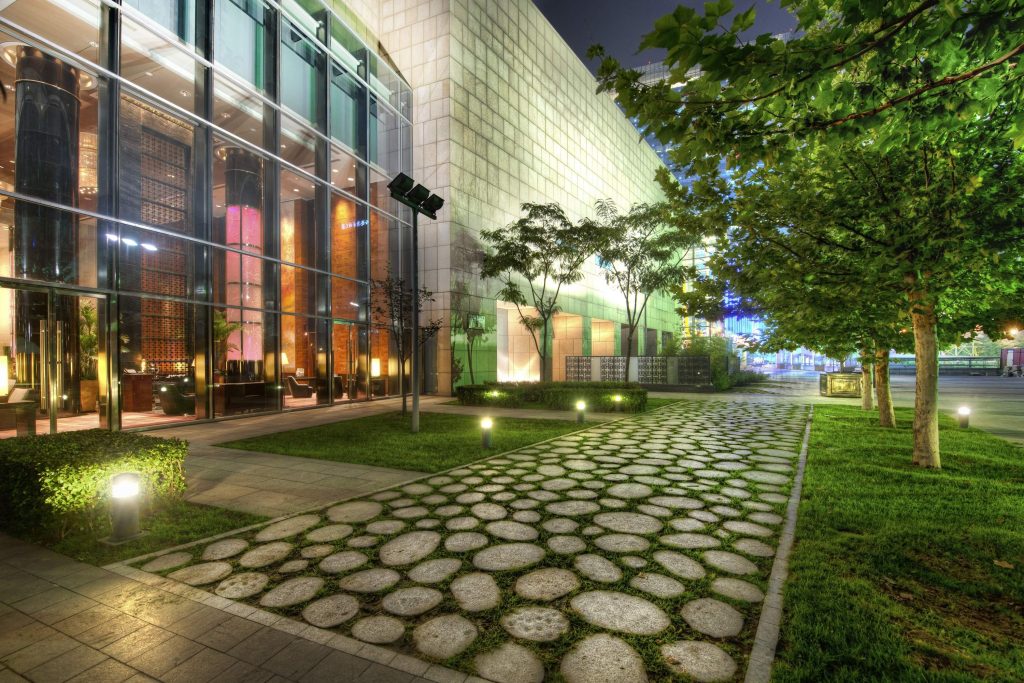
It generates depth in your yard that during the day is flattened by natural sunlight. By highlighting certain plants or features with light while letting others fade into shadow, you can create beautiful contrasts not visible during daytime hours that captivate viewers’ senses, creating a profound visual impact.
But there’s more at stake than pure aesthetics – safety should also be taken into consideration when planning your outdoor lighting scheme. Well-lit exteriors can prevent accidental falls by guests navigating unfamiliar terrain in dimly lit conditions or deter potential trespassers who might perceive darkness as an invitation to invade personal spaces unnoticed.
Common Misconceptions about Energy Consumption in Landscape Lighting
Despite the myriad of benefits it offers, landscape lighting has often been viewed with skepticism, primarily due to misconceptions about its energy consumption. One common myth is that such outdoor lighting invariably leads to exorbitant electricity bills – a notion that makes many homeowners hesitant to embrace this beneficial feature. In reality, the amount of energy consumed by landscape lights largely depends upon three variables: the type of bulbs used (LED, halogen, or incandescent), the wattage of these bulbs, and how long they are left turned on.
The misconception arises when one equates brightness with high energy consumption; however, highly efficient LED bulbs can generate just as much light or lumens as their high-consumption counterparts but at a fraction of the energy use. It’s also worth noting that not all lights need to be left on throughout the night.
Utilization of timers and sensors can significantly reduce power consumption while still providing ample illumination when required, reducing both environmental impact and operating costs. Taking these factors into account can help bust prevalent myths regarding landscape lighting’s energy usage and open up a world of aesthetic and functional possibilities for homeowners far and wide.
Understanding Electricity Consumption in Landscape Lights
Demystifying the Factors Affecting Electricity Usage
The essence of understanding electricity consumption in landscape lighting revolves around several crucial factors. One must delve into this labyrinth of electricity usage by dissecting its core constituents meticulously, starting with the type of light bulb used.
The Significance of Light Bulb Types: LED, Halogen, Incandescent
Different types of light bulbs, namely LED (light-emitting diodes), halogen, and incandescent, vastly influence how much energy a landscape light consumes. LEDs are typically renowned for their energy efficiency, as they emit a substantial amount of light without consuming excessive power. Their efficient design minimizes waste heat, which results in lower energy use compared to other lighting technology.
Halogen lights function by passing electricity through a tungsten filament surrounded by halogen gas. While they offer bright illumination and accurate color rendering, they fall short when it comes to energy efficiency. This deficiency is primarily due to the significant amount of heat these bulbs generate.
Incandescent lights are arguably the least energy-efficient among the trio. These traditional bulbs work by heating a wire filament until it’s white-hot and emits light. Unfortunately, this process loses approximately 90% of its energy as heat rather than visible light.
The Role of Wattage in Landscape Lighting Energy Consumption
The wattage or power rating directly corresponds with how much electricity any given landscape lamp will utilize over time. A high-wattage bulb consumes more power than its lower-wattage counterpart does within the same duration – simply put, more watts translate to higher electricity consumption and vice versa. However, one should be cautious not to equate wattage with brightness necessarily, as this would be misleading – especially when comparing different types of bulbs, such as LEDs and incandescents, where an LED bulb may deliver more lumens while consuming less wattage.
Duration of Operation: A Vital Player in Energy Consumption
The duration for which the landscape lights remain illuminated also plays an integral role in determining their overall energy consumption. Naturally, keeping the lights on for extended periods escalates their energy use.
For instance, a light left on constantly for 24 hours will invariably use more electricity than one that’s only switched on for a couple of hours each night. In this respect, efficiency can be boosted significantly by utilizing timers or sensors to ensure that landscape lights are only active when necessary, thereby conserving energy and reducing electricity consumption over time.
Interpreting Electricity Measurement: Watts versus Lumens
In dissecting electricity usage in lighting, it’s essential to understand the difference between Watts and Lumens – two fundamental measurements often misunderstood or used interchangeably. Watts measure power consumption. When referring to light bulbs, it indicates how much electric power the bulb uses per hour.
Alternatively, lumens measure actual light output or brightness regardless of how much power is consumed to produce it. Henceforth, a bulb with a higher lumen rating produces more light even if its wattage is relatively low – a typical characteristic found in LED lights.
Understanding these two distinct concepts helps make sense of energy efficiency among different types of bulbs used in landscape lighting. It aids in debunking myths surrounding bright illumination being synonymous with high electricity usage.
Types of Landscape Lights and Their Energy Consumption
A Radiant Rundown: LED Landscape Lights
LEDs, or light-emitting diodes, have rapidly become an industry standard for outdoor lighting solutions owing to their remarkable energy efficiency. They are a class of solid-state devices that produce light through the movement of electrons in a semiconductor. This technology enables them to convert nearly 95% of the electricity they consume into light, wasting minimal energy as heat.

This exceptional energy efficiency is accompanied by an impressively long lifespan. On average, LED bulbs can last up to 50,000 hours before they need replacing – a stark contrast to other types of bulbs. Therefore, despite their slightly higher upfront cost compared to traditional options like incandescent or halogen lights, LEDs prove to be more cost-effective over time due to lower replacement costs and significant savings on electricity bills.
Regarding consumption specifics, most residential LED landscape lights use only about 4–30 watts of electricity. To put this into perspective, imagine having ten landscape lights in your garden, each using a 5-watt LED bulb; collectively, they would only consume as much power as a single 50-watt halogen bulb.
The Bright and the Dim: Halogen Landscape Lights
Halogen lamps are essentially an enhanced version of traditional incandescent bulbs. The addition of halogen gas inside these bulbs increases both their brightness and heat output, which can lead to greater energy consumption. Typically, a halogen bulb converts just about 10%-20% of its consumed power into light; the bulk remainder is lost as heat.
Despite their relatively high energy usage – normally between 20 and 50 watts for outdoor applications – halogens are lauded for producing bright white light that accurately represents true colors (high color rendering index). However, due to changes in environmental policy and advancements in technology, halogen lamps are increasingly becoming a less popular choice.
While they may be cheaper upfront, their lower lifespan (2000-4000 hours) and higher energy consumption make them a costly option in the long run. Their higher heat production also brings safety concerns, especially when installed near plants or flammable materials.
A Timeless Classic: Incandescent Landscape Lights
Incandescent bulbs, the quintessential image of a light bulb for many, are perhaps the least energy efficient of all. These bulbs produce light by heating a wire filament to such high temperatures that it begins to glow. As might be expected from this process, it is considerably inefficient – around 90% of the power an incandescent bulb uses is emitted as heat rather than visible light. The watts used by an incandescent bulb for landscape lighting typically range from 20 to 100 watts.
However, their lumen output (brightness) is significantly lower than LEDs or halogen lights consuming similar amounts of power. Though they may have a charming nostalgic appeal and low initial cost, their inefficiency and comparatively short lifespan – averaging around 1,000 hours – make incandescent lights an unsustainable choice for regular use in landscape lighting today.
Solar-Powered Landscape Lighting: An Eco-Friendly Alternative
The Luminous Prospects of Solar Energy
In an era where sustainability is not only encouraged but also essential, solar-powered landscape lighting emerges as a viable and eco-friendly alternative. These lights work by harnessing the sun’s energy during the day through photovoltaic cells, subsequently storing this power in batteries to be used after dusk. One of the primary benefits of solar landscape lights is their independence from the traditional power grid, reducing our reliance on fossil fuels and contributing to a more sustainable future.
The environmental advantages of solar landscape lighting are numerous. For one, they produce no greenhouse gases or other harmful emissions. Each light is a self-sustaining unit that generates its own clean energy – an asset in mitigating climate change. Furthermore, since they consume no grid electricity, they contribute to reducing overall energy demands and alleviating pressure on power plants.
Comparative Analysis: Solar vs Traditional Electric Landscape Lights
When comparing solar and traditional electric landscape lights in terms of energy usage, it becomes clear why many environmentally conscious individuals opt for the former. The first point of comparison naturally falls on electricity consumption – solar-powered lights are consummately more efficient because they use renewable energy harnessed directly from the sun.
Moreover, unlike traditional lighting systems that require complex wiring setups and can lead to safety hazards if improperly installed or maintained, solar lights are easy to install and carry virtually no risk of electrical accidents. They offer versatility in placement options as they do not need proximity to an electrical source. This makes them ideal for lighting remote areas in your garden or yard.
Analyzing cost-effectiveness further clarifies why many opt for solar-powered solutions for their landscapes. While initial costs may be higher than some electric alternatives – given components like photovoltaic cells and rechargeable batteries – over time, solar lights prove to be more economical. With no electricity bills to contend with and often lower maintenance costs, the financial benefits become clear over the long term.
When energy usage is considered, solar-powered landscape lights unequivocally outshine their traditional electric counterparts. They offer an eco-friendly alternative that can beautify your outdoors while minimizing environmental impact – a shining example of how technology can illuminate our lives in harmony with nature.
Techniques to Reduce Electricity Usage in Landscape Lighting
Embracing Timers and Sensors for Efficient Use
The integration of timers and sensors into landscape lighting systems is one ingenious way of significantly reducing their electricity usage. By automating the process, lights are turned on only when needed, cutting down on unnecessary power consumption. For instance, timers can be programmed to activate the lights at dusk and deactivate them at dawn, ensuring they are not left running during daylight hours.
Sensors take this concept a step further by adding a dynamic element to the operation. They use technologies such as infrared and ultrasonic waves to detect movement or presence within their vicinity. Consequently, landscape lights with sensors are activated only when there is someone in the area or perhaps when a car pulls up into your driveway. This not only adds an element of security but also keeps energy usage in check by ensuring that no energy is wasted lighting empty spaces.
With advancements in technology, these devices have become more reliable and affordable; thus, they should be considered as essential components in every landscape lighting system. Beyond efficiency, timers and sensors also contribute towards prolonging the lifespan of your bulbs.
Less time spent burning equates to less wear and tear on your bulbs, which could save you replacement costs in addition to your electricity bills. In essence, embracing timers and sensors can result in a dual victory: achieving an aesthetically pleasing lit landscape while conserving energy and saving money over time.
The Art of Proper Placement for Maximum Effectiveness
The seemingly innocuous act of correctly positioning your landscape lights plays an instrumental role in determining their electricity consumption. When installed strategically, fewer fixtures are required to create pleasing lighting effects, which translates into lower power usage overall. For example, placing fixtures close enough to paths, driveways, and entryways ensures that light is concentrated where it’s most needed. This eliminates the necessity for high-wattage bulbs, as the light doesn’t have to be spread over a wide area.
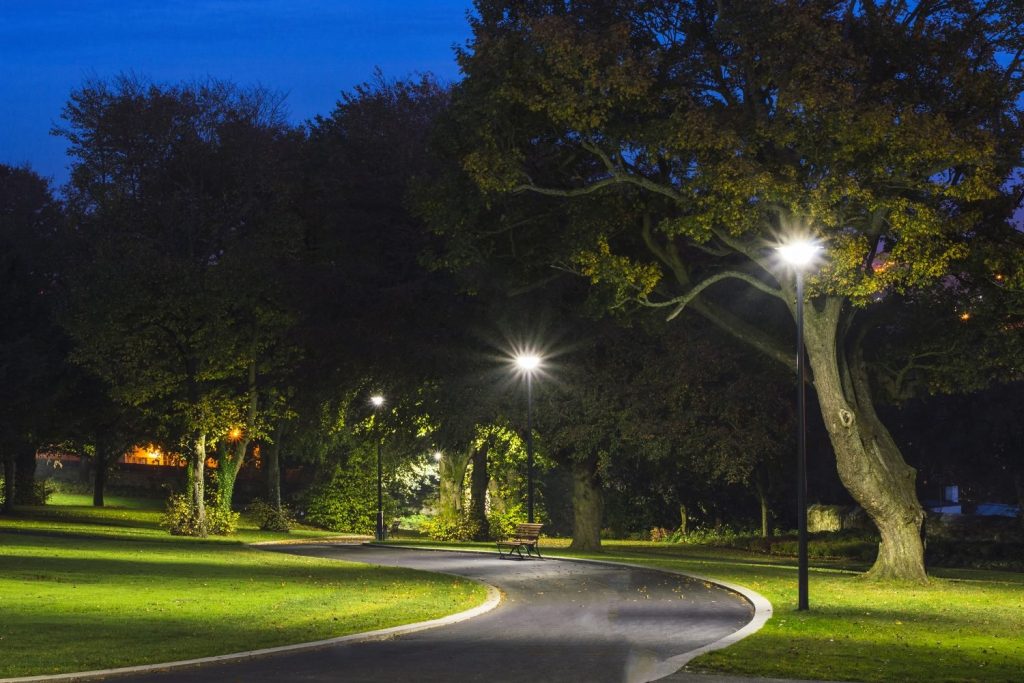
Another technique is using downlighting or moonlighting by installing fixtures in trees or on structures to shine down on a larger area. This creates an enchanting atmosphere with fewer lights and avoids over-lighting, which can result in wasted energy. Moreover, using reflective surfaces strategically can also amplify your lighting without additional energy consumption.
Light-colored materials and objects can reflect light effectively, making the surrounding space seem brighter with just a few fixtures. Thoughtful placement of landscape lights not only enhances their aesthetics but also substantially aids in power conservation and should be an integral part of any landscape lighting design plan.
The Significance of Regular Maintenance for Optimal Performance
Maintaining your landscape lights regularly may seem like an avoidable chore, but its significance cannot be overstated when trying to achieve optimal performance and reduced electricity use. Over time, dust, dirt, and even small insects or debris can accumulate inside the fixtures, blocking part of the light output. Cleaning these fixtures periodically will ensure they are functioning at their best capacity, thereby reducing the need for adding extra fixtures due to decreased brightness from dirty ones.
Beyond cleaning fixture lenses, maintenance should also include checking for frayed wires or loose connections that could pose safety hazards as well as consume more power due to inefficiency. Another aspect of key importance is replacing burned-out bulbs promptly so that others in the system aren’t overcompensating by consuming more power.
LEDs typically have long lifespans, but once they start dimming, it’s crucial to replace them immediately since a dimming LED is an indication that its efficiency is dropping and it’s consuming energy without producing the necessary light output. In summation, regular maintenance of your landscape lights ensures their optimum performance, safety, and longevity while simultaneously conserving power and reducing your energy bills over time.
Conclusion: Do Landscape Lights Really Use a Lot of Electricity?
A Comprehensive Summary of Landscape Lighting Energy Consumption
In our quest to address the myth surrounding energy consumption by landscape lights, we have delved deep into the intricacies and nuances of bulbs, wattage, and duration. Our comprehensive exploration elucidates that not all landscape lights are created equal when it comes to electricity usage. Predominantly, their energy consumption hinges on three key elements: the type of light bulb used (LED, halogen, or incandescent), its wattage, and how long they are left switched on.
Indeed, LED landscape lights emerge as the indisputable champion in terms of energy efficiency. They use significantly less electricity than their halogen and incandescent counterparts while providing equivalent, if not superior, luminosity. Their average electricity consumption is impressively low, making them a cost-effective choice in the long run.
Halogen bulbs endure as a viable option too, despite consuming more power than LEDs. They strike a balance between cost and brightness but their higher wattage justifies their increased energy usage when compared to LEDs. Last but not least, incandescent lights, though widely considered vintage due to their warm glow, tend to consume much more electricity owing to their inherently high wattages.
Solar Power: A Bright Outlook for Landscape Lighting
We also uplifted our gaze towards the sky as we explored solar-powered landscape lighting options. These eco-friendly alternatives harness the abundant solar power during daylight hours and deliver lighting even after dusk without consuming any additional electrical power from your home grid. This makes them an exceptional solution for homeowners seeking to create an aesthetically pleasing outdoor environment without escalating utility costs.
Efficient Techniques for Optimizing Landscape Lighting Usage
In addition, we shared efficacious strategies that can help further reduce your landscape lighting’s electrical consumption. Smart applications of timers and sensors, strategic placement for maximal effectiveness, and regular maintenance are all tools in your arsenal to ensure optimal, energy-efficient performance from your landscape lights.
The Outcome: Enlightening Facts Over Shadowy Myths
So, do landscape lights use a lot of electricity? The answer is unequivocal: It depends! As we have unearthed through our detailed exploration, the energy consumption of your landscape lighting is contingent upon a multitude of factors. With judicious selection and strategic usage, it is entirely possible to enjoy beautiful outdoor lighting without being burdened by exorbitant electricity bills.
The Power of Light: Reiterating the Significance
Before we conclude our enlightening journey into the world of landscape lighting and its power consumption, let us not forget the reason why we embarked on this journey – understanding the importance and benefits of outdoor lighting. From enhancing safety and security to elevating aesthetics and creating a welcoming ambiance for guests or just for personal enjoyment, these tangible benefits far outweigh any concerns about energy usage.
Remember, every watt spent on proper landscape lighting is not wasted; it contributes towards making your home more welcoming, secure, stylishly distinguished, and potentially increases its resale value too. So go forth with this newfound understanding – let there be light!
You may also be interested in the following posts: