
Understanding Transformers and LED Lights
The Ascendancy of LED Lights
Light-emitting diodes (LEDs), once a fledgling entrant in the world of lighting, have now become a dominant player, casting their radiant glow across myriad spaces – from humble homes to towering skyscrapers. Since their inception in the 1960s, LEDs have steadily replaced traditional lighting technology with their energy efficiency, longevity, and versatility.
Today they are ubiquitously adorning our internal and external environments, bringing brightness into our lives in ways that are as economically prudent as they are environmentally friendly. The ascendancy of LEDs has been swift and emphatic.
They offer superior luminous efficacy compared to incandescent and fluorescent lights by providing more light output per watt of electricity used. Coupled with their longevity – they can last up to 50 times longer than traditional light sources – LEDs have quickly become the luminaire par excellence for energy-conscious consumers around the globe.
However, every shining LED achievement is underpinned by an often overlooked piece of hardware: transformers. These silent workhorses regulate voltage supply to ensure LEDs perform optimally without premature deterioration or unexpected burnouts.
The Importance of Identifying the Correct Transformer for LED Lights
A transformer’s role is pivotal in any lighting setup – it steps down high voltage current (typically from mains power) to a suitable level that your light fixture can handle safely and efficiently. For low-voltage lighting systems such as LED lights, which typically operate at 12V or 24V, an appropriate transformer is particularly critical.
The challenge here lies in the fact that not all transformers are created equal. Thus, understanding how different transformers interact with your LED system is paramount to ensuring its longevity and performance. Choosing an incompatible transformer can lead to various detriments, including flickering lights, reduced lifespan, or even complete failure – problems that not only cause inconvenience but can also escalate maintenance costs unnecessarily.
The intricate relationship between an LED light system and its transformer requires careful consideration of several factors, such as total wattage, load compatibility, and dimming capabilities. These become even more important when you consider that LEDs, unlike their conventional predecessors, function on low-voltage direct current (DC), thereby demanding specific types of transformers.
A Detailed Voyage into the World of Transformers for LED Lights
In this post, we delve into the nitty-gritty details of LED lighting systems and their supporting transformers. We commence by exploring the basics of what a transformer is and how it works in unison with your LEDs to create optimal lighting. From there, we discuss whether any 12V transformer can be used for LED lights or if there are more intricate considerations at play.

We then break down different types of transformers suitable for LEDs – electronic and magnetic – dissecting their features, pros, cons, and ideal use-cases. This prefaces a practical guide on selecting the perfect transformer for your specific needs while offering tips to ensure maximum lifespan from your luminaires.
We ground our discussion with real-world case studies demonstrating how correct transformer choice has brought forth successful lighting installations in both residential and commercial contexts. By taking this comprehensive journey through the world of transformers for LED lights together, you’ll gain valuable insights to make enlightened decisions about your own lighting system’s needs.
A Primer on Transformers in Lighting Systems
A transformer, fundamentally, is an electrical device that regulates the voltage of an electric current. Its primary role in lighting systems is to alter the voltage from a source (typically a main power supply) to a level suitable for a light fitting. This process often involves lowering high voltage levels for safe and efficient use by low-voltage light bulbs.
The principle of operation of transformers centers around electromagnetic induction. Essentially, when an alternating current passes through the primary coil (input), it creates a fluctuating magnetic field, which induces a voltage in the secondary coil (output). The voltage alteration between input and output depends on the turn ratio of these coils.
Transformers are pivotal components in many lighting systems due to their ability to provide controlled, stable voltages, thus ensuring longevity and optimal performance of light fittings. They also enhance safety by minimizing risks associated with electrical faults or overvoltages. In some specific lighting applications, such as low-voltage halogen lamps or LED lights, transformers are crucial because these types of lights cannot connect directly to main power supplies without risking damage or inefficient operation.
The Specifics of 12V Transformers
A 12V transformer, as its name implies, is designed specifically to lower input voltages to an output level of 12 volts. These transformers are commonly used in various low-voltage applications, one being LED lighting systems. These devices come with either AC (alternating current) or DC (direct current) outputs. While AC versions are usually employed for halogen bulbs, DC variants are most likely used with LED lights because LEDs require direct current for their operation.
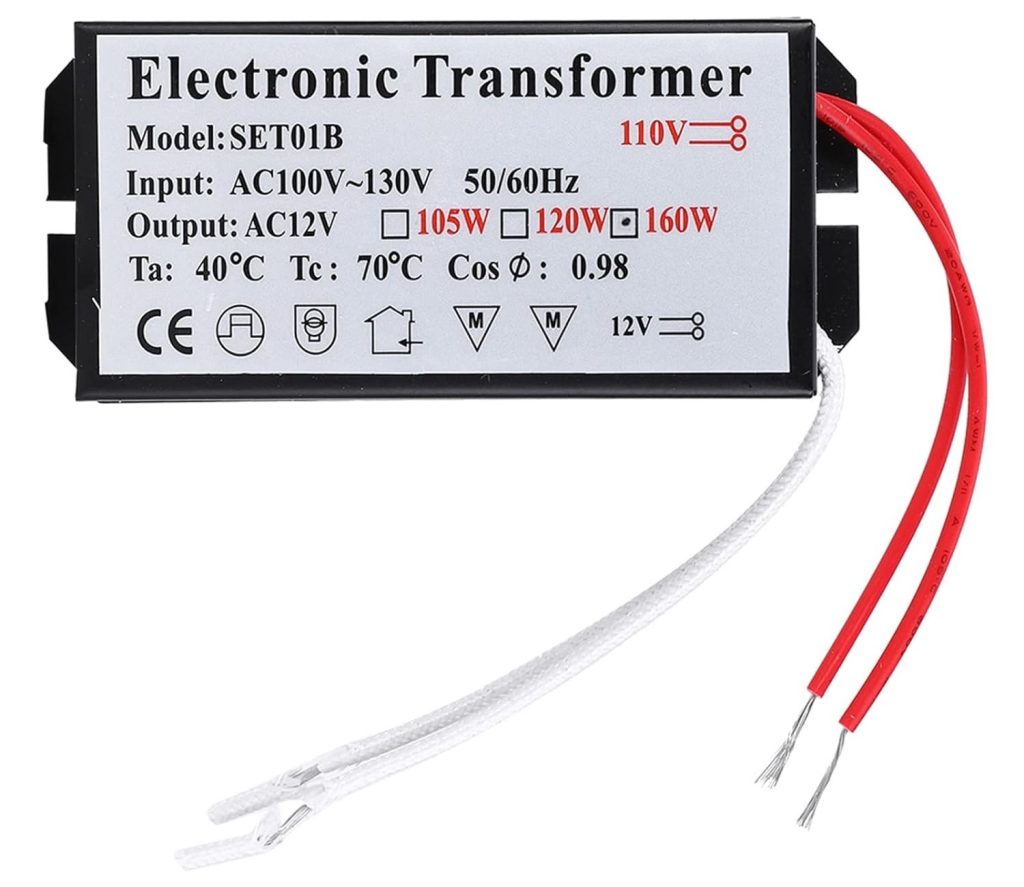
It’s worth noting that not all 12V transformers may be suitable for all types of 12V lamps; certain factors such as wattage capacity and type (electronic vs magnetic) should be considered. Moreover, some transformers may also have dimming capabilities, an important factor if you wish to install a dimmer switch in your lighting setup.
Focusing on LED Lights and Their Low Voltage Requirements
Light-emitting diodes (LEDs) are semiconductor devices that emit light when an electric current passes through them. They are highly efficient, long-lasting, and environmentally friendly, which explains why they have become increasingly popular in modern lighting applications. One defining characteristic of LEDs is their low voltage requirement. Standard LED light bulbs typically require anywhere from 2 to 4 volts for operation.
However, some LED lights designed for household or commercial use incorporate multiple LEDs, and hence the overall voltage requirement can be higher – often at a standard level of 12 volts. Given this low voltage need compared to traditional incandescent or halogen lamps (which operate at mains voltage level), it’s crucial that the power supply for LED lights is carefully regulated.
Hence the role of a transformer becomes even more critical when using LED lighting systems. Ensuring you use the right transformer with your specific type of LED lights not only guarantees optimal brightness but also prolongs the lifespan of the LEDs by preventing over-driving – a scenario where too much current passes through the LEDs leading to premature failure or diminished light output.
Understanding the Compatibility between Transformers and LEDs
Understanding how transformers work with LEDs requires explicit attention to two main factors: wattage and type (electronic vs magnetic). Wattage refers to the power capacity of both your transformer and your total lighting system. The total wattage capacity of your transformer should be equal to or greater than that required by all combined lamps (bulbs) in your system.
The type of transformer also plays a significant role in compatibility with LEDs. Electronic transformers are compact, lightweight, and less expensive, but they may not work perfectly with different loads due to their minimum load requirements.
Magnetic transformers, on the other hand, are bulkier and more expensive but offer smooth operation over a wider range of loads. Expounding on these details enables you to make an informed decision when choosing a transformer for your LED lights, ensuring efficient operation and extended service life of your lighting system.
Can We Use Any 12V Transformer for LED Lights?
Understanding the Relationship Between Voltage and Transformers
When it comes to the question of whether any 12-volt transformer is suitable for all LED light applications, it’s paramount to consider the fundamental relationship between voltage and transformers. First and foremost, transformers are designed to convert high-voltage power to lower voltage levels appropriate for specific devices – in this case, LED lights.
On that note, while a 12V transformer may technically be compatible with an LED light on a basic level due to matching voltage requirements, other factors come into play that determine their overall compatibility. The suitable use of a specific transformer with a certain type of LED light doesn’t solely hinge on voltage compatibility. Instead, it requires intricate matching based on several considerations that guarantee efficient functionality and longevity of the lighting system.
The Transformer-Lights Compatibility Dilemma
Not all 12V transformers are created equal, nor are they uniformly suitable for all types of 12V LED lights. The reason behind this lies in their diverse design specifics tailored towards distinct applications. For instance, some transformers are engineered primarily for halogen or incandescent lighting systems, which inherently differ from LEDs in terms of power usage and efficiency.
Moreover, LEDs operate on low-voltage direct current (DC), unlike traditional lights, which run on alternating current (AC). Consequently, while some 12V AC transformers can power LEDs without instantaneously damaging them, they might eventually shorten their lifespan due to incompatible power supply characteristics over time.
Influence of Wattage Capacity on Compatibility
One key element affecting the compatibility between transformers and LED lights is wattage capacity. In essence, every transformer has a minimum and maximum load capacity measured in watts that must be taken into account when pairing with an array of LED lights.
For optimal performance without overheating or premature failures, the total wattage of all connected LED lights shouldn’t exceed 80% of the transformer’s maximum capacity. Similarly, it also shouldn’t fall below the minimum load requirement since underloading a transformer can lead to issues like inefficient power conversion and flickering lights.
Assessing the Total Wattage Requirement of the LED Light System
Equally important in determining compatibility is assessing the total wattage requirement of your LED light system. This involves summing up the wattage ratings of all individual LEDs intended to operate from a single transformer.
A compelling reason for this assessment is to ensure that your lighting system doesn’t overload the transformer, which could result in its failure and potentially hazardous situations such as electrical fires. Additionally, understanding your system’s total wattage requirement aids in choosing a transformer with an appropriate rating that guarantees longevity both for itself and connected LEDs.
Type of Transformer: Electronic vs Magnetic
Another critical determinant of compatibility between transformers and LED lights is their type, chiefly, whether they are electronic or magnetic transformers. Electronic transformers are compact, lightweight, and usually cheaper than their magnetic counterparts but may not be as durable or compatible with all types of LEDs.
On the other hand, magnetic transformers are typically more robust and reliable over time but come at a higher cost due to their heavy-duty construction. They often have better minimum load handling capabilities too, making them more suitable for low-wattage LED systems than electronic ones.
Importance of Dimming Capabilities in Lighting Systems
The last factor worth considering when discussing LED light-transformer compatibility is dimming capabilities if required by your lighting system. Notably, if you intend to install dimmable LEDs, it’s crucial to select a 12V transformer designed to handle dimming functions correctly without causing any flickering or reduced lifespan for your lights.

Transformers not designated for use with dimmable LEDs could lead to a myriad of problems, from inconsistent lighting levels to complete system failure. Therefore, careful selection of the right transformer that supports your desired features is an untold secret to enjoying the full benefits of LED lights.
Types of Transformers Suitable for LEDs
A Closer Look at Electronic Transformers
Electronic transformers, fundamentally, are coil-based transformers. They operate using high-frequency electronic mechanisms, which modulate and transform electrical voltage levels. This modulation occurs by alternating between high frequencies during its operation, typically between 20,000 and 60,000 Hz.
When it comes to LED lights specifically, electronic transformers are often used with low-voltage LED lights. The transformer takes in the high household voltage and transforms it into a lower voltage suitable for the LED lighting system.
Notably, the conversion process is relatively efficient and streamlined due to the built-in electronic circuitry in these transformers. However, as with all elements of technology, there exist certain benefits and drawbacks associated with electronic transformers.
On the beneficial side of things, they are generally more compact than other types of transformers; their lightweight construction allows easy installation even in confined spaces. Moreover, they demonstrate an admirable efficiency when operating at or near their maximum load capacity.
Contrarily though, one potential drawback could be their performance under less-than-ideal conditions, particularly when operating at significantly less than their maximum load capacity. In such situations – say when only powering a single low-wattage LED light – an electronic transformer might exhibit issues like flickering lights or unexpected dimming due to imprecise power regulation.
Understanding Magnetic Transformers
On the other end of the spectrum lie magnetic transformers. Fundamentally different from their electronic counterparts, magnetic variants operate on principles laid out by Michael Faraday back in 1831 – Faraday’s Law of Electromagnetic Induction.
Magnetic transformers are commonly used for converting line voltage into lower voltages suitable for LED systems too. However, unlike electronic ones that employ high-frequency switching techniques to accomplish this task, magnetic ones use wire coils wound around a steel or iron core – hence their ‘magnetic’ designation.

In terms of the advantages and disadvantages of magnetic transformers, they have a few unique characteristics. They demonstrate exceptional durability and longevity, often offering years – if not decades – of reliable service. Moreover, they tend to be less sensitive to minimal load issues than electronic transformers, making them a better choice for smaller or more intricate LED lighting configurations.
On the downside, though, magnetic transformers are bulkier and heavier compared to their electronic counterparts. This size and weight can make them challenging to install in spaces where room is at a premium. Additionally, even though they’re less sensitive than electronic transformers under low load conditions, when it comes to high-frequency operations or dimming applications, they might not be as efficient or reliable.
How to Choose the Right Transformer for Your LEDs: A Comprehensive Guide
Choosing the Right Transformer: A Step-by-Step Breakdown
Picking the right transformer for your LED lighting system is not just about matching voltage ratings. It’s a careful consideration of several factors, each potentially impacting the performance and lifespan of your lights.
Firstly, calculate the total wattage of your LED lights; this is usually indicated on their packaging or product specification sheets. Ensure that the chosen transformer can handle this total – typically, it should be loaded to a maximum of 80% of its capacity for optimal performance and longevity.
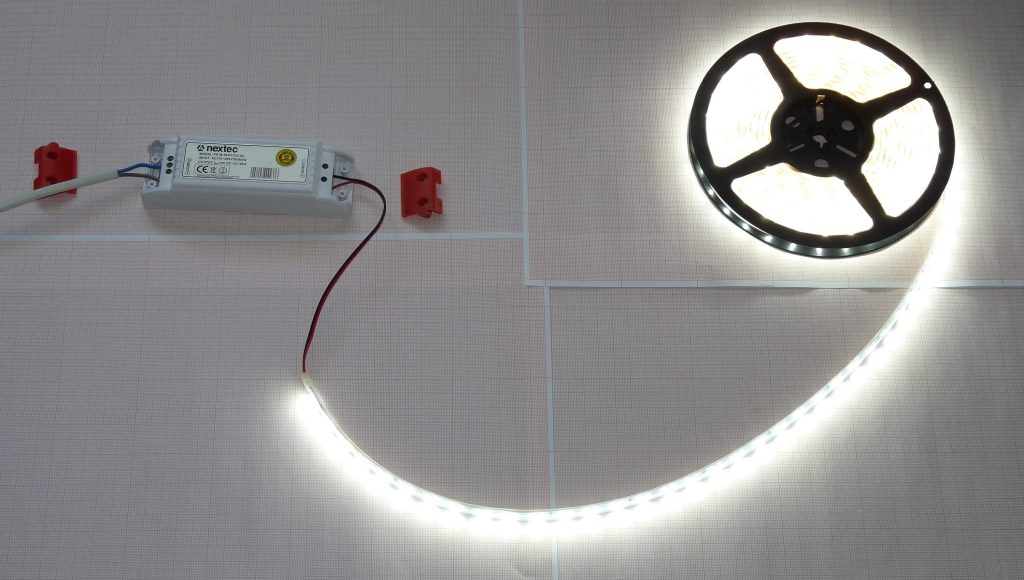
The second key consideration involves checking whether your LED lights need a constant current (CC) or constant voltage (CV) transformer; this information will also be available in product specifications. Thirdly, consider whether you wish to incorporate dimming functionality into your lighting setup; if so, both transformers and LEDs must support dimming.
Crucially, you must always cross-verify the compatibility between LED light bulbs and transformers. Even if all technical parameters line up perfectly on paper, some pairings may still result in flickering or reduced longevity due to subtle differences in internal electronic design.
In Pursuit of Longevity: Ensuring a Long Life for Your LEDs
Sustaining an enduring lifespan for your LEDs extends beyond merely choosing the right transformer; consistent maintenance and vigilant monitoring play leading roles too. Always ensure that transformers are set up in well-ventilated areas to prevent overheating, which can damage both transformers and LEDs prematurely.
Regularly inspecting wiring connections for any loose contacts helps maintain optimal power delivery from transformers to LED lights; poor connections can cause inconsistent light output or even damage the system entirely over time.
Should you notice any signs of malfunction, such as flickering or unusual dimness, investigate immediately by checking both LED bulbs and transformer. Often, catching issues early can prevent more serious problems down the line, thereby enhancing the longevity of your LED lighting system.
Case Studies: How The Correct Transformer Choices Impact Real-World Lighting Scenarios
A Residential Epiphany: The Power of Correct Indoor Lighting
Consider a contemporary residential setting where recessed LED lights are used extensively. A 12V magnetic transformer was initially chosen for its reputed reliability and durability. However, upon installation, persistent flickering issues arose despite wattage requirements being comfortably within transformer capacity.
The issue was eventually traced to incompatibility between the magnetic transformer and certain electronic components within the LED bulbs. Switching to a compatible electronic transformer resolved these issues entirely, showcasing how crucial compatibility is in ensuring smooth operation for indoor lighting.
Commercial Enlightenment: Optimizing Outdoor Illumination
In a commercial scenario where outdoor LED lighting was utilized for landscape aesthetics, initial setup involved using a large 12V electronic transformer. All seemed well until winter arrived; colder temperatures caused significant light dimming due to altered electrical characteristics in the electronic transformers.
Switching over to a 12V magnetic transformer designed for outdoor use remedied this problem – these transformers are generally more robust against ambient temperature variations. This case study underscores that environment-specific considerations can play as critical of a role as technical specifications when choosing suitable transformers.
Conclusion: Can We Use Any 12V Transformer for LED Lights?
Selecting an appropriate 12V transformer for your LED lights is not simply about matching voltage ratings; it involves assessing total loads, understanding specific bulb requirements, and ensuring compatibility between components. These steps go miles in ensuring optimal and long-lasting performance from your LEDs while avoiding unnecessary complications or replacement costs down the line.
Lighting our lives efficiently with LEDs requires some technical knowledge but also offers us opportunities to learn more about the technology we use daily. As LED lighting continues to evolve, so does our understanding – illuminating not just our surroundings but also the pathways to a more enlightened and energy-efficient future.
You may also be interested in the following posts: