
Unleashing Potential: Plugging LED String Lights into Regular Sockets
Introduction to the Luminous Language of Lights
Welcome, dear reader, to a fascinating exploration of our day-to-day companions – lights. These omnipresent entities brighten our lives, quite literally. In this post, we delve deep into understanding two unique types of lights that adorn our world: LED string lights and regular lights.
As we traverse through the intricacies of these illuminating subjects, prepare yourself for an enlightening journey. We unravel the mysteries as diverse as the nature and operation of these lights to an intriguing question: Can we plug LED string lights into regular light sockets?
This question might have surfaced in your mind while you were planning your landscape lighting or contemplating a festive decoration with landscape string lights. Our quest for knowledge will take us through scientific principles, practical considerations, and future trends.
A Glimmering Overview of LED String Lights
LED string lights are like twinkling stars brought down to earth to infuse magic into our mundane lives. An innovative lighting solution, these are essentially light-emitting diodes strung together on a conductive wire.
The versatility of LED string lights is remarkable; they can be molded into various shapes and sizes, making them perfect for any decorative or functional application. When it comes to landscape lighting or outdoor decorations, their resilience against weather conditions makes them a popular choice.

Unaffected by heat or cold, they continue spreading their glow unabatedly. Another noteworthy aspect is their energy efficiency; they consume significantly less power than conventional bulbs while providing superior brightness – quite an impressive feat indeed!
Their longevity outshines traditional counterparts by several years, making them both economical and ecologically friendly. The allure doesn’t stop there! With advances in technology, many LED string light variants offer customizable light patterns and colors controlled via remotes or even smartphone apps!
So whether it’s adorning your Christmas tree with vibrant hues, tracing the contour of your garden path with gentle warm lights, or setting a festive mood with landscape string lights, LED string lights are the go-to solution.
Decoding the Fundamentals of Regular Lights
As we now transition from the sparkle of LEDs to the realm of regular lights, our understanding becomes more nuanced. Regular lights, more commonly known as incandescent bulbs or fluorescent lamps, have been faithful companions in our homes and workplaces for generations. They work on different principles as compared to LEDs but share a common purpose – lighting.
Incandescent bulbs produce light by heating a filament inside the bulb until it glows. This process is simple and effective but lacks energy efficiency. These bulbs consume significantly more electrical power while producing less light output compared to LEDs. Moreover, their lifespan is considerably shorter because frequent heating and cooling cause the filament to degrade over time.
On the other hand, fluorescent bulbs operate by exciting gas present within them using electricity, which subsequently produces light. They are relatively more efficient than incandescent bulbs and offer a longer lifespan as well. However, they fall short when compared with LED technologies on these fronts.
Taking into consideration aspects like energy consumption, longevity, and environmental impact, it’s evident that while regular lights have served us well in the past era of lighting technology, newer options like LED string lights make for compelling alternatives, especially in applications such as landscape lighting where longer life, low maintenance, and aesthetic appeal matter significantly.
The Luminous Landscape of Light: Understanding the Science behind LED and Regular Lights
The Radiance of LED: Unveiling its Mechanism
Light-emitting diodes are far from your ordinary light bulbs. They are semiconductor devices that emit light through a process called electroluminescence. When an electric current passes through the diode, it excites the electrons within, causing them to emit light. This light emission is what gives birth to the glow we associate with LEDs.
Perhaps one could consider LEDs as robust landscape lighting options. Given their design and operation mechanism, LEDs offer a unique blend of energy efficiency and durability. They use less power compared to traditional lighting options while offering more lumens per watt, making them an excellent choice for landscape string lights or for any application requiring illumination over extended periods.
The life expectancy of LEDs also greatly surpasses that of regular lights. Unlike incandescent or fluorescent lights, which burn out or fail after a certain period of use, LEDs ‘fade away’ gradually over time without abrupt failure while maintaining their initial brightness levels for much longer. This fading phenomenon is known as lumen depreciation – it indicates the point at which an LED emits less light than it did when new.
Most LEDs have a rated life of up to 50,000 hours compared to approximately 1,000 hours for incandescent bulbs and between 8,000 and 15,000 hours for fluorescents. Furthermore, LED’s energy efficiency does not subtract from its luminous output; they still provide superb brightness levels suitable even for landscape lighting applications.
Traversing Traditional Trails: The Mechanics behind Regular Lights
Turning now to regular lights – specifically incandescent bulbs – we discover an entirely different mechanism of light production. Incandescent bulbs work on the principle of thermal radiation. They contain a tungsten filament that, when heated by electric current, emits visible light. This process can be likened to heating a metal until it glows or ‘incandesces’. Unlike LEDs, incandescent bulbs release 90% of their energy as heat, making them less efficient.
The lifespan of incandescent bulbs is significantly shorter compared to LEDs due to the intense heat produced during operation. The constant heating and cooling cycles cause the tungsten filament inside these bulbs to deteriorate over time, leading to eventual failure. Though not ideal for long-term landscape lighting solutions due to their inefficiency and short lifespans, incandescents still hold merit for creating warm atmospheric lighting in certain environments such as cozy indoor spaces or intimate outdoor gatherings.
Fluorescent lights work on an entirely different principle yet again – that of gas excitation. A fluorescent tube is filled with mercury vapor. When an electric current passes through this gas, it causes the mercury atoms to emit ultraviolet (UV) light. This UV light then strikes a phosphor coating inside the fluorescent tube, causing it to fluoresce and emit visible light. Similar to incandescents, though far more efficient, fluorescents are also less suited for landscape string lights, due in part to their susceptibility towards temperature variations and humidity changes, which can affect their performance and longevity.
Comparative Analysis: LED vs Regular Lights
The Dynamics of Energy Consumption and Efficiency
When considering the energy consumption matrix between regular incandescent and LED lights, the comparison inclines heavily in favor of LEDs. Regular bulbs generate light by heating a filament inside the bulb; unfortunately, 90% of their energy is emitted as heat rather than light.
This inefficiency is drastically overturned in LEDs, which use energy solely for light production. LEDs are highly efficient in their energy utilization. For instance, consider using landscape string lights for an outdoor event. Utilizing LED string lights can reduce electricity consumption to one-tenth that used by a conventional incandescent bulb string light setup.
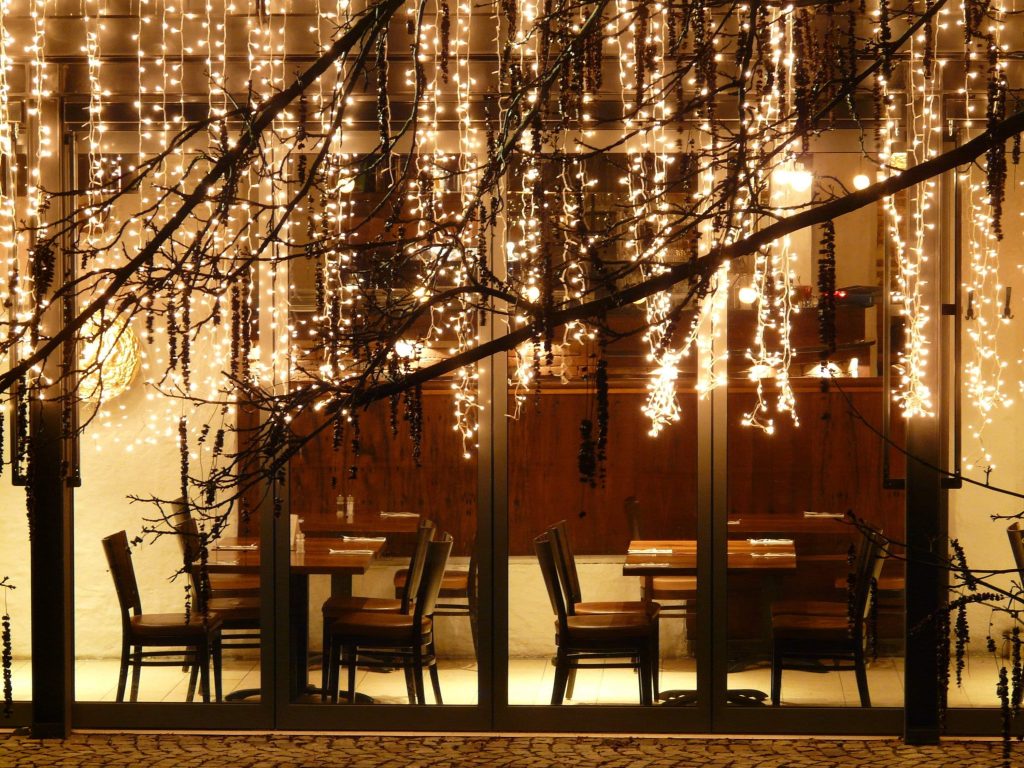
Furthermore, LEDs provide brighter lighting while consuming significantly less power, which enhances their value proposition as excellent choices for landscape lighting. An interesting characteristic of LED lights is their ability to retain consistent brightness regardless of power fluctuations – an attribute lacking in traditional incandescent or fluorescent bulbs.
In areas experiencing erratic power supply, LEDs showcase superior performance by maintaining steady brightness levels even when power supply fluctuates drastically. LEDs also display remarkable efficiency in terms of luminous efficacy (amount of visible light produced per unit of electric power consumed).
This efficacy can be as high as 150 lumens per watt for some LED variants, whereas most incandescent and fluorescent lamps have efficacies below 100 lumens per watt. It’s important to note that unlike traditional bulbs, which convert a significant portion of electricity into heat, thereby creating potential fire hazards, LEDs utilize nearly all the electrical input to generate only light, thus making them much safer alternatives.
A Probe into Bulb Longevity
When evaluating bulb lifespan, again LED emerges as the clear victor over traditional lighting solutions. The longevity difference primarily arises from how each type generates light. Incandescent bulbs function through a heated filament, which wears down over time due to constant heating and cooling. On average, incandescent bulbs last approximately 1,200 hours.
LEDs produce light when electricity passes through a semiconductor or diode. This method of light production minimizes wear and tear, significantly bolstering the lifespan of LED bulbs to about 25,000-50,000 hours on average. This translates into nearly a decade of usage based on typical daily use, far outstripping the longevity offered by traditional incandescent or even fluorescent bulbs.
The longevity becomes particularly relevant in landscape lighting applications where changing lights can be more difficult due to access issues or sheer volume if we are considering landscape string lights across an extensive area. Here again, LED string lights offer enhanced convenience by reducing replacement frequency considerably.
From a cost perspective too, LEDs’ superior longevity offers significant savings over time as fewer replacements are needed compared to traditional lighting systems. Ruggedness is another often overlooked aspect where LEDs trump incandescent or fluorescent alternatives, as they lack delicate parts like filaments or tubes, which can break easily, making them ideal for hardy applications like outdoor landscape lighting.
Environmental Impact: A Green Perspective
The environmental impact of our choice of lighting cannot be overstated in today’s eco-conscious world. In this regard, too, LEDs make a commendable case for themselves by manifesting lower environmental impact than their conventional counterparts. In terms of raw materials and manufacturing processes required to produce them, LEDs use less energy and fewer resources compared with the process involved in creating regular incandescent bulbs – thereby already scoring high on the sustainability index right from the inception stage itself!
Disposal also tilts favorably towards LEDs, as they do not contain hazardous substances like mercury found in many fluorescents, which require special disposal procedures. LEDs can be safely disposed of without posing environmental threats. The lower energy consumption noted earlier also translates into less CO2 emissions per unit of light produced, thus decreasing their carbon footprint significantly compared to regular bulbs.
Recyclability is yet another eco-advantage that LEDs offer. Unlike incandescent or fluorescent bulbs, which are more difficult to recycle due to the diverse materials used in their manufacture and the presence of hazardous materials, LEDs are more easily recyclable at the end of their long life spans. LEDs clearly outshine their traditional counterparts in energy efficiency, lifespan, and environmental impact, making them an enlightened choice for all types of lighting applications, including landscape string lights.
Can We Plug LED String Lights into Regular Light Sockets?
Perhaps one of the most common inquiries concerning landscape lighting pertains to the compatibility of LED string lights with regular light sockets. It is quite understandable given the charm and luminous appeal these string lights bring to various outdoor settings. The question is, can you swap out your regular bulbs and replace them with bright, energy-efficient LED string lights?
The answer depends on multiple factors, as this isn’t a straightforward yes or no proposition. Several aspects come into play, including socket size, voltage compatibility, and wattage requirements, which we shall delve deeper into in the subsequent sections.
It’s crucial to note beforehand that while it might be physically possible to screw an LED bulb into a conventional light socket, whether or not it functions optimally or even safely will depend on these aforementioned variables. Subsequently, understanding these components becomes essential for those looking to substitute their standard bulbs with landscape string lights.
This knowledge allows you not just to enhance your surroundings aesthetically but also to ensure energy efficiency along with safety. Of this section, plugging an LED string light into a regular light socket may likely be feasible but relies heavily upon certain factors, which we’ll further elucidate next.
The Compatibility Issue: Socket Size, Voltage, and Wattage
Navigating through the labyrinth of bulb specifications isn’t always straightforward; among them are socket size, voltage requirements, and wattage – all integral features in assessing compatibility between LED string lights and typical sockets. The first consideration should be the physical dimension of the socket versus that of your preferred landscape lighting.
Typically, standard sockets in American homes use the E26 (medium) base type, while most LED strings come equipped with smaller bases like the E17 (intermediate) or E12 (candelabra). Hence, before purchasing or installing LED string lights, it’s prudent to check the base size.
Secondly, understanding the voltage requirement can save a ton of trouble. Most LEDs are low-voltage lights, designed to operate at 12 volts. On the other hand, regular sockets in homes are made for bulbs that utilize 120 volts. This mismatch can lead to premature LED failure if not addressed properly.
The last piece of this compatibility puzzle is wattage. LEDs generally use less wattage than incandescent bulbs, meaning they draw less current from the circuit. Hence, when swapping out an incandescent bulb with an LED in a regular socket, ensure that the entire circuit isn’t loaded above its maximum rated capacity. For successful integration between landscape string lights and regular light sockets, it boils down to matching socket size and ensuring voltage and wattage compatibility.
Safety Concerns when Mixing Different Types of Lighting Systems
When introducing an innovative lighting system like landscape string lights into traditional sockets initially designed for incandescent or fluorescent bulbs, certain safety considerations must be kept in mind. A major concern crops up from voltage mismatches leading to overheating and potentially hazardous situations like fire breakouts.
As LEDs usually operate on lower voltages than conventional bulbs tend to provide, without suitable transformers or drivers that adjust these voltages down to appropriate levels, there exists a substantial risk element when using such configurations.
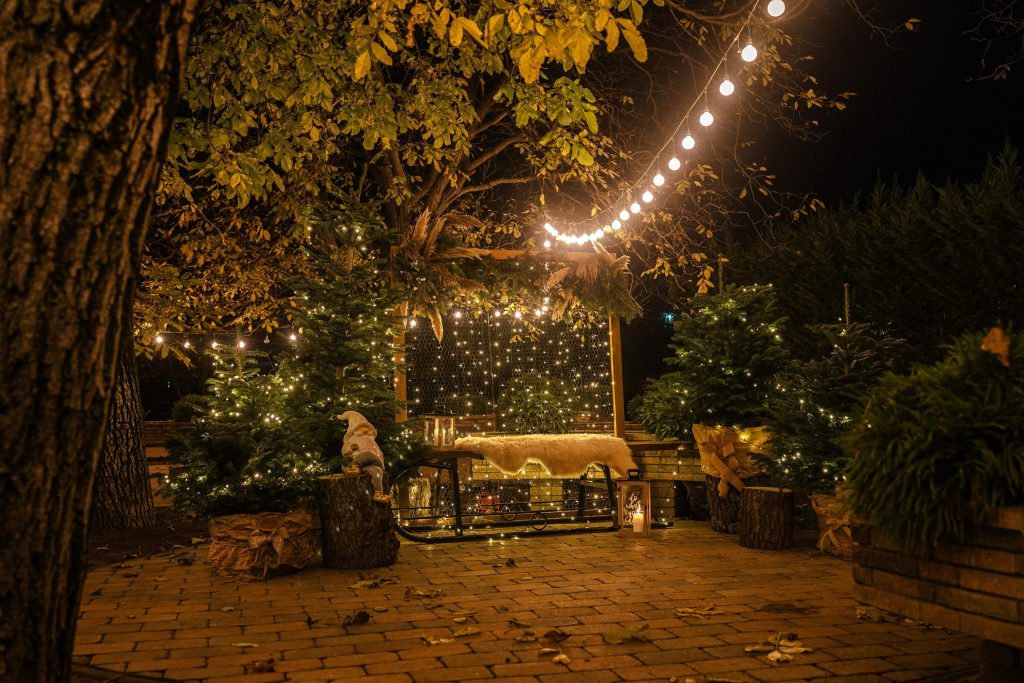
An additional safety aspect is linked with thermal management. LEDs produce less heat compared to incandescent bulbs, but their heat dissipation occurs differently, which may cause issues if not properly taken into account. There could be scenarios where circuit assembly becomes overloaded due to excess current flow – another potential fire hazard necessitating cautious handling while mixing different lighting systems.
The structural integrity of the string lights themselves can be compromised when used in inappropriate sockets, posing risks such as electrical short circuits or premature burnout. The safety implications of integrating LED string lights into regular sockets should not be overlooked, thereby underlining the importance of correct compatibility checks before installation.
Case Study: Successful Instances of Plugging LED String Lights into Regular Sockets
A Transformative Journey: Landscape String Lights and Traditional Sockets
Profound success has been noted in specific cases where LED string lights, specifically landscape string lights, have been plugged into standard sockets.
One such instance is that of a renowned restaurant located in the heart of the city. This establishment decided to replace their traditional incandescent lights with more energy-efficient LED landscape string lights. Their main concern was whether these innovative LEDs would be compatible with their existing regular sockets.
In the initial phase, a detailed examination was carried out on their existing socket system to determine its compatibility with the incoming LED string lights. It was revealed that although there were minor differences in terms of voltage and wattage requirements, overall, they were compatible.
Bridging Compatibility Gaps: The Restaurant’s Success Story
The restaurant’s transition from incandescent bulbs to LED landscape lighting was seamless. They meticulously planned every detail before making the switch. Crucially, they ensured that these new lights matched the wattage range supported by their regular sockets and that they did not overload any circuits. The outcome was a resounding success. The restaurant’s exterior transformed dramatically due to the vibrant and varied colors offered by the LED landscape lighting while also reducing energy costs significantly.
The Residential Triumph: A Householder’s Landscape Lighting Event
Another successful case study can be seen in residential settings where homeowners wished to revamp their outdoor landscape lighting using string LEDs instead of traditional bulbs. In this instance, a homeowner wanted to light up his backyard for an upcoming family gathering using multicolored LED string lights but had reservations about whether his existing sockets would support them. After meticulous planning and thorough verification of compatibility parameters like voltage requirements and socket sizes, he managed to beautifully light up his backyard using his existing regular light sockets with these LED landscape string lights.
Overcoming Challenges: Successful Integration at a Local Festival
A similar success story is seen in the context of a local festival. The event organizers wished to use energy-efficient, vibrant LED string lights to decorate their venue but were unsure of compatibility with the existing regular light sockets. However, by ensuring careful installation and adherence to safety measures, they managed to create an enchanting atmosphere using these LED string lights in their regular sockets, thereby saving significant amounts in energy costs while providing phenomenal lighting effects.
Lessons Learned from Successful Instances
The above instances clearly demonstrate that plugging LED string lights into regular sockets can indeed be successful, given due diligence and proper planning. It requires understanding the technicalities behind the operation of both types of lights and ensuring compatibility for a seamless transition. These case studies are proof that with cautious steps and correct decision-making processes, integrating landscape lighting systems like LED string lights into existing traditional socket systems can indeed be achieved effectively and efficiently.
Precautions for a Bright Yet Safe Landscape: Integrating LED String Lights into Regular Sockets
Navigating the Voltage Vortex: Checking for Compatibility
As illuminating as landscape lighting can be, one must be vigilant when it comes to plugging LED string lights into regular sockets.
The first crucial step entails checking for voltage compatibility. LEDs generally operate at a lower voltage than incandescent or fluorescent bulbs. Consequently, connecting your luminous LED landscape string lights to a high-voltage regular socket might result in immediate failure or reduced lifespan of the LEDs.
Secondly, we need to understand the voltage requirements of your particular set of LED string lights. Not all LEDs are created equal, and their operating voltages may vary significantly. Some will work fine with standard 120V residential circuits, while others require a lower voltage, typically between 12V and 24V.
Thirdly, it is always advisable to consult with an experienced electrician or lighting specialist when dealing with electrical installations such as landscape lighting. They possess the knowledge and tools necessary to accurately assess whether your existing sockets can handle the specified requirements of your LED string lights.
Fourthly, if you prefer DIY solutions over professional services, portable voltmeters could be beneficial in determining socket voltages without undue risks. These devices are relatively user-friendly and provide accurate readings that inform whether it’s safe to connect your LED strings.
On this topic, consider acquiring LED string lights equipped with built-in resistors or drivers that ensure they function properly across various voltages. They offer more flexibility and protection against unexpected power fluctuations.
Size Matters in Socket Compatibility: Ensuring Correct Dimensioning
The quest for captivating landscape lighting transcends mere voltage compatibility; ensuring proper socket size is another critical precautionary measure before plugging your resplendent LED string lights into regular sockets.
Firstly, you need to ascertain your LED string lights’ base type and size. These details are typically indicated on the bulb or fixture packaging. Socket types vary from screw-in bases, such as E26/E27, used for standard home fixtures, to pin bases common for landscape lighting.
Secondly, after determining your LED string lights’ base type and size, compare these specifications with the sockets into which you plan to insert them. Remember to turn off power at the circuit breaker before inspecting sockets closely.
Thirdly, many LED string lights intended for landscape use are designed with a two-pin base due to their low-voltage operation requirements. Therefore, those using regular light sockets might require adaptors or converters.
Fourthly, ensuring a snug fit is paramount in preventing accidental dislodging or shaky connections that could compromise lighting performance and safety. Avoid forcing bulbs into sockets; if they don’t fit easily or feel loose once installed, reassess your compatibility considerations.
On this topic, remember that while adaptors can facilitate compatibility between different socket types and sizes, they introduce an additional point of failure into your lighting system, so always ensure high-quality components are used when following this approach.
Lighting Without Overloading: Balancing Circuit Capacities
Breathtaking landscape lighting necessitates not only compatible voltages and correct bulb sizes but also prudent planning to avoid overloading circuits. Ignoring this critical aspect could spell disaster for both your visually striking landscape string lights and electrical system. Commencing this discussion is the imperative understanding of circuit capacities alongside assessing how much load your LED strings add to them.
Your house’s electrical circuits each carry a maximum load capacity (usually 15 or 20 amps), exceeding which triggers circuit breakers as a protective measure against overheating wires leading to potentially catastrophic outcomes such as fires.
Secondly, knowing how much current each of your electrical appliances draws becomes crucial in managing your overall circuit loads. LED string lights, although energy efficient, contribute to this load and must be factored into your calculations.
Thirdly, landscape lighting, particularly when incorporating many LED string lights, can significantly increase your circuit load. This factor is even more significant during festive seasons when numerous decorations and lights might be added concurrently.
Fourthly, many homeowners overlook the total power consumption of their landscape lighting setup. For instance, even though each individual bulb on an LED string light may consume minimal power, it can quickly add up considering strings often contain dozens or hundreds of bulbs.
On this topic, if you find that your circuit load is nearing its capacity upon adding landscape lighting elements such as LED string lights, you should consult with a professional electrician. They can advise whether installing additional circuits or upgrading existing ones will be necessary to accommodate your envisioned brilliant nightscape safely.
Forging New Paths: Alternatives to Plugging LED String Lights into Regular Sockets
Navigating the Luminary Labyrinth: Using Adapters for Compatibility Issues
The first alternative to directly plugging LED string lights into regular sockets is utilizing adapters. These handy devices are adept at navigating the luminary labyrinth of compatibility issues that often arise. To understand why adapters can be helpful, it’s essential to appreciate the fact that LED lights and regular incandescent or fluorescent light sockets aren’t always designed with one another in mind.
Adapters essentially act as mediators between your LED string lights and the socket in question. They adjust the fitting size, voltage, or wattage of a light socket so that it aligns with the requirements of your LED string lights. This action safeguards against potential damage and ensures optimal performance of the LEDs. This solution can be applied across various lighting scenarios, including landscape lighting, where outdoor sockets may not match with your landscape string lights.
Adapters come in an array of sizes, accommodating a sweeping range of both bulb types and socket dimensions, thereby offering an efficient way to bridge this incompatibility gap. However, it’s crucial to bear in mind that while adapters solve immediate compatibility issues, they might not address underlying challenges such as energy inefficiency associated with traditional light sockets.
Furthermore, repeated use might lead to wear and tear – although this largely depends on the quality and proper handling of your adapter. Ultimately, using adapters is a clear-cut solution for those unwilling or unable to modify their current lighting arrangement drastically but still wishing to enjoy the brilliance and efficiency LED string lights bring.
Embracing Lighting Innovation: Opting for Specialized LED Fixtures
For those seeking a more permanent alternative solution without worries about compatibility issues or continual replacement of worn-out adapters over time, specialized LED fixtures emerge as an exemplary option. These are lighting fixtures designed specifically to house and power LED string lights, thereby circumventing any potential compatibility issues.
Designed to tap into the unique architecture and energy efficiency of LED technology, these fixtures ensure that there’s an optimal match between the light source (LED) and the fixture itself. This harmony maximizes the efficacy of your LED string lights, producing superior illumination compared to their traditional counterparts.
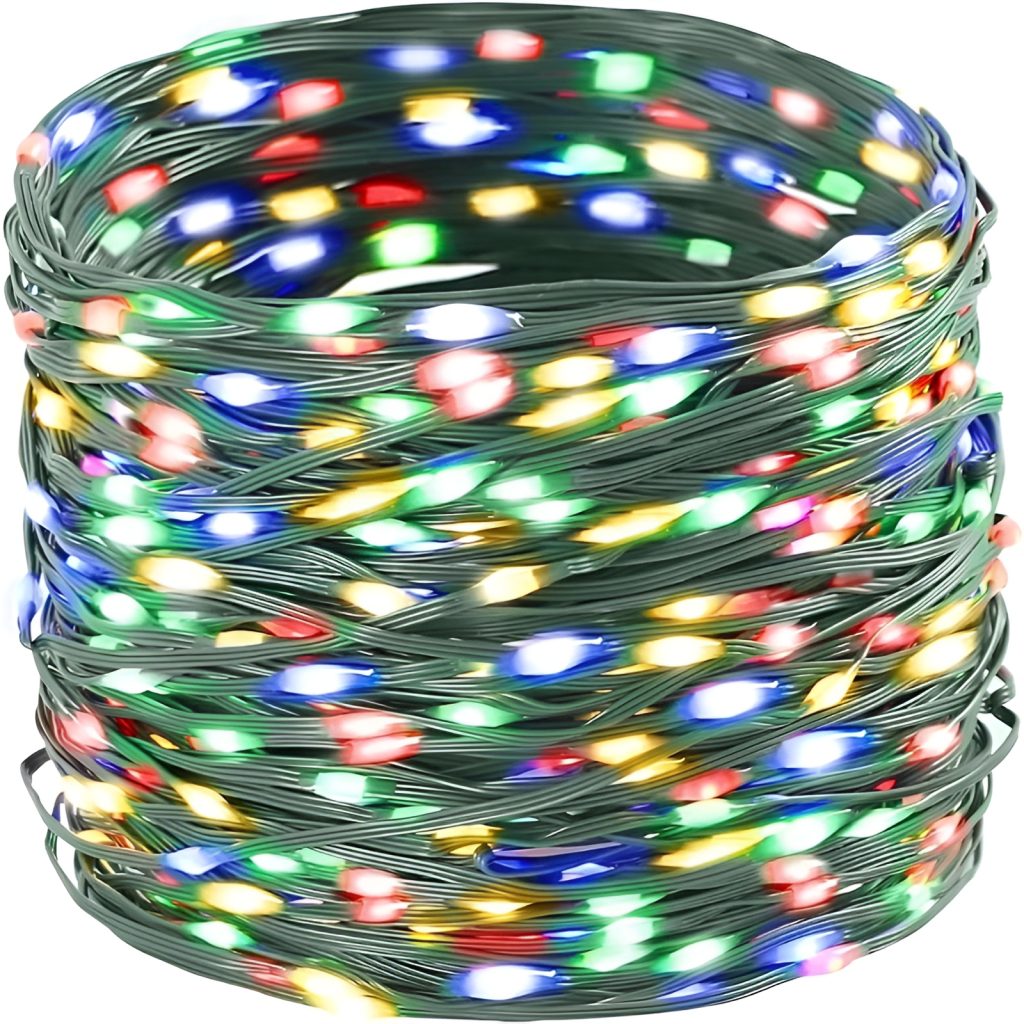
These specialized fixtures not only make for a more seamless integration of LED string lights into your home or landscape lighting but also pave the way for enhanced aesthetic appeal. With their varied designs – from sleek modern styles to charming vintage options – they cater to different tastes and decor themes. Moreover, specialized LED fixtures often come with additional features such as built-in dimmers or color change options that allow customization according to mood or occasion.
For instance, you could adjust your landscape string lights for a soft glow during a tranquil evening gathering or switch them up for a vibrant party ambiance. While it might require some initial investment and effort to install, opting for specialized LED fixtures is an excellent long-term alternative that couples convenience with ingenuity in embracing the illuminating world of LEDs.
The Feasibility and Practicality of Plugging in LED String Lights into Regular Sockets
The Crucial Criterion and the Compelling Considerations
The feasibility and practicality of plugging LED string lights into regular sockets is determined by several factors. Foremost among these is the compatibility between the two types of lighting systems.
As we have established in previous sections, there are crucial differences in how both types of lights – LED and incandescent or fluorescent – function. These differences have a profound impact on their compatibility when it comes to socket sizes, voltage requirements, and wattage limits.
Another significant consideration resides in landscape lighting, where LEDs showcase their superior efficacies. The charm of a well-lit garden or backyard isn’t just about aesthetics but also requires energy efficiency, longevity, and environmental sustainability – all attributes inherent in LED technology.
LED Landscape Lighting: An Attractive Alternative
For homeowners who have extensively invested in traditional landscape lighting setups using regular light sockets, replacing every fixture to accommodate LED bulbs can be a daunting task. In this context, plugging in landscape string lights that use LEDs can be seen as an attractive alternative that strikes a balance between beauty and utility.
Moreover, the energy savings accrued from using LED string lights versus traditional bulbs can offset any initial costs involved with transitioning to these more modern light sources. This applies even more so if one considers that LEDs last significantly longer than their conventional counterparts.
Safety First: Mixing Light Technologies with Caution
However appealing this alternative might sound, safety should always be paramount when dealing with electricity at home or at work. Mixing different types of lighting technologies comes with its share of risks, from overload potential due to mismatched wattage ratings to possible damage due to incompatible socket sizes.
That said, adopting careful measures (such as checking voltage compatibility and ensuring correct socket size) should mitigate most safety concerns. It’s also wise to avoid overloading circuits, which might happen if one were to plug in too many LED string lights into regular light sockets.
A Dynamic Shift: Transitioning towards Energy-Efficient Lighting
In the larger context of energy conservation and environmental sustainability, transitioning from traditional lighting systems to energy-efficient alternatives like LED string lights is a step in the right direction. It’s not just about cutting down on electricity bills or extending the lifespan of your lighting fixtures but also about reducing our carbon footprint.
So, while the feasibility and practicality of plugging in LED string lights into regular sockets might vary based on several factors, it represents a dynamic shift towards more sustainable and responsible consumption. And whether we’re lighting up a single room or an entire landscape, it’s a change that holds promising benefits for all.
Future Trends in Lighting Technology: The Transition from Traditional to More Efficient Lighting Solutions
A New Dawn: Transitioning Towards Higher Efficiency in Lighting
As the awareness about energy efficiency and environmental conservation expands, the lighting industry is witnessing a revolutionary shift. The traditional filament-based lighting solutions are becoming archaic relics of the past, making way for more efficient illuminants such as LED landscape string lights. These LED lights not only provide better illumination but also offer longer lifespans and lower energy consumption, making them a superior choice for landscape lighting.
The transition to LED lighting has been gathering momentum over the years. Cities around the globe are replacing their old streetlights with LEDs, driving this change underpinned by multiple benefits. In personal spaces too, people are increasingly adopting LEDs for their landscape lighting needs due to their versatility and design options.
The Inescapable Shift: Replacing Conventional Light Sources with LEDs
Despite initial resistance due to higher upfront costs, the inherent benefits of LED light sources have made them an irresistibly appealing option. With governments across various jurisdictions providing incentives for switching to energy-efficient LED lights, even businesses are replacing conventional light sources with LEDs at an unprecedented rate.
LED string lights have emerged as prime examples of this trend towards efficient lighting solutions. These products consume less electricity than their traditional counterparts while offering vibrant colors and variable brightness levels – attributes that make them perfect candidates for landscape lighting.
The Green Trail: Environmental Considerations Driving Lighting Trends
A significant factor driving this transition towards efficient lighting solutions involves environmental considerations. Incandescent bulbs contribute significantly to carbon emissions due to their high-energy consumption values. Conversely, LED string lights consume less power, translating into lower greenhouse gas emissions.
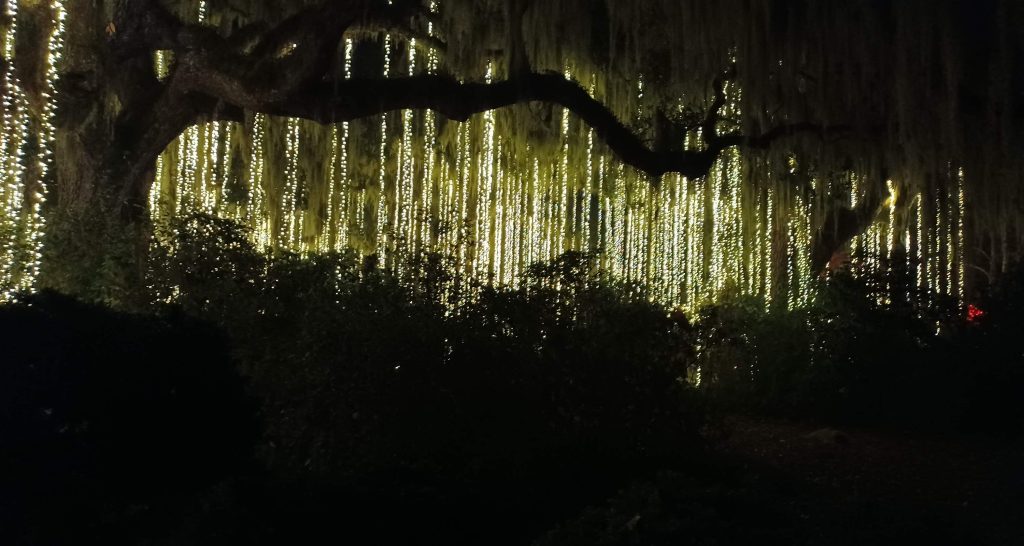
This environmental consciousness is encouraging homeowners to opt for greener alternatives when it comes to landscaping or outdoor decoration needs. As such, we see an increasing trend of LED landscape string lights being used in gardens, patios, and other outdoor settings.
Futuristic Lighting: What Lies Ahead?
As technology advances, we can expect to see further improvements in the efficiency and affordability of LED lights. Innovations such as smart lighting, where lights respond to environmental changes or user preferences automatically, are on the horizon. Further advancements may include integrating solar power with LED landscape string lights to tap into renewable energy sources. Such a development will not only make these light fixtures more efficient but also more environmentally friendly.
Conclusion: Navigating the Future with Efficient Lighting
The future of lighting is decidedly tilting towards high-efficiency solutions like LED string lights. This shift is driven primarily by increased awareness about energy conservation and environmental protection. Hence, as we look towards the future, we can expect LEDs to illuminate our homes and cities in a sustainable way while adding aesthetic charm through versatile options like landscape string lights.
Rarely Known Small Details about LEDs and Their Integration with Existing Light Systems
Little Known Facts about LEDs
In the modern lighting landscape, light-emitting diodes, or LEDs, have risen to prominence for their exceptional efficiency and longevity. Yet, despite their ubiquitous presence in everything from traffic lights to televisions and landscape string lights, there are several lesser-known facts about these tiny technological marvels that merit attention.
Firstly, while most people associate LED technology with energy efficiency and sustainability – a rightly earned reputation – one might be surprised to learn that the first practical LED was not white but red. Invented by Nick Holonyak Jr. in 1962 while he was working at General Electric, this initial LED emitted a low-intensity red light. Today’s vibrant spectrum of LED colors – so often adorning our gardens as landscape string lights – is the result of years of innovative research.
Another often-overlooked fact about LEDs relates to how they emit light. Unlike incandescent bulbs, which light via heat production (a process resulting in significant energy loss), an LED generates light when electricity passes through its semiconductor material. This intrinsic difference accounts for the remarkable efficiency disparity between traditional bulbs and LEDs.
LEDs also offer a wide range of color temperatures without the use of color filters – something unheard of in other lighting technologies – enabling you to set your desired atmosphere with precision using landscape lighting. This is integral when crafting an outdoor ambiance with landscape string lights because it allows for a seamless integration into any aesthetic environment.
But importantly, contrary to popular belief that all LEDs are non-dimmable, many modern iterations do indeed offer dimming capabilities. This means that your mesmerizing display of twinkling stars created by your landscape string lights can be adjusted at will, another testament to the adaptable nature of this advanced lighting solution.
Unforeseen Aspects of LED Integration into Existing Light Systems
As one navigates the transition from traditional lighting systems to more advanced LED solutions, there are several unexpected elements to consider. One such aspect relates to the integration of LEDs into existing electrical infrastructures, particularly with landscape lighting. One interesting challenge is posed by the fact that LEDs require less power than traditional light sources.
While this is generally a benefit for energy consumption, it can lead to compatibility issues with older dimmer switches that are calibrated for higher-wattage incandescent bulbs. These issues can cause flickering or inconsistent lighting when using LED landscape string lights, but they can be addressed by replacing the outdated switches with LED-compatible ones.
Another often-unexpected factor concerns the directional nature of LEDs. Unlike incandescent bulbs, which emit light in all directions, an LED emits light in a specific direction. This characteristic makes them perfect for task and spot lighting as well as landscape lighting where specific lighting adjustment is needed.
Furthermore, while it is widely known that LEDs produce less heat than other types of bulbs, some might be surprised to learn that they still need proper thermal management. Poorly designed or improperly installed fixtures may result in overheating and reduced lifespan – a consideration particularly crucial when installing outdoor landscape string lights exposed to various weather conditions.
Switching from Incandescent to LED String Lights
Switching over from incandescent or fluorescent fixtures to LEDs often means dealing with different shapes and sizes of bulbs and fittings. This calls for careful planning on how these new components will integrate into your current system without ruining your overall design aesthetic, especially if working on comprehensive projects such as outdoor landscape lighting. While transitioning to LED technology like landscape string lights presents its set of challenges, being aware and proactive about these unforeseen aspects will ensure you make the most out of your investment while enjoying superior quality lighting.
You may also be interested in the following posts: