
Do LED Tube Lights Outperform Fluorescent Tube Lights?
Lighting the Path: An Overview of Tube Lights
The emergence, evolution, and subsequent advancements in lighting technology have significantly transformed our daily lives. This post explores a fundamental yet intriguing question: Are LED tube lights better than fluorescent tube lights?
To fully comprehend the facets of this query, we shall delve into the nuances of both these lighting technologies. As we approach this topic, bear in mind that each type of light – be it landscape lighting or interior tube lights – serves distinct purposes and has its unique set of attributes.
The Radiance in Routine: The Importance of Lighting in Daily Life
Lighting has been an indispensable part of human existence since primitive times when man discovered fire. From the flickering flames adorning cave walls to modern LED tube lights brightening sprawling cityscapes at night, lighting has evolved dramatically, becoming deeply intertwined with our daily routines.
Today’s society heavily relies on artificial lighting for safety, productivity, and aesthetic enhancement. Landscape lighting accentuates architectural features while improving security; interior tube lights provide an ambience conducive to work or relaxation. Moreover, specific tasks demand particular kinds of light – for instance, the soft glow preferred for reading differs from the brighter light required for intricate handiwork.
Embers to Electrons: The Evolution of Lighting Technology
Our journey begins with classic incandescent tube lamps, which ruled the roost for many years due to their simple construction and warm light output. However, their energy inefficiency was a major shortfall – these old vacuum tube lamps converted only 10% of energy into light while wasting 90% as heat.
Subsequently entered typical gas-discharge tube lamps like fluorescent lights that used less energy than incandescent bulbs while offering a considerably longer lifespan. They produced light through ionized gas enclosed within a glass casing lined with phosphorous – when electrically charged, these ions struck the phosphorous layer, emitting visible light. Fluorescent lights soon became a standard for commercial and industrial lighting due to their superior efficacy.
However, the relentless quest for energy-saving alternatives in today’s environmentally conscious era led to the advent of light-emitting diode technology. Modern LED tube lights are semiconductor devices that convert electricity directly into light – they are known for their exceptional energy efficiency, durability, versatile color range, and instantaneous illumination.
The Transition: From Incandescence to Luminescence and Electroluminescence
The shift from incandescent to fluorescent tube lights marked a significant leap in lighting technology. While they both followed the principle of electroluminescence – creating light by passing an electric current through a substance – the difference lay in how this process was executed in each case.
Fluorescent tube lamps were an improvement over classic incandescent lamps as they gave off less heat and more light per watt. However, they contained mercury – a toxic substance posing disposal issues. This raised environmental concerns, as broken tubes could potentially release mercury into the environment.
LEDs came as an answer to these challenges, extending the possibilities of lighting beyond what traditional technologies could offer – better energy efficiency, longer lifetimes, smaller sizes, and faster switching. Moreover, LEDs do not require mercury or any other hazardous substances for operation, thus making them safer options too. As we journey further into this revealing discussion on LED versus fluorescent tube lights, it becomes evident that understanding their working principles is crucial before drawing comparisons.
Understanding Fluorescent Tube Lights
Defining and Discerning the Working Principle of Fluorescent Lights
Fluorescent tube lights are a type of lighting technology that falls under the broader category of gas-discharge lamps. Unlike classic incandescent tube lamps, which generate light through heating a filament until it glows, fluorescent lights utilize a completely different process.

The principle behind these lights involves exciting mercury vapor within the lamp to produce ultraviolet (UV) light. This UV light then interacts with a phosphor coating on the inside of the lamp. The phosphor absorbs the UV radiation and re-emits it in the visible spectrum, creating the glow that we associate with fluorescent tubes.
This is an intriguing departure from old vacuum tube lamps, which functioned solely via electron flow through a vacuum. The unique design elements used in fluorescent tubes allow them to be much more energy-efficient than their incandescent counterparts. They channel more power into producing light rather than heat, resulting in lower energy consumption and a longer lifespan.
The Evolutionary Journey: History and Development of Fluorescent Lights
Despite being dwarfed by modern LED tube lights recently, fluorescent lights have played an indelible role in history. Their journey started back in the mid-19th century when researchers began exploring electrical discharges through gases at low pressure. However, it wasn’t until 1934 that true practical application was realized when General Electric patented an efficient method for coating the inside of fluorescent tubes with phosphor.
Thereafter, during World War II, fluorescent lighting became ubiquitous due to its energy-saving properties, outshining even typical gas-discharge tube lamps. Over time, improvements were made on this initial design – enhancing efficiency and reducing harmful effects due to mercury content – solidifying their position as reliable fixtures for large-scale lighting needs up until today.
Fluorescent Tube Lights: A Multitude of Applications
Fluorescent tube lights have found widespread application in various sectors over the years. They are most commonly used in commercial and industrial settings where large amounts of light are needed for extended periods. Schools, offices, and retail spaces often rely on these lights due to their longevity and energy efficiency.
In residential spaces, fluorescent lighting has been traditionally used for task lighting in areas such as kitchens or garages due to the bright, diffuse light they emit. They’ve also been employed as landscape tube lights in outdoor spaces where soft yet ample lighting is desired.
However, with the advent of LED technology offering even greater efficiency and versatility (including LED variations of landscape lighting), fluorescent’s dominance has waned somewhat in recent years. Nonetheless, its legacy lives on as a vital stepping stone away from less efficient lighting technologies towards the modern era of LED lighting.
Understanding LED Tube Lights: The Dawn of Lighting
LED stands for light-emitting diode, which is a semiconductor device that emits light when an electric current is passed through it. LED tube lights function on electroluminescence, a phenomenon where a material emits light in response to an electric current or a strong electric field.

Unlike typical gas-discharge tube lamps such as fluorescent lights that require a sizable amount of heat to produce light, LED tube lights create light by the movement of electrons in their semiconductor material. This process significantly reduces the amount of energy wasted as heat, making LED tube lights more energy-efficient. In stark contrast to classic incandescent and old vacuum tube lamps, which emit light in all directions, modern LED tube lights emit light in one direction specifically.
This unidirectional emission reduces the need for reflectors and diffusers that can trap light, hence increasing overall efficiency. In addition, while most traditional lighting technologies have bulbs that consume power separately, an array of LEDs can share power amongst them, which adds another layer to the efficiency aspect.
The Evolution of Brightness: The History and Development of LED Tube Lights
The debut of LEDs dates back to 1962, when Nick Holonyak Jr., an engineer at General Electric, developed the first practical visible-spectrum LED. However, it wasn’t until much later that this technology would be used in lighting applications like landscape lighting or general-purpose room lighting due to limitations like cost and low intensity.
Through relentless developments over time, though, modern LED tube lights have become incredibly bright and affordable compared to earlier models. In fact, they are now widely considered as ideal successors to not only old vacuum tube lamps but also traditional fluorescent tubes thanks to their long lifespan and energy efficiency.
Shining Bright Everywhere: Common Applications and Uses
LEDs’ versatility has made them immensely popular across various sectors. LED tube lights are commonly used in places where bright, consistent light is required for extended periods, such as offices, retail stores, and hospitals. Their durability, combined with energy efficiency, makes them a top choice for these high-usage environments.
Further applications of LED tube lights can be found in landscape lighting. Landscape tube lights need to be robust enough to withstand the elements while also providing high-quality illumination, an area where LEDs excel due to their resistance to shock, vibration, and extreme temperatures.
Moreover, their compact size and flexibility make LED tube lights perfect for decorative lighting during festive seasons like Christmas or Halloween. They can also be found in various household appliances such as TVs and refrigerators due to their long useful life.
Comparing Fluorescent Tube Lights with LED Tube Lights
A Comparative Study on Energy Efficiency
In the pantheon of lighting technologies, LED tube lights stand distinctively tall, particularly so when compared to their predecessor – the classic incandescent tube lamps and typical gas-discharge tube lamps like fluorescent lights. This difference becomes quite stark when we delve into a detailed analysis of energy consumption rates. The old vacuum tube lamps or fluorescent tube lights, though more energy efficient than traditional incandescent bulbs, still pale in comparison to modern LED tube lights.
An LED lamp consumes approximately 30-60% less energy than a fluorescent light providing the same lumen output. Long-term cost implications based on energy usage also tip the scales in favor of LED tubes. Although upfront costs for LEDs are higher, they can significantly reduce electricity bills over time due to their superior energy efficiency. Given that lighting often accounts for up to 20% of a household’s electricity budget, this can translate into substantial savings throughout the lifespan of an LED lamp.
A Battle of Lifespan: Fluorescent vs LED Tube Lights
Moving from power consumption to durability, one must examine average lifespan data for both types of light sources. A typical fluorescent lamp promises around 10,000 hours of illumination before heading towards exhaustion. On the other hand, an average LED surpasses this functionally with a whopping 25,000-50,000 hours – they outshine not only old vacuum tube lamps but also exhibit remarkable longevity compared to most other light sources.
Several factors affect these lifespans, including frequency of switching on and off and operating conditions such as temperature and humidity. However, even factoring in these variables does not significantly close the lifespan gap between LEDs and fluorescents.
The associated cost implications based on replacement frequency further underline the economic advantage held by LED technology over fluorescents. Considering both the price of the bulbs themselves and the labor cost of frequent replacements, it becomes evident that while the initial investment for LEDs might be higher, over time, they prove to be a more cost-effective solution.
An Examination of Light Quality
The essence of any lighting solution lies in its light quality. An examination of light output (lumens), color rendering index (CRI), and color temperature provides interesting insights into the comparison between LED and fluorescent tube lights. While both types can provide a wide range of color temperatures, LEDs offer superior performance in terms of lumens produced per watt consumed – another testament to their exceptional efficiency.
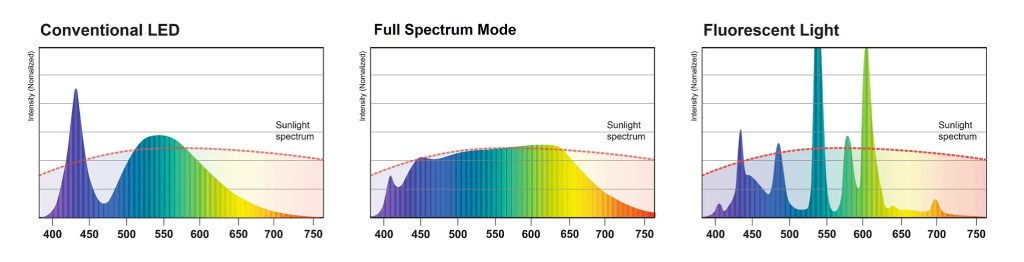
LEDs also edge out fluorescents when it comes to color rendering index (CRI), which is a measure of how accurately a light source displays colors compared to natural sunlight. While most fluorescent lights have a CRI between 50 and 75, LEDs can reach up to 98 CRI – nearly mimicking daylight. These aspects significantly impact human eyesight health as well.
Fluorescent lights emit UV radiation and excessively bright or harsh light, which can cause eye strain and discomfort over extended periods. In contrast, LED tube lights generate little UV emissions and are typically designed with better diffusers for softer lighting, making them far less likely to contribute towards visual discomfort or fatigue.
Shedding Light on the Environment: LED vs Fluorescent Tube Lights
Energy Waste Production – The Eco-Friendly Luminary
The path to minimizing our carbon footprint is an arduous journey that begins with tiny steps. One such step is pondering over the choice between LED and fluorescent tube lights. Both types of lighting have their unique energy consumption patterns, which invariably affect their overall environmental impact.
The life cycle of typical gas-discharge tube lamps, such as fluorescent lights, begins with a higher-energy manufacturing process compared to that of LED lights. Although improved over time from old vacuum tube lamps, fluorescent lights necessitate more energy-intensive materials for their production.
The high-energy consumption extends to the usage phase; while they are more efficient than classic incandescent tube lamps, they still lag behind modern LED tube lights in terms of energy efficiency. LEDs, on the other hand, are intrinsically low-voltage devices, hence requiring significantly less power for operation compared to fluorescents.
This reduction in energy usage correlates directly with a decrease in carbon emissions during the operation phase. Furthermore, LEDs offer greater longevity, which means fewer replacements and, subsequently, reduced manufacturing emissions.
However, no analysis would be comprehensive without examining end-of-life disposal procedures. While both LEDs and fluorescents have recyclable components like metal ends and glass tubes, disposing of or recycling fluorescents is a more complex process due to mercury content, making them somewhat less eco-friendly overall.
Luminaries Under Microscope: Hazardous Elements Unveiled
When looking at potential toxic elements involved in both types of light sources, there’s one clear villain in this narrative: mercury. Found within every fluorescent bulb, including landscape tube lights used for landscape lighting applications, mercury is a hazardous substance that poses significant environmental risks when disposed of improperly.
On breakage or during unregulated disposal processes of these bulbs, mercury vapors can leak and thereby pollute the surrounding environment. The mercury bioaccumulates, causing detrimental effects on human health and ecosystems alike.
LEDs, in contrast, have a far lesser environmental hazard associated with their disposal. While there are minute amounts of toxic materials like lead or arsenic used in some LED products, many modern LED tube lights (especially those manufactured in accordance with RoHS standards) are virtually free from dangerous substances.
However, it is worth noting that LEDs do utilize rare-earth elements for their production – materials that are both scarce and challenging to mine. The extraction process of these elements has raised concerns over potential environmental degradation and geopolitical issues linked with supply chains.
Conclusively considering all factors above – energy usage, manufacturing processes, and disposal methods – while neither lighting solution could be deemed as perfectly green, LED lights currently seem to be the more eco-friendly option compared to fluorescent tube lights. It is clear, therefore, that our move towards sustainable lighting should lean towards LEDs without disregarding further technological developments in this field.
The Unseen Dangers: Safety Considerations of Fluorescent and LED Tube Lights
When we contemplate the safety of our landscape lighting, we often overlook the potential hazards associated with the types of lights we use. Both fluorescent and LED tube lights have certain risks that should be considered.
Fluorescent tubes, which are essentially typical gas-discharge tube lamps, contain a small amount of mercury. If they break, this mercury can be released as a vapor that can be harmful if inhaled over an extended period. It is advised to ventilate areas where a fluorescent tube has broken immediately. Furthermore, proper disposal methods need to be followed to prevent environmental contamination.
On the other hand, LED tube lights have their unique set of safety concerns. They operate at much higher internal temperatures than classic incandescent tube lamps or old vacuum tube lamps. If improperly handled or installed, there is a marginal risk of burn injuries or fires. While these risks appear daunting, it’s essential to understand that they are significantly minimized with correct usage and handling procedures.
For instance, LEDs should not be used in extremely enclosed fixtures without sufficient heat dissipation capabilities. Safety is an integral aspect when choosing between fluorescent and modern LED tube lights for our landscape needs – both have certain hazards but can be safely used with proper knowledge and precautions.
Conclusion: Are LED Tube Lights Superior to Fluorescent Tube Lights?
In expounding on the complex comparison between fluorescent and LED tube lights for landscape lighting applications, it is evident that each comes with its unique set of advantages and drawbacks – be it in terms of energy efficiency, lifespan, or light quality. However, one thing shines through brightly: modern LED tube lights provide an optimistic way forward given their eco-friendliness and energy-saving capabilities.
This journey from old vacuum tube lamps to LED tube lights represents a shining example of technological advancement that greatly benefits both the environment and our pockets. Considering the safety aspects and choosing wisely can help illuminate our landscapes more effectively and efficiently, making them not just a feast for the eyes but also a friend to our planet.
You may also be interested in the following posts: