
What Causes LED Strip Lights Not To Light Up?
The Bright World of LED Strip Lights
As the dawn of technology continues to break into a new day, we are introduced to increasingly innovative lighting solutions designed to enhance our living and working spaces. One such revolutionary invention is the LED strip light. A marvel of modern lighting technology, LED strip lights are thin, flexible circuits populated by small light-emitting diodes that emit bright, colorful light when powered.
Unlike traditional bulbs or spotlights, these unique lighting fixtures offer versatility in their application. Their sleek design and adhesive backing make them easy to install in hard-to-reach or unconventional locations, permitting an array of creative lighting options. From adding a touch of glamour to your home interiors or brightening up a workspace to illuminating outdoor areas as landscape lighting, these luminary wonders can do it all.
In addition to their aesthetic appeal, LED strip lights also offer energy efficiency and longevity. They operate on low-voltage power sources and consume less energy than conventional incandescent or fluorescent lights, making them an eco-friendly choice for lighting both indoor and outdoor spaces.
Shining Bright: The Importance and Applications of LED Strip Lights
LED strip lights have dramatically changed the way we perceive artificial light. No longer confined merely to utility, they have redefined the boundaries between functional lighting and artistic expression. Their flexible nature allows them not only to provide essential visibility but also to contribute significantly towards creating ambiance within a space.
One prime example is their use in landscape lighting. Landscape strip lights skillfully hidden within foliage or placed under pathways add depth and character at dusk, creating enchanting nighttime vistas right in your backyard. Similarly indoors, they can be used for accentuating architectural details, highlighting artwork, or simply creating warm, inviting spaces.
In commercial spaces too, LED strip lights play a vital role. They offer efficient workspace lighting and can also be used for advertising purposes. From backlit signage to product displays, their varied color spectrums and brightness levels enhance visibility and attract attention.
Furthermore, in the entertainment industry, these lights have transformed stage designs and club atmospheres, creating dynamic visual experiences. Their ability to change colors in response to music or other triggers has greatly enriched performances, making them more engaging for the audience.
The Dark Side: Addressing Common Issues with LED Strip Lights
Despite their extensive benefits and applications, LED strip lights are not free from problems. Users often face issues related to installation errors, power supply malfunctions, or simple product faults. Among these issues, one of the most common yet puzzling problems is when the LED strip lights refuse to turn on.
This seemingly straightforward issue can be caused by a myriad of factors ranging from inadequate power supply and incorrect voltage input to wiring problems and faulty LEDs themselves. The mystery deepens as even high-quality landscape lighting or other outdoor installations are not immune from these occurrences.
It’s crucial to understand that while LED strip lights are designed for durability, they aren’t invincible. Exposure to harsh environmental conditions such as extreme temperature variations or moisture may cause them not only to lose luminosity over time but also to result in complete failure.
This post aims at delving deeper into this prevalent issue: why won’t LED strip lights turn on? By understanding how these innovative lighting solutions work and identifying potential issues that prevent them from operating efficiently, we can better troubleshoot such problems, effectively aiding in their long-term performance.
Understanding LED Strip Lights
The Mechanics of LED Strip Lights
Piercing through the general perceptions, it’s vital to understand the mechanics of how LED strip lights function. They are not just mere lengths of flexible circuit boards with tiny LEDs mounted on them. There’s a sophisticated science behind it, which primarily involves the basic principles of light-emitting diodes (LEDs).
Delving deeper into the functioning, each diode is made from a material like silicon or germanium, forming a ‘p-n junction’. When electric current passes through this junction, electrons and holes – vacancies where electrons should be – meet and produce energy in the form of light. This conversion process is known as electroluminescence.
In essence, operationally speaking, an LED strip light works by passing current through these semiconductor devices (LEDs). The strip contains several components, including resistors that control the current flow and capacitors that smooth any fluctuations.
Deciphering Light-Emitting Diodes (LEDs)
A better comprehension of LED strip lights can be achieved by familiarizing oneself with the basic principles behind LEDs. As aforementioned, LEDs are semiconductor devices that emit light when an electric current is applied to them. These devices function based on a phenomenon known as electroluminescence: when a voltage is applied across an LED’s terminals, energy levels in its atoms change.
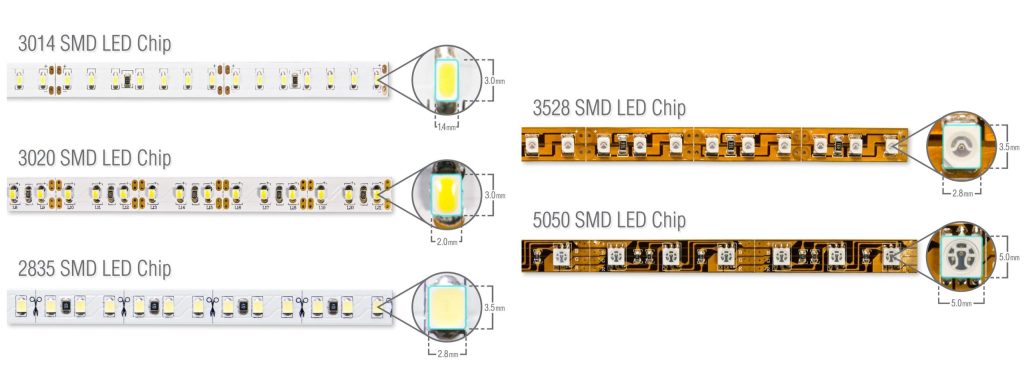
When these excited atoms return to their normal state, they release photons – the smallest discrete unit or quantum of electromagnetic radiation – in this case visible light. From multicolored landscape lighting to indicator signals in devices; from backlighting for screens to general lighting purposes – LEDs have been extensively used due to their high efficiency and long lifespan as compared to traditional incandescent and fluorescent lamps.
Components and Structure of an LED Strip Light
Beneath the apparent simplicity of an LED strip light lies an intricate structure. These strips are comprised of several LEDs soldered onto a flexible circuit board, powered via attached connectors. Each individual LED on the strip consists of a semiconductor light source, while resistors are incorporated to manage the current flowing through each LED.
The entire strip is typically coated with silicon or plastic for protection against physical damage and environmental elements. LED strips are often equipped with adhesive backing for easy installation and can be cut at specific intervals, usually every 3 LEDs, without damaging the rest of the strip. This feature offers great versatility in terms of design options, from accent interior lighting to landscape strip lights illuminating a backyard garden.
Exploring Varieties of LED Strip Lights
With growing popularity, market shelves display an array of different types and models of LED strip lights catering to varied needs. The primary distinguishing factors are color variants – single color (monochromatic), color-changing RGB (red-green-blue), or even RGBW that includes white for more variation.
Further variations come in terms of brightness levels (measured in lumens) determined by the size and number of LEDs on the strip. Certain specialized types include waterproof versions ideal for outdoor applications such as landscape lighting or underwater pool lighting.
Understanding how these compelling devices work forms an essential foundation before diving into troubleshooting their problems. A grasp on their functioning allows us to appreciate not only their contribution to our aesthetic satisfaction but also their marvels as feats of scientific innovation.
Common Reasons Why LED Strip Lights Won’t Turn On
Power Supply Issues
The first and foremost reason for landscape strip lights refusing to shine is power supply issues. These ultra-thin, highly flexible lights are powered by a direct current (DC) source. If there is an insufficient power supply, the LED strip lights will not function properly or may not turn on at all.
An insufficient power supply often occurs when the wattage of the power source does not match the wattage required by the LED strip light. It’s similar to expecting a small battery to run an appliance designed for a larger one; it simply cannot provide what’s needed.
Apart from an insufficient supply, faulty power adapters or connectors can also hinder the flow of electricity to your landscape lighting. A broken adapter may not translate alternating current (AC) effectively into DC, or it could have issues with its internal circuitry preventing it from supplying adequate voltage to your LED strips.
Even when using high-quality connectors, wear and tear can lead to malfunctions over time. Therefore, regular checks and replacements are necessary to keep your landscape strip lights performing optimally.
Wrong or Poor Wiring Connection
Mistakes in wiring connections are another common reason why LED strip lights fail to turn on. One such error is an incorrect polarity connection. The term ‘polarity’ in this context refers to the direction in which current flows from one end of a circuit to another.
Simply put, if you connect a positive wire where a negative should be (or vice versa), your LEDs won’t work. Incorrectly connecting wires that result in reverse polarity can potentially damage your LEDs beyond repair, forcing you into replacement rather than simple repair work.
Besides incorrect connections, loose or disconnected wires pose another problem. Over time, due to environmental factors, vibrations, or physical stresses, these connections can become loose or disconnected entirely – effectively cutting off power flow to your LED strip lights. Therefore, it is of utmost importance to inspect your wiring regularly to ensure it is secure and connected properly in order to maintain the brightness of your landscape lighting.
Damaged or Faulty LEDs
Landscape strip lights consist of a series of small LEDs. If one or several of these are damaged or faulty, it could prevent the entire strip from turning on. A common issue is “dead spots”, areas on the LED strip where multiple LEDs aren’t working due to one faulty LED component. The tricky part here is identifying which LEDs are damaged.
They can appear perfectly normal on visual inspection even when they’re not functioning correctly. The easiest method is by testing individual LEDs with a multimeter set to continuity mode. This helps in checking if each LED provides a stable electric continuity. Any inconsistency may indicate that it’s time for replacement.
Environmental Factors
Environmental factors like temperature and moisture play significant roles in determining the longevity and functionality of your landscape lighting. LEDs are generally more robust and resistant against environmental influences compared to traditional bulbs; however, they aren’t completely invincible. Excessive heat can result in rapid degradation and wear of the semiconductor material inside an LED, causing its light output to diminish over time or, in severe cases, cease altogether.
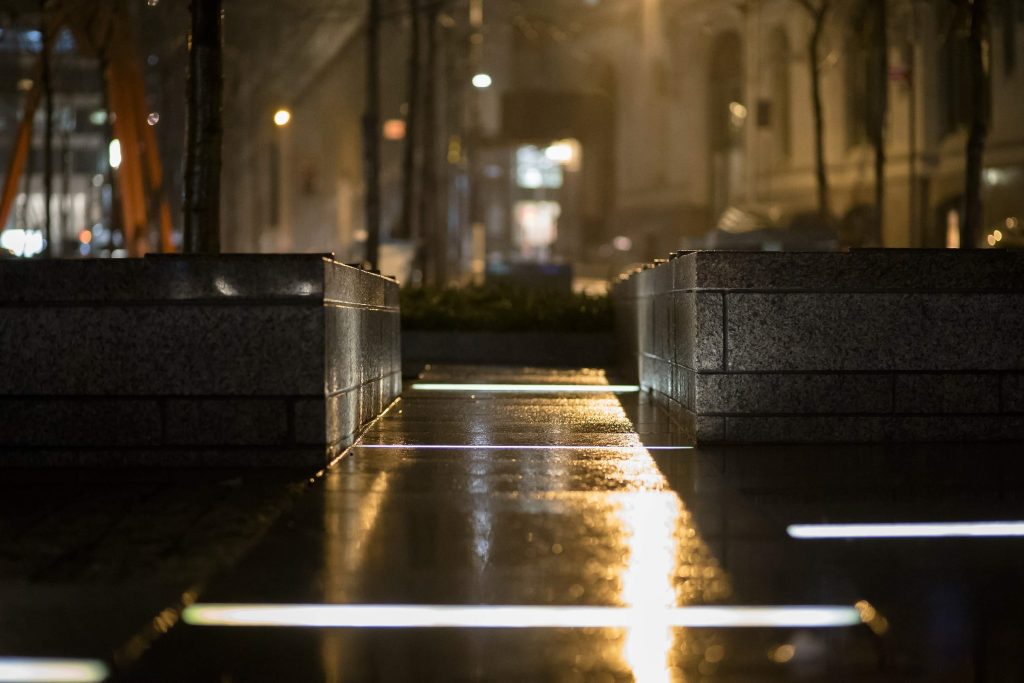
In terms of moisture, although many LED strips have a waterproof coating, prolonged exposure can lead to erosion and eventual short-circuiting if left unchecked. High humidity levels may also present problems for certain types of connectors used with LED strips, as they’re prone to rusting, which hinders their conductivity over time, affecting overall performance.
Understanding these common reasons why LED strip lights fail to turn on is key to maintaining their optimal performance. A regular check of the power supply, wiring connections, and LEDs themselves, accompanied by adherence to recommended environmental conditions, will ensure that your landscape lighting continues to shine bright.
The Dimming of Illumination: Understanding Voltage Drop in LED Strip Lights
In the realm of electrical engineering, voltage drop presents as a pervasive issue, significantly impacting the performance of LED strip lights. To elucidate this concept, voltage drop can be defined as the decrease in electrical potential along the path of a current flowing through an electric circuit. It is a phenomenon driven by resistance within the circuitry, which leads to energy being lost in forms like heat.
Demonstrating practical insight into this topic inevitably begins with understanding Ohm’s Law, which defines that voltage equals current times resistance (V=IR). In essence, every wire or component through which electricity passes acts as a resistor. The longer and thinner the wire is, or the more components it feeds, the greater its resistance. Consequently, less voltage remains at the end of that wire or series of components.
The Dimmed Reality: How Voltage Drop Affects LED Strip Lights
Turning from theory to practice, analyzing how such an elemental law impacts our everyday landscape lighting reveals fascinating insights. When it comes to strip lights – particularly those installed over long runs, such as landscape strip lights – voltage drop can result in inconsistent brightness, most clearly manifested at the farthest ends from power supply points, where light output dramatically decreases.
Understandably so, since LEDs operate optimally within certain voltage ranges, when this falls below the minimum threshold due to extensive distribution along circuitry length, their luminosity follows suit. In extreme cases where inadequate amounts are supplied due to significant drops, LED strip lights may fail entirely, leading one back to the original predicament – why won’t they turn on?
Lost Luminance: Symptoms Indicating Voltage Drop in Landscape Strip Lights
Recognizing symptoms indicative of this issue can save valuable time during the troubleshooting process. The most common signs include progressive dimming towards the end sections or sporadic flickering across the strip length.
In some instances, certain sections may not light up at all. Notably, voltage drop-related problems in landscape lighting are often exacerbated in cold temperatures since electrical resistance increases with falling mercury levels.
To accurately diagnose a voltage drop issue, one would need to measure the voltage at both ends of the LED strip light using a multimeter. If the reading is lower at the far end of the strip compared to where power is supplied, then it’s safe to assume that voltage drop is the likely culprit.
Combatting Darkness: Ways to Prevent Voltage Drop
Fortunately, there exist reliable strategies for preventing or minimizing this dimming due to voltage drops. Firstly, ensure the correct power supply, providing ample wattage for the entire LED strip light length – bear in mind that longer strips require higher voltages.
Secondly, consider installation methods; ideally, power should be supplied from the middle rather than one end so as to evenly distribute voltage across the whole strip. Additionally, using thicker wires, which reduce resistance, can help maintain proper voltages across the length of your landscape lighting setup.
Most importantly, always opt for quality LED products from trusted manufacturers who prioritize component efficiency, thereby reducing inherent resistances within each LED unit, leading ultimately towards lesser overall energy losses. Understanding and managing the unavoidable realities of electrical resistance and resultant voltage drops will ensure your brilliant landscapes remain unmarred by inconsistently lit or non-functional LED strip lights.
Troubleshooting Tips for Non-Functional LED Strip Lights
A Comprehensive Guide to Rectifying the Common LED Issues
LED strip lights are a popular choice for landscape lighting due to their vibrancy, efficiency, and flexibility. However, like any other electrical device, they can sometimes malfunction, leaving you in the dark. This section aims to provide insightful and practical guidance on diagnosing and fixing some of the most common issues associated with non-functional LED strip lights.
The Importance of Checking the Power Source
One of the first steps in troubleshooting non-functional landscape strip lights is to inspect your power source. A common issue that can prevent your LED strip lights from functioning correctly is a lack or inconsistency of power supply.
Begin by ensuring that your power supply unit (PSU) is properly connected and switched on. If this isn’t an issue, check for any visible signs of damage or wear on the power cord and plug. In addition, it’s important to verify that your power supply has sufficient wattage to support your LED strips’ total load.
An underpowered PSU may not have enough capacity to light up all sections of your landscape strip lights simultaneously. Use a multimeter to measure the output voltage of your PSU – if it’s significantly lower than specified by manufacturer guidelines, you may need a replacement.

If you’re using rechargeable batteries as a power source for portable or standalone lighting fixtures, make sure they’re fully charged before testing them with your LEDs. Replace them if they’re old or can’t hold a charge as well as they used to.
Also remember that outdoor temperatures can greatly affect battery performance – extreme cold or heat might cause batteries powering your landscape lighting to fail. Sometimes issues with turning on could be due to an unstable electricity grid at home, which might require help from a licensed electrician.
Furthermore, if your LED strip lights are connected to a dimmer switch, ensure that it’s compatible with your particular LED model and properly calibrated to the correct brightness level. If, after all these checks and measures, your landscape strip lights still refuse to illuminate your exterior spaces, it’s time to delve deeper into the wiring connections.
Thorough Inspection of Wiring Connections
Incorrect or loose wiring can often be an underlying cause for non-operational LED strip lights. Start by examining visible wire connections for any signs of damage or corrosion. If you notice any frayed wires or loose connections, they will need to be repaired or replaced accordingly.
The next step is to check for any reverse polarity issues. LEDs are diodes that allow current flow in only one direction – reverse polarity could stop them from lighting up. Make sure that the positive and negative leads on your power source align with the corresponding terminals on your LED strips.
In the case of larger landscape lighting setups involving multiple LED strips, ensure that all inter-strip connectors have been correctly attached – these connectors can sometimes come loose due to environmental elements such as wind or rain. Use a circuit tester or multimeter set in continuity mode to test each connection point along the length of each strip.
If you’ve soldered wires onto cut sections of an LED strip during installation, check that these solder joints haven’t cracked over time – this is especially important in outdoor installations where temperature fluctuations might affect joint integrity. A strong magnifying glass or loupe will come in handy here.
Testing Individual LEDs
If you’ve checked the power supply and wiring and yet find no issue there, it may be prudent to scrutinize individual LEDs on the strip next. Though LEDs are typically known for their long lifespan and durability, they can still burn out or get damaged due to various factors, leaving sections of your landscape strip lights unlit.
Begin by visually inspecting each LED to see if you can identify any obvious signs of damage. This could be anything from a cracked lens to signs of overheating like deformation or browning on the strip around a particular LED. If you do find visibly damaged LEDs, they will need to be replaced.
If the LEDs appear intact visually, you might want to conduct an electrical test next. Carefully use a multimeter or LED tester to check voltage across each individual diode – take care not to create short circuits with your testing probes. A functioning LED should show a forward voltage drop within the specifications given by its manufacturer.
The Consideration for Professional Help
While many issues with landscape strip lights can be diagnosed and fixed using these troubleshooting tips, some problems might need professional assistance. If all of these proposed solutions have been exhausted without success, it might be time to call in the pros.
A licensed electrician has the necessary tools and expertise to accurately diagnose and safely repair complex electrical issues that might be outside of typical homeowner abilities. They can help troubleshoot deeper issues like defects in circuit board design or internal component failure in power adapters that aren’t user-serviceable. You may also want professional help if your fixture is still under warranty – any unauthorized tampering could potentially void the warranty coverage.
Hiring professionals is especially crucial when dealing with high-voltage systems, which pose safety hazards when handled improperly. While encountering issues with your landscape lighting can be frustrating, most common problems can often be resolved by carefully following these troubleshooting steps – checking power sources, inspecting wiring connections, and testing individual LEDs – or seeking professional assistance when needed.
Preventive Measures to Avoid Future Issues with LED Strip Lights
Regular Maintenance and Cleaning: The Pathway to Longevity
The longevity and efficiency of your LED strip lights, including landscape strip lights, can be significantly improved through regular maintenance and cleaning. Dust, grime, or any form of particulate matter can accumulate on the surface of the LEDs over time. This not only affects the light output but can also lead to overheating, which may damage the LEDs.
Avoid using harsh chemicals or rough cleaning tools that could damage the diodes. Instead, a soft cloth lightly dampened with a mild cleaning solution will suffice in most cases. Always ensure that your LED strip lights are turned off and cool before you begin any cleaning regimen.
Maintenance isn’t solely about cleanliness; it also involves routine inspections for any visible damage or wear and tear. Check for darkened areas on your strips, as these could indicate burnt-out LEDs. Regularly conducting these simple proactive measures can prevent small problems from escalating into larger, more complex ones.
In relation to landscape lighting utilizing LED strip lights, extra care must be taken due to their exposure to outdoor elements such as rain and temperature fluctuations. While most exterior lighting fixtures are designed with weather protection in mind, regular maintenance checks remain crucial in extending their lifespan.
Remember that preventive maintenance is always cheaper than repair or replacement costs. Therefore, taking a little time for upkeep saves you more than just money – it keeps your lighted space in an unblemished glow.
Proper Installation Techniques: The Foundation of Functionality
The way your LED strip lights are installed can greatly impact their functionality over time – whether they’re applied as ambient indoor lighting or dynamic landscape lighting. Following proper installation techniques minimizes potential issues such as loose connections, mechanical strain, or exposure to hostile environmental conditions.
One critical installation aspect is ensuring correct polarity. LED lights require the right polarity connection for them to function. Always refer to manufacturer instructions to correctly distinguish positive and negative terminals.
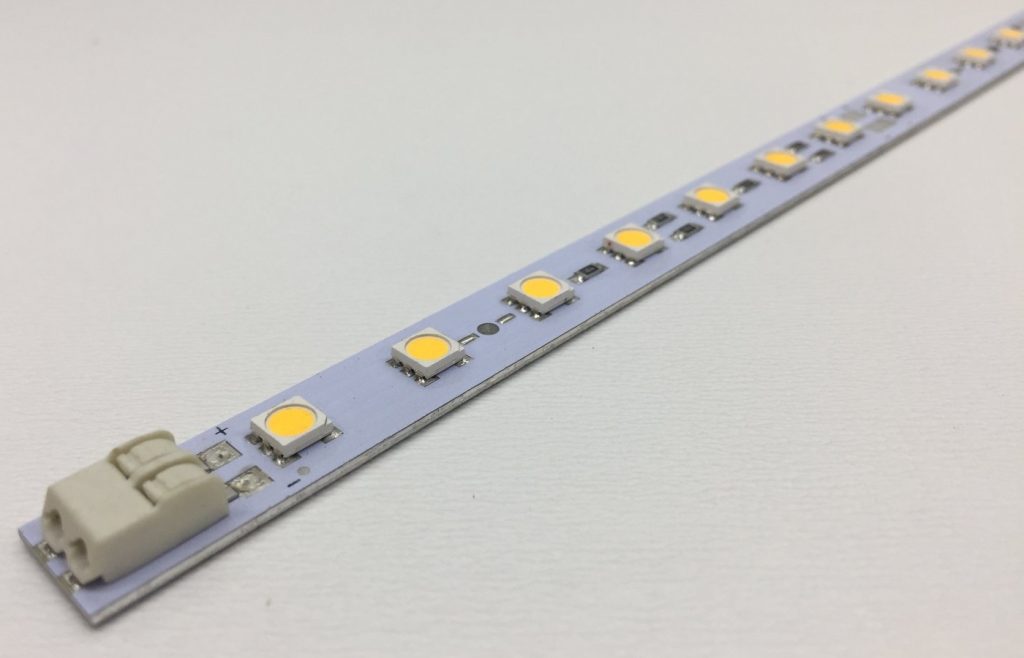
Use appropriate mounting hardware and adhesives that won’t damage the strip lights or compromise their performance. The choice of installation accessories can vary depending on where you’re installing the strip lights – be it under kitchen cabinets or along garden pathways.
Avoid overstretching your LED strips during installation, as this might lead to damaged circuitry or LEDs. Similarly, refrain from bending strip lights at sharp angles, as it could cause physical damage and shorten their lifespan.
In relation to landscape strip lights, ensure they are installed away from direct exposure to water sprinkler systems, in well-drained areas, and preferably under some form of overhang for protection against excessive moisture. Always remember that while most LED strip lights are designed with robustness in mind, a little preventive care during installation goes a long way in maintaining their performance.
Choosing Quality Products: An Investment in Reliability
The market is replete with a variety of LED products – including those designed specifically for landscape lighting – that cater to different tastes and budget constraints. However, opting for quality products should be given priority over other considerations such as cost.
Quality LED strip light products usually come from reputable manufacturers who undertake rigorous testing procedures before launching their products into the market. These products may come with a higher upfront cost but ultimately provide value for money through consistent performance and durability.
Beware of cheap knock-offs that may seem like a bargain initially but might end up costing more due to frequent replacements or repairs. The lack of quality control in these inferior products often results in inconsistent brightness levels, premature failure rates, inadequate weatherproofing, or even electrical safety hazards.
Furthermore, quality LED products are typically backed by comprehensive warranties and reliable customer service. This provides a level of assurance and support if problems do occur. Always check for warranty information and customer reviews before making a purchase.
Ultimately, whether it’s for decorative accents in your home or nighttime lighting in your garden, choosing quality products ensures that your landscape strip lights continue to contribute their radiant charm without the inconvenience of recurrent issues.
Conclusion: Why Won’t LED Strip Lights Turn On?
Wrapping Up the Luminary Discourse
In the course of this revealing exploration, we have journeyed deep into the world of LED strip lights, understanding their structure, types, and, more importantly, why they sometimes refuse to sprinkle their glow in our spaces. We delved into these luminaries, dissecting them layer by layer to expose their light-emitting diodes and how they work.
We also learned about their different models available in the market and how to choose wisely according to one’s needs. Further on this exploratory voyage, we uncovered common issues that dim the lights of our LED strip lights. Power supply problems can act as a stumbling block in lighting up your space with these sleek light sources.
Faulty power adapters or connectors might be hiding behind your unlit landscape strip lights. Wiring connections also play a pivotal role in ensuring these lights illuminate correctly; a wrong polarity connection or loose wires can indeed turn off your landscape lighting.
A Beacon towards Troubleshooting
Beyond identifying problems, we equipped ourselves with troubleshooting tips for non-functional LED strip lights. Checking your power source diligently along with a thorough inspection of wiring connections could be a beacon towards resolving issues. The methodical testing of individual LEDs also came into the spotlight as an effective way to restore lighting.
While it is important to troubleshoot problems as they arise, prevention undoubtedly yields brighter results. Regular maintenance and cleaning were identified as key preventive measures that, coupled with proper installation techniques, could significantly reduce future issues with LED strip lights.
An Enlightened Future Awaits
While it may seem daunting when your LED strip lights do not turn on at first glance, armed with this newfound knowledge about potential causes and solutions, you are well-equipped now to tackle any such problem that may arise later. This narrative has enlightened us, not only about the functioning of LED strip lights but also about how to keep them shining bright in our lives.
Whether you decide to light up your living room or install landscape strip lights for a stunning visual appeal, remember that proper care and understanding of these lighting marvels can go a long way in ensuring they continue to brighten our spaces and, consequently, our lives.
You may also be interested in the following posts: