
The Science Behind LED Tube Lights Glowing When Off
An Overview of LED Tube Lights
Light-emitting diodes have revolutionized the world of artificial lighting. In recent years, LED tube lights have gained significant popularity due to their exceptional luminous efficacy and long-lasting lifespan. These light sources are versatile in their application, finding use in landscape lighting, as LED tube strip lights for channel letters and signs, and even as LED tube vintage lights that combine energy efficiency with retro aesthetics.
They come in varying sizes and hues, from compact solar LED tube lights that harness renewable energy to vibrant RGB LED tube lights capable of displaying a spectrum of colors. The science behind the operation of these innovative light sources is both fascinating and complex.
Unlike conventional incandescent or fluorescent bulbs, LEDs generate light through a process called electroluminescence. This involves the movement of electrons within a semiconductor material, which then emits photons, or light particles, when powered by an electrical current.
Furthermore, LED tube grow lights have proven to be an effective solution for indoor horticulture owing to their spectrum tailored specifically for photosynthesis optimization. In addition, smart LED tube lights offer ultimate control over intensity and color temperature, which can be remotely adjusted via apps or voice commands, making them a popular choice for modern smart homes.
The strength and adaptability extend further with LED tube string lights providing beautiful ambient lighting at festive events, while UV LED tube lights find practical applications in sterilization procedures due to their germicidal properties. For retrofit projects seeking efficiency upgrades without complete overhauls, LED tube retrofit kits are invaluable, providing a seamless transition from outdated lighting technologies.
The Glow in the Dark: Unveiling the Phenomenon
A fascinating yet puzzling characteristic is often observed with these illuminators – they continue emitting a faint glow even when switched off, an eerie phenomenon that has puzzled many users. The ghostly glow is not exclusive to any specific type of LED light; from landscape lighting to solar LED tube lights, many might exhibit this tendency. This peculiar behavior isn’t indicative of any supernatural presence but the result of certain electrical and physical properties inherent to LEDs.
The phenomenon can be attributed mainly to three factors: residual voltage or ‘phantom power’, inductive leakage currents, and issues related to the design of the circuit or electrical wiring. The mystery behind these glowing LEDs when turned off is both a scientific conundrum and a practical concern.
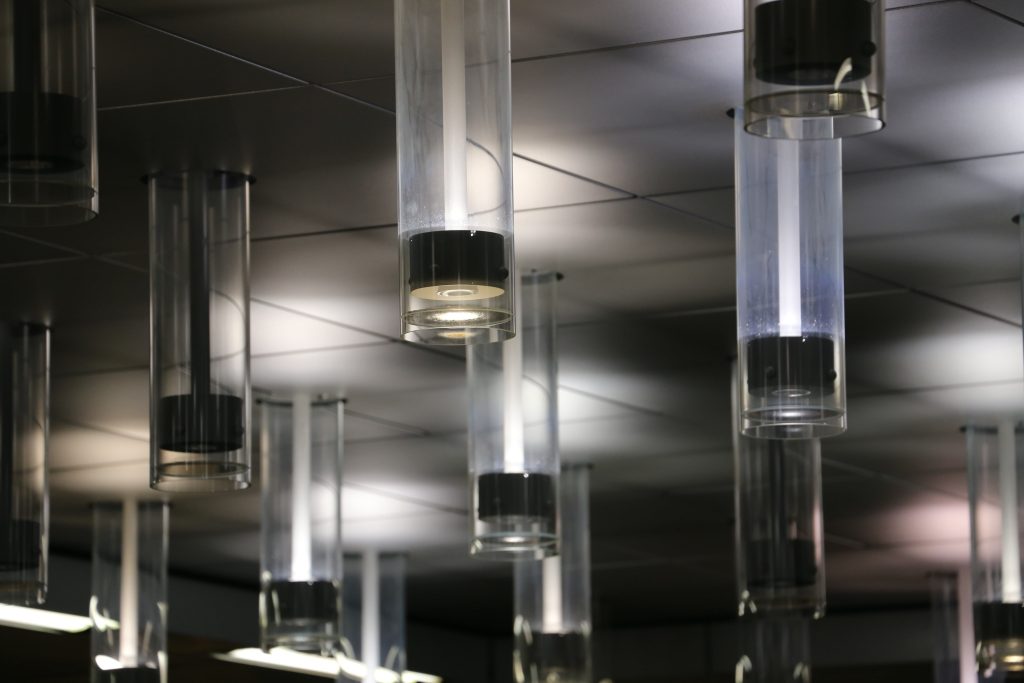
It raises questions about energy efficiency, as the glow indicates a potential waste of electricity. If your smart LED tube lights seem smarter than necessary by refusing to go completely dark when switched off, understanding why it happens might help mitigate this persistent luminescence.
The phenomenon may also affect other types of LED lighting applications, such as RGB LED tube lights or UV LED tube lights. Even though faint, continuous emission could potentially compromise their functionality over time. For instance, if an ultraviolet sterilization unit continues glowing when turned off, it could reduce its efficacy through extended use.
Understanding this unusual characteristic of LEDs is not only interesting from an academic perspective but also vital for users and manufacturers seeking maximum performance from their devices, whether it’s for beautifying gardens with landscape lighting or nurturing plants with LED grow lights.
Understanding LED Tube Lights
The Bright World of LED Lights
Light-emitting diodes, or LEDs, are semiconductor devices that emit light when an electric current passes through them. Unlike incandescent bulbs, which use heat to generate light, LEDs use a process called electroluminescence.
The illuminating magic lies within the semiconductor diode, which houses two regions of differing charge types: p-type (holes) and n-type (electrons). When voltage is applied to the diode, electrons from the n-type region begin to merge with holes from the p-type region at the junction. This recombination releases energy in the form of photons – light we perceive.
The beauty of LED technology isn’t limited to standard lighting fixtures. Their versatile design allows them to be a luminous choice for various applications, like RGB LED tube lights that provide a vibrant spectrum of colors for decorative purposes. Solar LED tube lights illuminate spaces while capitalizing on renewable energy sources – proving beneficial for landscape lighting.
The invention of LED tube grow lights has revolutionized indoor farming by providing targeted wavelength light essential for plant photosynthesis. For festive occasions or merely ambient aesthetics, LED tube string lights offer a captivating display.
Deciphering the Structure and Components of an LED Tube Light
An essential part of understanding why LEDs may glow when switched off is recognizing their structure and components. At its core, an array of individual light-emitting diodes exists within every LED tube light – each acting as a separate source of lighting. Harmoniously working together, these individual ‘dots’ create a continuous line of brightness, making them appear as one single entity.
LED tube retrofit lights serve as excellent examples where old fluorescent fixtures are replaced with energy-efficient and long-lasting LED tubes without any significant structural changes required. Similarly, LED strip lights function on the same principle but are housed in flexible circuit boards, allowing them to be used in a variety of shapes and lengths.
Alongside the diodes, an integral component is the LED driver – a self-contained power supply that regulates the amount of current flowing through the LED tubes. It plays a crucial role in ensuring that LED tube lights operate under optimal conditions, thereby maximizing their lifespan and luminous efficiency. Various lighting systems, like UV LED tube lights or smart LED tube lights, contain drivers that are specifically designed to accommodate their unique functionalities.
Heat sinks are another essential part of an LED light structure. Unlike traditional bulbs, LED tubes produce very little heat in the form of infrared radiation, which means most of it is trapped within the system. Here’s where heat sinks come into play – they absorb this generated heat and disperse it into the surrounding environment, protecting LEDs from potential overheating damage.
The Indispensable Roles of Diodes, Drivers, and Heat Sinks
Whether we’re discussing conventional applications like landscape lighting or specialized ones such as LED tube vintage lights, every single one depends on diodes, drivers, and heat sinks for their optimal functioning. The diodes are responsible for generating light through electroluminescence, while drivers ensure this process occurs under regulated currents – preventing any potential overdriving, which can lead to diminished performance or damages.
Heat sinks protect these sensitive components from thermal harm by efficiently managing any internal heat generation. Thus every component within an LED system – from RGB LED tube lights illuminating concerts with vivid colors to solar LED tube lights brightening up gardens without adding to electricity bills – plays its vital role towards achieving overall efficient performance.
The Lighting Mystery: Why Do LED Tube Lights Glow When Turned Off?
Have you ever observed your LED tube lights glowing even when the switch is turned off? This strange phenomenon occurs due to a handful of reasons. It’s not supernatural but rather scientific. Let us delve into the explanation behind this intriguing occurrence.
The Phantom Power: Residual Voltage
One of the principal causes for this glow is residual voltage, often referred to as ‘phantom power’. Residual voltage is a low level of electricity that still exists in an electrical circuit even when it’s switched off. This may occur due to capacitors present in the circuit or because of magnetic load that holds onto a charge and continues providing power even after you turn off the switch.
LED tube lights are highly sensitive and operate on low-voltage power supply. Thus, they can respond to an extremely low amount of current or residual voltage, which may not affect other lighting technologies. Consequently, this minute amount of phantom power can cause them to glow when they should ideally be off.
The Unseen Current: Inductive Leakage
Apart from residual voltage, another cause behind LED lights glowing when switched off is ‘inductive leakage currents.’ These are small amounts of electrical current that leak from one conductor to another due to magnetic fields generated by alternating current (AC).
This leakage current might be almost insignificant in terms of quantity; however, given the high sensitivity and efficiency at which LED tube lights operate, they can react even to such minuscule amounts. This reaction manifests as a faint yet puzzling glow emitted from your LED tube strip lights or smart LED tube lights even once they’re turned off.
The Circuit Maze: Design Flaws & Wiring Issues
Circuit design flaws or issues with electrical wiring can also be responsible for causing your LED tube lights to continue glowing. For instance, the presence of an induced voltage somewhere in the circuit, which can occur due to parallel routing of wires or incorrect connections, could lead to this glow.
Moreover, faulty electrical wiring or inaccurate earthing can cause a residual current flow through the LEDs. This residual current is enough to make your LED tube vintage lights or RGB LED tube lights emit a faint yet visible light.
The Afterglow: Effects & Possible Solutions
Repercussions: Energy Wastage & Performance Impact
Glowing LEDs when turned off might seem harmless; however, they subtly contribute to energy wastage and impact the lifespan and performance of your LED lights. While LED tube string lights and solar LED tube lights are energy efficient, their continuous glow drains power slowly but surely over time – even when they are not in active use.
Additionally, this undue stress on the diodes might affect their longevity adversely. Your LED tube retrofit lights or UV LED tube lights might exhibit reduced brightness levels over time due to constant exposure to phantom power.
Solutions: Zener Diodes, Earthing & Quality Transformers
To mitigate these issues with glowing LEDs, employing Zener diodes is a practical solution. These diodes can block residual voltage effectively and prevent it from reaching your delicate LED tube grow lights or landscape lighting fixtures.
Additionally, ensuring proper earthing/grounding in electrical circuits can help regulate residual current flow, thus preventing continuous glowing of LEDs. Using quality transformers with low standby power also plays a crucial role in cutting down phantom power that might be causing your LEDs to glow when switched off.
The Luminescent Narratives: Case Studies & Real-Life Examples
In real-world scenarios, it’s not uncommon for people to notice their LED tube lights glowing when switched off. For instance, a case involving LED tube strip lights in a commercial setting or instances of smart LED tube lights in homes emitting faint light even when switched off. These are practical examples that signify the existence of phantom power and highlight the need for proper solutions.
Conclusion: Why Do LED Tube Lights Glow When Turned Off?
We learn that while LED tube lights glowing when turned off might seem like an enigma, it’s entirely grounded in science. By understanding these phenomena and implementing solutions, we can ensure the longevity of our LED lights and reduce energy wastage.
As technology continues to evolve and advance with time, like the development of RGB LED tube lights or solar LED tube lights, we anticipate more efficient designs that will minimize these issues and make our lighting experience even more seamless and impressive.
You may also be interested in the following posts: