
LED Flickering: Discover Why Your Tube Lights Keep Glitching
The Luminous World of LED Tube Lights
In the realm of lighting technology, LED tube lights have emerged as a paragon of efficiency, durability, and versatility. They are elongated luminaries that can be used in a vast array of settings, from brightening homes and offices to adorning landscapes with LED tube string lights illuminating pathways.
LED tube lights come in myriad forms, each fulfilling distinct purposes. For instance, RGB LED tube lights radiate varied colors, enhancing aesthetic appeal, while solar LED tube lights operate on renewable solar energy, providing an eco-friendly lighting solution. Smart LED tube lights not only brighten spaces but also contribute to energy preservation due to their efficient energy consumption.
Innovations like LED tube grow lights aid in indoor plant growth by providing the light spectrum necessary for photosynthesis, whereas vintage-style ones lend a unique antique charm to interiors. UV LED tube lights are popular for sterilization purposes, while the strip variant is used for accent or mood lighting.
Landscape lighting often features LED tubes due to their weather resistance and efficiency. Last but not least, retrofit solutions use LED tubes as replacements for traditional fluorescent or incandescent bulbs, offering substantial power savings.
The Importance and Benefits of LED Lights
Light-emitting diode technology has transformed our lighting solutions substantially over the last few decades. LED lights are lauded for their myriad benefits, which include unparalleled energy efficiency, longer lifespan, and reduced environmental impact compared to traditional light bulbs – all attributes contributing significantly towards sustainable living.
LED lights offer immense durability, lasting up to 50 times longer than incandescent counterparts, thereby reducing frequent bulb replacements. This longevity implies less waste heading towards landfills, benefiting both consumers and the environment.
Moreover, LED lights consume significantly less energy than other bulb types, which means they run cooler, preventing potential fire hazards associated with overheated bulbs or fixtures. It’s no surprise, then, that LED tube lights are adopted extensively as ideal components in smart buildings and homes.
LED tubes provide superb light quality, offering a range of color temperatures from warm, welcoming glows in living spaces to clear, bright illumination in work environments. Their dimming capabilities make them even more versatile for varied lighting needs.
Disrupted Luminescence: The Problem of Flickering
Despite the many accolades that LED lighting technology receives, it is not entirely devoid of challenges. One such vexing issue is flickering – an intermittent fluctuation in light output that can range from barely noticeable to disruptive. A flicker happens when the cyclic rhythm of your electrical power causes an inconsistent supply frequency, making the LED’s brightness waver noticeably.
This inconsistency disturbs the stable luminescence we expect from our LED tubes and can lead to eye strain or headaches in some individuals. Flickering is perceived differently by various individuals depending on how sensitive their eyes are to varying light intensities.
For some, it may go unnoticed, while for others it could be a major source of discomfort. While a rare occurrence, understanding why this happens with seemingly perfect LED tube lights is crucial to prevent or troubleshoot this problem, effectively ensuring our luminous world remains steady and consistent.
Understanding the Flickering Phenomena in LED Lights
Decoding the Mystery: What is Flickering?
Flickering, in the context of lighting, refers to the quick, repetitive variation in light intensity. It’s a fluctuation that can range from a slight shimmer or wavering light to full-on flashing. Although flickering is commonly associated with traditional fluorescent lamps and not LED tube lights, it can still occur under certain circumstances with LED lighting systems. This anomaly may manifest itself differently across various types of LED tubes, such as LED tube vintage lights or RGB LED tube lights.
The Human Eye and the Flicker: An Unseen Dance
The human eye is an exceptionally sensitive instrument that can perceive minute changes in our surroundings. It can detect variations of light intensity but not always consciously register them. Depending on their frequency and intensity, these fluctuations might go unnoticed. For example, while landscape lighting designed with smart LED tube lights might produce some degree of flicker, it might be imperceptible to an observer due to its rapid frequency.
A Spectrum of Visibility: Manifestations of Flicker
When discussing flicker in LED tube retrofit lights or any form of lighting system, it’s essential to distinguish between visible and invisible flicker. Visible flicker is noticeable even by unaided observation when the fluctuations occur at lower frequencies (below 100 Hz). This kind of flicker is generally more prevalent in older lighting models like LED tube vintage lights.
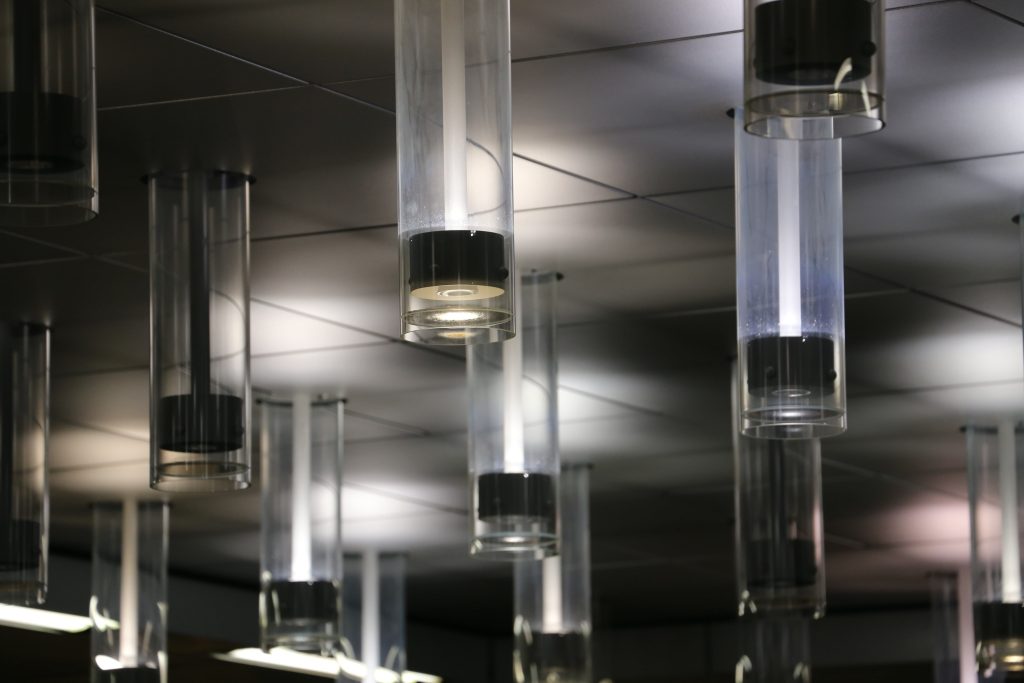
Invisible flicker usually occurs at frequencies above 100 Hz – these are too rapid for our eyes to detect explicitly but may still have subconscious effects on us. For instance, UV LED tube lights used for sterilization purposes often operate at high frequencies, causing invisible flickers.
The Subtle Threat: Invisible Flickers
While invisible flickers from LED tube string lights or other high-frequency lighting sources might not be easily observed, they shouldn’t be overlooked. Some studies suggest a connection between prolonged exposure to high-frequency flicker and certain health issues like headaches and eyestrain. Our eyes may not see these rapid fluctuations, but our brains are continually trying to process them, leading to possible discomfort over time.
Shedding Light on the Shadow Play: Visible Flickering
Visible flickering, as seen in some LED tube grow lights or old fluorescent lamps, can create a disturbing visual environment. It can distract and cause discomfort, thus decreasing productivity in workspaces. In some extreme cases, it can trigger photosensitive epilepsy. Therefore, understanding why your LED tube lights or any other lighting system are flickering becomes crucial for creating a safe and comfortable environment.
The Science behind LED Tube Lights
Unraveling the Fundamentals: Basic Working Principle of LED Lights
The acronym LED stands for ‘light-emitting diodes‘, and they are fundamentally different from traditional bulbs. The operation of an LED light is based on the principle of electroluminescence, a phenomenon where a material emits light in response to an electric current or a strong electric field. This is in stark contrast to incandescent bulbs, which generate light by heating a metal filament until it glows.
LEDs are composed of semiconductor materials that create light when electric current passes through them. They have two layers of semiconductors, one with excess electrons (n-type) and the other with deficit electrons (p-type). When voltage is applied across these layers, electrons from the n-type layer start moving towards the p-type layer.
This movement leads to the release of energy in the form of photons, or light particles. This fundamental difference in operation presents numerous advantages for LED lights over traditional lighting options. For instance, because LEDs do not rely on heat generation to produce light, they’re far more efficient than incandescent bulbs, leading to their widespread usage in landscape lighting.
Anatomy of Lighting: Components Involved in the Functioning of LED Tubes
An LED tube consists mainly of three components: the LED chip that generates light, a heat sink that dissipates heat and prolongs chip life, and an electronic driver that controls power to the chip. The combination of these components can be found in various forms, such as RGB LED tube lights or UV LED tube lights.
The LED chip itself comprises numerous layers, including semiconductor material like gallium arsenide for infrared LEDs or indium gallium nitride for blue and ultraviolet LEDs. These semiconductor materials can be adjusted so as to alter the color spectrum produced by an LED; hence we have variations like the RGB LED tube lights, which can display a multitude of colors.
The heatsink is an integral component of an LED tube’s design. Despite their efficiency, LED tubes still generate heat, which needs to be managed. The heatsink absorbs this heat and disperses it into the surrounding environment, thereby preventing it from damaging the chip.
The electronic driver acts as a regulator in LED systems, delivering constant power to the chip despite variations in voltage or current. This ability to maintain consistent lighting under different power conditions is essential for applications such as LED tube grow lights or solar LED tube lights, where consistency could affect plant growth or energy savings, respectively.
From Power to Photons: Process Leading to Light Emission in LED Tubes
When an electric current is applied across the LED’s semiconductor material, electrons move from their original high-energy state in the n-type layer towards holes available at a lower energy state in the p-type layer. The transition of these electrons releases energy that manifests as light. This process varies based on different types of LED lights.
For instance, smart LED tube lights contain additional components enabling them to connect with home automation systems and adjust light intensity based on user preference – a feature not commonly found in other types of LED tube retrofit lights or vintage LED tube lights. Furthermore, factors such as material type and quality influence factors like color temperature and brightness.
For instance, UV LED tube strip lights require different semiconductors than those used for warm white LED bulb applications. While diverse in its many forms – from RGB LED tubes and UV LED tubes to smart LED tubes and solar-powered options – the underlying science of these innovative lighting solutions remains rooted in key principles derived from semiconductor physics.
Causes of LED Tube Lights Flickering
The Impact of Inadequate Power Supply on LED Tube Lights
A common culprit behind the flickering of LED tube lights is an inadequate power supply. This can occur due to several reasons, among which voltage fluctuations hold high significance. When voltage oscillates above or below the optimum level required for an LED light to function, it results in a sporadic glow that we see as flickering.
This can often happen with RGB LED tube lights, which entail multiple colors and require a stable current for smooth operation. Similarly, smart LED tube lights that integrate with home automation systems are also prone to this issue if they face unstable voltages.

Insufficient current flow is another factor contributing to power supply issues affecting the performance of many lighting solutions, such as UV LED tube lights or LED tube strip lights used in various applications. When there is not enough electrical current passing through the diode, it disrupts the production of light, causing intermittent flickering.
Power surges are an overlooked yet substantial factor that can impact LED tubes considerably. They can be particularly damaging for sensitive devices like solar LED tube lights, where abrupt changes in power input might lead to circuit damage and result in flickers.
Dimming Issues with LED Tubes: A Silent Contributor to Flickering
The compatibility between your dimmer switch and LED tubes could lead to visible flickerings too. Not all dimmers work well with all types of LED tubes and vice versa. For instance, a dimmer switch perfectly suitable for traditional bulbs might not be compatible with modern smart LED tube lights or LED tube retrofit lights, leading them to exhibit inconsistent luminosity levels.
Incorrect installation or wiring of dimmer switches can also cause problems. It’s especially crucial when dealing with advanced lighting solutions such as RGB LED tube lights, where improper wiring may interfere with color rendering apart from inducing flicker.
Effect of Faulty or Poor-Quality Transformers on LED Tube Lights
The quality and condition of the transformers used with your LED lights play a significant role in their performance. Low-quality transformers often fail to provide stable voltage, which is vital for the stable operation of lights, especially sophisticated ones like LED tube grow lights and landscape lighting solutions.
Quality fluctuations in transformers can also lead to power surges that, as discussed earlier, may cause flickering in LED tube lights. This problem is particularly common in certain types of customized lighting solutions, like LED tube vintage lights or solar LED tube lights, that often require specialized transformers.
The Role of Aging and Wear-and-Tear on Flickering LED Tubes
Like any other electronic device, aging and wear-and-tear can have considerable effects on LED components too. Over time, the components inside LED fixtures, such as those inside LED tube string lights, degrade due to continuous use, leading to inconsistent light output.
Gradual degradation might result in reduced efficiency of components like capacitors or resistors, disrupting current flow through LED tubes and causing flicker. A prime example would be older models of RGB LED tube lights, where wear and tear may not only cause flickering but can also affect color representation over time.
Impact of Flickering LED Tube Lights on Human Health
Revealing the Shadows: The Health Consequences of Flickering Lights
The camouflaged phenomenon of flickering LED tube lights has more repercussions than just being a mere source of irritation. In fact, incessant exposure to flickering lights, be it from smart LED tube lights or RGB LED tube lights, can have significant impacts on human health.
The first and most common complaint linked with flickering LED lights is related to headaches. The constant on-and-off cycle strains our eyes due to the rapid changes in luminosity, leading to discomfort and frequent headaches. This is particularly notable in environments where LED tube retrofit lights are used extensively, such as offices or educational institutions.
Another health issue correlated with flickering LED tube string or strip lights is eye strain and fatigue. Our eyes constantly try to adjust to the varying brightness levels caused by the flicker, which can result in tired and strained eyes over time. This problem intensifies if one spends prolonged periods under UV LED tube lights that are prone to flicker.
Flickering solar LED tube lights can also exacerbate existing conditions like migraines and epilepsy. There’s strong evidence that rapid light fluctuations act as a trigger for seizures in people with photosensitive epilepsy. There have been studies indicating that incessant exposure to flickering LED tube vintage lights could potentially lead to stress and anxiety, disrupting overall mental well-being.
The Environmental Impact of Flickering LED Tube Lights
A Silent Waster: Energy Waste Caused by Flicker
Beyond individual health concerns lies another significant yet overlooked impact area – our environment. Although LED tubes were initially praised for their energy efficiency, making them ideal for landscape lighting or as LED tube grow lights, the issue with flicker paints a different story altogether.
A key reason behind the flickering of LED lights is often a power supply issue. Voltage instability or insufficient current flow can result in the emission of light that isn’t constant. In other words, energy is wasted each time the light flickers off, only to turn back on a fraction of a second later.
This incessant cycle of turning on and off not only wastes energy but also shortens the lifespan of LED tube lights by causing unnecessary wear and tear. This pushes us into a vicious cycle where faulty lights lead to increased demand for new ones, consequently boosting production and leading to increased e-waste.
Moreover, while flickering LED tubes may consume less energy compared to their incandescent or halogen counterparts, they still utilize more power than non-flickering LED lights would. This escalates our overall carbon footprint and exacerbates global warming due to excessive greenhouse gas emissions from power plants.
It’s essential to remember that every flickering LED tube light replaced before reaching its full potential lifespan contributes directly towards increasing electronic waste – an already burgeoning environmental concern worldwide. Addressing the problem of flickering LED tube lights is not only crucial for ensuring our physical well-being but also plays a key role in maintaining our environmental health.
Troubleshooting Flickering LED Tube Lights
A Deep Dive into Power Supply Issues
Flickering in LED tube lights often stems from power supply issues. Irregular or fluctuating voltage can cause a recurrent on-and-off effect, manifesting as flicker. The first step in diagnosing this problem is to ensure that the voltage reaching your LED tube lights is steady and within the stipulated range as per the manufacturer’s specifications.
Next, verify that the current flow is adequate for your LED tube lights. These devices require a particular level of current to function optimally; inadequate flows can precipitate flickering or flashing. Solar LED tube lights, for instance, rely on steady sunlight exposure for consistent performance.
Pay attention also to instances of power surges. Unexpected spikes in electrical energy can overwhelm your UV LED tube lights or any other type of LED tubes, leading to sporadic flicker. Implementing surge protectors can help control this issue.
Make sure all wiring connections are secure and free from corrosion or damage. Loose connections and faulty wires are common culprits behind power supply issues in landscape lighting using LED retrofit lights.
Evaluating Compatibility with Dimmer Switches
Dimmable smart LED tube lights allow you to adjust their brightness according to your needs and preferences – a great feature when working perfectly but a potential source of flicker when not so compliant. Firstly, it’s crucial that your dimmer switch is compatible with your RGB LED tube light system; incompatible combinations often result in erratic brightness levels and visible flicker.
If you’ve confirmed compatibility but still experience flickering, inspect the wiring of your dimmer switches – incorrect installation may be causing the problem. Additionally, try adjusting the load on the dimmer by connecting more or fewer LED lights; sometimes an underloaded or overloaded dimmer results in LED tube strip lights flickering.
Then, check if the dimmer switch is rated for the total wattage of your LED lights. If the total goes beyond the capacity of your switch, it could cause flickering in your LED tube vintage lights.
Probing into Transformers: Quality and Condition
A transformer converts a high-voltage power supply into a lower voltage that your LED tube lights can safely use. Therefore, a faulty or low-quality transformer can easily result in flickering. Inspect the transformer to ensure that it’s compatible with your LED tube grow lights or whatever type you’re using.
Incompatibility could lead to insufficient power being provided to the bulbs, leading to flickering. Furthermore, assess its quality – low-quality transformers often fail to provide steady voltage outputs, leading to intermittent light emission from LEDs.
Poor construction materials also increase their susceptibility to wear and tear, which in turn affects their performance over time. Also examine its condition – a worn-out transformer may no longer be able to maintain stable output voltages, hence causing flicker in LED tubes used for landscape lighting or any other application.
The Case of Aging and Worn-Out LED Tubes
LED tubes have impressively long lifetimes, but they aren’t immortal. Over time and through continuous usage, components within an LED fixture can degrade, causing less than optimal performance – and possibly producing a noticeable flicker in your LED tube retrofit lights or solar LED tube lights.
Firstly, look for signs of physical damage. Cracks on the surface of LED bulbs can influence how they distribute light and consequently cause visible flickering effects. Next, examine whether there’s consistent brightness across all tubes; uneven illumination suggests some tubes are nearing their end-of-life phase – a common reason for flickering in older LED tube strip light systems.
If one or more LED tubes display persistent signs of degradation, such as dimming or color shifts alongside flicker, then replacing them may be the best solution. Whether you’re dealing with smart LED tube lights or vintage LED tube lights, the key is regular inspections and timely replacements.
Preventive Measures to Avoid Flickering in the Future
The Importance of Regular Maintenance for LED Tube Lights
Regular maintenance is integral to preventing flickering in LED tube lights, with a focus on examining the condition of critical components. Inspect the power supply regularly to ensure optimal voltage and current flow. Periodically check dimmer switches for any potential issues or malfunctions, as these can lead to flickering if they are not compatible or properly installed.
Also, regularly evaluate the transformers for signs of damage or wear and tear, replacing them when necessary. While maintaining LED tube vintage lights or LED tube grow lights may seem daunting due to their specific uses, regular checks and timely replacements can increase their lifespan considerably. Most smart LED tube lights come with features that allow you to monitor their performance and guide you with maintenance reminders.
Long-Term Benefits of Regular Maintenance
Maintaining your LED lights not only prevents flicker but also extends the lifespan of your lighting system. This means less frequent replacement and thus a reduction in waste and environmental impact. For instance, solar LED tube lights can be even more efficient when maintained well since they rely on renewable energy sources. Properly looked after, LED lights provide consistent performance over time, especially advantageous when used in critical applications like landscape lighting or UV LED tube lights, which need to provide reliable lighting consistently.
Picking High-Quality LED Products: An Investment into Longevity
Another preventive measure against flicker issues is investing in high-quality LED products from reputable manufacturers. Quality products would contain better components that can handle voltage fluctuations effectively without causing flicker. Moreover, higher-quality LED tubes will have better compatibility with various types of dimmer switches and can withstand wear and tear longer than lower-quality alternatives.
High-quality RGB LED tube strip lights are a popular choice among consumers for their vibrant colors and durability compared to cheaper alternatives. The same goes for LED tube retrofit lights and LED tube string lights, where quality plays a significant role in their durability and performance.
The Impact of Quality on LED Tube Longevity
By opting for high-quality products, consumers can prevent the flickering issue from arising in the first place. This preventive measure not only ensures that the LED tube lights function at their best but also makes them last longer, making them an economical choice in the long run.
Remember, your choice of LED tube light product can directly affect its performance and lifespan. Whether it’s solar LED tube lights for your garden or smart LED tube lights for indoor use, choosing quality over cost will bring about more benefits in terms of longevity and reliability.
Conclusion: Why Do LED Tube Lights Flicker?
Flickering in LED tube lights can be a result of various factors such as power supply issues, dimming problems, poor transformers, or simple aging of components. However, with regular maintenance and by choosing high-quality products from reputable manufacturers right at the outset, these issues can be effectively mitigated or completely avoided.
This ensures not only a smoother LED experience but also contributes to energy efficiency – truly capturing the essence of what it means to use LED tubes today. As we continue to appreciate and benefit from advancements like smart LED tube lights or RGB LED strip lights, let’s also strive to understand their workings better for optimal usage. This knowledge empowers us all to enjoy brighter futures while conserving precious resources.
You may also be interested in the following posts: