
Solving LED Strip Lights Flashing: A Comprehensive Guide
An Enlightening Introduction to LED Strip Lights
LED strip lights, an indispensable element in modern lighting design, have become a prevalent choice for both decorative and task lighting. These highly flexible lights consist of small light-emitting diodes mounted on a strip that can be affixed to various surfaces with adhesive backing.
A perfect balance of aesthetics and functionality, these LED strips are used in myriad settings, including residential, commercial, and industrial spaces. The versatility of these light strips makes them particularly suitable for landscape lighting.
They offer potential for creative designs due to their flexibility and adaptability. From illuminating pathways to accentuating features in a garden or patio, landscape strip lights have the potential to dramatically enhance the aesthetic appeal of an outdoor space after dusk.
LED strip lights are unique because they offer color-changing capabilities with the help of controllers and can be cut down into specific lengths as per individual requirements without compromising their functionality. This makes them an excellent choice for custom projects that require precise measurements, such as under-cabinet lighting or cove lighting.
However, while efficient and versatile, LED strip lights, like all electrical devices, may encounter operational issues that could affect their performance or lifespan. One common issue encountered is the intermittent flashing on and off of these strips.
Decoding the Enigma: Why Do LED Strip Lights Flash?
Flashing LED strip lights pose a perplexing riddle for many homeowners who’ve chosen this form of landscape lighting. The spontaneous flashing or flickering can disrupt the mood set by your well-planned design aesthetics while also hinting at underlying technical issues that need immediate attention.
The reasons behind this disruptive behavior vary widely – from power supply discrepancies to electrical circuit problems; these are just a few potential culprits causing your LEDs’ inconsistent behavior. This common issue might seem like merely a flicker but could potentially be indicative of more serious underlying problems.
For the uninitiated, dealing with this problem could appear daunting. However, armed with a bit of technical insight and understanding of LED operations, it’s entirely possible to diagnose and correct the issue themselves. In some more complex cases, though, professional intervention might still be required.
In the lighting world, where LED strip lights have established their dominance, their sporadic flickering can cause quite an annoyance – one that requires careful examination and thoughtful troubleshooting. So, we delve into this matter to shed light on why your landscape strip lights could be flashing on and off.
Understanding what causes these issues is key to preventing potential future disruptions in your lighting system. This is also a crucial step towards guaranteeing the longevity of your LED strips while ensuring they continue to provide optimal performance.
Understanding LED Strip Lights: Embracing the Brightness
A Detailed Description of How LED Strip Lights Work
The science behind the operation of a light-emitting diode (LED) strip light is remarkably fascinating. At its most elementary level, an LED strip light operates when electricity is applied to the semiconductors within each diode, stimulating electron movement and resulting in the emission of photons – visible as light.
This process, known as electroluminescence, is energy efficient and produces considerably less heat than traditional lighting methods. Each tiny diode on a strip works independently and emits its own small ray of light. The combined effect creates a uniform radiance that has made LED strip lights popular in both domestic and commercial settings.

Because LEDs function on low-voltage DC power, they are safe to use around children and pets when installed correctly. In particular, landscape strip lights have become a prevalent way to accentuate architectural features or garden elements after dark. These are often carefully installed along paths or bordering patios to create ambient exterior lighting – hence adding a touch of aesthetic magic to any landscape design.
No matter their use, all LEDs share common components like semiconductors (diodes), resistors, and capacitors, which jointly ensure the efficient running of your landscape lighting or other types of LED installations. With this foundation established, we delve into the integral parts that constitute these innovative lighting devices: resistors and capacitors.
Regulating Current Flow: The Role Resistors Play
In an electronic circuit like that found in an LED strip light, resistors serve one primary function – regulating the flow of electrical current passing through it. Simply put, too much current can lead quickly to overheating and the subsequent burnout of the LED.
To prevent this, a resistor is used to restrict the flow of current to a level that’s safe yet sufficient for illuminating your diode. It’s essential to note that different LEDs require different levels of current – a factor determined by the LED’s color, size, and material constitution. Therefore, getting the right resistor for your type of LED strip light is paramount in ensuring its longevity and efficiency.
Resistors also contribute to energy efficiency in LED strip lights. By only allowing necessary current to pass through each diode, they ensure no energy is wasted, making your landscape lighting not only inviting but also cost-effective. The positioning and installation of resistors within an LED strip light circuit are crucial factors in achieving optimum performance.
Incorrectly placed or inappropriate resistors can lead to inconsistent brightness across an LED strip light or cause it to fail altogether. Now that we understand resistors’ function, let us turn our attention towards capacitors and their role in smoothing voltage fluctuations within an LED circuit.
Dealing with Voltage Fluctuations: The Functionality of Capacitors
The capacitor plays a quiet but vital role in managing how power flows through an LED strip circuit. Its primary function is to store electrical energy temporarily and release it during periods of low power supply, effectively smoothing out any potential voltage fluctuations within the system. A sudden drop or surge in voltage can cause flashing or dimming effects on your usually reliable landscape lighting or other types of LEDs.
The capacitor ensures such irregularities don’t occur by keeping voltage steady, providing seamless operation regardless of alterations in input power conditions. Just like resistors, capacitors must be accurately matched with their corresponding LEDs based on factors such as operating voltage levels and capacity. Using an unsuitable capacitor can cause operational inefficiencies, leading to suboptimal lighting output and potential LED strip damage.
Capacitors are typically located near the power supply source in LED landscape strip lights and other setups. They can be considered ‘behind-the-scenes’ heroes, working constantly to ensure consistent lighting from your LED installations. Our next stop in this enlightening journey is a look at the different types of LED strip lights and their varied uses.
Diverse Radiance: The Different Types and Uses of LED Strip Lights
LED strip lights are incredibly versatile, coming in various types that cater to different needs. Whether you’re looking for task lighting in the kitchen, ambient landscape lighting outdoors, or funky color-changing modes for a party atmosphere, there’s an LED strip light that fits the bill.
In terms of colors, these strips range from single-color LEDs (like warm white), suitable for creating cozy indoor atmospheres or elegant outdoor landscapes, to RGB (red-green-blue) LEDs capable of emitting up to 16 million hues for vibrant and dynamic lighting effects.
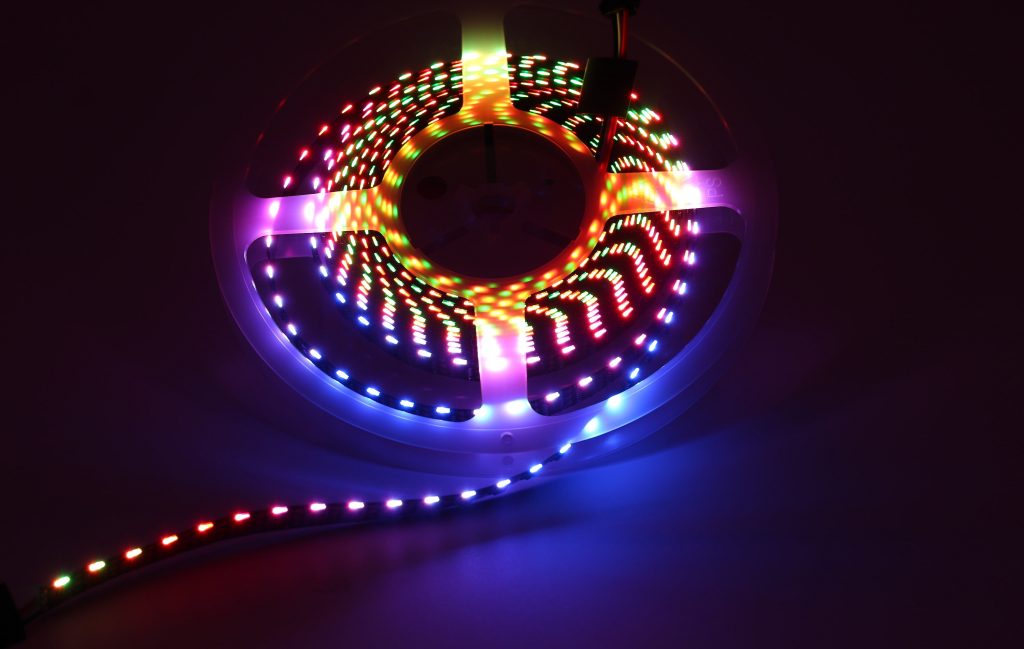
Moreover, there are waterproof variants specially designed for exterior use or wet locations like bathrooms or around swimming pools. These weather-resistant options provide an excellent solution for landscape strip lights exposed to moisture.
Beyond just colors and waterproofing, some high-end models offer smart compatibility with home automation systems. These smart-enabled strips can be controlled remotely via smartphone apps or voice commands through devices like Alexa or Google Home – offering convenience at your fingertips.
All these variants uphold the same principles as detailed above – they employ resistors to regulate current flow through each diode while capacitors smooth out any voltage inconsistencies. This ensures reliable operation across all types of LED strip lights – from your humble under-cabinet light to that stunning landscape lighting masterpiece in your garden.
Unraveling the Enigma of Erratic LEDs
When your LED strip lights behave erratically, blinking on and off unexpectedly, it is indeed a perplexing situation. There are several potential culprits behind this phenomenon that can lie anywhere from power supply issues to controller malfunctions. Understanding these causes is the first step towards finding a solution.
The Power Play: Issues in Supply
An insufficient power supply could be one of the primary reasons causing your landscape strip lights to act up. If you find your LEDs flashing intermittently, it may be an indication that they are not receiving adequate power to operate efficiently. This might happen if the wattage of the adapter is lower than what’s required by the string of LEDs.
Overheating power adapters present another common issue that can lead to flickering LEDs. Pushing an adapter beyond its capacity works like running a marathon without adequate preparation – it’s bound to falter sooner or later. Overheating not only causes intermittent operation but also poses risks such as electrical fires or permanent damage to your landscape lighting setup.
Circuitry Chronicles: Wiring Woes and Volts Drop
In some cases, loose or faulty wiring connections could be responsible for flashing LED strip lights. Even a minute discrepancy in connection strength can disrupt optimal current flow, leading to inconsistent light output.
Voltage drop due to long strip length or improper gauge wire use is another facet often overlooked when installing extensive landscape lighting systems like LED strips. When current travels over long distances through wire carrying high resistance (as with thin-gauge wires), voltage tends to decline along its path, which causes dimming at one end of your LED strip or even intermittent on-and-off cycles.
The Command Center: A Glitch in Control
Controllers play a crucial role in LED operation by ensuring seamless color transition and on-off cycles. If the controller malfunctions, it can cause irregularities in these operations, including unanticipated flashing.
Demystifying the Flicker: In-Depth Analysis and Troubleshooting
The first step to remedying this issue is to isolate each possible cause for accurate diagnosis. Once you’ve narrowed down the possibilities, you can take appropriate steps to rectify each problem.
Amping It Up: Addressing Power Supply Issues
Ensure your adapter’s wattage matches the total power consumption of your LED strip lights. If not, you may need to upgrade your adapter or, alternatively, split your LEDs across more than one power supply. To tackle overheating adapters, consider a higher-quality unit designed for sustained use or one with a higher capacity than needed so it operates more comfortably within its limits.
Circuit in Check: Tackling Wiring Problems
If suspecting loose connections, make sure all connectors are securely fitted and there’s no waggly wiring. Replace any faulty wires promptly for seamless operation. To overcome voltage drop issues, either reduce strip length or opt for thicker gauge wire that offers less resistance to current flow.
In Control: Fixing Controller Glitches
If you think controller malfunction is causing flashing in your LED strip lights, try resetting it if possible or replacing it with a compatible unit. Always ensure that controllers are installed as per manufacturer guidelines and treated with care to avoid premature failures.
Conclusion: Why Are LED Strip Lights Flashing On and Off?
While flashing LED strip lights can be frustratingly mysterious at first glance, they merely signal underlying issues that are relatively straightforward to diagnose and resolve once understood properly. With some basic knowledge of how LEDs work and an informed approach to troubleshooting, you can keep your landscape lighting shining bright, adding beauty and security to your outdoor spaces.
You may also be interested in the following posts: