
Master Guide: Where to Plug in Outdoor String Lights Safely
Outdoor String Lights: Brightening Your Landscape with a Touch of Elegance
Outdoor string lights, also often referred to as landscape string lights, are an exceptional means to enrich your outdoor living space. These simple yet elegant adornments can turn an ordinary garden, patio, or backyard into a captivating haven, dappled with soft glimmers and welcoming warmth.
They grace the space with their whimsical charm while fulfilling practical lighting needs. Outdoor string lights are not just functional tools for illuminating your surroundings but also a way to add style and creativity to your landscape.
Taking various forms such as fairy lights, festoon globes, or sophisticated Edison bulb strings, these little orbs of glow can create ambiances ranging from cheerful festivity to serene tranquility. Whether you’re planning a grand outdoor party or simply desire a tranquil evening under the stars, outdoor string lights can be your versatile accomplice.
Proper Placement of Outdoor String Lights: The Key to Optimal Landscape Lighting
As enchanting as these little luminous marvels might be, their magic is substantially amplified when they are positioned thoughtfully. Strategic placement of outdoor string lights is pivotal in creating the desired aesthetic and maximizing their lighting effectiveness.
When properly hung, these landscape string lights have the power not only to illuminate dark corners but also to highlight particular elements in your outdoor area, such as trees, pathways, or architectural details, thereby accentuating their beauty.
Proper positioning also ensures even distribution of light across your space, preventing overly lit spots or shadowy patches that could disrupt the overall harmony. The benefits of proper placement extend beyond aesthetics, though – it also has safety implications and contributes towards energy efficiency.
Attentively installed outdoor string lights minimize trip hazards by adequately lighting steps and walkways. Moreover, it prevents overloading circuits by avoiding unnecessary clustering of lights at one spot, which could lead to higher electricity consumption.
Indeed, the art of landscape lighting is in the perfect placement of outdoor string lights. They are a simple accessory with a profound impact, transforming your outdoor space into an enchanting sanctuary of light and shadow. It all depends on where you plug them in.
Demystifying Outdoor String Lights: Types and Varieties
Before venturing into the landscape lighting journey, it’s essential to understand the different types of outdoor string lights on offer.
First off are the classic incandescent bulbs. These are popular for their warm glow reminiscent of nostalgic yesteryears but can consume a considerable amount of electricity if used extensively.
Next on our list are LED landscape string lights. The benefits they offer over their traditional counterparts cannot be overstated – they are energy-efficient, long-lasting, and emit less heat, making them an excellent choice for those looking to make a sustainable choice.
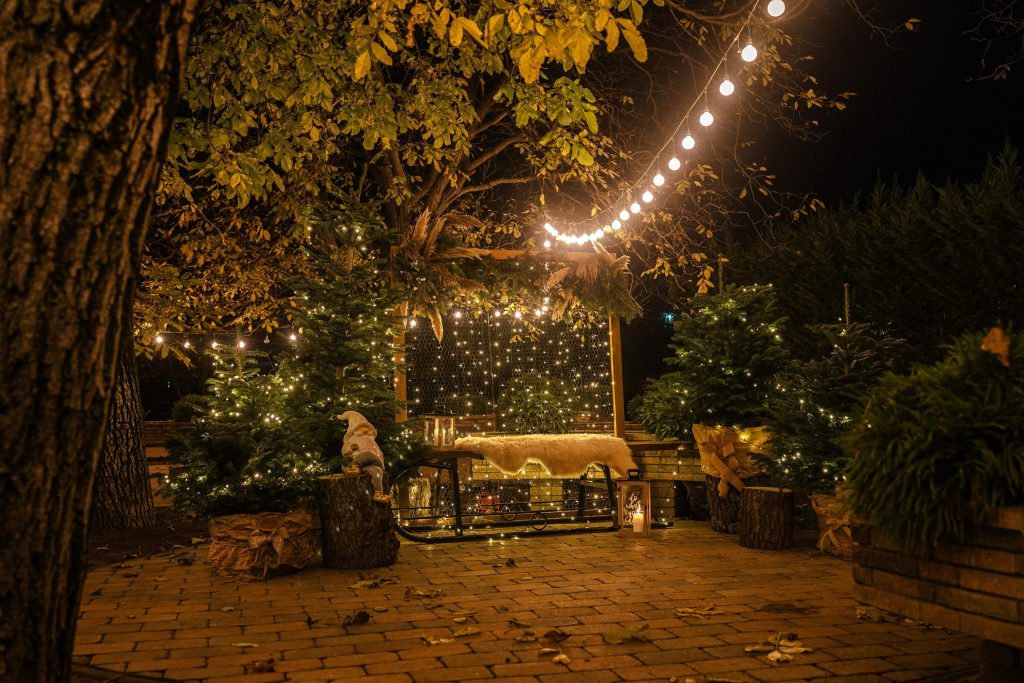
Solar-powered string lights present another compelling option. Dependent on sunlight for power, these eco-friendly alternatives eliminate the need for plug-ins while offering the same beautiful light display once dusk falls.
Then we have battery-powered string lights that take convenience to another level. You can place them virtually anywhere without worrying about proximity to a power outlet.
Commercial-grade outdoor string lights meet more professional or heavy-duty needs, with weather-resistant and durable designs that guarantee longevity in different environmental conditions.
Power & Safety: Unraveling Key Considerations
Embellishing your outdoor spaces with landscape lighting may seem straightforward; however, it requires meticulous attention to safety protocols as electricity is involved. Foremost among these precautions is understanding wattage requirements.
Overloading a circuit by plugging in more lights than it can handle is a prevalent mistake made by enthusiastic homeowners eager to light up their yards. Retaining information about your bulbs’ wattage and ensuring that they do not exceed the circuit’s capacity is integral in averting possible electrical mishaps.
Equally important is exercising caution when replacing bulbs or dealing with damaged strings of light. It’s recommended to disconnect any power source before attempting any fixes or replacements yourself – an elementary yet often overlooked safety measure.
Furthermore, when planning your landscape lighting, prioritize placing your string lights away from areas of high traffic. This includes walkways, play areas, or any region where they pose a risk of tripping or getting knocked over.
Water and electricity are a dangerous mix. Therefore, when considering areas like pools or ponds for your landscape string lights installation, ensure they are well insulated and securely plugged into ground fault circuit interrupter (GFCI) outlets – these will automatically cut power should they come into contact with water.
Weather-resistant products should always be chosen for outdoor use. Elements such as rain, snow or heavy winds can damage regular bulbs and strings, so look for those specifically labeled ‘outdoor’ or ‘weather-resistant’.
The Art of Evaluating Your Outdoor Space: Size, Layout, and Design
In order to aptly utilize landscape string lights to illuminate your outdoor space, an essential first step is evaluating the size, layout, and design of the area.
The size of the space dictates how many lights you’ll need to achieve a desired effect. A larger area may require more or longer strings of lights. Conversely, a smaller one could be sufficiently lit with fewer strings. Enlightening yourself about the dimensions of your chosen space is imperative for efficient planning.
The layout refers to both the physical structure of your landscaping as well as any existing infrastructure such as patios, pathways, ponds, or garden beds. This consideration will help determine where you can feasibly run wires or hang lights without them becoming an obstacle or safety hazard. It will also indicate which areas might benefit most from lighting.
Design encompasses both aesthetic and functional aspects – it’s not just about what looks good but also about what works well for practical usage. For instance, if you have a barbecue spot in your backyard that you often use during nighttime gatherings, incorporating landscape lighting there would be a good idea.
You also need to consider how different elements can co-exist harmoniously; for example, ensuring that the glow emitted by your landscape string lights complements other light sources in the vicinity, like porch lights or security lights.
The design aspect becomes particularly important when we acknowledge that landscape lighting isn’t merely functional; it’s an art form in its own right. The thoughtful placement and mixture of different types of outdoor string lights can create captivating aesthetics that elevate your outdoor living experience – from creating cozy ambiances around seating areas to illuminating pathways for safety and navigation.
Lighting Ideas: Identifying Potential Areas for Light Installation
Now that we’ve established an understanding about our outdoor spaces through evaluation of their size, layout, and design, identifying potential areas for light installation becomes the next step. Embarking on this journey can be akin to etching a well-thought-out painting filled with landscape string lights.
The first and foremost area to consider is any venue that typically hosts outdoor activities during nighttime, like dining areas, barbecue setups, or spots meant for evening relaxation. Not only do these need to be lighted for practical purposes, but the right string lighting can also enhance the ambiance manifold.
Places that are inherently aesthetically pleasing, like a beautiful tree, an interesting architectural feature, or a charming garden path, also make great candidates for landscape lighting. A well-lit feature can become an enchanting focal point and provide picturesque views from inside your home too.

Safety and security should always be at the forefront while planning your lighting scheme. Hence, don’t forget to highlight potential hazard areas like steps, slopes, or water features with adequate lighting.
Additionally, consider spaces where you might want privacy from outside viewers. Strategic use of landscape string lights in conjunction with other elements like fences or shrubbery can create wonderful secluded spots within your outdoor space.
Keep an eye out for areas that could allow easy access to power sources without disturbing the visual aesthetics of your setting – availability of nearby outlets or solar exposure could come in handy while finalizing locations. Remember as you proceed with this exploration – proper identification is not about saturating every corner with light but rather using it as a tool to augment the beauty and functionality of selected spaces.
Power Source Considerations for Outdoor String Lights
The Implications of Powering Your Landscape Lighting
In the universe of landscape lighting, the dynamics of power sources is an essential element that demands pivotal attention. To ensure your light network functions optimally, you must comprehend the requirements and implications of their power sources. The underlying need for a power source is ingrained in the very operational matrix of all outdoor lights; without it, they cannot fulfill their purpose.
Understanding the power needs for your landscape string lights goes beyond merely knowing where to plug them in. It also involves acknowledging their energy consumption and how that impacts your utility expenses. Additionally, one must account for any potential inconveniences that might arise from choosing a particular type of power source.
Moreover, a well-considered choice of power source can enhance durability and longevity. Certain types might be more resistant to weather conditions or better suited to specific landscapes than others. Consequently, not only does your incandescent or LED string light gain an operational base but also has increased chances for a longer lifespan.
Considering your power source contributes significantly to safety measures. Outdoor string lights are exposed to various elements – harsh weather conditions being topmost among them. An appropriate choice ensures these devices are safe from electrical hazards and consequently safeguards you as well.
Exploring Available Power Source Alternatives
Navigating through different types of available resources can be as intricate as charting unknown territories on an aged map; however, understanding each’s pros and cons can help make informed decisions about suitable options.
The first common type is the traditional wall electrical outlet available in most homes’ exteriors – commonly known as an outdoor GFCI outlet. It provides a readily accessible plug-in point for landscape lighting but requires careful usage due to exposure to external elements.
Solar-powered string lights represent an environmentally friendly alternative. They harness the Sun’s energy through attached solar panels, converting it into electricity to power the lights when darkness falls. This option is ideal for areas with plentiful sunlight and a desire for sustainable solutions.
A third alternative is battery-operated string lights. These are powered by batteries and do not require any particular environmental conditions to function effectively, making them highly portable and flexible in usage. Battery-operated string lights may be perfect for temporary setups or spaces without easy access to electrical outlets or ample sunlight.
Each power source carries its own set of functionalities, offering unique benefits and potential limitations. Making an informed choice depends entirely on personal preferences, the specifics of your outdoor space, and your landscape lighting needs.
Where to Plug in Outdoor String Lights: High-Level Overview
The Direct Approach: Plugging into an Outdoor Outlet
Outdoor string lights, particularly landscape string lights, are often designed with long cords and convenient plugs. One of the simplest ways to power these lighted ornaments is to plug them directly into an outdoor electrical outlet.
This method provides a reliable source of power and often supports brighter, more potent lighting elements. However, it’s crucial to ensure that the outlet is waterproof or at least resistant to adverse weather conditions. Positioning your landscape lighting near such an outlet minimizes the need for lengthy extension cords and reduces potential tripping hazards.
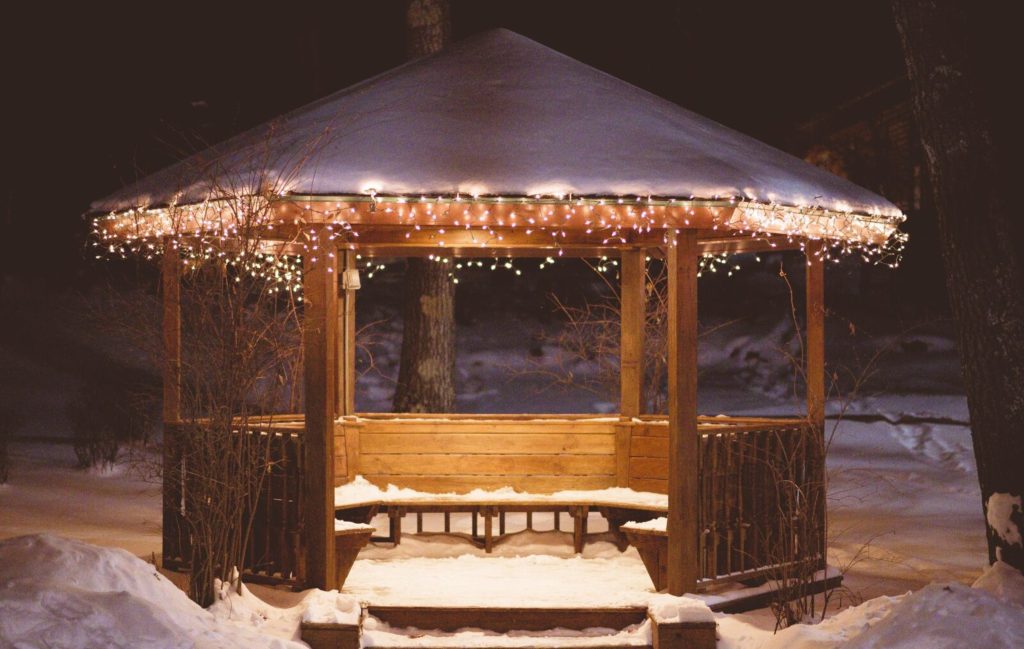
Understanding your circuit’s capacity is also essential. Overloading circuits with too many string lights can lead to power shortages or even fire hazards. It’s prudent to share the load between several outlets if possible – this equates not only to a safer setup but also allows for more creative light positioning.
Consider the use of a ground fault circuit interrupter (GFCI) outlet for additional safety measures. These outlets cut off power when they detect irregular current flow – such as when water intrudes – thus protecting you from potential electrical shock.
Extension Cords: Broadening Your Horizons Safely
There will be instances where direct access to an outdoor outlet isn’t feasible. That’s where extension cords come into play – they offer flexibility in placing your landscape string lights further from the primary power source. However, their usage warrants understanding some fundamental safety tips.
Firstly, ensure that you’re using exterior-rated extension cords; these are built with durable materials that can withstand outdoor conditions. Check the cord’s wattage rating before plugging in your landscape lighting – it must exceed the total wattage of all connected light strings for safe operation. Untangle and neatly arrange cords along less-trafficked paths or conceal them under mats to avoid the risk of tripping or damage.
Another good practice is to elevate plugs and connectors off the ground, where they might come into contact with pools of water. There are even products available – often termed ‘plug domes’ or ‘socket protectors’ – specifically designed to keep your outdoor connections safe and dry.
Alternative Options: Solar-Powered and Battery-Operated Lights
In contrast to the traditional power methods, solar-powered and battery-operated string lights offer heightened flexibility. They can be placed almost anywhere without worrying about cords or proximity to outlets. These qualities make them particularly suitable for temporary setups, such as events or decorative holiday lighting.
Solar landscape lighting harnesses energy from sunlight, storing it within an integral battery for use when it gets dark. The key is ensuring that the solar panel has sufficient exposure to sunlight during the day – an open area with little shade is usually best. Note that these lights may not be as bright as their mains-powered counterparts.
On the other hand, battery-operated string lights are a portable choice powered by replaceable batteries. Their lifespan depends significantly on battery life and usage habits – it’s important to turn them off when not in use for maximum lifespan.
However, both solar-powered and battery-operated options may not provide enough light output for substantial landscape illumination – they’re more suited towards enhancing ambiance rather than providing practical outdoor light. Your choice ultimately depends on your specific needs and limitations.
A Comprehensive Guide to Plugging in Outdoor String Lights
Embracing the Proximity of a Water-Resistant Outdoor Electrical Outlet
When it comes to landscape lighting, particularly landscape string lights, a water-resistant outdoor electrical outlet is an ideal power source.
The foremost consideration when using these outdoor outlets is ensuring they are GFCI protected. A GFCI outlet is crucial for safety, as it protects against electric shock by immediately cutting off power when an imbalance in electrical current is detected.
Choosing the right extension cord for plugging in your landscape string lights can influence both safety and aesthetics. Opt for cords that are rated for outdoor use, and ensure they are heavy-duty with a sufficient gauge to handle the load. Remember to place cords along less-trafficked areas or conceal them under mulch or soil to prevent tripping hazards.
Protecting your outlets from harsh weather conditions prolongs their lifespan and prevents potential electrical issues. This can be achieved by using weatherproof box covers, which offer robust protection against rain, snow, and ice. In addition, they allow easy access when you want to plug in or disconnect your lights.
Harvesting the Sun: Solar-Powered Options
Solar-powered landscape string lights present an innovative approach towards sustainable lighting solutions. The efficacy of these lights greatly depends on solar panel placement, which ideally should be in unobstructed areas that receive ample sunlight throughout the day.

Although solar-powered options do come with many benefits, such as energy savings, reduced carbon footprint, and eliminating concerns about proximity to power sources, certain considerations should not be overlooked.
These include less potent lighting compared to traditional plug-in options and dependence on weather conditions for efficient operation. Despite these factors, solar-powered string lights can be an exceptional fit in certain scenarios where there’s consistent sun exposure throughout the year.
Deciding on Battery-Operated Alternatives: A Freedom from Cables
Battery-operated string lights offer a cord-free alternative that can provide more flexibility in terms of where you place your lights. These are ideal for transient lighting setups such as holiday decorations, party lighting, or instances where outlets are inconveniently located.
However, keep in mind that battery life becomes a critical factor to consider when choosing this option. Depending on the type and frequency of use, batteries can deplete quickly, requiring frequent replacements. Opt for string lights with energy-efficient LED bulbs and consider rechargeable batteries to counteract these challenges.
Each power source method has its unique set of advantages and potential drawbacks. The best choice largely depends upon the specific requirements of your space, available resources, and personal preferences when it comes to landscape lighting.
Shedding Light Without Overloading: Tips and Tricks
When it comes to landscape string lights, it’s important to remember that less is often more. While the allure of a brightly lit garden or patio can be quite enticing, caution must be exercised to avoid overloading circuits with too many lights. Your outdoor oasis’s radiant charm can quickly fade into an electrical nightmare if caution isn’t heeded.
The power rating of your circuit breaker dictates how many lights can be strung together safely. Exceeding this limit can lead to blown fuses or even worse, fire hazards. To avert such scenarios, calculate the power draw of each light bulb in your string and ensure that the total does not surpass the capacity of your circuit breaker.
Frequent switching on and off of landscape lighting causes power surges that may overload circuits. Optimizing your lighting schedule or using lower wattage bulbs are effective ways to mitigate this risk. It’s also advisable not to run all your strings from one source; instead, spread them across different circuits.
In case you find yourself constantly tripping breakers despite following these tips, it might be time to consider upgrading your home’s electrical system. Consulting with a professional electrician could provide additional insights on how best to accommodate your landscape lighting needs without compromising safety.
Energy Efficiency: The Future is Bright with Timers and Smart Plugs
Using timers or smart plugs for controlling outdoor string lights is an excellent strategy for reducing energy consumption while ensuring that your landscape lighting stays on when needed. These devices offer automation features that allow you to set schedules for when the lights should turn on or off, thereby amplifying efficiency and convenience.
A timer will help ensure that you are only using electricity when necessary, eliminating forgetfulness, which often leads to leaving lights on all night. This not only saves electricity but also extends the life of your bulbs by reducing the hours they are lit.
Smart plugs, on the other hand, offer a myriad of benefits beyond basic scheduling. These devices can be controlled remotely using a smartphone app, giving you the freedom to manipulate your lighting from anywhere. Some models even support voice commands via home assistants like Amazon Alexa or Google Home.
Moreover, smart plugs provide energy usage reports, which can be instrumental in understanding and managing your landscape lighting consumption better. These devices allow for seamless integration with other smart home devices, such as security systems, providing an interconnected and streamlined experience.
Lighting Maintenance: Keeping the Lights Bright and Shining
Regular maintenance is crucial to ensure the longevity and brightness of your outdoor string lights. It’s not enough to simply hang them up; they must be cared for properly to maximize their lifespan and maintain optimal performance.
The first step is regular cleaning. Outdoor lights are exposed to dust, dirt, and other weather elements that may dull their glow over time. A soft cloth dampened with warm water and mild detergent does wonders in removing such accumulated grime.

Sometimes bulbs will burn out or break – this is unavoidable. As part of your maintenance routine, regularly check your strings for any faulty bulbs and replace them promptly. Neglected burnt-out bulbs can cause overheating issues that might shorten the lifespan of surrounding bulbs in the string.
During harsh weather conditions like storms or snowfall, it’s advisable to take down non-weatherproof lights if possible, as these conditions can wear down or damage the wiring insulation, leading to malfunctioning lights or safety concerns when moisture penetrates into live wires.
Conclusion: Where to Plug in Outdoor String Lights?
As we draw the curtains on our comprehensive exploration into the world of outdoor string lights, it becomes apparent that equipping your landscape with the right type of lighting can truly magnify its beauty and overall aesthetic appeal. The use of landscape string lights has been emphasized, not just for their decorative qualities but also for their ability to create a warm and welcoming ambiance in your outdoor space.
We’ve looked at direct plug-in options, solar-powered alternatives, and even battery-operated models – all designed with functionality and convenience in mind. A significant takeaway from this guide is understanding that where you plug in your outdoor string lights is as important as choosing the right kind of lights. Knowledge about power sources and safety precautions is key in ensuring a safe environment while maintaining an aesthetic appeal.
Landscape lighting serves multiple purposes – it accentuates architectural features, highlights landscaping efforts, provides functional lighting for comfort and safety, and sets the mood for outdoor activities or gatherings. By strategically plugging in landscape string lights, you can transform a plain yard into an enchanting escape right at your doorstep. As you embark on this enlightening journey, remember that every light has its place; it’s about finding where yours fits best.
Certainly, understanding how to effectively use landscape string lights will continue to be an ever-evolving pursuit due to technological advancements. However, equipped with this knowledge and these guidelines provided within this post, you should be firmly on track towards implementing effective landscape lighting solutions that best suit your needs.
You may also be interested in the following posts: