
Implications of Inserting an LED Tube into a Fluorescent Light Fixture
A Brief Overview of LED and Fluorescent Lighting Technologies
In the radiant world of lighting technology, two types of lighting stand out for their widespread usage and significance: fluorescent tube lights and LED tube lights. Traditionally, fluorescent fixtures have been the preferred choice for commercial and residential lighting due to their longer lifespan than incandescent bulbs, better energy efficiency, and softer light output. They function through a complex process where electricity excites mercury vapor inside the bulb, resulting in ultraviolet light that subsequently illuminates a phosphor coating on the inside of the tube.
Light-emitting diodes, on the other hand, represent a more modern approach to lighting. These semiconductors emit light when current is applied, a process known as electroluminescence. Unlike fluorescents, they do not need any ballast or starter for operation. With exceptional longevity, improved energy efficiency over even fluorescent lights, and minimal heat output despite prolonged usage, LED technology has revolutionized landscape lighting in particular.
The Increasing Popularity of LED Tubes as Replacements for Fluorescent Bulbs
The global wave toward environmentally friendly practices coupled with significant advancements in lighting technology has led to an increasing shift from traditional fluorescent fixtures towards LED tube lights. This transition not only represents an evolution in lighting design but also signals an understanding by consumers and businesses alike about the long-term cost-effectiveness of LEDs.
LED tubes offer clearer lighting than fluorescent tubes with none of the humming noises or flickering issues often associated with older fluorescents. Additionally, they provide instant brightness without needing any warm-up time – another advantage over fluorescent counterparts. The ability to customize color temperature without sacrificing luminosity is another reason behind the growing popularity of LED tubes.
They are now available in various shades, from warm white mimicking incandescent bulbs to cool white resembling the brightness of daylight, offering a versatility not found in traditional fluorescent lighting. Learning the basic differences between LED and fluorescent technologies is essential.
As we transition from traditional fluorescent fixtures to LED-driven lighting solutions, it’s important to understand what happens when an LED tube is placed in a fluorescent fixture. The following sections will delve deeper into this subject.
Understanding Fluorescent Fixtures
Peering into the Anatomy of a Typical Fluorescent Fixture
To fully grasp the potential compatibility or incompatibility issues between fluorescent tube lights and LED tube lights, it’s prudent to first understand the internal structure of a standard fluorescent fixture. The primary components include the lamp or tube, lamp holders, starter, ballast, and a reflector. The housing encases these components and often plays a crucial role in directing light.
The lamp holders are constructed to hold the tube firmly at each end. The starter’s function is igniting the gas within the tube that in turn produces light, while the reflector helps enhance this illumination by directing it downwards. Therefore, understanding these components’ functions is essential when contemplating replacing fluorescent tube lights with LED alternatives.
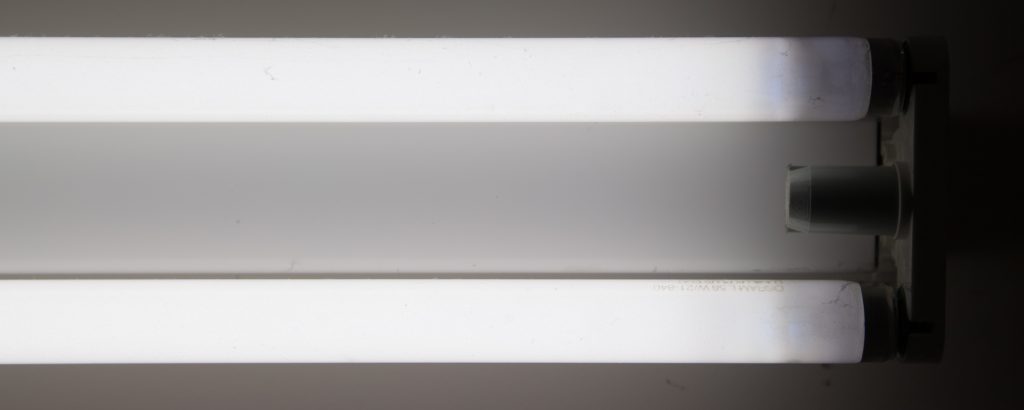
In most cases, traditional fluorescent fixtures are designed such that they can easily accommodate both T12 and T8 bulbs. T12 bulbs are often larger in diameter compared to their T8 counterparts and consume more energy; hence, they’re gradually being phased out.
The size differentiation among these tubes does not pose significant challenges when transitioning from fluorescent to LED lighting since most LED manufacturers fashion their products to fit comfortably into existing fixtures. This attribute makes LED tubes viable options for individuals aiming for efficiency without fundamentally altering their existing landscape lighting setup.
Explaining How Fluorescent Lighting Works
The operation of a fluorescent fixture follows an intriguing yet straightforward process that transforms electrical energy into visible light. When switched on, electric current flows from the power source through ballasts, which then regulate this current flowing through electrodes located at each end of a bulb. These electrodes heat up and begin emitting electrons, which collide with mercury atoms present inside the bulb.
This collision triggers an atomic activity that leads to the emission of short-wave ultraviolet light. It’s worth noting that this light is not visible to the human eye. The phosphorous coating inside the bulb comes into play here, as it absorbs the ultraviolet light and re-emits it in a spectral range visible to humans. The result of this process is the characteristic bright light that emanates from fluorescent tube lights.
Although seemingly simple, this process is reliant on several components working harmoniously and efficiently. This coordination underscores why there might be compatibility concerns when one contemplates substituting LED tube lights for fluorescent bulbs in existing fixtures.
The Pivotal Role of Ballast in a Fluorescent Fixture
In a typical fluorescent fixture, the electrical ballast plays an indispensable role. It essentially controls the amount of electric current flowing through the lamp during startup and normal operation – an aspect critical in preventing a lamp from swift deterioration or even potential explosion due to overloading. At startup, the ballast provides a relatively high surge of current that causes ionization within the bulb, which starts up emission of light.
Once lit, its duty doesn’t cease; instead, it continues regulating current flowing through electrodes, ensuring it remains at an optimal level corresponding with design specifications for each specific type of bulb. Given their fundamental role in powering fluorescent tube lights, ballasts become significant factors when considering shifting from traditional fluorescents to LED tube lights, especially since certain types require elimination or bypassing of these essential components entirely.
Understanding LED Tubes
An Overview of How LED Lights Function
The functionality of light-emitting diode tube lights is markedly different from that of conventional fluorescent tube lights. At their core, LED tube lights are semiconductor devices that emit light when an electric current passes through them, a process termed electroluminescence. This phenomenon is a result of the movement of electrons in the semiconductor material, which generates photons, or light particles.
LEDs operate on direct current (DC) rather than alternating current (AC), which necessitates the use of a driver to convert AC from the power supply into DC. This key feature distinguishes LED lights from traditional lighting systems like fluorescent fixtures and significantly contributes to their energy efficiency.
Essential Components and Their Functions
An LED lighting system comprises several integral components that collectively contribute to its functionality. First off, there’s the LED chip itself – the core of any LED tube light, responsible for emitting the light. The chip is usually encapsulated in an epoxy resin enclosure for protection and optimal light distribution.
Accompanying this central component is an array of supporting elements, including a heat sink designed to dissipate any heat generated by the chip, thereby maintaining optimal operating temperatures and extending lifespan.
Further components include reflectors to direct light output and lenses to aid focus or dispersion as required. The final essential element in this assembly is the driver circuitry – essentially a transformer that steps down incoming AC power to DC voltage compatible with LED tube light operation, ensuring they function correctly within a fluorescent fixture setup.
The Benefits of LED Tubes over Traditional Fluorescents
LED tubes stand out as arguably superior alternatives to fluorescent tubes across various parameters. Foremost among these advantages is energy efficiency – LED tubes typically use about 50% less electricity than traditional fluorescents, thus drastically reducing power costs over time while providing equivalent or superior lighting levels. This trait renders them an ideal choice for long-duration applications such as landscape lighting.
Furthermore, LED tube lights are renowned for their longevity, often boasting lifespans of up to 50,000 hours – nearly five times that of a typical fluorescent tube light. This translates to fewer replacements and reduced maintenance costs in the long run.

Additionally, LED tubes accommodate versatile design opportunities owing to their compact size and flexible application, which traditional fluorescents can’t match. Therefore, apart from providing an efficient direct replacement in a fluorescent fixture scenario, they also open doors to innovative lighting solutions like integrated architectural features or creative landscape lighting.
LED tubes are more environmentally friendly than their fluorescent counterparts. They don’t contain potentially harmful elements like mercury found in fluorescents and emit fewer greenhouse gases due to their superior energy efficiency.
Moreover, the extended lifespan results in less waste over time. When one delves into understanding LED tubes and contrasts them with conventional fluorescent tube lights, the benefits conferred by LEDs, including energy efficiency, longevity, design flexibility, and environmental friendliness, make them an overwhelmingly attractive option for both standard applications, such as replacing fluorescent fixtures, and more imaginative uses, like novel landscape lighting solutions.
What Happens When You Put an LED Tube in a Fluorescent Fixture?
Compatibility Considerations and Implications
When delving into the world of LED tube lights and their integration within traditional fluorescent fixtures, one must first comprehend the inherent compatibility issues that may arise. The fluorescent fixture, designed to work with fluorescent tube lights, operates on quite a different mechanism than that of LED lights.
This divergence fundamentally lies in the method each uses to produce light; while LEDs produce light through a semiconductor device when an electric current passes through it, fluorescent bulbs rely on ionized gas. The compatibility between these two divergent systems depends heavily on their individual functionalities.
It primarily revolves around two fundamental components – the type of LED tube being used and the type of ballast installed in the existing fluorescent fixture. Effectively connecting these separate parts requires careful consideration of their distinct specifications and configurations.
The Role of the Ballast: A Detailed Discourse
The ballast plays a critical role in this interplay between LED tubes and traditional fixtures. In essence, it’s responsible for regulating current passing through light bulbs to prevent them from drawing excessive power – a requirement for fluorescent tube lights due to their inherent design. However, most LED tubes don’t require such management because they operate using drivers built within them.
When you insert an LED tube into a fixture designed for fluorescents, whether or not it functions smoothly depends mainly upon the type of ballast employed and its compatibility with your chosen LED replacement. Certain types of LED tubes are engineered to work with existing ballasts – also known as ‘plug-and-play’ or ‘direct fit’ LED tubes – while others are not conducive to such arrangements.
Navigating through Compatibility: Why Some LED Tubes Work and Others Don’t
The varied performance outcomes when installing an array of different LED tubes into a singularly purposed fluorescent fixture can be primarily attributed to their individual design parameters. Direct-fit LED tube lights, as the name suggests, are designed to work directly with the ballast already in place in your fluorescent fixture. They provide a simple, seamless transition from traditional lighting landscapes to more energy-efficient LED technology.
Conversely, there exist LED tubes that are incompatible with existing ballasts – commonly known as ‘ballast-bypass’ or ‘direct wire’ LED tubes. These types of LED tubes necessitate the removal of the existing ballast for them to function effectively within a fluorescent fixture. This requirement stems from the fact that these LED tubes have their drivers built-in and do not require an external source for current regulation.
The Risks Involved When Mismatch Occurs
The decision to install an incompatible LED tube into a fluorescent fixture may lead to numerous potential risks if not undertaken carefully and with thorough understanding. For starters, one evident concern is that the light simply won’t function properly – this could result in intermittent operation or complete non-functionality. The more severe implications of such mismatches can lead to overheating and potential fire hazards due to incorrect electrical loads imposed on components not designed for such configurations.
Additionally, an incompatible connection diminishes the lifespan of both your LED tubes and your fixtures, causing additional long-term costs despite any immediate savings you might perceive from using mismatched components. While transitioning from traditional landscape lighting or retrofitting fluorescent fixtures with modern LED tube lights presents multiple advantages like improved energy efficiency and longevity, it remains critical to understand all aspects related thereto for ensuring positive outcomes and avoiding potential pitfalls.
Types of LED Tubes for Fluorescent Fixtures: The Fusion of Old and New
As we delve into the world of LED tube lights for fluorescent fixtures, it is crucial to understand the three primary types: direct fit, ballast bypass, and hybrid tubes. Each type comes with its unique mechanism and functionality that sets it apart from its counterparts.
Direct Fit LED Tubes: A Seamless Transition
Direct-fit LED tubes, also known as plug-and-play bulbs, are designed to work seamlessly with the existing ballast in a fluorescent fixture. These tubes provide an effortless switch from traditional fluorescent tube lights to more energy-efficient LED technology without altering the current infrastructure.
This compatibility makes direct-fit LED tubes a popular choice for those who wish to keep the initial setup intact while transitioning towards LEDs. However, there’s a caveat to this simplicity – these bulbs still rely on a ballast for their operation. Over time, as the ballast wears out or fails, one has to replace it – an additional maintenance cost that is usually absent in other types of LED tubes.

Ballast Bypass LED Tubes: Cutting the Middleman
Next up are ballast-bypass LED tubes, which completely eliminate any reliance on a fixture’s existing ballast. By cutting out this ‘middle man’, they can connect directly to the electrical power supply. Offering simplicity in terms of system design and improved energy efficiency over traditional fluorescent tube lights and even direct-fit LED tubes, these are often hailed as the future of landscape lighting.
Still, there’s no denying that they require more effort during installation due to necessary wiring modifications – turning off non-shunted sockets or entirely removing them can be an intricate process requiring professional expertise.
Hybrid LED Tubes: Best of Both Worlds
Last but not least are hybrid tubes that offer flexibility by working both with and without a fixture’s ballast. This feature allows users to install them directly in a fluorescent fixture without any modifications and then bypass the ballast when it fails, eliminating the need for its replacement.
The dual functionality of hybrid bulbs positions them as a future-proof investment for those unsure about their long-term lighting plans. However, like every coin that has two sides, hybrids tend to be more expensive upfront than their direct-fit and ballast-bypass counterparts due to their advanced technology.
Each type of LED tube light offers unique advantages. Depending on your individual requirements – whether it’s ease of installation with Direct Fit, energy efficiency with Ballast-Bypass, or flexibility with Hybrid tubes – there’s an LED solution designed to meet your specific needs for transitioning from traditional fluorescent fixtures.
Potential Problems and Solutions when Converting from Fluorescent to LED Tubes in Existing Fixtures
Identifying and Overcoming Common Conversion Challenges
The transition from fluorescent tube lights to their LED counterparts may seem tantamount to simply replacing a bulb, but it can often be a labyrinthine task fraught with several potential difficulties. One common issue that might surface during this conversion process is the flickering of lights.
Often, when LED tube lights are assembled into a fixture designed originally for fluorescent bulbs, they tend to flicker or produce inconsistent lighting. This can occur due to incompatible ballast types or poor electrical connections.
In some instances, the new LED tubes may not function at all, creating an unexpected void in your luminous landscape. Another serious conundrum is associated with circuitry issues that cause LED tube lights to not light up properly or at all despite correct installation.
This is usually due to residual voltage from the fluorescent fixture interfering with the proper functioning of the LED tubes. Ensure that you opt for high-quality LED tubes with integrated drivers, which can effectively deal with potential fluctuations in voltage and deliver consistent lighting without any flickering.
Proactive Steps for a Trouble-Free Transition
Prevention is certainly better than cure when it comes down to ensuring a seamless transition from fluorescent fixtures to LED technology. Firstly, consider conducting an audit of your current lighting setup. A thorough understanding of your existing landscape lighting structure will enable better decision-making while selecting suitable replacement options among various types of LED tube lights available on the market.
Next, pay keen attention during installation – especially if you are performing tasks yourself instead of hiring professionals. Ensure that you follow manufacturer instructions meticulously for each fixture type and light model, as nuances may vary significantly across different products.
If your fluorescent fixture was formerly operated by a magnetic ballast, it would be prudent to replace it with an electronic equivalent before introducing LED tubes. Electronic ballasts are more compatible with LED technology and can effectively eliminate the risk of flickering or unstable lighting.
Consider consulting a professional if you are unsure about the conversion process. An experienced electrician or lighting professional can provide invaluable advice based on your specific circumstances, ensuring that your transition to LED tube lights is smooth and trouble-free.
Undoubtedly, the shift from traditional fluorescent tube lights to LED tubes in existing fixtures may seem daunting at first glance. However, by understanding potential issues and taking proactive steps to prevent them, you can successfully illuminate your surroundings with energy-efficient and long-lasting LED lights.
Conclusion: What Happens If We Put an LED Tube in a Fluorescent Fixture?
A Reflective Recapitulation on LED Tube Lights in Fluorescent Fixtures
Having traversed the fascinating landscape of lighting technologies, we have discerned the intricate dynamics that come into play when one positions LED tube lights within a traditional fluorescent fixture. It has been established that this process, albeit seemingly complex, is not an enigma beyond comprehension or resolution.
We have discovered that there are certain compatibility issues to consider and specific safety measures to observe. LED tube lights, with their unmistakable benefits in energy efficiency and longevity, are increasingly becoming the preferred choice for both domestic and commercial environments. This trend is evident in many applications, from interior lighting systems to outdoor landscape lighting solutions.
Navigating Conversion Challenges: A Retrospective
As we delved deeper into the subject matter, we scrutinized the different types of LED tubes suitable for fluorescent fixtures – direct fit, ballast bypass, and hybrid bulbs. Each type presents its unique advantages as well as potential pitfalls. The quintessential considerations remain the compatibility with existing ballasts and understanding how each type operates under different conditions.
Our exploration led us into common problems experienced during conversion from conventional fluorescent tube to LED tube lights – flickering or non-functioning lights being chief among these issues. However, we unveiled proactive steps that can be undertaken to forestall these problems, ensuring a seamless transition during conversion.
The Optimal Intersection of Technology and Convenience
Moreover, it became clear that while transitioning from traditional fluorescent fixtures to LED tube technology poses some challenges, these are far outweighed by the long-term benefits brought about by this switch. The future promises an optimized intersection of convenience and advanced technology where LED lights reign supreme over other forms of lighting.
The future of lighting undoubtedly belongs to LED tubes due to their remarkable efficiency, longevity, and eco-friendliness. As the LED technology continues to advance and evolve, it is expected to solve compatibility issues with traditional fixtures further, making the transition even smoother for everyone. The era of fluorescent tube lights has been pivotal in shaping our lighting landscape, but it appears that the spotlight is now firmly focused on their LED counterparts.
You may also be interested in the following posts: