
Unveiling the Mystery: Which Color Light Truly Kills Insects?
Shedding Light on the Spectrum: An Overview of Color’s Impact on Insects
The intriguing world of insects continues to mystify and captivate our curiosity. Within this realm, one fascinating area that’s been garnering attention is the relationship between colored light and insects’ behaviors.
At first glance, it might seem implausible; after all, can something as simple as a color really influence the insect’s actions? The answer is a resounding yes. Insects do not perceive the world in the same way humans do.
While we are limited to seeing light within the visible spectrum – from red to violet – many insects can see ultraviolet (UV) light, effectively broadening their color palette. Thus, different colors of light elicit various responses in these small creatures, from attraction to repulsion.
It’s important to understand that not all colored lights affect insects equally. Some colors attract them tremendously, while others seem innocuous or even repellent. Moreover, this phenomenon isn’t uniform across all insect species either – what may be attractive or lethal to one species might have a negligible effect on another.
The Prismatic Perspective: Why Understand Color Light and Insect Interactions?
In an era increasingly plagued by health concerns linked to biting insects – such as mosquitoes carrying Zika virus or ticks bearing Lyme disease – understanding how colored lights impact insects could provide critical insights for effective pest control strategies. Moreover, this information could be harnessed for agricultural benefits too.
Crop farmers continually face challenges in protecting their produce from various pests. If we can discern which colors attract harmful insects and which ones repel them, we can potentially develop more efficient and less environmentally damaging methods of pest control. But the significance extends beyond practical applications alone; it also offers us a chance for deeper ecological understanding.
Our planet is teeming with myriad forms of life, all intricately linked in a complex web of interactions. By investigating the influence of colored light on insects, we gain a more nuanced view of these relationships, honing our comprehension of the Earth’s biodiversity.
In essence, delving into this topic isn’t just about finding ‘what color light kills insects?’ It’s about broadening our knowledge base, sparking scientific innovation, and promoting the wellbeing of our environment and ourselves. As we journey through this post, let us illuminate this fascinating subject together – one spectral shade at a time.
The Kaleidoscope of Insect Perception: Understanding Insects’ Vision
Despite their diminutive size, insects possess a remarkable ability to perceive a broad spectrum of light. While we like to think of vision as a human-centric experience marked by the simple beauty of rainbows and sunsets, insects navigate an entirely different visual realm.
The science behind insect perception is intricate, revealing a world unseen and unimaginable to the human eye. Insects’ eyes, unlike those of humans, are compound in nature. This means that they consist of numerous miniature lenses, or ‘ommatidia‘, each representing an individual visual receptor. Thus, while humans see one complete picture formed by light falling on their retinal cells, insects view multiple fragments from these individual ommatidia, which combine to form a mosaic-like image.
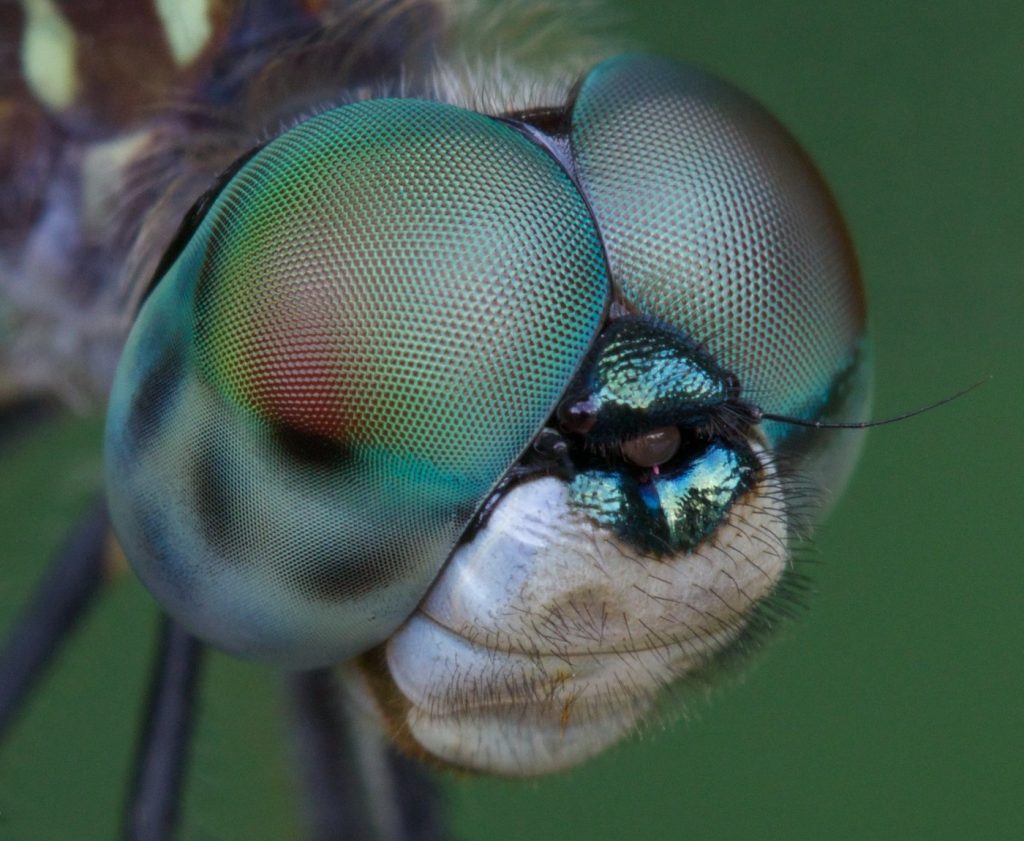
An intriguing characteristic that sets apart insect vision is their sensitivity to different wavelengths or colors of light. Unlike us, who can discern only three primary colors – red, green, and blue – many insects can detect a wider array comprising ultraviolet (UV) light as well.
This expanded color perception enables them not only to find food and mates but also to evade predators effectively. Additionally, the polarization-sensitivity feature of their vision helps them navigate by detecting subtle changes in the direction light waves vibrate when passing through air or bouncing off surfaces such as water bodies, a phenomenon largely undetectable by human eyes yet crucial for many insects’ survival strategies.
Insect vision epitomizes how evolution tailors sensory perception according to ecological needs rather than aesthetic values – resulting in an extraordinarily complex matrix capable of capturing not just images but information essential for survival within their respective environments.
A Comparative Study: Human Vision vs Insect Vision
The stark differences between human and insect vision are not just fascinating but also incredibly illuminating, shedding light on the extent to which visual perception can vary across species. The fundamental contrast lies in the structure of the eyes: human eyes being simple and insect eyes being compound.
Whereas humans possess a single lens that focuses incoming light onto a retinal plane, insects’ compound eyes consist of numerous separate lenses that capture multiple images. These multifaceted views are then combined by the insect’s brain, creating an overall picture that may not be as sharp as what we perceive but offers a much wider field of vision.
Color perception is another domain where stark differences between humans and insects are evident. Our trichromatic vision, based on three types of color receptors (cones), allows us to perceive a broad range of colors within the visible light spectrum. However, it falls short when compared with insects’ ability to detect ultraviolet (UV) light, which remains invisible to us.
Polarization sensitivity, a feature absent in human vision, is another critical component of insect sight aiding navigation. This unique capability enables them to perceive subtle changes in light wave vibrations – an unparalleled advantage particularly useful for aerial or aquatic insects.
In essence, while we appreciate intricate details and true-to-life color reproduction in our visual experience, insects excel at piecing together wide-angle views imbued with UV hues and polarization hints – each tuned perfectly for their survival strategies amidst the vast tapestry of life.
The Role of Light in Attracting Insects
Moths to a Flame: Why Are Insects Drawn to Light?
In the enigmatic theater of nature, few oddities are as bewitching as the proclivity of insects to gravitate towards light sources. The reasons for this beguiling behavior can be traced back to their primordial instincts and perception systems. In nocturnal species, light sources serve as navigational tools.
By maintaining a constant angle relative to a point of light – usually the moon or stars – insects can maintain a straight flight path. However, artificial lights upset this celestial orientation by producing an unnaturally bright point of reference that pulls insects off course due to its close proximity.
This phenomenon is known as phototaxis. Positive phototaxis describes insects’ irresistible draw towards light, while negative phototaxis characterizes those creatures who instinctively scurry away from it.
Furthermore, some entomologists propose that many flying insects are lured by lights since they mimic the infrared spectrum emitted by female pheromones. Consequently, these flummoxed males congregate around porch lights under the misguided notion that they are potential mates – a fatal attraction indeed.
Specters in the Spectrum: Identifying Types of Lights that Attract Insects Most
The allure of illumination for our six-legged earthsharers is not uniform across all types and colors of light – an important fact for those seeking an uninvited guest-free evening on their porch or patio.
Incandescent bulbs – often used in outdoor lighting fixtures – are infamous insect attractants due to their emission spectrum, which heavily leans towards both ends: infrared and ultraviolet. Their high heat signature makes them an irresistible beacon for many nighttime nectar seekers like moths.
Compact fluorescent lights (CFLs) also emit ultraviolet radiation, which echoes the spectral characteristics of sunlight, thereby attracting a wide range of insects. Their energy efficiency, unfortunately, does not translate into a diminished allure for these creatures.
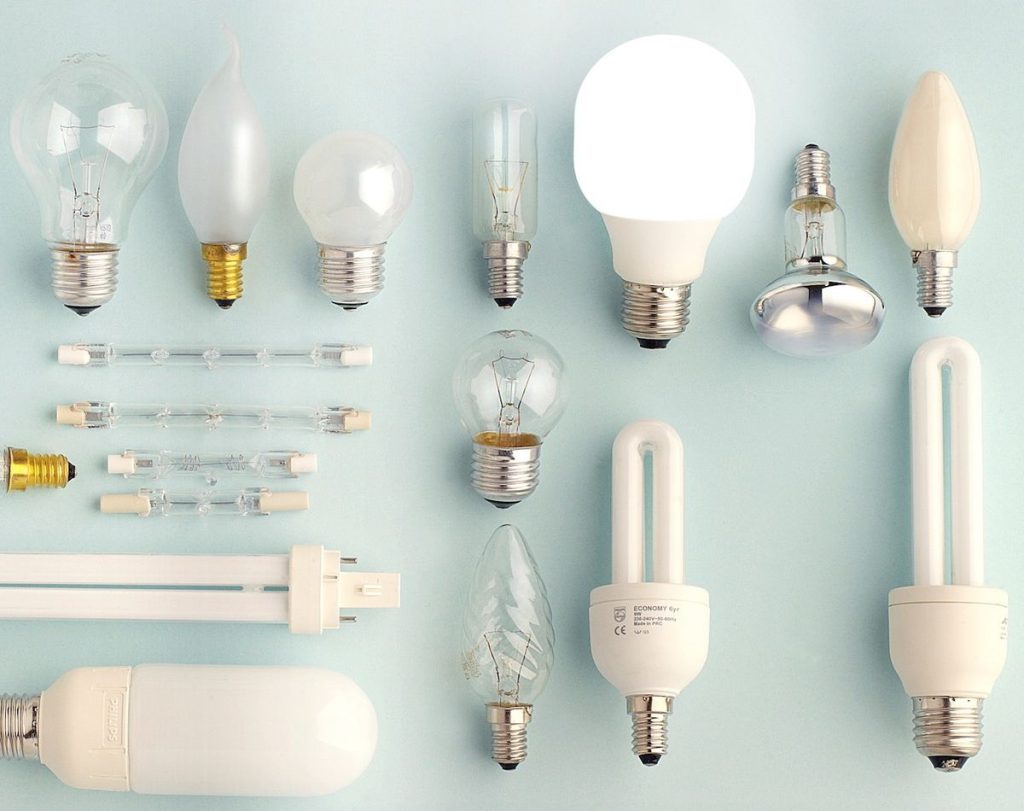
Mercury vapor lamps or ‘bluish-green’ lights – often used in street lighting – are equally culpable in luring insects. Emitting short-wavelength light that is heavily skewed towards the ultraviolet range, they are more likely to attract bugs than sodium-vapor lamps that give off longer-wavelength ‘yellowish’ light.
Furthermore, traditional LED lights that produce white or bluish light also attract a significant number of insects due to their emission of shorter wavelength lights. However, recent advances have led to the development of ‘bug-friendly’ LED lights that emit a spectrum less appealing to most flying insects.
Black lights – most prominently used in bug zappers – attract an astonishing array of insects as they emit UV-A radiation, an irresistible lure for many species. This makes them an effective tool for insect control but also a potential disruptor of local ecosystems if used carelessly.
The Impact of Different Colors of Light on Insects: A Spectrum Analysis
In the intriguing world of entomology, the correlation between insects and light is a subject that has elicited significant scientific interest. From an evolutionary perspective, insects have developed an affinity for different colors of light, each with distinct consequences. While humans perceive the full range of the visual spectrum, insects see colors differently.
Their photoreceptors are tuned to shorter wavelengths; hence, they respond more strongly to ultraviolet (UV) light compared to other color spectrums. This variance in perception has a profound influence on the behavioral patterns of various insect species.
Insects utilize light as a navigational tool during nocturnal activities such as locating food or potential mates. This attraction towards light is termed phototaxis and varies from one insect species to another.
However, not all spectra are enticing to them; specific hues can serve as deterrents and even pose risks. The intensity and wavelength can significantly impact their response – some lights may attract while others repel or can even become lethal when used in traps or bug zappers.
The influence of distinct colors on these creatures provides insights into developing effective pest control strategies. Moreover, this effect isn’t uniform across all species; it’s subject to variances depending on several factors, including the insect’s lifecycle stage, sex, and its native habitat’s lighting conditions, among others.
Lighting Choices: Which Colors Attract or Repel Insects?
A fascinating aspect of this subject revolves around identifying specific colors that either attract or repel certain types of insects. For instance, mosquitoes are notoriously attracted to blue and violet lights due largely because they mimic twilight conditions – their preferred hunting time.
Contrarily, yellow light tends not to be very attractive to many insect species. This color is often used in so-called ‘bug lights’, posing minimal attraction to mosquitoes, moths, and other nocturnal insects. These lights, despite being less enticing, do not repel bugs but simply draw fewer insects than the conventional blue or white light sources.
Besides yellow, warm colors such as orange and red are also less appealing to insects due to their longer wavelengths, which are less detectable by most insect species’ visual systems. They don’t necessarily kill or repel insects but work by being less visible and hence reducing the likelihood of attracting them.
Interestingly, recent studies have highlighted green light as an effective tool in deterring a range of agricultural pests, including aphids and whiteflies. It’s theorized that green light interferes with their biological rhythms, causing disorientation and deterrence.
The interplay between color, light, and insects is complex yet captivating. The research into this area not only brings intriguing scientific insights but also provides practical solutions for pest control strategies.
The Concept Behind Bug Zappers
A Peek into the Mechanism of Bug Zappers
Bug zappers are a beloved summertime fixture in many homes, their soft buzz providing an unwitting soundtrack to evening picnics and backyard barbecues. At first glance, they may appear unsophisticated – innocuous metal boxes occasionally punctuated by a spark of light and accompanying zap sound.
However, the underlying engineering is a testament to our understanding of insect behavior and our ability to manipulate it. The fundamental working principle revolves around attracting insects into an electric grid that dispatches them instantly.
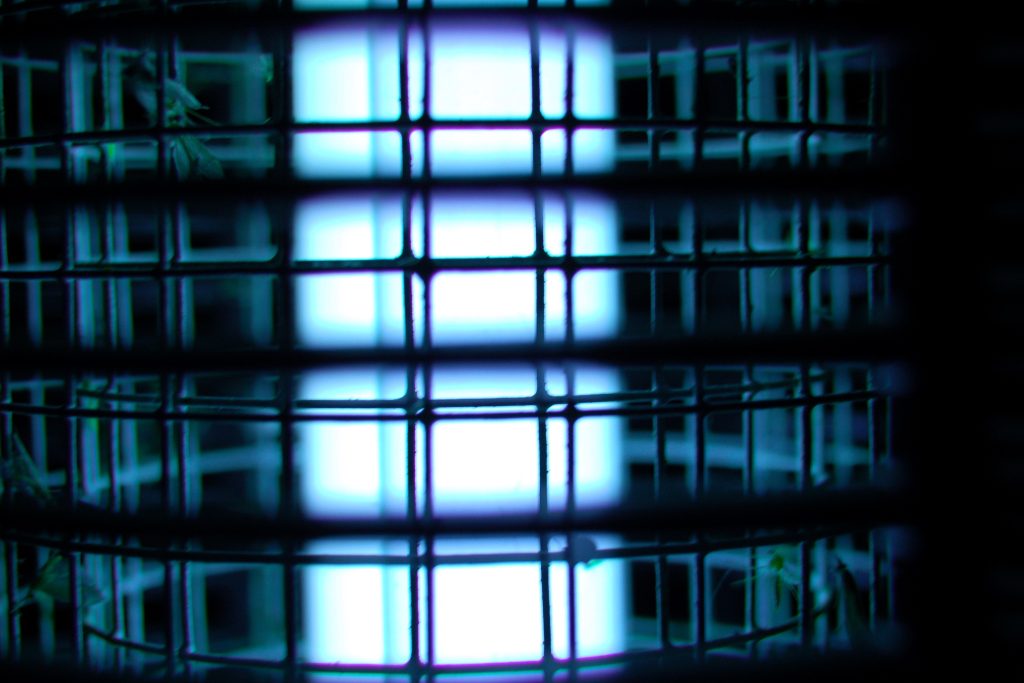
The core components include an ultraviolet light source, an electrified grid, and an outer protective casing. Ultraviolet light serves as the irresistible bait, luring inquisitive insects towards the device. Upon coming into contact with the highly charged metal grid encasing this UV light source, they are electrocuted – hence the name ‘bug zapper’.
It’s worth noting that these devices are designed with safety as a priority. The external housing prevents larger organisms like birds or pets from harm while allowing smaller insects access to the deadly innards. Additionally, most designs include trays for easy disposal of dispatched insects.
The Kaleidoscope Effect: How Color Light Influences Bug Zapper Efficiency
It’s not merely by happenstance that bug zappers use ultraviolet (UV) light sources; it’s rooted in hard scientific facts about insect behavior and perception. Essentially, most insects are more attracted to ultraviolet light than they are to visible light in our spectrum – this phenomenon is known as phototaxis.
The affinity for UV radiation can be traced back millions of years when early forms of insect life evolved under a sun that was significantly richer in UV emissions than today’s star. Consequently, their visual systems developed heightened sensitivity towards shorter wavelengths corresponding to UV radiation.
Different species demonstrate unique phototactic responses; mosquitoes, for instance, are highly attracted to UV light, but not all insects share the same enthusiasm. Moths, commonly associated with artificial lights at night, actually display positive phototaxis towards a wide spectrum of light.
For bug zappers to be effective, it’s not just about emitting UV light but emitting it in a specific wavelength range that is most attractive to the majority of insect species. Manufacturers often fine-tune the UV wavelength according to target insect species. For example, devices designed to attract mosquitoes might feature slightly different UV spectra than those targeting moths or flies.
While bug zappers may seem simple on the surface, their efficiency lies in their careful design around biological nuances and behavioral patterns of insects. The color of light plays an essential role in this process as it influences how well these devices attract various insect species.
The Power of Ultraviolet (UV) Light
Unraveling the Mystique: The Attraction of Insects to UV Light
Insects are incredibly diverse, but many species share a common trait: they are attracted to ultraviolet light. This fascination may seem perplexing to humans, as our eyes cannot perceive this spectrum of light. However, for insects, this spectral range is not only visible but captivating.
Phototropism, the movement or orientation towards a light source, is prevalent in insects and gets significantly pronounced when it comes to ultraviolet light. Predominantly nocturnal insects have evolved with sophisticated visual systems that are fine-tuned to detect wavelengths of light that correspond with twilight or nighttime conditions – primarily in the ultraviolet range.
The moon and the stars emit UV radiation, which gets scattered or diffused in Earth’s atmosphere, creating a celestial UV beacon that many flying insects use for navigation. By comparison, man-made UV sources tend to be far more intense than these natural navigational cues and often cause an irresistible photo-attractive response in these creatures.
Artificial lights distort their ability to fly straight, causing them to spiral towards the source – what some might describe as a fatal attraction. This magnetic allure is used strategically by entomologists and pest control experts to study insect behavior or control pest populations, respectively.
Bug zappers, insect traps, and monitoring devices often use bulbs that emit UV light, knowing very well about its alluring impact on these creatures. While it’s amazing how such small creatures can see what is invisible to us humans, it’s even more fascinating how this peculiar visual acuity has been harnessed by science for varied purposes, from research endeavors to practical applications in everyday life.
The Dark Side of the Light: Lethal Impact of Ultraviolet Radiation on Insects
While UV light serves as a siren call for many insects, it also has a lethal impact. Exposure to ultraviolet radiation is detrimental to most forms of life, and insects are no exception. Underneath the captivating exterior of UV light lies a harmful reality that can prove fatal for these creatures.
UV-C, which is the most damaging type of UV radiation, can kill insects by damaging their DNA and cellular structure. This damage hinders normal cell functions, eventually leading to the insect’s death.

A classic example is how bug zappers work – luring insects with UV light only to electrocute them. In addition, continuous exposure to UV-B light can also cause lethal effects in certain species of insects by interfering with larval development and reproduction processes.
Prolonged exposure may cause sterility in some species or affect their ability to find food or mates, thereby indirectly contributing towards their demise. Interestingly, some organisms have evolved mechanisms to repair UV-induced DNA damage, thus enhancing their survival potential under UV stress situations.
Some types of beetles and flies are known for this remarkable ability, showcasing once again the amazing adaptability nature fosters among its creations. The twin characteristics of attraction and destruction render ultraviolet light an effective tool in pest management strategies devising ingenious ways not only to attract pests but also annihilate them, thereby striking a perfect balance between lure and elimination.
Unfolding the Enigma: Mosquitoes and Their Respective Light Colors
In order to delve deeper into the complexity of how different colors of light may impact insects, we will unfold a case study focusing specifically on one of the most ubiquitous and universally disliked insects – mosquitoes.
The mosquito, a blood-sucking vector of numerous diseases, has been extensively studied by researchers attempting to understand its behaviors better and find innovative ways to manage mosquito populations. The relationship between mosquitoes and color light is particularly fascinating because, unlike some other insects, mosquitoes are not inherently attracted to all types of light.
In fact, they have been observed demonstrating varying behavioral responses depending on the color frequency of the light. This aspect presents an intriguing opportunity for researchers and pest control experts alike. An important factor when considering mosquito behavior in relation to colored lights is the time at which these insects are most active.
Mosquitoes are primarily nocturnal creatures; their peak feeding times occur during dusk or dawn when the sky transitions through a spectrum of colors. Understanding this helps provide context, as they might be responding more actively towards certain hues during these transitional phases.
Research on this topic has yielded interesting insights into how various colors affect mosquito behavior. Certain colors, such as red or yellow, seem less attractive to mosquitoes; in contrast, blue or green lights appear more enticing for them.
However, it’s worth noting that further research is still required in order to conclusively determine whether specific colors can effectively repel mosquitoes. Acknowledging these nuances leads us down a path where pest control measures can be developed with an understanding that different insect species respond differently even within their own genus or family when exposed to multifarious colors of light.
Evidence-Based Findings: Unmasking Mosquito Deterring Colors
Moving forward from understanding and exploring the relationship between mosquitoes and colored light is the in-depth analysis of evidence-based findings that unravel what light color repels or potentially kills mosquitoes.
One notable study conducted by Prof. Samuel Rund from the University of Notre Dame found that mosquitoes are less active when exposed to a light source that repeatedly switches between different colors, as compared to a consistent white light. Further, it was reported that certain color wavelengths were less attractive to them thereby hinting at potential deterrents.
Another scientific experiment conducted in Malaysia found that LED lights emitting wavelengths associated with the colors violet (around 395 nm) and blue (470 nm) attracted significantly fewer mosquitoes than traditional incandescent lights. The research suggested these specific colors could be incorporated into innovative pest control strategies.
A more recent study, published in Acta Tropica, investigated how Anopheles gambiae (the primary vector of malaria in Africa) responded to different colored lights during its nocturnal activity period. The results showed a significant reduction in mosquito activity under purple and red lights compared to blue and green ones.
Numerous studies reiterate two key points: first, no particular color has been definitively proven to kill mosquitoes; secondly, specific colors such as red or violet appear less attractive to mosquitoes and may help reduce their activity levels. This opens up an avenue for ongoing investigation into how these findings can be applied on a larger scale for effective mosquito population management.
Innovations in Insect Control Technology: The Dawn of a New Age
In recent times, innovation has permeated every facet of life, and insect control technology is not exempt. With the increasing need for more effective and environmentally friendly pest control methods, scientists and inventors are leveraging their understanding of the relationship between colored light and insects to devise cutting-edge solutions.
The connection between certain wavelengths of light, especially ultraviolet (UV) light, and insect attraction is well-established. This knowledge serves as a fulcrum for new-age inventions in insect control technology.
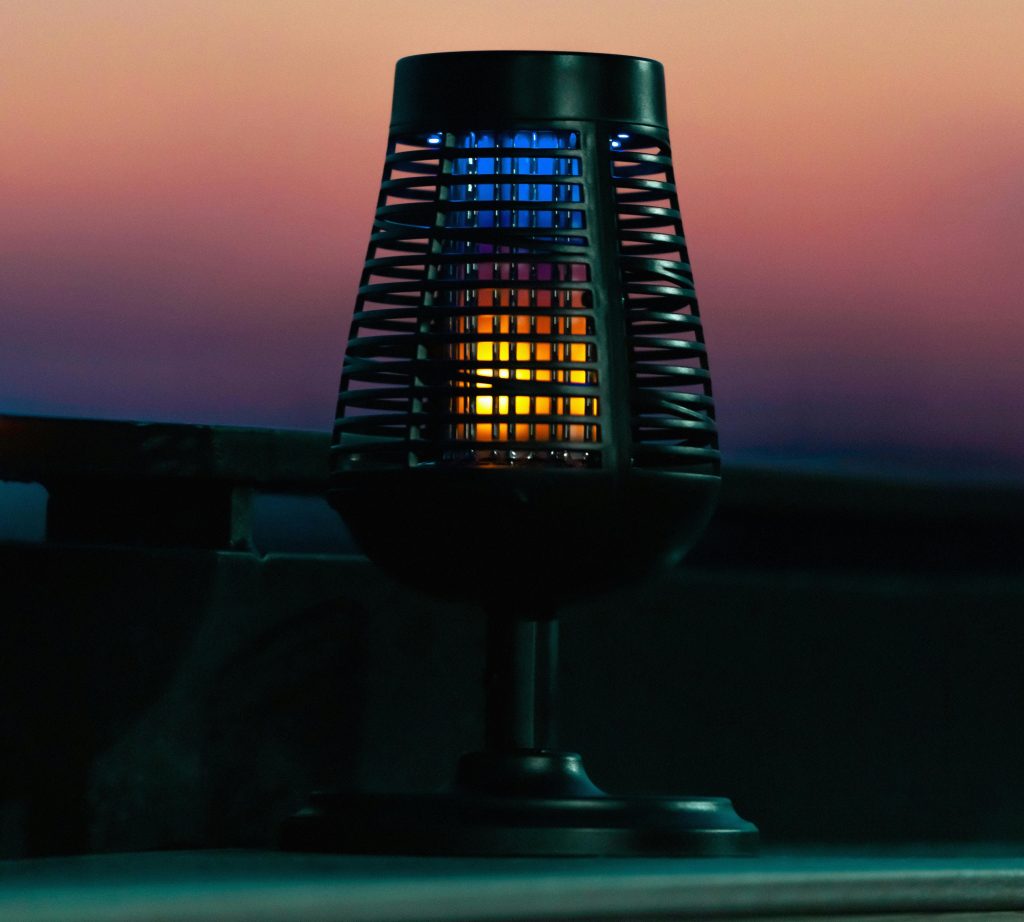
From simple bugzappers with improved efficacy to intricate systems that use AI algorithms to identify specific types of insects based on how they react to different colors of light, this area has seen tremendous growth. Although UV light remains at the core of many innovations due to its high attractiveness to many insects, other colors are also employed strategically.
For instance, some devices utilize green LED lights that mimic the wavelengths emitted by fireflies’ bioluminescence – an irresistible lure for many nocturnal insects. Moreover, advances have also been made in creating ‘invisible’ light traps that emit UV radiation outside the perceptible range of humans but within insects’ viewing spectrum.
Furthermore, there’s been significant progress towards ‘smart’ insect control technologies capable of not only attracting pests but also identifying and tracking their species and population sizes. Such data can be crucial for larger-scale pest management strategies or studying insect behavior without causing unnecessary harm to non-target groups.
Effective Illuminated Defenses: Products Championing the Cause
Turning our gaze toward current market offerings reveals a litany of products that incorporate these innovative concepts into practical solutions – all designed with one aim: providing an effective defense against pests while being non-disruptive to human activities.
Leading this league is Flowtron’s range of bug zappers, which employ powerful UV black lights encapsulated in weatherproof polycarbonate housing. Their high-intensity light covers large areas, attracting an array of flying insects into the electrocution grid.
Another noteworthy product is the DynaTrap series, which not only uses UV light but also adds a titanium dioxide-coated surface to produce CO2, thus mimicking human breath and enhancing their attractiveness to blood-sucking insects like mosquitoes.
Brison’s ultrasonic pest repellers provide an interesting twist in this narrative. These devices pair colored lights with variable ultrasonic frequencies to disorient and drive away pests within their radius of effect while being completely safe and unnoticeable for humans and pets.
Lighting up gardens and backyards while doubling as insect deterrents are solar-powered bugzapper lanterns such as those by GutReise. They incorporate blue-light LEDs that draw in pests to be zapped, providing a dual function of illumination and insect control.
Residential or commercial spaces seeking a discreet solution might find products like the KATCHY Indoor Insect Trap appealing. Attracting bugs with UV light, this device sucks them into a sticky trap, leaving no mess or noise – a shining example of how far innovation has taken us from the rudimentary fly swatter.
Each product epitomizes how far we’ve come in leveraging colored lights for pest control – bringing together science, technology, design, and functionality to tackle an age-old problem with newfound sophistication.
A Beacon in the Darkness: Deciphering the Lethal Luminary
In our exploration of light’s effects on insects, we have delved into the intricacies of insect vision, dissected the mechanics of bug zappers, and scrutinized how different colors of light influence these creatures. One central revelation from this exploration is that ultraviolet (UV) light holds a potent attraction for many species of insects, making it a key component in effective bug zappers.
Ultraviolet light falls just outside the visible spectrum for humans, but it’s an intense beacon for numerous insect species. It operates as an irresistible lure, drawing them towards the source. Once near enough to a device like a UV-emitting bug zapper, these insects meet their demise swiftly.
The lethal allure of UV light extends to mosquitoes, those blood-sucking pests known for their uncanny ability to ruin outdoor activities and transmit diseases. The application of UV light provides an effective means to control mosquito populations and other bothersome insects in both residential and commercial settings.
From Theory to Practice: Harnessing Light’s Lethality
Having established UV light as an effective killer where bugs are concerned, its practical uses become apparent. In settings such as food preparation areas where hygiene is paramount or outdoor spaces where mosquito-borne diseases pose a risk, purpose-built devices that emit UV can be highly beneficial.
Bug zappers are one such device commonly found on patios and porches around the world. They utilize not only UV light to attract insects but also incorporate electrical grids that swiftly exterminate any bugs that fly too close.
For indoor use, especially within food handling facilities or areas with high sanitation requirements like hospitals, adhesive traps with similar UV attraction mechanisms can be used instead.

Another advantage of using ultraviolet technology is its environmental friendliness compared to chemical-based options like pesticides or insecticides, which could harm non-target organisms. Furthermore, as UV light is invisible to human eyes, these devices can operate without causing any visual disturbances.
In terms of future innovation, the research signals a promising direction. A deeper understanding of how insects perceive and react to different wavelengths could lead to even more sophisticated pest control devices. We might see advancements like programmable lights that switch between wavelengths according to the specific types of insects common during different times of the year.
Ultimately, while it is intriguing to reflect on insect behavior towards different colors of light, it seems clear that UV light holds the crown when it comes to luring and killing these ubiquitous pests. The strides made in bug control technology using UV lights underscore its dominance and offer an effective solution for combating unwelcome insect visitors.
Appendix: Rarely Known Facts about Insects and Colored Lights
A Panoply of Peculiarities: Unveiling the Conundrums of Insect Perception
Contrary to popular belief, insects do not see the world in the same way humans do. The world they perceive is fundamentally different, bathed in colors that remain unseen by our own eyes.
While human vision is trichromatic, many insects are dichromatic, meaning they see only two primary colors instead of our three. This dichromatism often encompasses ultraviolet light, which is invisible to human eyes but plays a crucial role in their navigation and foraging behaviors.
Research has shown that some insects can even see polarized light – a capability far beyond our own ocular abilities. This ability allows them to locate water bodies with ease and also assists in navigation. Polarized light occurs when light waves vibrate on one plane, and this occurs naturally over water bodies, making it easier for certain insects to find these locations.
Interestingly, not all lights have the same level of attraction for all types of insects. For instance, yellow lights tend to attract fewer insects than other lights because many species cannot perceive this color well due to their restricted color perception range. On the other hand, green and blue lights can be overwhelmingly attractive, as these wavelengths are easily perceptible by most bugs.
Luminous intensity also plays a crucial role in luring or repelling various insect species. High-intensity lights are generally more attracting than low-intensity ones due to their higher visibility from a distance; however, specific bugs may favor dimmer conditions depending on their nature.
While it’s common knowledge that ultraviolet (UV) light attracts many species of flying nocturnal insects – think of bug zappers or moth traps – few realize that certain terrestrial arthropods like scorpions fluoresce under UV light! This unique characteristic of scorpions can be used to locate these creatures in the darkness of desert nights.
Shedding Light on the Mysteries: Unraveling the Obscurities of Insect-Color Interaction
One of the most intriguing aspects of insect behavior is their reaction to colored light. This theme, though scientifically complex, holds a series of engaging truths that are often overlooked in common knowledge.
A rarely discussed fact is that color plays a pivotal role in many insects’ mating rituals. For instance, some male butterflies emit ultraviolet patterns from their wings to attract females – an intricate dance of colors unseen by human observers. Similarly, fireflies use specific patterns and colors for communication during their nightly mating displays.
It’s also fascinating how certain insects use colored light for survival. Some aphids, tiny sap-sucking insects, react to changes in green and yellow light wavelengths caused by other feeding aphids – effectively using color signals as an alert system!
Moreover, it has been observed that some insects change their color under different light conditions – an impact known as metachrosis. It’s a survival technique employed mostly by insects like stick bugs or mantises that helps them blend with changing surroundings, thus preventing predation.
The understanding and manipulation of this aspect can significantly influence pest control strategies in agriculture and horticulture sectors. For example, a particular color wavelength might attract harmful pests into traps or repellent devices, which could minimize crop damage without resorting to harmful pesticides.
Final Remarks
While we may believe we understand our world perfectly well within our spectrum of visible light, it is nothing short of whimsical poetry for insects who experience it differently under their perception capabilities, teaching us invaluable lessons about adaptability and survival. The exploration into the realm where color meets insect vision not only enriches our knowledge but also provides potential solutions for real-world problems such as pest control.
You may also be interested in the following posts: