
In early electronics, vacuum tube lamps, also known as electron tubes or valves (as referred to in British English), played a pivotal role. These components were the backbone of electronic devices before the advent of transistors and integrated circuits. From the earliest radios to the first computers, vacuum tubes have been essential in controlling electrical signals. This post delves into the history, definition, types, and applications of vacuum tube lamps, highlighting their significance and enduring legacy.
The history of vacuum tube lamps began in the early 20th century. The concept of controlling electrical current with a vacuum device was revolutionary. In 1904, John Ambrose Fleming developed the first practical vacuum tube, the Fleming valve. This diode tube could rectify alternating current (AC) into direct current (DC), a breakthrough in radio technology.
The next significant advancement came in 1906, when Lee De Forest introduced the triode, or audion. This tube added a control grid between the anode and cathode, allowing the amplification of signals. The triode was a cornerstone in the development of early radio transmitters, receivers, and the first amplifiers. Its ability to amplify weak signals made long-distance communication possible, marking a new era in electronics.
Technology advanced, leading to the development of more complex tubes. The tetrode, introduced in the 1920s, added a screen grid to reduce capacitance between the control grid and anode, improving performance at high frequencies. The pentode, with an additional suppressor grid, further enhanced amplification capabilities by minimizing secondary emission effects. These developments enabled more sophisticated radio and audio applications, laying the groundwork for modern electronics.
Vacuum Tube Lamps Definition. What are Vacuum Tube Lamps
A vacuum tube lamp is an electronic device that controls the electric current flow through a vacuum in a sealed glass or metal enclosure. These tubes contain different electrodes, including a cathode, an anode, and one or more control grids. By heating the cathode, electrons are emitted and directed to the anode, resulting in a current flow that may be controlled by the control grids. This ability to control electron flow made vacuum tubes essential for amplifying and switching electronic signals.

The Importance of Vacuum Tube Lamps
The importance of vacuum tube lamps lies in their foundational role in the development of modern electronics. They were the first devices capable of amplifying electrical signals, enabling the creation of early radio, television, and computing technologies. Vacuum tubes made long-distance communication possible, revolutionizing how information was shared and consumed.
Despite their decline in mainstream electronics, vacuum tube lamps have maintained a niche market, particularly in high-end audio equipment. Tube amplifiers are still revered by audiophiles for their unique sound characteristics. Additionally, there has been a resurgence of interest in vacuum tube technology among vintage electronics enthusiasts and DIY hobbyists. Modern tube manufacturing techniques have improved the reliability and performance of these components, ensuring their continued relevance in certain applications.
Vacuum Tube Lamps Advantages and Disadvantages
Vacuum tube lamps, also known as electron tubes or valves, have played a pivotal role in the evolution of electronics. Despite being largely replaced by solid-state devices like transistors and integrated circuits, vacuum tubes remain significant in certain niches. This article explores the advantages and disadvantages of vacuum tube lamps, offering a comprehensive understanding of their role and impact on electronics.
Vacuum Tube Lamps Advantages
Linear Operation: Vacuum tubes exhibit highly linear operation, which is beneficial for certain applications requiring precise signal amplification. This linearity ensures that the output signal is a faithful reproduction of the input signal, with minimal distortion. This characteristic is particularly valued in audio and instrument applications.
Simple Circuit Design: The design of circuits using vacuum tubes is relatively straightforward compared to complex solid-state circuits. This simplicity can be advantageous in certain applications, especially for hobbyists and those working in educational settings. Vacuum tubes allow for a more hands-on understanding of electronic principles, which is valuable for learning and experimentation.
Vintage Appeal: Vacuum tubes have a nostalgic appeal and are often favored in vintage and retro electronic devices. This aesthetic appeal, combined with their unique performance characteristics, has led to a resurgence in their use among enthusiasts who appreciate the craftsmanship and historical significance of vacuum tube technology.
Superior Audio Quality: One of the most celebrated advantages of vacuum tube lamps is their superior audio quality. Tube amplifiers are known for their warm, rich sound, which many audiophiles and musicians find more pleasing than the sound produced by solid-state amplifiers. The harmonic distortion produced by vacuum tubes is often perceived as musically pleasing, contributing to their enduring popularity in high-end audio equipment.
High Power Capability: Vacuum tubes can handle high power levels and voltages, making them suitable for applications that require significant power output. This capability was particularly relevant in the early days of radio and television broadcasting, where high-power transmitters were necessary to cover large distances. Even today, certain high-power applications, such as radio frequency transmitters and industrial equipment, still rely on vacuum tube technology.
Robustness and Durability: Vacuum tubes are inherently robust and can withstand harsh operating conditions, including high temperatures and voltages. This durability makes them suitable for use in environments where solid-state devices might fail. For instance, vacuum tubes are still used in some military and aerospace applications where reliability under extreme conditions is paramount.
Vacuum Tube Lamps Disadvantages
Heat Generation: The operation of vacuum tubes generates considerable heat, which can lead to thermal management issues. Excessive heat can affect the performance and lifespan of electronic components and require additional cooling mechanisms. This heat generation is one reason why solid-state devices, which produce less heat, have become the preferred choice in most applications.
Power Consumption: Vacuum tubes require substantial power to operate, particularly to heat the cathode for electron emission. This high power consumption leads to greater energy inefficiency compared to solid-state devices. In a world increasingly focused on energy conservation, this inefficiency is a notable drawback.
Size and Weight: One of the most significant disadvantages of vacuum tubes is their size and weight. Compared to modern solid-state devices, vacuum tubes are bulky and heavy, making them impractical for use in portable and compact electronic devices. This limitation was a driving factor in the development and adoption of smaller, lighter transistors.
Limited Lifespan: Vacuum tubes have a finite lifespan and require periodic replacement. The cathode’s emission capability diminishes over time, leading to reduced performance and eventual failure. This limited lifespan contrasts with the longer durability of solid-state devices, which can operate reliably for many years without maintenance.
Fragility: Despite their robustness under certain conditions, vacuum tubes are fragile and prone to damage from physical shocks and vibrations. The glass or metal enclosure can break, and internal components can become misaligned or damaged. This fragility necessitates careful handling and protection, particularly in mobile or high-vibration environments.
Higher Manufacturing Costs: The production of vacuum tubes is more complex and labor-intensive than that of solid-state devices, leading to higher manufacturing costs. This cost factor makes vacuum tubes less economically viable for mass production, especially in consumer electronics, where cost efficiency is crucial.
Obsolescence and Availability: With the widespread adoption of solid-state technology, the manufacturing and availability of vacuum tubes have significantly decreased. Finding replacements or specific types of vacuum tubes can be challenging and costly. This scarcity can be a major disadvantage for those relying on vacuum tube technology for specialized applications or vintage equipment restoration.
Classification of Vacuum Tube Lamps
Vacuum tube lamps, also known as electron tubes or valves, are critical components in the history of electronics. They are used to amplify, switch, or modify electrical signals. These tubes are classified based on their operation principles into thermionic and non-thermionic types. This comprehensive tutorial explores both classifications and their respective subtypes.
Thermionic Vacuum Tube Lamps
Thermionic vacuum tubes work by heating the cathode to emit electrons through thermionic emission. This section delves into various types of thermionic vacuum tubes, detailing their structure and applications.
Diode
Structure and Function: Consists of two electrodes: a cathode and an anode. The cathode emits electrons when heated, which are collected by the anode.
Applications: Used for rectification in power supplies. Found in early radio receivers and signal demodulators.
Triode
Structure and Function: Includes three electrodes: a cathode, an anode, and a control grid. The control grid modulates the flow of electrons between the cathode and anode, enabling signal amplification.
Applications: Used in amplifiers, oscillators, and early radio transmitters. Essential in audio amplification and signal processing.
Tetrode
Structure and Function: Adds a screen grid between the control grid and the anode to a triode structure. The screen grid reduces capacitance, improving high-frequency performance.

Applications: Used in radio transmitters and high-frequency amplifiers. Common in intermediate frequency stages of radio receivers.
Pentode
Structure and Function: Incorporates an additional suppressor grid to the tetrode structure. The suppressor grid minimizes secondary emission effects, enhancing performance.
Applications: Widely used in audio amplifiers and radio frequency amplification. Preferred in applications requiring high gain and low distortion.
Hexode
Structure and Function: Contains six electrodes, including multiple grids to modulate electron flow. Allows for mixing and frequency conversion in radio circuits.
Applications: Used in frequency mixers and modulators in radio communication equipment. Essential in superheterodyne radio receivers for signal processing.
Heptode
Structure and Function: Features seven electrodes with multiple control grids. Designed for complex signal mixing and frequency conversion.
Applications: Utilized in advanced frequency mixers and converters. Common in high-frequency communication equipment.

Octode
Structure and Function: Comprises eight electrodes for intricate control of electron flow. Facilitates sophisticated signal mixing and frequency modulation.
Applications: Employed in radio frequency converters and modulators. Integral to multi-band radio receivers and transmitters.
Cathode Ray Tube (CRT)
Structure and Function: Includes an electron gun, deflection system, and phosphorescent screen. Electrons are emitted by the cathode and directed to create images on the screen.
Applications: Used in television sets, oscilloscopes, and computer monitors. Essential in radar displays and graphical interfaces.
Thyratron
Structure and Function: A gas-filled tube with a heated cathode. Operates as a switch, controlling large currents and voltages.
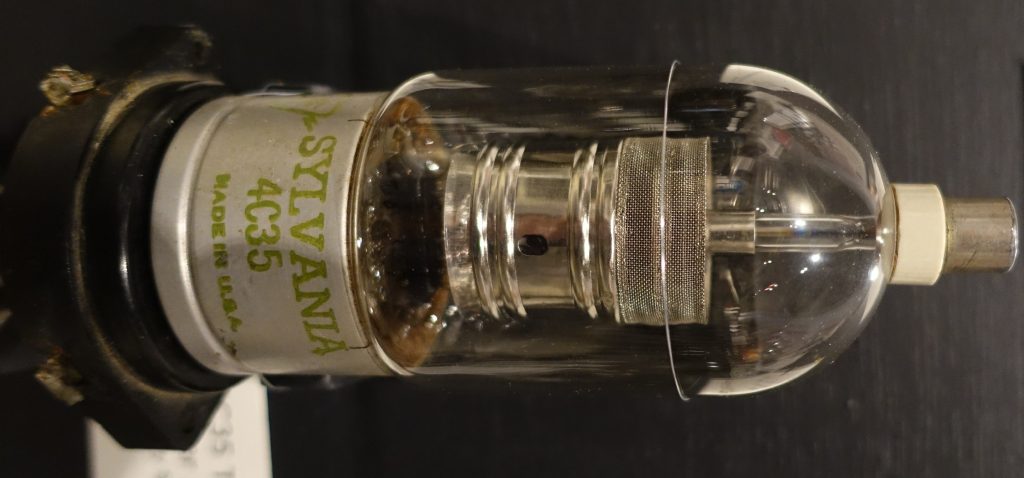
Applications: Used in radar pulse modulators and industrial high-voltage switches. Common in lighting control and power conversion circuits.
Klystron
Structure and Function: Comprises cavities that modulate electron velocity to amplify microwave frequencies. Utilizes thermionic emission for electron generation.
Applications: Used in radar transmitters, satellite communication, and microwave ovens. Essential in particle accelerators and scientific research.
Magnetron
Structure and Function: A type of diode with a magnetic field applied perpendicular to the electric field. Generates high-power microwave oscillations.
Applications: Widely used in microwave ovens and radar systems. Key component in communications and heating applications.
Phototube
Structure and Function: Contains a photocathode that emits electrons when exposed to light. Functions as a light-sensitive switch or amplifier.
Applications: Used in light detection, measurement instruments, and early television cameras. Essential in spectroscopy and optical communication.
| Thermionic Vacuum Tube | ||
| Type | Features | Common Uses |
| Diode | Two electrodes (cathode and anode); allows current to flow in one direction | Rectifiers, signal demodulation, power supplies |
| Triode | Three electrodes (cathode, anode, and control grid); amplifies signals | Audio amplification, oscillators, radio frequency amplification |
| Tetrode | Four electrodes (adds screen grid); reduces capacitance between anode and control grid | Radio frequency amplification, audio amplification |
| Pentode | Five electrodes (adds suppressor grid); further reduces capacitance and improves performance | High-frequency amplification, audio power amplification |
| Hexode | Six electrodes; used for frequency conversion and mixing | Mixers, frequency converters in radio receivers |
| Heptode | Seven electrodes; used for complex mixing and frequency conversion | Advanced frequency converters, radio receivers |
| Octode | Eight electrodes; similar to heptode but with additional control capabilities | Specialized radio applications, frequency conversion |
| Cathode Ray Tube (CRT) | Electron beam directed at phosphorescent screen; used to display images | Television screens, oscilloscopes, radar displays |
| Thyratron | Gas-filled tube; acts as a switch, triggered by control grid | Industrial control, light dimmers, motor control |
| Klystron | Velocity modulation to amplify high-frequency signals | Radar, microwave transmitters, satellite communication |
| Magnetron | Generates high-frequency microwaves using a magnetic field | Microwave ovens, radar systems, communications |
| Phototube | Converts light into an electrical signal | Light sensors, early television cameras, photometry |
Non-Thermionic Vacuum Tube Lamps
Non-thermionic vacuum tubes operate without the need for cathode heating. They rely on other mechanisms, such as cold cathode emission or gas ionization, to emit electrons. This section covers various types of non-thermionic vacuum tubes.
Cold Cathode Tube
Structure and Function: Utilizes a cathode that emits electrons without heating. Often involves high voltage to initiate electron emission.
Applications: Used in neon signs, lighting displays, and some types of fluorescent lamps. Found in voltage regulators and certain types of electronic switches.
Photomultiplier Tube (PMT)
Structure and Function: Contains multiple dynodes that amplify the initial photoelectron emission. Extremely sensitive to low levels of light.
Applications: Used in scientific instruments, medical imaging, and radiation detection. Essential in particle physics and astronomy for detecting faint light signals.
Gas Discharge Tube (GDT)
Structure and Function: Filled with gas that ionizes under high voltage, allowing current to flow. Acts as a protective device against voltage surges.
Applications: Used in surge protectors and lightning arrestors. Common in telecommunications and power supply protection circuits.
Geiger-Müller Tube
Structure and Function: Contains a gas-filled tube that ionizes when exposed to radiation. Detects ionizing radiation by producing electrical pulses.

Applications: Used in Geiger counters for radiation detection and measurement. Essential in environmental monitoring, nuclear industry, and health physics.
Neon Lamp
Structure and Function: Filled with neon gas that glows when ionized by an electric current. Operates as a low-current indicator or display light.
Applications: Used in signage, decorative lighting, and indicator lamps. Found in voltage regulators and pilot lights.
Voltage Regulator Tube
Structure and Function: Contains gas that ionizes to maintain a stable voltage across its terminals. Acts as a reference voltage source.
Applications: Used in power supplies to stabilize output voltage. Common in high-voltage regulation circuits.
Nixie Tube
Structure and Function: Filled with gas and contains multiple cathodes shaped as numerals. Glows to display numbers when specific cathodes are energized.

Applications: Used in digital displays, clocks, and measuring instruments. Popular in vintage and retro electronic projects.
Pseudospark Switch
Structure and Function: Operates as a high-speed switch using cold cathode emission. Capable of handling high currents and voltages.
Applications: Used in pulsed power systems, laser technology, and particle accelerators. Common in high-speed, high-power switching applications.
Thyratron (Cold Cathode)
Structure and Function: A gas-filled tube with a cold cathode that acts as a switch. Similar to hot cathode thyratrons but operates without heating.
Applications: Used in high-power switching, radar systems, and lighting controls. Common in pulsed circuits and industrial equipment.
| Non-Thermionic Vacuum Tube | ||
| Type | Features | Common Uses |
| Photomultiplier Tube (PMT) | Converts light into an electrical signal with multiple amplification stages | Scintillation counters, spectroscopy, medical imaging |
| X-ray Tube | Generates X-rays by accelerating electrons and hitting a metal target | Medical imaging, industrial inspection, security scanning |
| Cold Cathode Tube | Electrons emitted without heating the cathode | Neon signs, gas discharge lamps, voltage regulation |
| Gas Discharge Tube (GDT) | Contains gas that ionizes and conducts electricity when a voltage is applied | Surge protection, voltage regulation |
| Geiger-Müller Tube | Detects ionizing radiation by ionization of gas within the tube | Radiation detection, nuclear instrumentation |
| Neon Lamp | Small gas-discharge tube that emits light when a voltage is applied | Indicator lights, signage, decorative lighting |
| Voltage Regulator Tube | Maintains a constant voltage by ionizing gas inside the tube | Voltage regulation in power supplies |
| Nixie Tube | Displays numerical information using cold cathode glow discharge | Vintage electronic displays, clocks, instrumentation |
| Pseudospark Switch | High-current switch utilizing a cold cathode discharge | Pulse power systems, particle accelerators, high-speed switching |
| Thyratron (Cold Cathode) | Gas-filled tube operating without a heated cathode, acts as a switch | Industrial control, lighting control, motor starters |
Applications of Vacuum Tube Lamps
Vacuum tube lamps have played an essential role in the development of various technologies. Despite the rise of solid-state electronics, vacuum tube lamps remain significant in many applications due to their unique characteristics. This comprehensive tutorial explores the diverse applications of vacuum tube lamps, focusing on audio amplification, radio and broadcasting, television and display technology, early computing, and industrial and scientific applications.
Audio Amplification

In the realm of audio, vacuum tube lamps became synonymous with high-fidelity sound. Tube amplifiers are renowned for their warm, rich tones and are still prized by audiophiles and musicians. The characteristic harmonic distortion produced by vacuum tubes is often considered more pleasing to the ear compared to solid-state amplifiers. This unique sound quality has ensured the continued popularity of tube amplifiers in high-end audio equipment and musical instrument amplification.
Radio and Broadcasting

Vacuum tube lamps played a crucial role in the development of radio broadcasting. Early radio receivers relied on triodes, tetrodes, and pentodes for signal amplification and detection. The ability to amplify weak radio signals made long-distance broadcasting and reception possible, ushering in a new era of mass communication. Vacuum tube technology enabled the first commercial radio broadcasts, connecting people across vast distances and laying the foundation for the global communication networks we have today.
Television and Display Technology

The cathode-ray tube (CRT), a type of vacuum tube, was the cornerstone of early television technology. By directing an electron beam onto a phosphorescent screen, CRTs could display moving images, making televisions a household staple. CRT technology also played a crucial role in oscilloscopes, which are essential tools for engineers and scientists to visualize electrical signals.
Early Computing

Vacuum tube lamps were crucial in the development of early computers. Machines like the ENIAC, one of the first electronic general-purpose computers, relied on thousands of vacuum tubes for processing and memory. These early computers were massive and consumed significant power, but they were capable of performing complex calculations at unprecedented speeds. The ability of vacuum tubes to switch states quickly was vital for the operation of these early digital circuits, laying the groundwork for the modern computing revolution.
Industrial and Scientific Applications

Vacuum tube lamps have a variety of industrial and scientific applications. Thyratrons, for example, were used in radar systems and high-speed switching applications due to their ability to handle high voltages and currents. Phototubes, which convert light into electrical signals, were employed in spectroscopy, light detection, and early television cameras. These applications contributed to significant advancements in both industrial processes and scientific research.
Vacuum Tube Lamps Best Practices
Warm-up Time: Vacuum tubes need a warm-up period to reach optimal operating conditions. Turn on the equipment and allow the tubes to warm up for at least 15-30 minutes before use. This practice ensures stable performance and extends the life of the tubes.
Ventilation: Ensure proper ventilation around the equipment to dissipate heat generated by the vacuum tubes. Overheating can reduce tube life and affect performance. Use fans or place the equipment in a well-ventilated area to maintain a stable operating temperature.
Avoiding Power Surges: Power surges can damage vacuum tubes. Use a surge protector or an uninterruptible power supply (UPS) to protect your equipment from sudden voltage spikes. This practice is particularly important in areas prone to electrical disturbances.
Periodic Inspection: Regularly inspect your vacuum tubes and equipment for signs of wear or damage.
Cleaning: Keep the tubes and their sockets clean to maintain good electrical contact. Use a soft brush or compressed air to remove dust and debris. For more stubborn grime, use isopropyl alcohol and a lint-free cloth, being careful not to leave any residue.
Conclusions
Vacuum tube lamps represent a fascinating chapter in the history of electronics. Their contribution to the development of modern technology is immeasurable. While they may no longer dominate the industry, their unique qualities ensure that they remain relevant in high-fidelity audio, specialized scientific instruments, and certain industrial applications.
While the widespread adoption of solid-state technology has overshadowed vacuum tubes, they continue to hold a special place in specific applications. Hybrid designs that combine the advantages of vacuum tubes with solid-state components are gaining popularity, offering the best of both worlds.

The preservation and restoration of vintage vacuum tube equipment are also significant. Collectors and enthusiasts dedicate considerable effort to maintaining these historical artifacts, ensuring that the legacy of vacuum tubes endures. These restoration projects not only preserve history but also provide valuable educational insights into the early days of electronic technology.
Understanding the importance of vacuum tube lamps and adhering to best practices in their maintenance and operation will ensure their continued use and appreciation. As technology advances, the enduring charm and utility of vacuum tube lamps remind us of the remarkable journey of electronic innovation. By recognizing and preserving their legacy, we honor the ingenuity and creativity that have driven technological progress for over a century.
FAQs (Frequently Asked Questions) about Vacuum Tube Lamps
Q1.How long do vacuum tube lamps last?
The lifespan of vacuum tube lamps varies based on usage and conditions, but typically ranges from 1,000 to 10,000 hours. Proper maintenance and usage can extend their life, while excessive heat, incorrect voltage, or mechanical stress can shorten it.
Q2.What are common signs that a vacuum tube lamp needs replacement?
Signs indicating a vacuum tube lamp needs replacement include: lower output or increased noise; darkened glass or white spots; noise when tapped, indicating mechanical issues; cracks or other visible damage.
Q3.Can vacuum tube lamps be repaired?
While vacuum tube lamps are generally not repairable due to their sealed design, replacing them with new or refurbished tubes is common. Some specialized services can refurbish certain types of tubes, but this is often not cost-effective for most applications.
Q4.Are there modern applications for vacuum tube lamps?
Yes, vacuum tube lamps are still used in modern applications, including: high-end audio, preferred for superior sound quality; broadcast transmitters, for high-power signal transmission; military and industrial equipment, where robustness is required; and scientific instruments, such as oscilloscopes and particle accelerators.
Q5.Are there collectors or enthusiast communities for vacuum tube lamps?
Yes, there are active communities of collectors and enthusiasts who restore and preserve vintage vacuum tube equipment. These communities often share knowledge, resources, and appreciation for the history and technology of vacuum tubes.
Q6.Can vacuum tube lamps be used in DIY projects?
Yes, vacuum tube lamps are popular in DIY projects, particularly in: audio amplifiers – building custom tube amplifiers; radio kits – assembling vintage-style radio receivers; and educational projects – demonstrating basic electronic principles.