
An Easy Guide to Hanging Outdoor String Lights with Guide Wire
Lighting Your Outdoor Spaces with String Lights
In the realm of landscape design, outdoor string lights have emerged as a pivotal element, bringing an ethereal beauty to gardens, patios, and other outdoor spaces. Termed as landscape string lights, their soft glow adds a magical touch to evening gatherings and private strolls alike.
These versatile lights not only serve the practical purpose of providing illumination but also contribute to the aesthetics and ambiance of your outdoor settings. With a variety of styles available in the market today – from vintage Edison bulbs to twinkling fairy lights – you can customize your space based on your individual taste and mood.
Landscape string lights are incredibly dynamic, enabling homeowners to transform their backyards into enchanting venues for parties or tranquil retreats for relaxation. They add depth to the night sky, create focal points within your garden, and set a warm tone that can make any alfresco dining experience more inviting.
The benefits of landscape lighting extend beyond mere aesthetics. Strategically placed lighting enhances safety by highlighting walkways and reducing shadowed areas that could harbor potential hazards. Furthermore, it can increase property value by amplifying visual appeal even during nighttime hours.
Despite its many advantages, hanging these radiant jewels in an optimal manner requires some planning. Here is where guide wire comes into play when installing outdoor string lights.
The Role of Guide Wire in Outdoor String Light Arrangements
Guide wires act as robust support systems for your landscape string lights. Also known as tension or aircraft cables, these sturdy wires ensure that your light strands remain taut and perfectly aligned over extended spans or harsh weather conditions.
This strong framework reduces sagging which not only improves visual appeal but also extends the longevity of your lighting setup by minimizing strain on bulb sockets or electrical connectors. Consequently, guide wires play an integral role in maintaining the durability and appearance of landscape lighting.
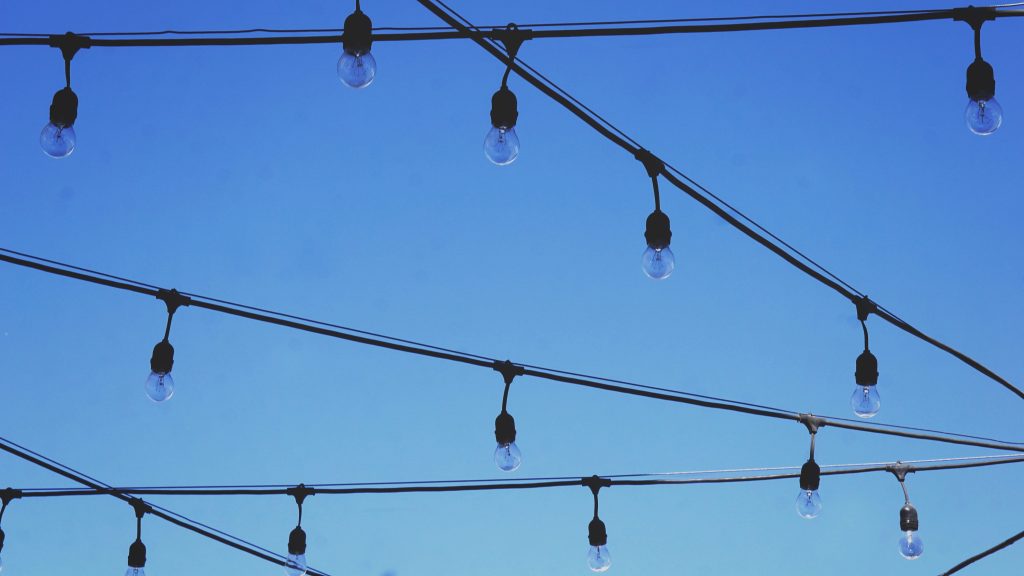
Moreover, the use of a guide wire significantly simplifies the process of hanging outdoor string lights. By providing a firm path to follow, it allows for more precise and streamlined installation. It helps achieve the desired pattern or shape for your light layout, be it zigzag patterns, straight lines, or circular shapes around patio umbrellas.
The flexibility offered by guide wires makes them ideal for custom arrangements, leaving ample room for creativity. As such, they cater to diverse landscape lighting needs and preferences, so whether you’re creating a lively party zone or a sophisticated dining area under the stars, you can rely on them to help set up your dream space.
Understanding how to install landscape string lights with guide wire will give you the freedom to illuminate your outdoor living spaces just as you’ve envisioned. With these sturdy cables in place, you will have a reliable framework that ensures your striking display of lights shines brightly season after season.
Lighting Equipment: The Essential Tools
Embracing the art of installing landscape lighting requires a few essential tools. The first is a pair of pliers, a versatile and indispensable instrument that will enable you to twist and bend the guide wire as needed. Choosing pliers with insulated handles can provide added safety when working with electrical components.
Secondly, a reliable set of wire cutters is necessary. The wire cutters will be employed to trim your guide wire to the desired length, ensuring that your landscape string lights fit perfectly within your chosen space. As with pliers, opting for wire cutters with insulated handles offers an added layer of protection.
An electric drill represents another vital tool in this project. You’ll use it to create pilot holes for the eye hooks that will support your guide wire and string lights. A selection of drill bits catering to different surface materials – wood, metal, or masonry – might also be crucial depending on where you plan to hang your lights.
A tape measure is an unsung hero in such undertakings. Accurate measurements are crucial when hanging outdoor string lights since they dictate how much guide wire you’ll need and where exactly to place your eye hooks for optimal light distribution.
To ensure the tightness and stability of your installation, a turnbuckle or carabiner will be required. These devices help adjust tension in the guide wires, thereby maintaining an optimum sagging degree, which enhances both the aesthetic appeal and the durability of the setup.
Materializing Ambiance: The Necessary Materials
Once armed with the appropriate tools, acquiring the correct materials is paramount in creating captivating outdoor lighting via landscape string lights. Primarily, selecting quality outdoor string lights is essential.
When choosing these lights, consider factors like bulb type (LEDs generally offer longevity), color temperature (for desired ambiance), cord length (to cover intended area), and power source (electric grid, solar, battery, or plug-in).
Accompanying these string lights, a sturdy guide wire is mandatory. This wire not only supports the weight of the lights but also withstands different weather conditions. Look for a stainless steel wire that’s strong and corrosion-resistant. The thickness of your wire will depend largely on the length of your light span and the weight of your string lights.

Eye hooks are instrumental in this project as well. They provide anchor points for your guide wire and should be robust enough to support the combined weight of both string lights and guide wire. Choosing eye hooks made from durable materials like stainless steel ensures longevity.
Zip ties or cable clips will be needed to attach your string lights to the guide wire securely. They should be weather-resistant, ensuring they don’t become brittle under sun exposure or snap in frigid temperatures.
Consider an outdoor-rated extension cord if your chosen string light cord doesn’t reach an available power outlet directly – safety first! And remember to plan for proper watertight protection at connection points to prevent any electrical mishaps.
Choosing the Right String Lights
Light Up Your World: Factors to Consider When Selecting Outdoor String Lights
Outdoor lighting, specifically landscape string lights, can significantly enhance the aesthetics of your space. However, not all string lights are created equal. It is imperative to consider factors such as weather resistance and bulb type when choosing your outdoor string lights.
The first key aspect to consider in selecting landscape lighting is its resistance to weather conditions. Outdoor fixtures are exposed to elements like rain, snow, dust, and heat, which may damage them over time. Thus, it’s wise to choose outdoor string lights built for durability against varied climatic conditions. Look for options labeled as waterproof or weather-resistant; these units are designed to withstand harsh environmental aspects more effectively than their generic counterparts.
Secondly, bulb type is a crucial factor that should be taken into account when purchasing landscape string lights. There are numerous bulb types available on the market, including light-emitting diodes (LED) lights, incandescent bulbs, and compact fluorescent lamps (CFLs).
LEDs tend to be more energy-efficient and longer-lasting than traditional incandescent bulbs or CFLs. Moreover, they produce less heat, which makes them safer for use in close proximity with plants or fabrics.
Another aspect related to bulb type involves color temperature. The color of light emitted by each bulb can vary from warm yellow hues mimicking traditional Edison-style bulbs to brilliant white light similar to that of daylight; choose according to the ambiance you wish to create in your outdoor space.
But importantly, luminosity, or brightness level, which is usually measured in lumens. Brighter isn’t always better – it’s about setting the right mood while providing adequate lighting for safety and visibility purposes.
Selecting an Appropriate Guide Wire
The Backbone of Landscape Lighting: Choosing Your Guide Wire
After deciding on suitable outdoor string lights, the next critical step is to choose an appropriate guide wire. This may seem a somewhat minute detail, but in the world of landscape lighting, everything matters. The main function of a guide wire is to provide structural support for your string lights and ensure they remain taut and uniformly spaced, thereby maintaining optimal aesthetic appeal.
When selecting a guide wire, one of the primary considerations is its strength. You want to choose a guide wire robust enough to support the weight of your string lights even under adverse conditions such as strong winds or heavy snow.

Material type is another aspect to consider when selecting your guide wire. Stainless steel wires are a popular choice for their strength and durability; they also resist rusting, which makes them suitable for outdoor applications.
The diameter or thickness of your guide wire also plays an integral role in its overall performance. Thicker wires typically offer more strength and durability, but they can be more challenging to work with due to their stiffness. Another factor worth considering is ease of installation.
Some types of guide wires come pre-threaded through eye hooks or other fasteners, which can significantly streamline the installation process. Yet importantly, always ensure that any hardware associated with your guide wire (like turnbuckles or carabiners) has sufficient load-bearing capacity relative to both the weight of your string lights and potential environmental stressors.
Planning Your Layout: A Blueprint for Success
Analyzing Space and Power Source Locations
Before setting up your landscape string lights, it is critical to analyze your outdoor space. The first step involves measuring the area where you plan to hang your lights. This will not only help you in acquiring the adequate length of string lights and guide wire but also determine the number of eye hooks needed.
Next, scrutinize each potential spot for hanging your lights. Consider factors like height and distance from other structures, as well as aesthetic appeal. Ensure that these factors align with the primary purpose of your landscape lighting – that could range from illuminating an outdoor dining area to creating a whimsical ambience in a garden alcove.
The location of your power source is another fundamental aspect to consider during layout planning. Ideally, you’d want a power outlet within a short distance of the start of your lighting run. If this isn’t feasible, consider hiring an electrician to install one or using an outdoor extension cord rated for long-term exterior use.
Designing Your Landscape Lighting Layout
In designing the layout for your landscape string lights, imagine how they would look when illuminated against the night sky. This visualization will guide you in deciding whether to go for straight lines forming a canopy design or criss-cross patterns creating more depth and dimension.
When sketching out a layout plan, be sure to mark on paper where each eye hook will be installed, as these serve as anchor points for the guide wire supporting your string lights. This exercise can also help reveal any potential obstacles, such as trees or structures that might interfere with installation or final aesthetics.
Planning is integral in successfully hanging landscape string lights with guide wire. By giving careful thought to space size and power source location along with crafting an effective layout plan, you’re paving way towards achieving phenomenal outdoor lighting effects that are not just functional, but also visually enchanting.
Installation Process: From Eye Hooks to Lighting
Installing Eye Hooks: Laying the Groundwork
In our quest to create a magical landscape lighting experience, the first step involves marking spots for hooks. When determining placement, keep in mind that eye hooks serve as the supportive backbone for your landscape string lights. Equidistant spacing between hooks helps maintain tautness in your guide wire and ensures an aesthetically pleasing layout.
Proceeding from marking, we move to drilling pilot holes at each marked spot. This process is crucial to prevent splitting or damaging your material, whether it’s wood or stucco. The diameter of each hole should be slightly smaller than the screw part of the eye hook so as to ensure a secure fit.
Next, screw in the eye hooks into these carefully drilled pilot holes. By hand is typically best – this allows you to feel any resistance and adjust accordingly to prevent damage. Coupled with careful placement and drilling, this step creates sturdy anchor points for your guide wire.
Setting Up the Guide Wire: Creating a Secure Pathway
Having completed hook installation, we now turn our attention towards setting up the guide wire. Start by measuring the distance between each pair of eye hooks accurately; this measurement determines how much guide wire you’ll need.
When cutting your guide wire length according to these measurements, always allow some extra length for adjustments and secure attachment. After cutting, attach one end of the guide wire firmly onto an eye hook using a turnbuckle or carabiner.
The use of a turnbuckle or carabiner is vital as it provides an avenue for tension adjustment, ensuring that your strings are neither too tight (to avoid snapping) nor too loose (to prevent sagging). Next comes stretching and securing the guide wire onto the corresponding opposite hooks, pulling tightly enough that minimal sag occurs but not so much as to strain the wire.
Hanging String Lights: Bringing the Landscape to Life
With the guide wire securely installed, it’s time to hang your string lights. Begin by attaching your landscape string lights to the guide wire. This can be achieved using zip ties or cable clips; both are excellent tools for this purpose due to their durability and ease of use.

When attaching, ensure that each light bulb hangs down from the wire and is firmly secured. Check each bulb’s placement, making adjustments as necessary for an even distribution of light across your landscape. We focus on ensuring even spacing between bulbs.
This is more than a question of aesthetics; consistent spacing contributes significantly towards illuminating your outdoor area uniformly and creating that beautiful ambiance you desire from landscape lighting. By following these steps in detail, you’re well on the way to constructing a spectacular outdoor lighting project that enhances and highlights the beauty of your environment.
Potential Challenges & Troubleshooting Tips: Navigating the Rough Waters
Every endeavor invariably encounters some hurdles, and installing landscape string lights is no exception. The initial challenge often lies in sketching an appropriate layout that both accentuates your outdoor space’s aesthetics and ensures the practical placement of lights.
To overcome this, start with a rough sketch of your space, marking trees, fences, or walls that could serve as potential support points. This also allows you to estimate the length of guide wire and string lights needed accurately.
The second common issue arises while drilling pilot holes for eye hooks. If you’re drilling into wood or concrete, you may face resistance due to hardness. In such cases, ensure that you’re using a drill bit meant for the specific material type – masonry bits for concrete or brad point bits for wood. Also, remember to drill only as deep as the screw’s length to avoid damaging the structure.
Another obstacle might surface during guide wire installation. If your measured distance is quite long, sagging could pose a problem without proper tensioning devices like turnbuckles or carabiners in place. Ensure they are installed at one end of each guide wire section so that tension can be adjusted over time if required.
Hanging landscape lighting fixtures presents its own set of challenges too. Sometimes bulbs may clash against each other or other objects due to wind movement; this can be mitigated by using cable clips or zip ties at regular intervals along with guide wires, providing stability and maintaining uniform spacing between bulbs.
Weather conditions like rain and snow can affect both the lifespan and performance of your landscape string lights. Opt for waterproof or weather-resistant string lights while remembering to unplug them during severe weather conditions.
Conclusion: How to Hang Outdoor String Lights with Guide Wire?
There’s no denying that hanging outdoor string lights using guide wires comes with its share of tests and trials. But, with the right tools, materials, and a little patience, these hurdles can be overcome to create a twinkling fairyland in your garden or patio.
Looking past the potential pitfalls, you will see that the journey towards installing landscape string lights is an enlightening one; it not only brightens your outdoor space but also brightens up your DIY skills.
So gear up, venture out under the vast sky, and let your backyard bask in the warm glow of your achievements. As they say, every light begins with a spark; consider yourself that spark, setting your landscape alight with beauty and brilliance.
You may also be interested in the following posts: