
An Easy Guide to Hanging Outdoor String Lights on Sidings
The Luminous Impact of Outdoor String Lights
Outdoor string lights, commonly referred to as landscape string lights, have transcended their utility to become a popular aesthetic choice for homeowners. They not only provide lighting but also create a warm and welcoming ambiance that enhances the beauty of your home after dusk. These radiant yet subtle lights add a magical charm to the architecture, making it stand out even on the darkest nights.
Landscape lighting such as outdoor string lights is not merely decorative; it serves several practical purposes as well. Strategically placed, they can improve visibility around your property thereby enhancing safety and security. Whether it’s illuminating a garden path or accentuating architectural features, these lights can considerably ameliorate nighttime navigation.
When installed on vinyl siding or other exterior surfaces, they subtly highlight the texture and color of the material, adding depth and dimension to your home’s appearance. Furthermore, outdoor string lights are an excellent way to define outdoor spaces such as patios or decks and create an inviting atmosphere for alfresco dining or relaxed evenings under the stars.
Moreover, from an environmental perspective, many contemporary landscape lighting options such as LED or solar-powered string lights consume less energy compared with traditional lighting methods thereby contributing towards sustainability. Furthermore, in festive seasons or during special events at home these versatile and resilient strings of light can be used innovatively to notch up aesthetics proving their multifaceted utility.
A Guide to Glow: Mastering the Art of Hanging Outdoor String Lights
This easy guide aims at assisting homeowners in safely installing landscape string lights on sidings without causing any damage to them. A detailed walkthrough covering every aspect from selecting suitable string lights through maintenance tips will ensure you have an enchanting addition to your home with minimal effort while adhering to safety measures ensuring longevity.
Having a clear understanding of the different types of outdoor string lights, considering factors like the right length, appropriate style, and energy consumption, can significantly influence your decision-making. Knowledge about your siding material will also help you customize your installation strategy.
Following this guide will ensure that you are able to hang landscape lights with professional precision. You’ll be furnished with tips and techniques on how to install hooks or clips on sidings based on the type and how to secure them, ensuring an even display. The process doesn’t end at mere installation; maintaining these delicate strings is equally important to ensure they remain functional and beautiful over time.
Tips for proper maintenance will be provided in the latter part of this post. This meticulous guide is intended for anyone looking to enrich their exteriors with landscape lighting, especially on sidings, while ensuring safety, durability, beauty, and functionality are not compromised.
Understanding Outdoor String Lights: Lighting Up the Night Sky
Outdoor string lights, often referred to as landscape string lights, are decorative lighting fixtures designed to be strung across outdoor spaces like gardens, patios, decks, or along siding. They offer a unique aesthetic appeal that can transform the ambiance of your outdoor space from ordinary to magical.
More than just lighting sources, these enchanting strands of light serve as an extension of your personal style and a testament to your eye for design. Utilizing these captivating lighting elements can instantly elevate the aesthetic charm of your landscape while providing functional lighting needed for evening outdoor activities.

Whether it’s a casual family dinner on the patio or a lively garden party with friends, landscape string lights create an inviting atmosphere everyone will enjoy. The allure and functionality of outdoor string lights are not confined solely within the boundaries of aesthetics and practicality.
These little gleaming bulbs are also integral parts of many holiday decorations and celebrations, often used in events such as weddings, birthdays, or even Christmas festivities. Consequently, understanding their diversity is crucial in choosing which type is perfect for vinyl siding lighting.
The Radiant Array: Types and Styles
String lights come in various styles ranging from vintage Edison-style bulbs to contemporary LED versions. The choice primarily depends on personal preference combined with consideration for energy efficiency and bulb longevity.
In comparing LEDs versus incandescent bulbs, for instance, LEDs typically consume less energy and last longer than their incandescent counterparts, making them perfect for long-term use. Their bright light output provides clear visibility – excellent when used as security or landscape lighting.
On the other hand, incandescent bulbs emit warm white light, creating a cozy ambiance suitable for intimate outdoor gatherings. However, they tend to consume more electricity over time, thus perhaps better suited to occasional use. Furthermore, the power source is another important consideration.
While most outdoor string lights are electrically powered, solar options have gained popularity, especially amongst eco-conscious individuals. Solar lights are energy-efficient, drawing their power from the Sun and automatically turning on at dusk – an ideal choice for areas with abundant sunlight.
Notably, styles of bulbs also vary extensively. You can choose from globe lights, which emit a soft round glow ideal for creating relaxed environments; fairy lights that look like twinkling stars in the night sky; or vintage-style bulbs, which infuse an old-world charm into your space.
Safety First: String Light Considerations
As enchanting as they may be, it’s crucial not to overlook safety considerations when installing outdoor string lights. Ensuring that your chosen string lights are designed for outdoor use is paramount – these types are made to withstand weather conditions and have necessary safety features such as fused plugs and circuit breakers to prevent electrical faults.
When installing landscape lighting on vinyl siding or any other type of siding, make sure not to pierce any electrical cables hidden beneath the surface. This could lead to serious accidents or damage to your property’s electrical system.
Additionally, if opting for electric-powered string light options, ensure you have a nearby exterior-grade outlet accessible – extension cords stretched across lawn spaces pose tripping hazards and might be affected by harsh weather conditions.
Furthermore, remember to turn off the lights during rainstorms unless they’re specifically designed to withstand such conditions. Maintaining appropriate bulb spacing is another critical consideration when hanging string lights.
This helps avoid overlapping wires, which could potentially heat up and cause a fire hazard. It’s advisable to follow manufacturer guidelines regarding maximum connection limits and always ensure bulbs aren’t touching any flammable materials.
In essence, while beautifying your outdoor space with string lights, always remember that safety should not be compromised. Careful and correct installation will ensure that your nights are not only beautifully lit but also safe and secured.
Preparing for Installation: The Preliminary Measures
Before embarking on the installation process of landscape string lights, it’s crucial to ensure that you’ve made adequate preparations. The first step entails selecting the right type and length of string lights for your siding. This decision is determined by factors such as personal preference, budget, and the architectural style of your home.
Measuring your space accurately is a vital step in this process. Use a measuring tape to ascertain the exact length you will need for your project. It’s better to slightly overestimate than underestimate to prevent any shortage during installation.
During measurement, also give consideration to bulb spacing and brightness level. Landscape lighting varies widely in terms of brightness and warmth; therefore, choose a type that complements your outdoor ambiance without creating glare or overly lit spots.
Gathering necessary tools and materials ahead of time can save you from unnecessary pauses during installation due to missing equipment. Essential tools comprise items like a ladder (for reaching high areas), a drill (for making holes), screws (for securing hooks or clips), pliers, among others.
It’s essential that each tool plays a significant role in easing the installation process; thus, their necessity cannot be overstated. For instance, having a proper ladder guarantees safe access to elevated areas while drills make precise holes for screws.
Understanding Your Siding Material: Factors That Influence Light Installation
Identifying the type of material used for siding is an integral part of this process since it influences how outdoor string lights are hung up. Broadly speaking, there are three typical types: vinyl siding, wood siding, and metal siding.
Vinyl sidings are relatively easy to work with due to their low-density characteristic, which allows drilling without causing severe damage.
Wood sidings require careful handling to avoid splintering, while metal sidings necessitate specific drill bits designed for metals.
The effect each type has on the installation process varies. For instance, with wood or vinyl siding, you can directly drill hooks into the siding. However, for metal sidings, adhesive hooks or clips might be a more appropriate choice.
Step-by-Step Guide to Installing String Lights on Sidings: Ensuring a Smooth Installation Process
Once you’ve made all the necessary pre-installation considerations, it’s time to move on to the next stage: physically installing your landscape string lights.
The first step involves planning your layout. Determine where you want to start and end your strings based on power source proximity and the pattern you’d like to achieve.
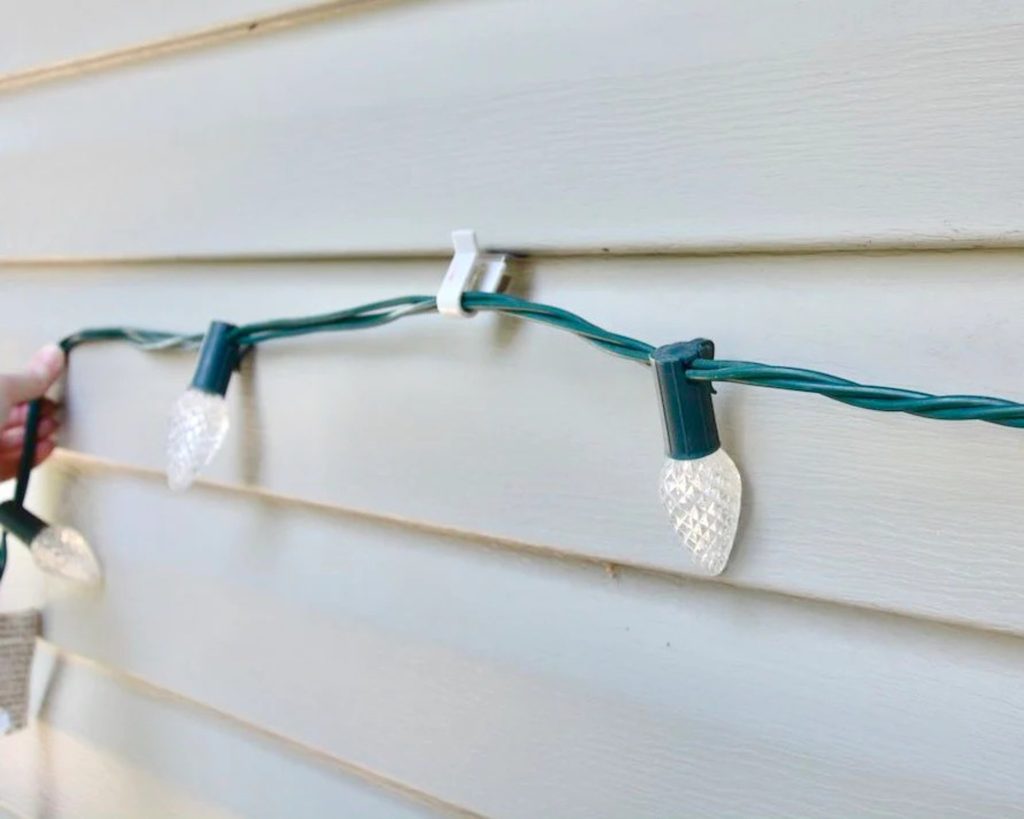
Next comes attaching hooks or clips to your sidings. If drilling is an option for your type of siding (like wood or vinyl), use an appropriate drill bit size that corresponds with your screws’ size. However, when dealing with metal sidings, which are generally resistant to drilling, adhesive hooks or clips come in handy.
Hanging up the string lights requires careful handling to ensure they’re secure and evenly spaced out for optimal lighting effects. Start from one end and slowly work towards the other end while checking at intervals that each bulb is firmly held in place by its corresponding hook or clip.
Connecting to a power source should be done cautiously since it involves handling electrical connections outdoors which pose potential safety hazards if not properly handled.
Maintenance Tips for Outdoor String Lights: Ensuring Longevity
Proper maintenance of landscape string lights significantly extends their lifespan while preserving their initial allure for longer periods. These could involve routinely checking for any faulty bulbs and promptly replacing them as well as ensuring that all connections remain dry especially during wet seasons.
Conclusion: How to Hang Outdoor String Lights on Sidings?
Hanging outdoor string lights on sidings doesn’t have to be a complicated process filled with uncertainties. With proper planning and execution guided by these recommendations, this task can quickly transform into a gratifying DIY project that significantly enhances the aesthetic beauty of your home’s exterior.
The glow from these lights not only illuminates your space but also radiates an enchanting aura that can turn any ordinary night into a magical experience. So take this chance and light up your world with the mesmerizing effect of landscape string lights.
You may also be interested in the following posts: