
Enlightening the Night: Tent String Lighting Techniques
A Beacon in the Wilderness: The Importance of Tent String Lights
The tranquillity and grandeur of nature are often best appreciated in the soft glow of twilight. Yet, as darkness descends, a need for illumination becomes apparent. This is where attaching string lights to your tent can transform your outdoor experience.
Landscape lighting, particularly when camping, serves a dual purpose. It not only dispels darkness but also enhances the aesthetic appeal of your temporary home within nature’s grand panorama. String lights have an ethereal quality to them–they add warmth and charm to any space they illuminate.
Imagine a canopy of shimmering stars mirrored within your tent through the soft oscillation of fairy lights. These tiny points of light can create an inviting ambiance that turns an ordinary tent into an enchanting retreat. Beyond their aesthetic contribution, string lights also provide practical benefits.
They increase visibility around your campsite during nighttime hours, thereby reducing potential hazards that might be obscured in darkness. Moreover, should you find yourself lost amid nature’s vast expanse after sundown, landscape string lights attached to your tent serve as a beacon guiding you back to safety.
Flickers in the Dark: Benefits Unveiled
Draping landscape string lights over your tent provides more than just functional lighting; it delivers something magical and mysterious that enhances the entire camping experience. There’s nothing quite like opening your eyes in the middle of the night and seeing a soft glow surrounding you rather than being engulfed by impenetrable darkness.
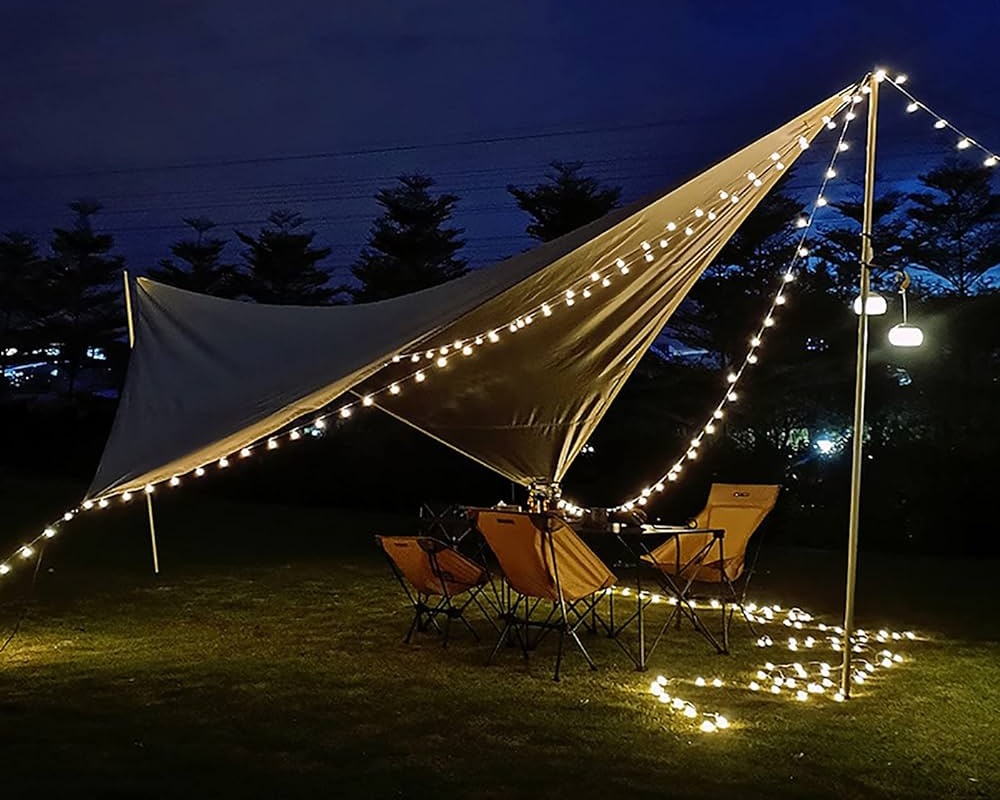
A well-lit campsite discourages unwelcome nocturnal creatures from wandering too close to your shelter. Furthermore, having ample lighting allows for spontaneous card games under the starlit sky or late-night storytelling sessions without straining one’s eyesight – activities that often create some of life’s most cherished memories.
Your Journey to Starlight: A Sneak Peek at the Lighting Process
Now that we’ve shone a light on the importance and benefits of attaching string lights to your tent, let’s take an early glimpse into the steps involved in making this concept a reality. The process begins with selecting the right kind of string lights suitable for your needs and power source availability. This choice will influence everything else that follows.
Next, you’ll embark on the preparatory phase, which involves planning your design layout and prepping your tent before installing the lights. Once all preparations have been completed, you’re ready for the actual attachment of string lights onto your tent – a task requiring some strategic thought but one that can be immensely rewarding.
To maintain their functionality and charm, these twinkling additions need regular care so they remain shining brightly throughout all weather conditions. Maintenance checks are therefore essential procedures to incorporate into your camping routine. In our subsequent sections, we will unfold each step in exhaustive detail – providing tips, hints, and advice – to facilitate your journey from darkness into an ethereal world illuminated by countless dots of radiant light.
Materials Needed for Attaching String Lights
Essential Ingredients for a Luminous Terrain
The first step towards creating an ethereal setting with landscape string lights begins with gathering the proper materials. It is important that we are equipped not only with the correct tools but also with a vision of what we want our final landscape lighting to look like.
String Lights: The Stars of the Show
The main protagonist in our journey towards creating a breathtakingly lit tent is, of course, the string lights. Whether you prefer warm, inviting white bulbs or a riotous celebration of colors, your choice of string lights will pave the way for your overall aesthetic.
Landscape string lights come in a variety of shapes, sizes, and colors and can be customized to suit your individual taste and preference. We have solar-powered ones that charge during the day and light up at night. You can also opt for battery-operated ones if you’re not sure about sunlight availability or electric ones if there’s an accessible power source nearby.
The Supporting Cast: A Tent with Suitable Structure
A suitable tent structure acts as the canvas upon which we paint our luminous spectacle. Depending on its size and design, different tents may lend themselves to varying types of landscape lighting setups. Tents with higher roofs offer more space to create layers of lighting while smaller tents might provide an intimate setting where each bulb shines like a star-studded sky above us.
It’s important that your chosen tent should be sturdy enough to support the weight of string lights without risk of collapsing or getting damaged. Always consider factors such as wind speed and drizzly rain conditions and ensure that your tent is waterproof if you’re planning to hang outdoor-rated landscape string lights.
Clips or Hooks: Securing Your Dreamscape

Next up are clips or hooks – these unsung heroes provide much-needed support by securely attaching your string lights to the tent. Depending on your tent’s structure, you may use clips that can easily be clamped onto poles or ropes or hooks that can be inserted into pre-existing loopholes in the tent’s fabric.
Extension Cord: Powering Your Vision
An extension cord might become necessary if the power source isn’t close at hand and you’re using electric string lights. Always ensure that your extension cord is in good condition, without any fraying or other signs of damage. Also, take care to position it so it doesn’t become a trip hazard.
Safety Equipment: An Optional but Important Consideration
Safety should always remain paramount when dealing with electrical equipment outdoors. While optional, having safety equipment on hand, such as gloves (to protect hands while handling bulbs), a bulb tester (for testing each bulb before installation), and a GFCI plug (to prevent electrical shocks), will give you peace of mind knowing you’ve taken precautionary measures for a safe and stunning landscape lighting experience.
Choosing the Right String Lights: Illuminating Your Outdoor Nightscape
Choosing the right string lights for your tent is a task that requires careful consideration, bearing in mind both practical needs and aesthetic preferences. String lights can transform an ordinary campsite into a whimsical retreat, imparting an enchanting ambiance that elevates your camping experience. Beyond their decorative appeal, they also function as critical landscape lighting that provides safety and visibility during nocturnal hours.
Solar-Powered Lights: Harnessing the Sun’s Brilliance
Solar-powered string lights are ideal choices for outdoor enthusiasts mindful of sustainability and convenience. These landscape string lights store energy from sunlight during the day and illuminate in darkness without the need for an external power source. Their self-reliance makes them perfect partners for long camping trips where electricity is scarce.
However, it’s essential to ensure these solar-powered marvels get sufficient sunlight daily to function seamlessly at night. Additionally, since they rely on photovoltaics to convert sunlight into electricity, their brightness levels might not be as high as other types of string lights.
Battery-Operated Lights: Your Portable Twinkling Companions
Battery-operated string lights are another compelling choice for camping enthusiasts. They offer a significant advantage in terms of mobility without being dependent on a constant power supply or abundant sunlight. However, you should consider carrying extra batteries if you plan to camp for extended periods or anticipate using these luminous decorations extensively.
Despite their convenience factor, battery-operated landscape lighting may require frequent battery replacements depending on usage patterns. Thus it’s prudent to consider models with energy-saving features like timers or dimmers.
Electric String Lights: Camping Under Starry Skies
Electric string lights can deliver a dazzling spectacle of light, making your tent resemble a starry sky in the midst of nature’s wilderness. They offer the best brightness levels, and you can easily control their intensity. However, they require a power source, which can be a limiting factor if your campsite doesn’t provide electricity.

If you opt for electric string lights, it’s crucial to follow safety precautions to avoid potential hazards associated with electricity and outdoor conditions. Always opt for lights designed for outdoor use that have necessary weatherproof seals and proper insulation to prevent any electrical accidents.
Guiding Luminosity: Factors in the Search for Perfect String Lights
When embarking on your quest for the perfect string lights, keeping key characteristics in mind will guide you towards making an informed decision.
Size and Weight: Balance in Lighting and Portability
The size and weight of your landscape string lights are vital aspects to consider when planning your camping trip. Bulky or heavy string lights might add unnecessary weight to your gear, while miniaturized options may not provide sufficient light output. Thus, striking a balance between portability and lighting is crucial.
Brightness Level: Tailoring Light to Your Needs
Different activities call for different brightness levels. If you plan on reading under the landscape lighting or playing board games with fellow campers, you’d need brighter lighting than if you merely want dim ambient lighting conducive to relaxed chitchats by the tent.
Power Source Availability: Energy Options Under the Open Sky
Before deciding on which type of light source is appropriate, consider the power options available at your chosen campsite. Solar-powered lights would be less effective if your site is heavily shaded throughout the day, while electric options would necessitate access to electricity outlets or generators. Choosing perfect string lights can seem daunting given numerous considerations, but bearing these factors in mind will surely light your path towards creating an enchanting camping nightscape under stars.
Preparation Before Installation
The Art of Planning Your Design Layout
The first important step in the installation process is to plan your design layout. Depending on the size and shape of your tent, you might want to create a simple border around the edges or perhaps a more intricate pattern across the ceiling. To enhance the beauty of your surroundings, consider how landscape lighting can elevate this setting.
For instance, if you are near trees or shrubs, you may want to extend some lights into these areas for a more immersive lighting experience. It’s best to sketch out your ideas on paper first before proceeding with actual installations.
This will give you a clear vision of how the final product will look and help you determine how many string lights you’ll need. When planning for landscape string lights, remember that less is often more; subtle touches can create a magical ambiance without being overpowering.
Ensuring Operational Integrity: Testing Your String Lights Before Installation
Next, it is paramount that you test your string lights before installing them on your tent. This step ensures that all bulbs are working correctly and saves potential heartache after installation when realizing one or more bulbs are not functioning as they should be.
After unpacking each set of lights, plug them in to check if they light up properly. In case any bulbs are dim or completely out, most sets come with spare bulbs for easy replacement.
Additionally, testing beforehand gives an opportunity to confirm that the lengths work for your design idea and provide adequate lighting. Remember not only to test for brightness but also check whether all modes (if any exist), such as flashing, fading, etc., function according to expectations.
Cleaning Your Canvas: Preparing Your Tent
Now comes the preparation of what could be considered our canvas – our tent! It’s essential that it’s clean and dry before mounting the lights. A clean tent ensures that any clips or adhesive hooks will attach more securely, preventing your beautiful new lighting display from coming down in a gust of wind.
Begin by sweeping away any dust or debris from the surface of your tent. If it’s been a while since its last cleaning, you might want to wash down the material with a gentle soap and warm water solution, then give it ample time to dry. This is also an excellent opportunity to check for any damage to your tent that might need repairing.
Remember, preparation is key when installing landscape lighting or string lights on your tent. By taking the time to plan out your design layout accurately, testing all of your lights beforehand, and ensuring that your ‘canvas’ is clean and ready, you’ll pave the way for a smooth and successful installation process.
A Luminescent Journey: Step-by-Step Guide to Attaching String Lights
In the realm of tent decoration, landscape string lights have a transformative power, turning a plain camping area into an enchanting haven. The process of attaching these lights is not complex, but it requires careful attention. Here’s your comprehensive guide on how to breathe life into your camping abode with an ethereal glow.
The First Trail: Attaching Clips or Hooks to the Tent
Begin by identifying the points on your tent where you want to attach the landscape string lighting. These could be along the edges of your tent or across its ceiling. Once you’ve decided on this, start attaching clips or hooks at regular intervals along these points. Ensure that they are sturdy and can withstand some weight without tearing your tent fabric.

Remember that design is subjective; you may choose a straight line formation for a minimalistic look or zigzag across for a more festive feel. Regardless of what you select, consistency in spacing will maintain balance and secure better structural integrity.
A Dance with Light: Stringing the Lights Through or Around These Attachments
Now comes the beautiful part – weaving in those luminescent beads of light through their newly formed trail. Starting from one end, begin threading your landscape string lights through or around each clip or hook attached to the tent.
Be gentle as you thread them through each clip, ensuring not to pull too hard or fast, as this might result in damaging both the clips and string lights themselves. Make sure there’s enough slack between each attachment point for the light strings to hang naturally without straining their connections – this not only prevents damage but also contributes aesthetically with an elegant drape effect.
Securing Harmony: Securing Any Loose Ends or Extra Lengths of Light Strings
After successfully threading all your landscape lighting through the clips, you may find yourself with excess light strings. Don’t worry; these can be looped around the last hook or clip for a little added decor or simply secured discreetly behind the tent if they pose a trip hazard.
Ensure that these loose ends are well-secured to prevent them from coming undone due to wind, movement, or other external factors. If your string lights are battery-powered, place the battery pack in an easily accessible yet hidden spot for easy operation.
Thus concludes this guide on attaching your landscape string lights to your tent – an endeavor that combines practicality with aesthetic appeal. With careful planning and execution, you will soon have created a magical camping atmosphere that infuses the night with gentle whispers of light.
Tips on Powering Your String Lights
Setting Up A Safe Power Source for Landscape String Lights
The method of powering your tent string lights is contingent upon the type of lights you selected. If you opted for electric landscape string lights, it’s imperative to set up a safe power source to minimize any potential hazards. Firstly, ensure that the chosen power source is capable of handling the electrical load brought by your string lights.
The voltage requirements will typically be mentioned in the product’s specifications. It’s also crucial that all electrical connections are kept dry. Invest in outdoor extension cords with built-in circuit breakers for increased safety. Also, consider using a ground fault circuit interrupter (GFCI) outlet, which automatically cuts off power when it detects an imbalance or surge.
You should also keep in mind that extension cords should remain uncoiled while in use to prevent overheating and be placed well out of walkways to avoid tripping hazards. Avoid connecting multiple extension cords together, as this increases the risk of accidents caused by overloading and loose connections.
If necessary, opt instead for one single cord long enough to reach from the power source to your tent. Last but not least, remember always to turn off and unplug your landscape lighting when not in use or during bad weather conditions.
Banking on Power Banks
If you’re adventuring where access to traditional electricity sources is limited or unavailable, consider using portable power banks as an alternative energy supply for your tent’s lighting needs. Power banks are compact devices capable of storing energy and supplying it on demand – perfect for powering battery-operated string lights or charging solar-powered light batteries during overcast days.

They come in various sizes and capacities; thus, choose one that matches the energy needs of your string lights. Utilizing a power bank eliminates the need for extension cords, reducing potential tripping hazards. However, ensure your power bank is fully charged before embarking on your camping trip. Having a backup power bank is also a good idea in case the primary one runs out of juice.
Although using a power bank might not provide the same level of brightness as electric-powered landscape string lights, it assures safety and convenience without compromising much on ambiance. Remember, when selecting a power bank, prioritize ones with fast charging capabilities and numerous output ports to cater to all your charging needs while camping.
Solar Charging: Harnessing the Power of the Sun
If you’re using solar-powered landscape string lights, understanding how to optimally charge them is paramount. Solar-powered lights come with photovoltaic cells that convert sunlight into electricity. This electricity is then stored in batteries within the light units, ready for use after dusk.
To maximize solar charging efficiency, place your solar panel or light units under direct sunlight throughout the day if possible. Avoid shady areas or places where sunlight may be obstructed by trees or other structures. Solar-powered string lights are generally self-regulating – they automatically turn off during daylight (charging mode) and turn on at night (discharging mode).
Remember, though, that weather conditions and seasonal changes can affect their performance greatly; overcast days may result in dimmer lights while longer summer days can lead to brighter illumination at night. Regularly clean off any dust or debris from your solar panels, as these can reduce their efficiency significantly.
Also consider having a backup power source, like a fully charged power bank, to keep your tent well-lit during extended periods of poor sunlight exposure. While using solar-powered landscape string lights may require a bit more effort and planning, it is an environmentally friendly way of lighting your tent and contributes to preserving our planet.
Maintenance and Safety Tips for Tent String Lights: Ensuring Longevity of Your Lighting Setup
String lights, especially when used in outdoor settings like tents, are subject to a myriad of conditions that could potentially hamper their performance or longevity. Therefore, as a part of regular maintenance, it is essential to conduct timely inspections for any signs of wear and tear.
Regularly scrutinizing each bulb not only helps you identify any anomalies, such as flickering lights or dimness, but also enables you to ensure the overall safety and functionality of your string lights setup. Replacement of damaged bulbs should be done at the earliest. This not only maintains the consistent brightness level across your tent but also prevents further damage that might occur due to electrical imbalances in the circuit caused by faulty bulbs. It’s always wise to have an extra set of replacement bulbs handy.
Safe Handling and Storage Tips: Maximizing Lifespan through Proper Care
After a delightful camping trip adorned with your landscape string lights brightening up the night, it’s important to remember that your string lights need careful handling while disassembling and storing for future use.
Firstly, switch off and unplug all connections before you start taking down your string lights. Avoid tugging or pulling hard on the wires; instead gently remove them from hooks or clips they were attached to. Secondly, clean off any dirt or residue from the bulbs and wires using a soft cloth before storage.
When storing your landscape lighting setup, roll it up neatly without bending wires too much, which could lead to stress-induced damage over time. Store them in cool, dry places away from direct sunlight since excessive heat could deteriorate the plastic coatings on the wire over time, leading to eventual wire exposure.
Advice on Weather Considerations: Preparing for Elements
While setting up landscape string lighting around a tent is an exciting prospect, one must always factor in weather conditions for safety. The effect of weather on your string lights can be profound if not planned for in advance. If you anticipate heavy rain, ensure that all connections are well protected and waterproof.
For snowy conditions, opt for string lights that can withstand cold temperatures and are resistant to ice damage. If your camping spot is particularly windy, make sure your string light attachments are secure enough to handle the wind stress.
The longevity of your lighting setup greatly depends on how effectively you can adapt it to changing weather conditions. Therefore, always keep an eye on forecasts before setting up camp and plan accordingly.
Conclusion: How to Attach String Lights to the Tent?
The addition of landscape string lights to a tent not only creates an aesthetically pleasing environment but also adds a layer of safety by highlighting potential hazards around the camping area. It is essential that these lighting fixtures be maintained appropriately with regular inspections and replacements when necessary.
As with any outdoor equipment, the safe handling and storage of these fixtures are paramount in ensuring their long-term usability. Preparing for weather variations will also go a long way towards maximizing their performance and lifespan. With these tips in mind, you’re now ready to imbue charm into your camping escapades with twinkling tent lights.
You may also be interested in the following posts: