
Comprehending the Strip Lights’ Lifespan
The Luminary Marvel: An Insight into Strip Lights
Strip lights, also known in some circles as tape lights or ribbon lights, are a flexible circuit board populated by surface-mounted light-emitting diodes and other components that usually come with an adhesive backing. Traditionally, they were used solely in accent lighting, backlighting, task lighting, decorative lighting, and event lighting. However, over time they have found extensive usage in residential and commercial applications for their versatile features like energy efficiency and durability.
Landscape strip lights have become an integral part of landscape design due to their ability to light up paths or accentuate features at minimal cost while maximizing impact. Their inherent flexibility allows them to be molded around architectural elements, enhancing the aesthetic appeal of any landscape while providing illuminance to increase visibility during the dark hours.
Strip lights are available in numerous colors ranging from warm whites to neon hues, offering endless potential for customization according to one’s decor needs. Furthermore, with options like programmable RGB LED strip light kits available on the market today, users can even control color mixtures, thus allowing unprecedented levels of creative freedom when it comes to interior or exterior lighting.
In recent years there has been a swift transition towards LED technology in strip lighting due to its extraordinary lifespan compared with traditional fluorescents and incandescent bulbs. But how long do LED strip lights last? The answer lies within various factors, which will be explored further, but on average, one should expect 25,000 to 50,000 hours of operation.
Whether you need them for task lighting or mood setting through color variation, whether you are using them indoors or outdoors, or whether they are installed underneath your kitchen cabinet or adorning your garden pathway, strip lights serve diverse purposes across various domains, making them a popular choice among consumers today.
Stripping Down the Longevity: Why Understanding the Lifespan of Strip Lights Matters
While purchasing any product, understanding its operational life is of utmost importance, and strip lights are no exception to this rule. However, comprehending the lifespan of strip lights is not merely about knowing ‘how long do LED strip lights last?’ or ‘how long does a typical fluorescent or incandescent strip light last?’. It’s about understanding how certain variables can affect their longevity and how making informed choices can lead to cost savings and better efficiency.
The lifespan of a strip light hinges on several factors: the quality of components used in manufacturing, how often they are used, their installation and maintenance, and environmental conditions where they operate. For instance, outdoor landscape lighting with strip lights may endure more moisture compared to indoor lighting, thereby influencing their longevity.
In addition to enhancing sustainability by reducing waste associated with frequent replacements, a longer lifespan also means reduced maintenance efforts. Imagine installing decorative landscape lighting in your garden only for it to fail prematurely due to low-quality components or improper handling. The effort required for reinstalling them would certainly outweigh the initial savings from choosing cheaper alternatives.
Understanding how long different types of strip lights last can also influence design decisions. If you’re planning a semi-permanent installation where changing out the lights frequently would be impractical or cost-prohibitive, selecting an option with a longer lifespan becomes imperative.
Yet importantly, comprehending the longevity of strip lights aids in planning for future costs associated with replacement and disposal, thus contributing towards responsible consumption that aligns well with sustainable development goals. Therefore, knowledge about the lifespan isn’t just a manufacturer’s specification but an integral part of strategic decision-making when purchasing these luminous marvels.
Understanding Strip Lights: Lighting the Basics
Strip lights, also known as tape or ribbon lights, are flexible circuit boards populated by surface-mounted light-emitting diodes (SMD LEDs) and other components. They come in a wide variety of color options and can be cut to custom lengths, making them an incredibly versatile lighting solution.
Their slim profile allows them to be installed in tight spaces, providing smooth and even lighting where traditional bulbs cannot reach. These lighting solutions have been steadily gaining popularity due to their energy efficiency and adaptability.
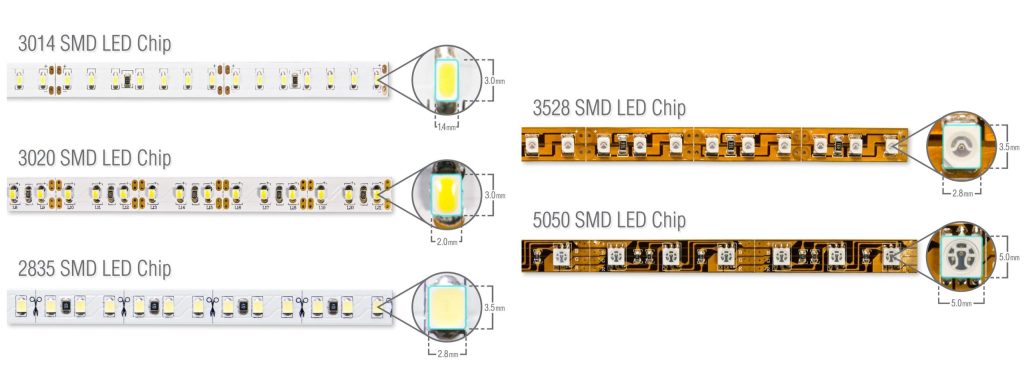
They are often employed in both residential and commercial settings for accent lighting, under-cabinet lighting, signage backlighting, or landscape strip lights. With their ability to conform to virtually any shape and produce a broad spectrum of colors, strip lights provide designers with unlimited creative potential.
However diverse the applications may be, it’s pivotal to understand that not all strip lights are created equal. There exist various subcategories within the realm of strip lighting – each with its unique characteristics.
LED Strip Lights: The Leader of Efficiency
LED strip lights house numerous tiny but mighty light-emitting diodes on a thin circuit board. The question ‘How long do LED strip lights last?’ is often asked since they are well-known for their longevity and efficiency. A high-quality LED strip light can last up to 50,000 hours – far outlasting their traditional counterparts.
LEDs produce light by an entirely different mechanism than incandescent or fluorescent technologies, which inherently makes them more durable and less susceptible to failure. Moreover, the use of LEDs allows for a remarkable reduction in power consumption while delivering superior brightness levels, which makes them ideal for continuous-use applications such as landscape lighting.
Fluorescent Strip Lights: The Traditional Choice
Fluorescent strip lights utilize fluorescent bulbs that operate through the excitation of mercury vapor. This classic type of strip lighting has been in use for several decades, illuminating everything from offices and warehouses to retail spaces and homes.
Fluorescent lights are often favored for their ability to produce a large amount of light over broad areas, which makes them well-suited for task or ambient lighting. However, the lifespan of fluorescent strip lights is shorter than that of their LED counterparts – typically around 10,000 to 20,000 hours.
Incandescent Strip Lights: The Pioneer
Incandescent strip lights are the oldest form of this technology, featuring incandescent bulbs lined up on a flexible strip. These types of lights create a warm and welcoming ambiance due to their ability to produce high-quality white light with excellent color rendering capabilities.
However, incandescent strip lights have a significantly reduced lifespan compared with LED or even fluorescent alternatives – typically lasting only between 1,000 and 2,000 hours. Aside from that drawback, they also consume more energy due to the nature of their operation, which involves heating a filament until it glows.
Profound Variables that Determine the Lifespan of Strip Lights
The Impact of Material Quality and Manufacturing Standards on Light Strips’ Longevity
The lifespan of strip lights, like most products, is greatly influenced by the quality and type of materials used in their manufacture. High-quality materials coupled with high manufacturing standards invariably contribute to a longer lifespan.
For instance, LED strip lights often consist of a flexible circuit board with LEDs mounted on it. The superior durability and performance of these boards depend largely on material quality and manufacturing precision. Conversely, inferior materials or poor manufacturing practices may result in strip lights that are prone to early failure.
This can manifest as dimming lights, inconsistent color performance, or even complete system failure. Therefore, when considering the question, ‘How long do LED strip lights last?’, one must bear in mind the substantial role played by material quality and manufacturing process.
Frequency and Intensity: Usage Patterns influencing Strip Light Longevity
The frequency and intensity with which strip lights are used also greatly impact their lifespan. Like any other electronic device, overuse can lead to increased wear and tear, subsequently shortening the light’s useful life. In contrast, optimal usage patterns can help maximize longevity.
For applications such as landscape lighting where strip lights may be in use for extended periods, proper usage becomes particularly crucial for ensuring longevity. Employing timers or sensors to control usage can help extend the life span of landscape strip light installations.
Lifespan’s Vulnerability to Environmental Conditions
Strip light lifespans are also susceptible to environmental conditions such as temperature fluctuations and moisture levels. Extreme temperatures can affect both the electronic components within strip lights and their protective housing, leading to reduced functional lifespans.
Similarly, excessive humidity or exposure to moisture can lead to corrosion or electrical short circuits, further compromising lifespan. Landscape strip lights, often exposed to variable weather conditions, require robust protective measures to ensure their longevity.
The Role of Power Supply Quality in Lightstrip Lifespan
The quality of a strip light’s power supply is another pivotal determinant of its lifespan. A power supply that provides consistent, reliable voltage ensures the strip light operates optimally without unnecessary stress to its components. An inconsistent or poor-quality power supply can wreak havoc on the light strip over time, resulting in a significantly reduced lifespan.
Exploring Lifespans: A Deep Dive into Different Strip Light Types
LED Strip Lights: Leading the Pack with Longevity
Light-emitting diode strip lights are renowned for their long lifespan, which can extend up to 50,000 hours under optimal conditions. This makes them an ideal choice for applications where long life and low maintenance are paramount, like landscape lighting.
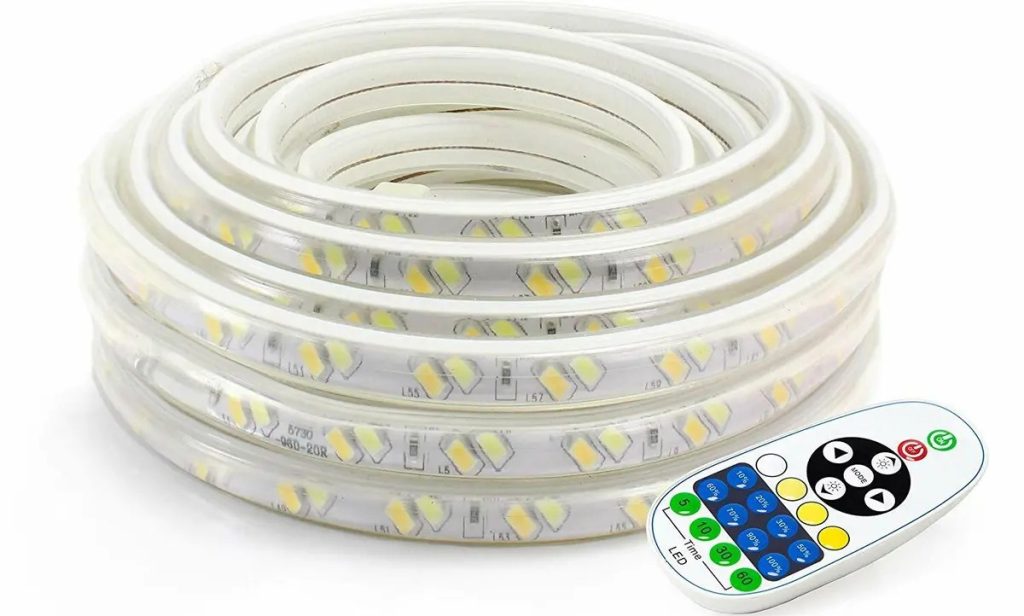
However, ensuring this lengthy lifespan requires careful attention to factors previously discussed – quality materials and manufacturing processes, controlled usage patterns, and proper environmental protection against temperature fluctuations and moisture exposure.
Fluorescent Strip Lights: Balancing Lifespan with Performance
Fluorescent strip lights have an average lifespan between 20,000 and 30,000 hours, which is substantially shorter than LED alternatives. Despite this relative disadvantage, they offer an effective balance between performance and lifespan, making them a good choice for certain applications. Factors that can extend or shorten their life include quality of production materials, usage patterns (including avoiding excess heat), as well as care during installation and maintenance.
The Incandescent Strip Light: Short-Lived but Impactful
Incandescent strip lights bring up the rear in terms of longevity, offering a modest 1,000-2,000 hours of service. Despite their short-lived nature, they continue to be widely used due to their warm light quality and color accuracy. Factors affecting their lifespan include the quality of manufacturing, frequency and intensity of use (with overuse often leading to premature burnout), and environmental conditions such as temperature and humidity fluctuations.
Maintaining the Glow: How to Extend the Lifespan of Strip Lights
Installation: The First Step towards Longevity
Proper installation plays a crucial role in preventing early failure. This includes ensuring that strip lights are installed on suitable surfaces that allow proper heat dissipation, using correct connectors for secure connections, and ensuring water-resistant installation for outdoor uses like landscape lighting.
Proper Usage: Ensuring a Bright Future
Avoiding overuse helps ensure strip lights do not suffer unnecessary wear and tear. Automated systems for controlling usage intervals, brightness levels, or temperature-based usage can help extend strip light lifespans even in high-demand applications like landscape lighting.
Maintenance: The Key to Prolonged Performance
Regular maintenance such as cleaning dust off the fixtures, checking connections for damage or corrosion, and replacing any failing components promptly can significantly extend strip light longevity. Maintenance should be scheduled based on usage patterns, with high-demand installations checked more frequently.
The Economic Impact of Long-Lasting vs Short-Lived Strip Lights
Cost Comparison: Longevity’s Impact on Wallets
Long-lasting LED strip lights may have higher upfront costs but provide significant savings over time compared to shorter-lived alternatives. This cost-effectiveness becomes particularly noteworthy over long periods, thus making them an excellent choice for applications requiring lengthy service life, like landscape lighting.
The Environmental Dividend of Durable Lights
Longer-lived strip lights mean less waste production, thereby contributing positively to environmental conservation efforts. By choosing durable options, consumers not only save money but also contribute to the well-being of our environment.
Conclusion: How Long Do Strip Lights Last?
Understanding the lifespan of strip lights is not only beneficial for functional and financial planning but also contributes to our environmental commitment. As we see, a myriad of factors can influence how long strip lights last – from the quality and type of components used, the intensity of use, environmental conditions, and even power supply quality.
By choosing wisely, installing correctly, and caring properly for our strip lights, we can optimize both their functional lifespan and their financial and environmental impact. All these combined bring an embracing optimism to landscape lighting’s future.
You may also be interested in the following posts: