
Optimal Brightness for Landscape Lighting
The Allure of Landscape Lighting
Landscape lighting, a fusion of art and science, brings an intriguing interplay of lights and shadows to the great outdoors. This decorative yet functional feature has the power to transform your outdoor space into a magical haven when the sun descends.
Landscape lights can highlight architectural details for enhanced aesthetics, illuminate paths for safe navigation, or simply create an enchanting ambiance for alfresco entertaining. Indeed, it’s a subtle tool that adds depth and dimension to your garden or patio, making it not just visible but vibrantly alive even in the darkest hours.
While seemingly simple compared to its indoor counterpart, landscape lighting demands careful planning and execution – much like painting a picture but with light. The canvas is your garden or yard; the paintbrushes are various types of outdoor lights like path lights, spotlights, or wall lights; and one crucial element that defines how your masterpiece will look – the paint – is the brightness level.
Shining Importance: Brightness in Landscape Lighting
The brightness of landscape lighting serves as more than just an aesthetic feature – it is also intrinsically tied to safety and functionality. Properly adjusted brightness can guide visitors safely around potential obstacles or uneven ground while discouraging uninvited guests from venturing too close.
It’s akin to setting up invisible boundaries around your property – visible enough to make people aware yet subtle enough not to intrude upon tranquility. Moreover, it is instrumental in creating varying moods in different areas within your outdoor space: a soft glow for intimate corners; bright illumination for recreational areas; gentle light washing on walls for a calming effect; sharp spotlights on water features for dramatic flair – the list goes on.
In essence, managing landscape lighting brightness is tantamount to stage direction – it sets up scenes and guides viewers’ attention where you want them. It’s about spotlighting the spectacular and taming down everything else.
However, achieving the right balance is a careful act: too little can render a space gloomy and unsafe, while too much can overexpose and rob it of its romantic nocturnal charm. Ultimately, the brilliance of landscape lighting lies in its ability to accentuate your home’s best features and present them to onlookers under the most becoming light.
Navigating the Brightness Spectrum
The spectrum of landscape lighting brightness may seem vast and daunting. However, knowing how to navigate it can mean the difference between creating a stunning nightscape that enhances your property after sunset or inadvertently turning your abode into an overly-lit fortress devoid of subtlety.
Understanding how brightness works in outdoor illumination sets you on the right path towards achieving this vision. The key is to remember: lighting isn’t merely about visibility – it’s about vision.
It’s not so much about seeing as it is being led to see – the hidden nook by the towering oak tree; the rustic charm of an aged stone bench; or perhaps a prized rose bush basking under soft moon-like glow. Embracing this philosophy allows us to appreciate landscape lighting not as mere functional tools but as conductors that orchestrate symphonies of light in our outdoor spaces – a symphony that enchants with its beauty, comforts with its warmth, and reassures with its security.
The Nuances of Luminosity: Defining and Measuring Light Brightness
The journey to understand landscape lighting brightness begins with the fundamental unit of measurement for light itself – the lumen. Lumens quantify the total amount of light emitted by a source, casting aside misleading notions tied to wattage, which only measures energy consumption.
It is essential to make this distinction as it allows us proper evaluation of a light source in terms of its producible illumination, therefore aiding in making informed choices about our landscape lighting. When choosing lights based on lumens, we must keep in mind the purpose and scope of our lighting needs.
For instance, intimate spaces may require fewer lumens – around 200–400 – to create an enchanting ambiance without being overwhelmingly bright. Larger areas needing broader coverage might necessitate high-lumen fixtures that can emit over 700 lumens for comprehensive illumination.

A key point to remember is that more lumens do not necessarily translate into better lighting. The appropriate choice depends greatly on the intended use, desired ambience, and scale of application.
For landscape lighting specifically, this balance is crucial to avoid glare or dark spots. Furthermore, understanding how lumens contribute to lighting different surfaces also plays a vital role in your overall landscape design strategy.
For example, darker surfaces absorb more light and thus require higher lumen fixtures compared to lighter ones that reflect most incoming light. Adjusting lumen output based on weather conditions can be another wise tactic; higher brightness levels might be preferable during foggy or snowy conditions for enhanced safety and visibility.
More than Just Brightness: The Role of Color Temperature
While understanding lumens gives us insights into the intensity aspect of landscape lighting brightness, color temperature brings another dimension into play: how warm or cool the emitted light appears – the ‘mood’ it sets. Color temperature is measured along the Kelvin (K) scale.
Lower Kelvin numbers (2000K–3000K) produce warm, yellowish light, creating a cozy, welcoming atmosphere. This warmth is best suited for relaxing outdoor areas such as patios and gazebos.
Lights with higher Kelvin values (3500K-4500K), on the other hand, emit a cool white or bluish hue. These are great for accentuating architectural features and adding modern flair to your landscape.
The impact of color temperature on our outdoor spaces cannot be underestimated. It affects not just aesthetics but can influence emotions as well, enhancing the overall experience of your landscape at night.
Experimenting with different color temperatures can help you discover unique lighting designs that enhance the beauty of your surroundings in ways you never imagined. Moreover, understanding how different plants react to various color temperatures can aid in highlighting your garden effectively without causing harm to plant health.
Throwing Light on Angles: Impact of Beam Angle
Another vital factor when contemplating landscape lighting brightness is the beam angle – the degree to which light spreads from a fixture. This concept is key when designing the lighting plan, as it directly impacts how much area a single light source can cover and how intensely it shines on its focal point.
Narrow beam angles (less than 30 degrees) produce a focused spotlighting effect, perfect for accentuating specific features in your landscape, such as statues or tree trunks. They create bright spots amidst darker backgrounds, adding drama and depth to an otherwise flat-looking scene.
Wide beam angles (more than 60 degrees), however, disperse light over larger areas more evenly. They work well for general lighting where no single feature needs distinguishing attention – like lawns or large patios.
It’s imperative not just to pick an arbitrary beam angle but to choose based on what you want to illuminate and how prominently you want it highlighted against its surrounding elements. Mixing varied beam angles strategically through your landscape can create a layered lighting effect, adding texture and depth to your lighting endeavor.
Remember, the brightness of your landscape lighting is not limited to lumens alone. By playing with color temperature and beam angle, you can devise a comprehensive lighting strategy that enhances and complements your outdoor living spaces in ways that go beyond mere illumination.
Factors that Highlight the Path: Determining the Ideal Landscape Lighting Brightness
The Purposeful Glow: Ambiance, Security, or Task Lighting
When establishing the desired brightness for your landscape lighting, a pivotal aspect to consider is its intended purpose. Is it to create an ambiance, provide security, or assist in particular tasks? If you’re aiming for ambiance lighting, softer illumination is typically preferred. This bathes your space in a warm glow that enhances relaxation and showcases the aesthetic appeal of your garden or patio.
In contrast, security lighting demands brighter lumens. The primary objective here is to deter potential intruders and illuminate any hidden dark spots around your property. However, it’s pertinent to strike a balance between maintaining safety and creating an inviting atmosphere.
Task lighting requires careful deliberation as well. You want enough light to perform specific tasks – say, outdoor cooking or reading – without producing an uncomfortable glare or stark brightness that disrupts the overall mood of your landscape setting.
The Spatial Canvas: Size and Layout of the Illuminated Area
The size and layout of the area you plan on illuminating also play a key role in determining ideal light brightness. Larger spaces tend to necessitate brighter lights to adequately cover all areas, while smaller locales can manage with dimmer solutions.
Moreover, consider how different objects within these spaces may shadow under different levels of light, both positively contributing to depth perception and negatively by obscuring significant features like steps or uneven ground that could pose safety risks. The layout’s intricacies also require contemplation; areas with complex layouts might benefit from cleverly placed lower-intensity lights compared with simpler landscapes, which could shine perfectly with fewer yet brighter sources of light.
Nature’s Interplay: Surrounding Elements like Plants, Water Features, and Architectural Structures
Surrounding elements add texture and complexity to how light plays across your landscape. For instance, plants can produce captivating silhouettes under the right light, but too bright a light might wash out their natural vibrancy. Similarly, water features reflect and refract light, necessitating strategic placement and brightness of lighting fixtures to prevent blinding reflections or dull, shadowy waters.
The goal should be to enhance their fluid beauty without overpowering it. Architectural structures provide another layer of complexity; they can look dramatically different depending on how they’re lit. Subtle shadows can emphasize texture and form, while too harsh a light may flatten these details.
Respecting Boundaries: Neighborhood Considerations & Avoiding Light Pollution
One must not forget that their landscape does not exist in isolation. It’s part of a wider neighborhood context where glaring lights could disturb others or contribute to light pollution – an often-overlooked environmental concern that disrupts ecosystems and obscures the night sky.
Strive for well-directed, shielded fixtures that point downward onto your property rather than outward, where they might intrude upon public spaces or neighboring homes. Aim for the right brightness level that satisfies your needs while respecting those around you. By doing so, you will uphold admirable levels of neighborhood harmony and environmentally conscious living.
Guidelines for Specific Outdoor Areas
Luminous Pathways: Ensuring Safety without Glare
Pathway lighting is much more than a decorative touch; it’s a primary safety feature. To optimally illuminate a pathway or driveway, the brightness must be sufficient to guide movement while avoiding harsh glare. A light with too high a lumen count can create distracting hotspots and shadows, both of which can disrupt visibility.
Ideally, fixtures should be placed low to the ground, casting their light downward to delineate the path. Spacing between lights is also crucial: they should be close enough together to generate an unbroken trail of light but far enough apart not to blend into one overpoweringly bright strip.
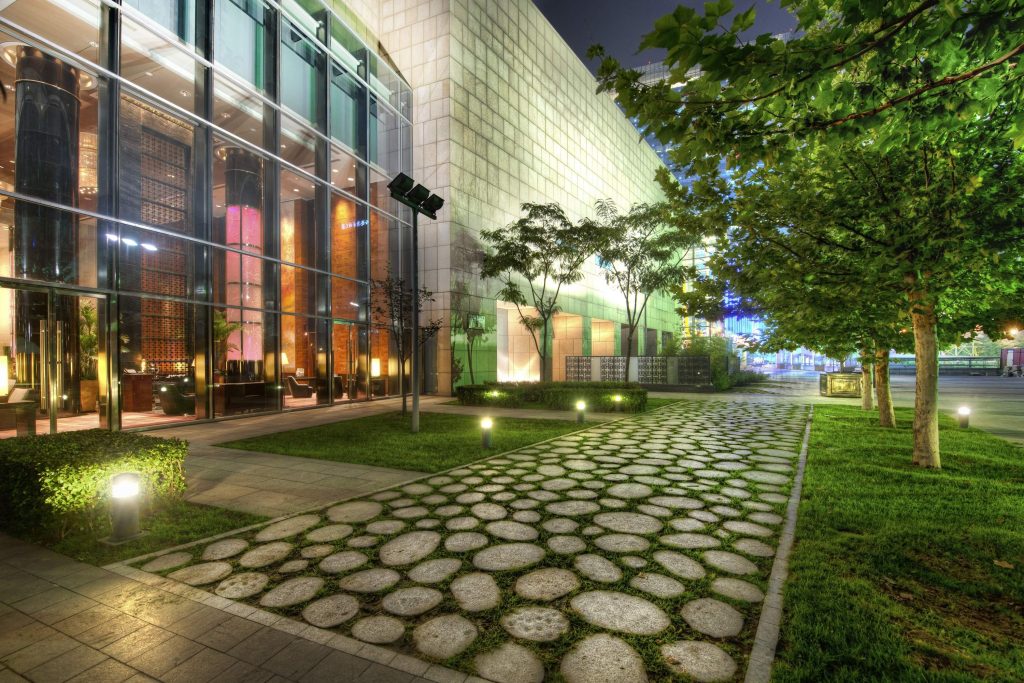
Consideration must also be given to the color temperature of the lighting. Cool white lights may seem brighter than warm yellow ones even if their actual lumen count is identical. Cooler temperatures can provide stark clarity, but warmer hues often offer softer, more inviting illumination for pathways.
An excellent trick for minimizing glare is utilizing fixtures that shield the light source from direct view. These designs allow only indirect light onto the pathway or driveway and help achieve balanced radiance without overwhelming brightness.
Beware not to overlight your pathways in an attempt to enhance safety. Overlighting not only leads to wastage of energy but also detracts from your property’s natural nocturnal charm by creating stark contrasts and hard shadows.
A subtle glow that gently outlines paths ensures both safety and aesthetic appeal. Don’t forget about durability when choosing your pathway lights – pick fixtures designed specifically for outdoor use that can withstand varying weather conditions while maintaining consistent brightness output.
Garden Illumination: Highlighting Features Without Harming Plants
The gentle luminescence of garden lighting allows you to transform your outdoor space into a twilight wonderland. When lighting plants, the key is to highlight their features without causing harm. Too much light can negatively affect plant growth and attract pests, so a careful balance must be struck.
Spotlights or uplights are excellent for showcasing tall trees or large shrubs. By positioning these light sources at the base of the tree and shining upwards, you create drama and showcase the texture and form of the plant. These lights should have lower lumen counts to avoid creating harsh shadows or stark impressions.
For flower beds or smaller plants, consider using lower-profile fixtures with less intense illumination. You can also intersperse lights among plants in such a way that the brightness highlights their colors while also casting soft shadows that provide depth to your garden scene.
Another aspect not to overlook is color temperature – warmer hues are great for highlighting flowers with reds, oranges, and yellows, while cooler tones can bring out the best in greens and blues. Remember that every plant has its own unique lighting requirements based on its health, size, and location within your garden. Therefore, it’s essential to adjust brightness levels accordingly so as not to shock or harm them.
Architectural Lighting: Showcasing Property Details
Brightening up your home’s exterior with architectural lighting serves both practical purposes – enhancing security – and aesthetic ones – emphasizing architectural details. This type of landscape lighting should be carefully calibrated to strike an artistic balance between illumination and shadow; overdoing it might wash out details rather than enhancing them.
Façades bearing intricate design elements may benefit from gentle washing light techniques that spread an even level of brightness across a wide area without producing harsh shadows or glaring highlights. For this purpose, wider beam angles are generally recommended.
If you wish to highlight specific architectural features such as pillars, arches, or uniquely textured surfaces, consider using spotlights. With their narrower beam angles and more intense brightness, they can draw attention to these elements effectively. However, keep the light intensity in check; overpowering brightness can distort the feature rather than accentuating it.
You should also pay heed to color temperature when planning architectural lighting. Warmer tones often work well with traditional architectural styles, while cooler hues couple nicely with modern aesthetics.
Integrating dimmer controls into your architectural lighting setup allows you to adjust brightness levels according to different times of the evening or occasions, thus lending a versatile appeal to your property.
Pool and Water Feature Lighting: Balancing Aesthetics with Safety
The shimmering reflection of lights on water adds a captivating dimension to any landscape. However, when it comes to pools and water features, the balance between aesthetics and safety becomes even more crucial.
Underwater lights in pools not only create an enchanting visual but also significantly enhance safety by improving visibility under the water’s surface. These lights should have sufficient brightness for clear visibility but not so bright as to cause discomfort for swimmers or a glare for those looking at the pool from a distance.
Fountains or other water features can be made visually dramatic with carefully placed spotlighting aimed at highlighting their flow pattern or structure. Here again, avoid excessive brightness that might lead to overwhelming glare on the water surface, which could diminish its overall aesthetic appeal.
Besides underwater fixtures, surrounding area lighting is equally important for safety purposes, especially if you tend to use these spaces after dark. Pathway lighting leading to and around these areas should be adequately bright without causing glare or shadows that might result in tripping hazards.
Remember that all lights used around water bodies need to comply with local regulations and safety standards, apart from being waterproof rated for their specific application. While color temperature is a matter of personal preference, cooler hues often accentuate the natural beauty of water better than warmer ones by creating a serene and tranquil ambiance.
Layering Lights: Painting with Shadow and Light
Just like in painting, where depth and texture are achieved by layering colors, similarly, landscape lighting becomes more appealing when layered appropriately, which helps create depth and texture in your outdoor areas. For instance, overhead lights like downlights can provide general illumination, whereas spotlights act as task lights, highlighting specific features such as trees or statues within your landscape. Additionally, adding accent lights can create contrast by producing pockets of shadows and light, enhancing the overall visual interest.
The interplay between different types of lights adds an element of drama to your landscape, breathing life into it once the sun sets. However, achieving balance is key in layering lights. You don’t want some areas to be brightly lit while others lurk in shadows. This would make your landscape look inconsistent and chaotic rather than harmonious and inviting.
The best way to ensure balance when layering lights is by experimenting at different times during the night. Remember, lighting isn’t a static feature; its effect changes as the night progresses, which is why periodic adjustments might be necessary.
Dimming the Lights: A Way to Command Control
There is an inordinate amount of control that comes with the use of dimmers in landscape lighting. Dimmers allow you to adjust the brightness levels with remarkable precision, providing flexibility that can cater to different moods or events. Whether it’s a bright illumination for an outdoor party or a soft glow for a tranquil evening, dimmers provide the requisite versatility.
Moreover, integrating dimmers into your landscape lighting setup is not as convoluted as it may initially seem. In today’s technologically advanced environment, there are even options available that can synchronize your outdoor lights with your smart home system. This enables you to adjust brightness levels from wherever you are, using just your smartphone.
However, one essential point of consideration when implementing dimmers is the type of light bulbs being used. Not all light sources are compatible with dimming technology; therefore, consult an expert or do some research before making any purchases.
Flickering lights can often be a sign of mismatched components. If this occurs after installing a dimmer switch, you might need to invest in different bulbs or perhaps another type of dimmer. Remember that not all lighting issues require professional solutions – sometimes minor adjustments on your part could solve these problems.
Despite these potential setbacks, the diverse benefits offered by dimmers deem it worth investing time and energy in understanding this technology. They allow homeowners greater control over their space while also contributing positively towards energy efficiency.
Motion Sensors: An Enlightening Security Approach
While motion sensor technology may seem like it’s reserved solely for security systems or James Bond films, they also serve a practical purpose in landscape lighting, offering both energy efficiency and enhanced security. Motion sensors function by detecting movement within their range and responding by illuminating the area where the movement was detected.
This means your outdoor space isn’t continuously lit up, which not only conserves energy but also prolongs the lifespan of your bulbs. Furthermore, motion sensors contribute towards reducing light pollution caused by unnecessary outdoor lighting.
They ensure that light is produced only when required, which can preserve the natural ambiance of your outdoor space while contributing to environmental sustainability. From a security perspective too, motion sensors prove beneficial since sudden illumination triggered by movement can startle potential intruders or unwanted animals lurking around.
Investing in motion sensor technology for landscape lighting gives homeowners peace of mind knowing their property is well protected while ensuring efficient use of energy resources. It’s a win-win situation that modernizes your home setup, taking it one step closer to being a smart home.
Finding Your Light: Understanding Different Types of Landscape Light Fixtures
The broad ambit of landscape lighting embraces a diverse array of fixtures designed to cater to varying functionalities, aesthetics, and light-brightness requirements. The first step towards selecting the optimal landscape light fixtures for your home is understanding the various options that are at your disposal.
Spotlights, for instance, command attention and offer concentrated illumination – ideal for accentuating striking architectural features or unique garden elements. Path lights are the quintessential elements for providing safe navigation through walkways, driveways, or garden paths. They emit softer illumination that subtly guides without causing harsh glare.
Wall lights enhance safety and highlight architectural features when installed around doorways or on walls. On the other hand, deck and step lights ensure safety in outdoor living spaces by illuminating steps and seating areas. For adding a whimsical charm to your gardens, you can bank on fairy lights.
Underwater lights serve dual purposes: they can make water bodies like pools or ponds safer while enhancing their visual appeal during the nighttime. Equipped with this knowledge about different types of fixtures will aid you in making an informed choice.
A Light Affair: Harmonizing Fixture Style with Your Home’s Exterior Design
Once conversant with the various fixture types available, it is incumbent upon a homeowner to astutely match these fixtures with their home’s exterior design – a task that requires aesthetic acumen as much as it does practical considerations. Contemporary homes may benefit from sleek and minimalist lighting options such as geometric path lights or simple spherical spotlights. Traditional homes could be better complemented by ornate lantern-style path lights or classic brass wall sconces.
When choosing your fixtures’ color scheme, ensure that it either matches or tastefully contrasts your home’s existing palette. A well-coordinated color scheme can impart an elegant feel to your landscape lighting setup.

Remember also to consider material compatibility. For instance, a home with stone accents might find rugged, bronze fixtures an ideal match, while a house with a modern glass facade may benefit from sleek stainless steel lighting.
The size and scale of your fixtures should harmonize with your landscape’s dimensions. Overly large lights can create unwanted glare and detract from the beauty of your outdoor spaces, while tiny fixtures may get lost or not provide adequate lighting.
Shining Responsibly: Opting for Energy-Efficient Landscape Lighting
In our current era of ecological consciousness, it is increasingly pertinent to consider energy efficiency in every aspect of our lives – including landscape lighting. LED lights have emerged as an unrivaled champion in this domain. LED lights are renowned for their exceptional longevity – some LED lights can last up to 50 times longer than traditional incandescent bulbs. This durability means fewer replacements over time, leading to cost savings in the long run.
Furthermore, LED bulbs consume significantly less energy than other bulbs – up to 80% less than incandescent options. This decreased energy usage not only results in lower electricity bills but also contributes substantially towards reducing one’s carbon footprint – a step towards a greener planet.
One common misconception about LED lights is that they emit colder or harsher light. However, LEDs come in a wide range of color temperatures (measured on the Kelvin scale) that can deliver warm ambiance light similar to incandescent bulbs or cool task light if required. Many contemporary LED landscape lights come equipped with smart features like dimming capabilities or motion sensors, which add value through enhanced flexibility and security features while further augmenting energy efficiency.
The Pitfalls of Illumination: Common Mistakes in Setting Landscape Lighting Brightness
Overlighting Outdoor Areas: The Glare Bear Traps
The enigma of landscape lighting is that more isn’t always merrier. Overlighting or oversaturating your beautiful outdoor spaces with excessive luminosity can render them less appealing, defeating the purpose of enhancing aesthetic appeal. It could lead to a blinding glare, creating discomfort rather than inviting warmth.
Excessive brightness could also wash out the features of your landscape, diminishing its depth and texture. Importantly, overlighting isn’t merely a threat to aesthetics; it also increases energy consumption and poses a potential hazard for nocturnal wildlife.
Rather than flooding an entire area with bright light, consider strategically placing lower-intensity lights to highlight specific features or create safe pathways. By doing so, you can create an enchanting ambiance while preserving the nocturnal charm of your garden and conserving energy.
Ignoring Shadows and Contrasts: The Forgotten Artistry
In our quest for perfect lighting, we often overlook the artistic power of shadows and contrast. Ignoring these elements may result in a flat or monotone landscape lacking dimensionality. Shadows add depth and perspective to a scene, creating visual interest. Understanding how light interacts with various elements in your space enables you to manipulate shadows effectively.
For instance, up-lighting trees can cast dramatic shadows on walls or fences behind them, while side-lighting can accentuate texture on surfaces like stone walls. Also vital is paying attention to transitions between lit areas and darker zones – too stark a contrast might be jarring or hazardous for movement at night.
Neglecting Regular Maintenance: The Dimming Effect
Landscape lighting systems require periodic maintenance to ensure they continue serving their intended purpose efficiently. Neglect in this regard leads not only towards a progressive reduction in brightness but also towards uneven lighting as bulbs fail or become obscured by dirt or plant growth.
Ensure a regular cleaning schedule for your lights to maintain their brightness. Regularly trim any overgrown plants that could obstruct the light. Replacing burnt-out bulbs promptly maintains the desired light levels and keeps your outdoor space looking its best.
Conclusion: How Bright Should the Landscape Lighting Be?
Landscape lighting, when done thoughtfully, has the power to transform an ordinary yard into an enchanting oasis. However, achieving this isn’t merely about installing expensive fixtures or flooding the area with light. It’s about striking a balance that accentuates architectural features and adds depth and dimension through contrast and shadow play, all while prioritizing energy efficiency and maintenance. Always remember that it’s not just about how bright should landscape lighting be – it’s about how cleverly this brightness is harnessed to create a harmonious interplay of light and shade.
You may also be interested in the following posts: