
The Glowing Path: Shining Light on Landscape Lighting
Landscape lighting, at its core, can be seen as both an art and a science that has the power to transform mundane outdoor spaces into masterpieces of light and shadow. It’s not merely about lighting a pathway or highlighting a garden feature; it’s about crafting an aesthetic ambiance, enhancing security, and increasing the usability of outdoor spaces after sunset.
Whether it’s creating a dramatic silhouette effect against the canvas of your home’s façade, accentuating the intricate details of your architectural features, or providing subtle glows for safety along winding paths, landscape lighting does it all. The beauty and functionality that landscape lighting imparts to homes isn’t accidental. Rather, it’s born from careful planning and meticulous execution.
Each fixture is strategically placed with precision to achieve the desired effect. Techniques such as backlighting to create silhouettes or using diffused light to soften features are employed by experts in this field. Whether you choose low-voltage lights for their energy efficiency or solar lights for their environmental friendliness will depend on your specific needs and preferences.
Beyond their utilitarian lighting function, these strategically positioned lights play a crucial role in enhancing visual appeal and thus indirectly contributing towards elevating property values. They cast pools of light that dance upon water features, draw attention to interesting textures on walls, or outline architectural structures like pergolas or gazebos in ethereal halos.
They bring plants alive with different shades of white light, emphasizing hues during twilight hours. In essence, landscape lighting is more than just installing fixtures; it’s about employing design principles – balance, unity, and rhythm – that harmonize elements within your space aesthetically while ensuring practicality isn’t compromised.
Licensing Lumens: An Initial Glance at Regulations
The question then arises, ‘Do we need a license to install landscape lighting?’ An enigma to many, the concept of requiring a license for such an installation often sparks curiosity and confusion. The answer, however, isn’t as straightforward as one might anticipate.
It’s not a simple ‘yes’ or ‘no’, but rather it depends on a variety of factors. Before delving into the particulars of licensing requirements for landscape lighting installation, one must understand that the need for a license is primarily aimed at ensuring safety and adherence to certain standards.
Electrical jobs can pose risks like accidents or fires if not conducted properly. A licensed professional has been deemed by the local regulatory authority as possessing the necessary knowledge and skills to safely execute such tasks.
Licensing requirements can also help ensure quality workmanship by holding installers accountable to meet certain standards in their work. For instance, licenses often require professionals to demonstrate their understanding of various lighting techniques, fixture placements, and types of lights best suited for different applications.
Moreover, because these installations are subject to local building codes and laws pertaining to electrical systems within property boundaries, having a license assures compliance with these codes. This is especially important when property owners want to sell their house; non-compliance with local building codes can lead to complications in real estate transactions.
While it might seem like an additional hurdle or expense initially, obtaining a license – if required – offers more advantages than disadvantages. However, before making any concrete decisions, it’s imperative that one comprehends the complexities surrounding this subject thoroughly – an intriguing task we will undertake in subsequent sections.
Understanding Landscape Lighting: Illuminating the Outdoors Aesthetically and Safely
Landscape lighting, in essence, refers to the lighting of outdoor spaces. It’s a broad term that encompasses various types of lighting techniques used to decorate and light up gardens, patios, walkways, and other outdoor areas. The significance of landscape lighting is manifold: it not only adds an aesthetic touch to your property but also enhances safety by clearly lighting paths and steps.
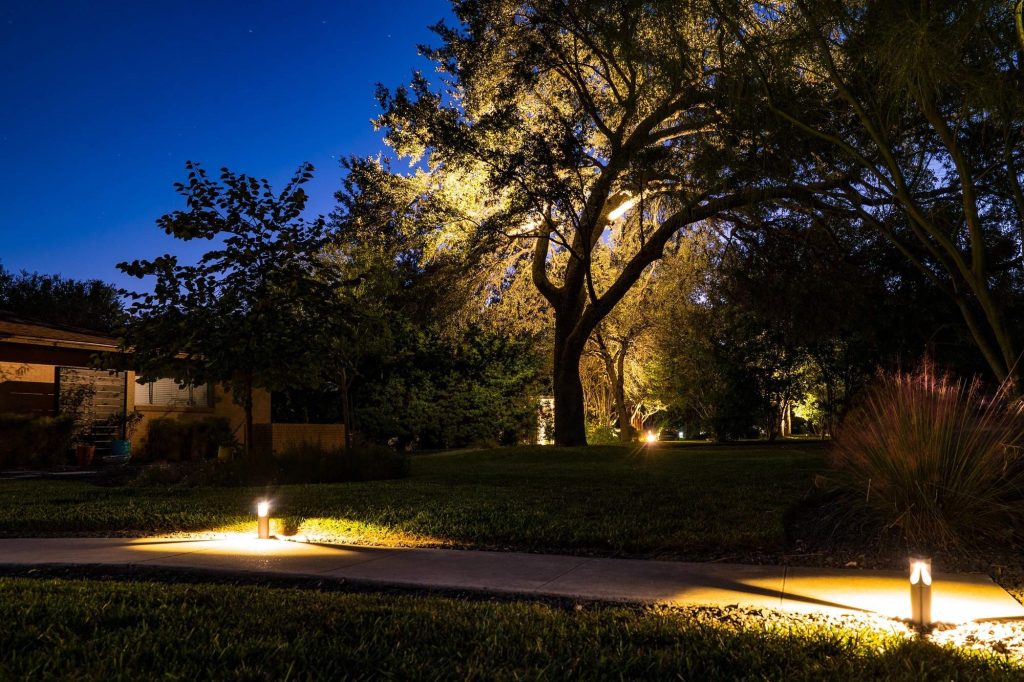
Moreover, landscape lighting can highlight architectural features of your home or garden, boosting visual appeal. The importance of landscape lighting extends beyond mere decoration; it plays a role in enhancing navigational ease during nighttime. By illuminating dark corners or pathways with landscape lights, homeowners can ensure minimal obstacles while moving around the property after sunset. Additionally, well-placed landscape lights can deter potential burglars by giving them fewer hiding spots.
A Glimpse at Different Types of Landscape Lighting Systems
There exist several types of landscape lighting systems that vary based on their power sources and technology used. These include solar lighting systems, low-voltage lighting systems, and LED (light-emitting diode) lighting systems.
Solar Lighting: Harnessing Sunlight for Nighttime Illumination
Solar landscape lights are powered by sunlight – making them an environmentally friendly choice for homeowners conscious about reducing their carbon footprint. During the day, these lights absorb solar energy, which they convert into electrical energy stored in built-in batteries for use after sunset.
While solar lighting systems are easy to install, requiring no electrical wiring, they come with a few caveats, most notably their dependency on sunlight for recharging. Consequently, during cloudy days or in shaded areas where there’s limited light exposure, they may not work as effectively as desired.
Low-Voltage Lighting: Energy Efficiency Meets Ambient Beauty
Unlike solar-powered options – which rely solely on the sun – low-voltage landscape lighting systems derive power from household electricity. They employ a transformer to step down the home’s standard line voltage (120 volts in most American homes) to a safer 12 volts.
Low-voltage lights offer more consistent performance than solar lights, regardless of weather conditions. Furthermore, they are energy efficient and quite versatile in terms of design options – making them a popular choice among homeowners seeking an ideal balance between energy usage and aesthetic appeal.
LED Lighting: The Future of Landscape Lighting
LED lighting systems are fast gaining popularity due to their superior energy efficiency and longer lifespan compared to traditional lighting options. LED landscape lights can produce brighter light using less energy, which means lower electricity bills over time – a feature that is quite attractive to discerning homeowners.
LED lights also offer unparalleled longevity, with an average life expectancy of 30,000–50,000 hours – significantly higher than other light types. This makes them an excellent investment for those looking for long-lasting illumination solutions for outdoor spaces.
The Unseen Beacon: The Need for a License in Installing Landscape Lighting
When it comes to installing landscape lighting, the foremost question that arises is the necessity of a license. The rule of thumb is that depending upon the jurisdiction and the type of work being conducted, a license may indeed be required. This mandate is not arbitrary but rooted in ensuring safety, maintaining standards, and protecting consumer interests.
Firstly, much depends on the scale of your project. If you’re simply replacing a bulb or adding a solar-powered path light to your backyard, a license won’t be necessary. However, more complex projects involving wiring or extensive lighting systems might require professional intervention and thus necessitate licensed individuals.
Local laws and regulations also play a significant role in determining whether you need licensing. Some regions stipulate that any electrical work must be performed by licensed professionals only. Even if you are capable of doing your own installation, the law might demand otherwise. Certain types of landscape lighting systems will invariably require licensed installers.
For example, low-voltage lighting installations often need to be undertaken by professionals with an electrical contractor’s license since these entail intricate installation procedures compared to other types. There are exceptions to this rule though; some locations may allow homeowners to perform minor electrical work without needing licensing if they pass an examination demonstrating knowledge about safe practices and local codes.
The Labyrinth Deciphered: Licensing Process for Landscape Lighting Installation
If required by law or by scale of work complexity, obtaining a license can seem like navigating through an intricate labyrinth unless one comprehends each step distinctly. The first step towards obtaining any kind of professional license usually involves applying through designated local authorities or departments that govern such licensing processes.
Once applied for, there are usually costs associated with this – both direct (application fee) and indirect (coursework or examinations required). Time frames vary from location to location and depending on the type of license being sought.
In terms of prerequisites, most licensing bodies require proof of experience or completed coursework in the field. Additionally, some jurisdictions may also need applicants to pass an examination validating their understanding of local codes and safe practices.
The types of licenses required can vary as well. Generally, landscape lighting installation might necessitate either an electrical contractor’s license or a landscape contractor’s license, depending upon the jurisdiction and the specific type of work being performed.
Playing with Fire: Consequences of Not Having a License
Foregoing a required license when installing landscape lighting can have severe consequences, ranging from legal implications to potential safety hazards. Legal penalties for unlicensed work can range from fines to potential incarceration in more serious cases. Moreover, you could also be held liable for damage caused by improperly installed lights or from fire hazards, which is usually not covered by insurance if done without a proper license.
Choosing Right: Benefits of Hiring Licensed Professionals for Landscape Lighting Installation
Investing in licensed professionals for landscape lighting installation brings myriad benefits, including quality workmanship following safety standards. As licensed installers are trained experts who have demonstrated their knowledge through examinations and practical experience, they are more likely to install lighting systems correctly and safely. Additionally, hiring licensed professionals often makes it easier to gain coverage under your homeowner’s insurance policy if something unexpected were to occur related to the installation in the future, providing peace of mind along with seamless beauty.
The Small Print Matters: Case Studies on Licensing Requirements in Different Regions and Countries
It’s illuminating how varying requirements across regions illustrate the importance of local laws when it comes to resolving whether licensing is mandatory for installing landscape lighting. For instance, in certain parts of the United States, like New Jersey, any form of electrical installation falls under strict regulatory oversight requiring an electrical contractor’s license, regardless of how minor the project might seem. On the contrary, in some regions of Australia, homeowners are allowed to undertake small-scale electrical work, including landscape lighting installments, after they pass a rudimentary test of their knowledge of safe practices.
Conclusion: Do We Need a License to Install Landscape Lighting?
To License or Not to License?
Indeed, the question of needing a license to install landscape lighting goes much beyond a simple yes or no. It’s about safety and standards as much as it is about legal requirements. The bright side here is that understanding local laws can remove ambiguities and prevent unnecessary problems in the future. Keep shining your light, ethically and lawfully!
You may also be interested in the following posts: