
Delving into the Enchanting World of Low-Voltage Landscape Lights
First, allow me to introduce you to the domain of low-voltage landscape lights, a realm often obscured in shadows due to misconceptions and lack of clarity. Landscape lighting not only takes your outdoor spaces from ordinary to extraordinary after sunset but can also provide an added layer of safety and security. Accentuating architectural features, trees, pathways, or any other fixtures that you wish to highlight are just some of their potential uses.
Among the various types and models available on the market today, low-voltage landscape lights have gained considerable popularity for their advantages concerning installation ease, safety, versatility, and energy efficiency. As their moniker suggests, they operate at a lower voltage – typically 12 volts – compared with line voltage lighting systems, which operate at 120 volts in most residential settings.
However, it’s crucial to note that ‘low voltage’ does not refer to the brightness or intensity of light produced. With advancements in technology such as LED (light-emitting diode) bulbs offering greater lumens per watt ratios than traditional incandescent or halogen bulbs, these low-voltage systems can emit as much light as their higher-voltage counterparts if needed.
The Energy Consumption Enigma
The topic on everyone’s mind when considering any electrical device is invariably its impact on our electricity bills. This concern is even more pronounced with outdoor lighting since it typically involves multiple fixtures spread over large areas operating for extended durations.
It is here that low-voltage landscape lights can prove beneficial owing to their lower electricity consumption compared with regular line voltage systems. However, this area is rife with misconceptions due largely to confusion around terms like ‘voltage’ and ‘wattage’ and how they relate to energy use and operating costs.
Layman’s understanding often equates low voltage with ‘less energy usage’, which, while generally true, is not necessarily accurate in every situation. It’s important to clarify that the electricity consumption of a light fixture is determined more by its wattage (power rating) and duration of operation than solely its voltage.
Debunking Common Misconceptions
Some prevalent misconceptions about low-voltage landscape lights and their energy consumption include the belief that they are too dim, expensive, or complicated to maintain. Each of these assumptions will be systematically addressed in later sections of this post, as we believe an informed choice is the best choice.
Another common misconception revolves around cost. Many associate low-voltage lighting systems with high upfront costs due to the necessity for a transformer – a device used to reduce the standard 120-volt household current to safer 12 volts.
While it’s true that transformers add to initial expenses, they are a one-time investment, which over time can lead to substantial savings on electricity bills due to lower operating costs, particularly when combined with energy-efficient LED bulbs. There’s a widespread belief that low-voltage systems are complex, which discourages many from exploring them further.
This arises mainly from unfamiliarity with terms like ‘transformers’, ‘LED bulbs’, ‘wattage’ etc., which seem intimidating for those without any electrical background. However, with detailed guides available online and experts ready to help at local hardware stores or professional lighting companies, installing and maintaining these systems can be much simpler than imagined.
Understanding Electricity Usage in Low-Voltage Landscape Lights
Demystifying the Concept of “Low Voltage”
In the realm of electrical design, the term “low voltage” is often a source of perplexity. Broadly speaking, low voltage refers to electrical energy levels that do not exceed 50 volts AC (alternating current) or 120 volts DC (direct current), according to IEC (International Electrotechnical Commission) standards. These voltages are classified as ‘extra-low’ and ‘low’ voltages.

Low-voltage systems, such as landscape lights, utilize this reduced energy level to deliver luminance across outdoor spaces. The core reason behind using lower voltage in landscape lighting is primarily related to safety concerns. As such installations are often exposed to elements like water and accidental human contact, having a lower voltage considerably diminishes potential hazards like electrocution.
However, it’s worthwhile noting that while the voltage level might be low, it doesn’t necessarily translate to low electricity usage or power consumption. Herein lies the crux: understanding power consumption entails more than just knowledge of the system’s voltage level – it also requires consideration of its current draw and duration of operation.
Comparative Examination: Low-Voltage vs Regular Voltage Landscape Lights
To truly appreciate electricity usage in low-voltage landscape lights, it’s crucial to compare them with their regular voltage counterparts – usually operating at line or mains voltages around 120V in most North American homes. Firstly, one might perceive that since low-voltage lights operate at a fraction of regular light voltages – typically 12V – they must inherently consume less electricity.
However, this presumption oversimplifies a complex equation. The reality is that both types can be energy-efficient; what matters more is how they’re utilized and what type of light bulbs they use.
Consider an incandescent bulb in a low-voltage light fixture, compared to an LED bulb in a regular-voltage fixture. Despite the lower operating voltage, the incandescent bulb could potentially use more electricity due to its inefficiency at converting electrical energy into light as compared to the LED bulb.
Similarly, a landscape filled with numerous low-voltage fixtures might consume more electricity than a few strategically placed regular voltage lights. This depends on factors like wattage of bulbs used and duration of operation – variables that significantly influence overall power consumption.
While low-voltage landscape lights operate at reduced energy levels, promoting safety against hazards, it doesn’t unequivocally ensure lower electricity usage. Instead, it’s crucial to focus on the type of bulbs used and their operational strategy to genuinely minimize power consumption and optimize energy efficiency.
Factors that Determine Electricity Consumption in Low-Voltage Landscape Lights
The Influence of Quantity: Number of Lights Used in the Landscape
Understanding the quantity of lights utilized in your landscape forms a fundamental basis for determining overall electricity usage. With each light added to your outdoor design, there is an incremental increase in energy consumption. However, because these are low-voltage systems, it’s important to note that this rise is significantly less than it would be with traditional high-voltage lighting.
Moreover, the correlation between the number of lights and electricity usage isn’t always linear due to various factors like wattage and transformer efficiency. For instance, having numerous low-wattage lights might consume less electricity than having fewer high-wattage ones.
The number of lighting fixtures isn’t inherently the issue; rather, it’s how they’re utilized and managed. Thoughtful arrangement and strategic placement can enhance lighting while keeping energy usage minimal.
The Role of Time: Duration the Lights Are Kept On
The length of time for which landscape lights are kept on significantly impacts energy consumption. Simply put, longer durations lead to higher electricity use. This might seem obvious but often gets overlooked when individuals assess their energy consumptions. It’s also worth noting that outdoor lighting doesn’t need to operate continuously throughout the night.
Intelligent use of timers or light sensors can regulate duration effectively, switching off when unnecessary, such as at dawn or during periods with ample moonlight. Integrating these automatic controls provides a dual benefit: reducing unnecessary light pollution and conserving energy – an environmental win-win situation that also reflects positively on your utility bills.
Power Dynamics: Wattage of the Bulbs Used
The power rating (wattage) plays a salient role in determining how much electricity a landscape light uses. In essence, more watts means more power consumption. The wattage of a bulb is a measure of energy it consumes per unit of time; hence, higher-wattage bulbs will use more electricity.
However, considering we’re discussing low-voltage landscape lights, the wattages involved are much smaller than those of traditional bulbs. Even so, choosing LED low-voltage bulbs can offer further energy savings as they provide similar levels of brightness for even less power consumption.
The trick here is to strike the perfect harmony between adequate lighting and optimal efficiency. The right balance allows you to enjoy beautifully lit landscapes without hefty electrical bills or undue environmental impact.
The Efficiency Conundrum: Transformer Used
The efficiency of the transformer used in your low-voltage landscape light setup is another crucial factor in electricity consumption. Transformers are required to step down the standard household voltage to a lower voltage suitable for these lights.
An efficient transformer minimizes energy loss during this conversion process, which translates into less overall electricity use. Opting for transformers that exhibit high operational efficiency can result in noticeable savings on your electricity bills over time.
Additionally, transformers should be adequately sized according to the total wattage requirements of all lights in the system. Oversized transformers waste energy, while undersized ones may lead to reduced lifespan and performance issues with your lights.
Advantages of Low-Voltage Landscape Lights in Terms of Energy Consumption
The Power of Efficiency: Reduced Voltage, Major Savings
The primary advantage of low-voltage landscape lights lies in their energy efficiency. The term “low voltage” is a bit of a misnomer, as the actual energy consumption isn’t directly linked to the voltage level but to the wattage. Low-voltage lights typically have a lower wattage, which results in less energy consumption overall. Consequently, this reduced rate of consumption offers significant potential savings on electricity bills.
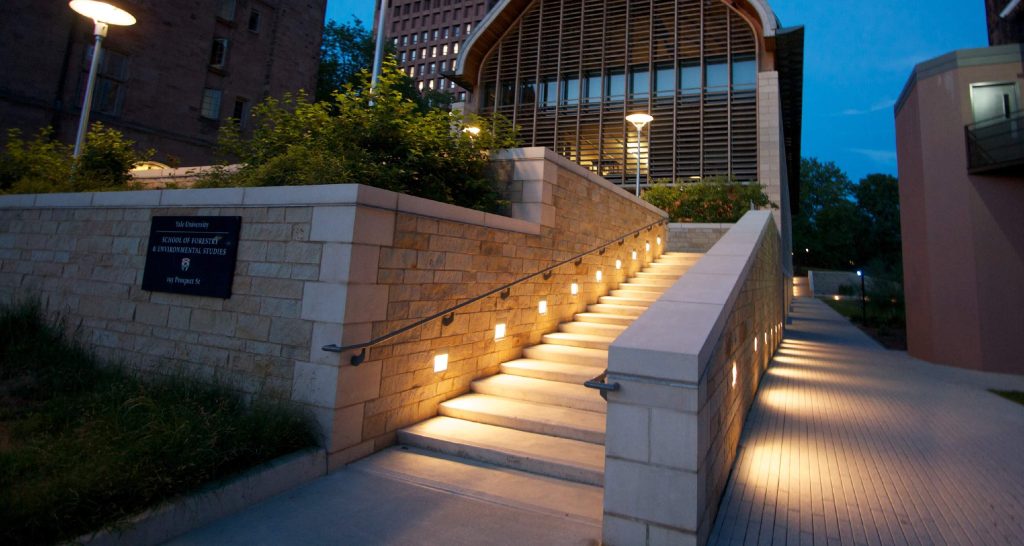
Additionally, due to their lower power requirement, low-voltage lights often generate less heat than traditional high-voltage bulbs – a further proof of their efficiency and an added benefit for those seeking an energy-efficient solution. This reduced heat generation not only enhances the lamps’ longevity but also minimizes potential fire hazards.
Case Study: Real-Life Examples Comparing Energy Consumption
From High Voltage to Low Voltage: A Tale of Two Lighting Systems
To truly appreciate the benefits offered by low-voltage landscape lighting systems, consider comparing them with traditional high-voltage outdoor lighting setups. Historically, these systems rely on 120 volts or more and consume considerably more electricity due to their high-wattage bulbs.
On the other hand are modern low-voltage landscape lighting systems that typically operate at 12 volts – a dramatic reduction in power needs compared to their higher-voltage counterparts. As such, they consume significantly less electricity without sacrificing lighting quality or coverage – an aspect that is particularly important for expansive landscapes.
How to Optimize Low-Voltage Landscape Lighting for Lower Electricity Use
Enlightening Ideas for Energy Efficiency
Choosing LED (light-emitting diode) bulbs over incandescent or halogen bulbs is one way to optimize low-voltage landscape lighting for lower electricity use. LEDs are renowned for their energy efficiency, long lifespan, and superb light quality, making them an ideal choice for outdoor lighting.
Another practical approach is to use timers or sensors to control light usage. This ensures that lights are only on when necessary, preventing unnecessary waste of electricity. Regular maintenance and updates also contribute to optimal performance, ensuring the system continues to operate at peak efficiency.
Myths and Misconceptions about Low-Voltage Landscape Lights’ Electricity Usage
Shining a Light on Misunderstandings
Despite the growing popularity of low-voltage landscape lights, myriad myths persist about their electricity usage. One common misconception is that they offer poor brightness compared with high-voltage options, a notion that has been debunked by advancements in LED technology.
Another misunderstanding is that they are costly to maintain due to frequent bulb changes. In truth, low-voltage LED bulbs have a remarkably long lifespan, often outperforming traditional incandescent or halogen bulbs by a significant margin.
Conclusion: Do Low-Voltage Landscape Lights Use a Lot of Electricity?
A Brighter Future with Low-Voltage Landscape Lights
Understanding how much electricity low-voltage landscape lights truly use helps us appreciate their inherent benefits. They’re energy-efficient without compromising brightness levels, cost-effective over time, and more environmentally friendly than high-voltage alternatives. Ultimately, adopting these systems can lead us toward a future where our landscapes continue to be beautifully lit while preserving the planet and our resources – a definite win-win situation for homeowners, environmental enthusiasts, and cost-conscious individuals alike!
You may also be interested in the following posts: