
Do LED Landscape Lights Consume Much Electricity?
A Brief Overview of LED Landscape Lights
LED landscape lights, an acronym for light-emitting diode landscape lights, have permeated the corners of outdoor spaces in recent decades. They are a popular choice among homeowners and commercial property owners looking to beautify their surroundings once the sun sets.
Their radiant glow offers a welcoming allure, whether it’s illuminating a serene garden path or accentuating architectural features of a building. An LED light is significantly smaller than traditional bulbs, yet they emit an impressive amount of light for their size.
These lights are often encased in robust materials, like hardened plastic or metal, to withstand various weather conditions and potential physical impacts. They come in different colors and dimmable variants, enabling users to create versatile lighting moods.
The invention of LED technology can be traced back to 1907, but its application as practical lighting solutions gained momentum around the early 1960s. It has progressively evolved over time due to technological advancements that have improved its efficiency and durability.
The Importance and Benefits of Using LED Landscape Lights
LED landscape lighting brings forth not only aesthetic enhancement but also functional value. Lighting improves visibility at night, enhancing safety by reducing the risk of trips or falls due to obscured vision. It also increases security by deterring potential intruders from trespassing into illuminated areas.
Energy efficiency is one key advantage that presents LEDs as an appealing choice for landscape lighting needs. Given their lower energy consumption levels compared with traditional bulbs, they help conserve electricity, which is beneficial both economically and environmentally.

Their long lifespan is another notable benefit provided by these tiny semiconductor devices: LEDs typically last up to 50 times longer than incandescent bulbs and approximately five times longer than compact fluorescent lamps (CFLs). This longevity means less frequent replacement, which translates into monetary savings over time.
The brightness level produced by LED landscape lights can also be adjusted to suit a user’s preference – from soft, subdued lighting for relaxed evenings to brighter settings for festive occasions. This flexibility makes it an excellent choice for creating different ambiances while ensuring the desired brightness level is achieved. Using LED lights contributes to environmental sustainability.
They don’t contain harmful chemicals such as mercury found in some traditional bulbs, and they generate less waste because of their extended lifespan. Additionally, they convert nearly all the energy they consume into light, with only a small percentage being emitted as heat, thereby reducing carbon emissions associated with power generation.
Understanding LED Landscape Lights
Defining LED Landscape Lighting: Highlighting Beauty and Efficiency
Light-emitting diodes, commonly known as LEDs, have revolutionized the lighting industry with their energy efficiency and longevity. LED landscape lights specifically are outdoor illuminating fixtures that employ this technology to highlight aesthetic features of a property, such as pathways, gardens, architectural elements, and more.
Besides transforming the visual aesthetics of outdoor spaces by creating ambiances ranging from subtle to dramatic, these lights significantly bolster safety by improving visibility during nighttime. LEDs essentially represent semiconductor devices that emit light when an electric current passes through them.
As opposed to incandescent or fluorescent lights that generate light through heated filaments or gas, respectively, LEDs produce light through electroluminescence – a phenomenon involving the emission of photons triggered by electric current. This fundamental difference in operation contributes to their superior energy efficiency and lifespan.
Diverse Designs and Types: An Array of Lighting Possibilities
LED landscape lights come in a vast array of designs and types catering to diverse applications and aesthetic preferences. Pathway or walkway lights are a common type employed for outlining paths while ensuring safety for people navigating them after dark. Spotlights shine focused beams on specific elements like statues or trees, amplifying their visual appeal at night.
Similarly, deck or patio lights enhance usability by providing adequate lighting for outdoor relaxation or socializing activities. Wall-mounted fixtures cast light downwards or upwards, creating intriguing shadows while increasing the visibility around building perimeters, thus enhancing security. Additionally, underwater LED lights deliver a mesmerizing ambiance around fountains, ponds, or pools, besides ensuring safety during nighttime swims.
Each type comes in various styles, like modern minimalist fixtures with clean lines and sleek finishes; traditional lantern-style units exuding warmth; rustic designs invoking natural charm; among others – ensuring there’s an LED landscape light design suitable for every property.
The Underlying Technology: The Magic of Electroluminescence
Peering into the technology behind LED lighting can help explain why these lights are so energy-efficient. Unlike traditional lighting mechanisms, LEDs don’t rely on burning filaments or gas discharge to produce light. Instead, they use a much more efficient process called electroluminescence – generating light from an electric field.
An LED is a semiconductor chip comprised of two regions separated by a junction. The first region is packed with negative charge carriers (electrons), while the other contains positive charge carriers (holes). When voltage is applied, electrons move across the junction towards the positive side and recombine with holes. This movement and recombination process cause electrons to drop in energy levels, which results in the emission of photons – light that we see.
Furthermore, different colors can be achieved by using different semiconductor materials or varying energy gap levels between them in LED design. This versatility adds to their appeal as landscape lights since they can be used to create various moods and effects without using color filters like traditional lighting methods.
To conclude this section, LED landscape lights leverage cutting-edge technology to deliver highly efficient illumination solutions that are versatile enough for any outdoor setting. Their array of designs ensures suitability for various applications – be it highlighting architectural features, enhancing safety around walkways or pools, or creating captivating nighttime aesthetics.
Energy Consumption of LED Landscape Lights
Deciphering Energy Consumption in Lighting
The first step to understanding the energy efficiency of LED landscape lights is to delve into how energy consumption is measured in lighting. Energy usage in lighting units is typically measured in ‘wattage’, a term that signifies the rate at which energy is used, and it’s measured in watts (W).
The amount of electricity consumed by a light bulb over time, however, is represented by kilowatt-hours (kWh), which equals one thousand watts of power used for one hour. In general, the lower the wattage of a light bulb, the less electricity it consumes.
Henceforth, when shopping for lights – be it for landscaping or general purposes – choosing those with lower wattages is often considered more energy-efficient. However, this does not imply that they are necessarily better at providing light.
Lumens (lm) measure how much visible light you get from a bulb or lamp. Thus, while wattage measures how much power your lighting device consumes to produce light, lumens gauge its effectiveness at converting that power into visible light.
The ratio between lumens and watts gives an indicator known as ‘lumens per watt’ or lm/W. This serves as an efficiency rating and represents how effectively your lighting unit turns electricity into light.
Therefore, an efficient lamp has a high lumen output with low wattage. For LED landscape lights, particularly, you would want to consider both their lumen output and their wattage while assessing their energy consumption levels.
An Exposition on LEDs versus Traditional Lighting Methods
When compared to traditional lighting technologies like incandescent bulbs, compact fluorescent lamps (CFLs), and halogen lamps, LEDs have been proven to be notably more energy-efficient, consuming a fraction of the electricity for an equivalent amount of light.
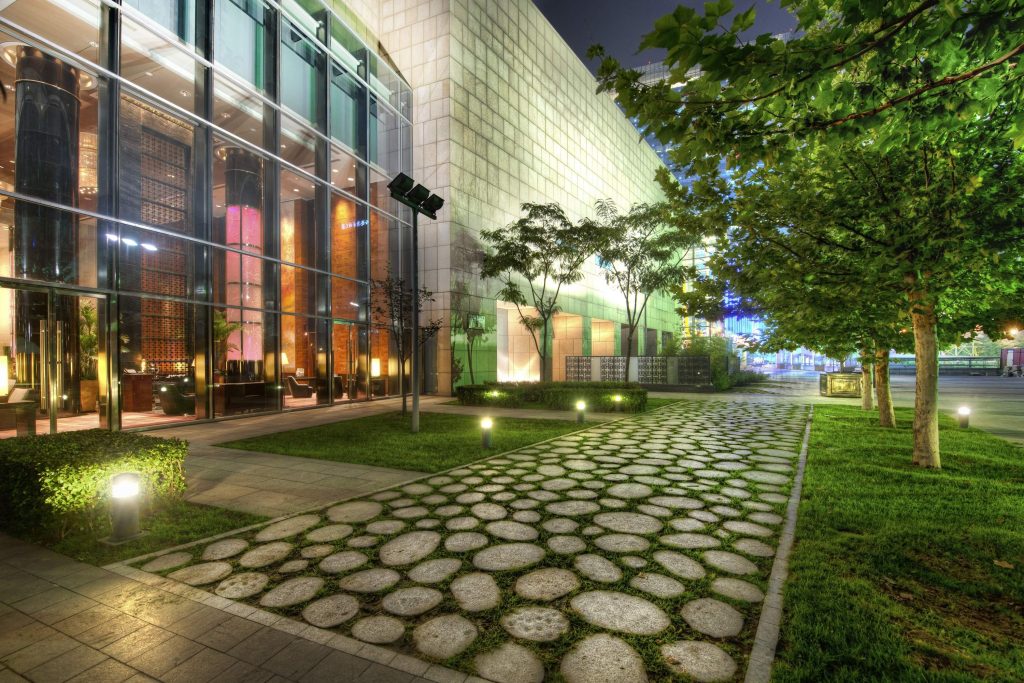
Incandescent bulbs have been used extensively for over a century. However, their energy inefficiency emerges from the fact they produce light by heating a metal filament until it glows. This process results in about 90% of the electricity being converted into heat rather than visible light, which makes them considerably inefficient compared to most modern lighting technologies.
Compact fluorescent lamps (CFLs), on the other hand, operate by passing an electric current through a tube containing argon and mercury vapor. This generates ultraviolet light that stimulates a fluorescent coating on the inside of the tube to produce visible light. CFLs are about four times more efficient than incandescent bulbs and last longer but still fall short when compared to LEDs.
Halogen lamps work similarly to incandescent ones, using electricity to heat a tungsten filament enclosed within halogen gas until it emits light. While their efficiency is slightly higher than that of traditional incandescent bulbs because they operate at higher temperatures, their luminous efficacy remains far lower than LEDs’.
In contrast, LED landscape lights use solid-state technology that allows them to convert nearly all the consumed power into visible light with minimal wastage as heat. The result is significantly reduced electricity consumption and longevity, making them an ideal choice for those seeking both aesthetically pleasing landscape lighting and energy conservation combined.
Factors that Influence Energy Consumption in LED Landscape Lights
Unraveling the Impact of Bulb Wattage
LED landscape lights are known for their energy efficiency, but it’s essential to understand that wattage contributes significantly to this equation. Wattage refers to the amount of electricity a bulb uses per hour. Comparatively, LED bulbs generally utilize less wattage than traditional incandescent or halogen bulbs. For instance, an LED bulb that provides the same amount of light as a 60W incandescent bulb only uses about 10W.
The Role of Duration
The length of time lights remain switched on also influences the energy consumed by LED landscape lights. Needless to say, the longer your lights stay on, the more electricity they consume. However, due to their low energy usage rate and high luminous efficacy (the ability to convert power into light), LEDs are less impacted by long durations compared to traditional lighting options.
Addressing Light Numbers and Arrangement
The number and arrangement of landscape lights don’t just impact aesthetics; they significantly affect electricity usage as well. Having numerous poorly placed lights can result in higher power consumption and wasteful overlapping illumination zones.
Cost Implications: A Cost Benefit Analysis of Using LED Landscape Lights
Evaluating Initial Costs Against Long-Term Savings
While initial purchase costs for LED landscape lighting might be higher than other alternatives, these costs are offset by substantial long-term savings that accrue from their lower energy usage and longer lifespan.
Understanding Impact on Electricity Bills
Given their efficient use of electricity, LEDs can reduce utility bills significantly over time compared with traditional lighting solutions like halogen or incandescent lamps.
Considering Environmental Costs
Beyond the sheer monetary implications, LED lights have lower environmental costs. They last longer, resulting in a reduced need for replacement and, consequently, less waste. Moreover, they don’t contain harmful substances like mercury found in some other lighting options.
Energy Efficiency Tips: Maximizing the Benefits of LED Landscape Lights
Optimal Placement for Maximum Efficiency
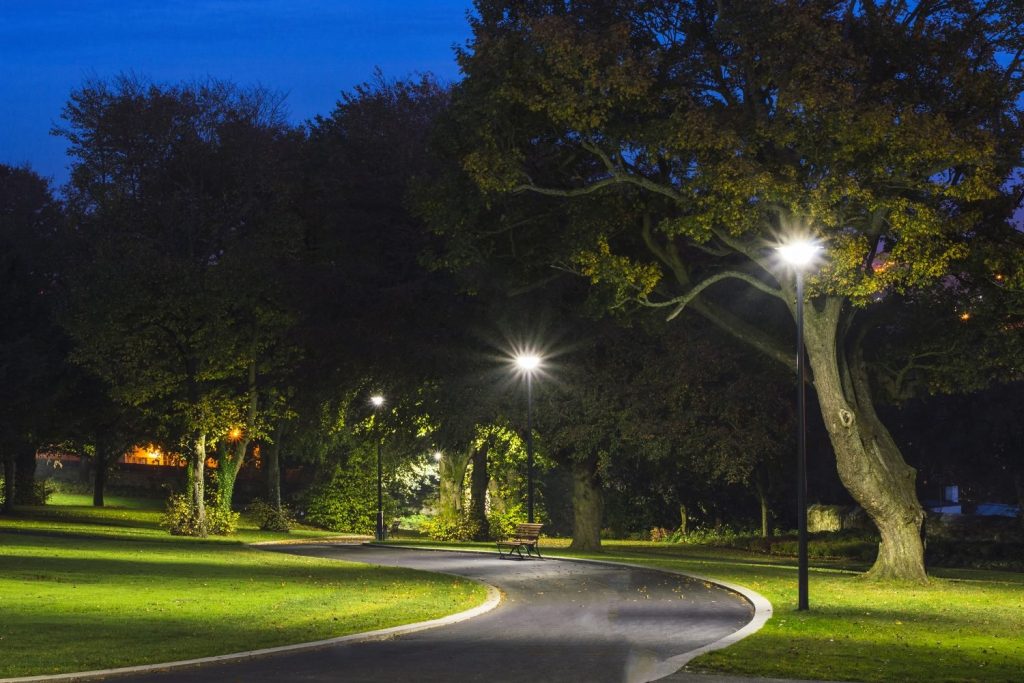
Strategic positioning of landscape lighting can enhance energy efficiency while optimizing overall lighting. It’s advisable to place lights where they’ll provide the most impact, avoid redundancy, and prevent wasteful overlapping of light zones.
Integrating Timers and Sensors
Using timers or sensors can further minimize unnecessary power usage by ensuring that lights are only active when needed. Sensors offer benefits such as turning on when detecting motion, while timers can be set to automatically switch lights on or off at specified times.
The Importance of Regular Maintenance
Like any other electrical appliance, regular maintenance is critical for optimal performance and longevity of LED landscape lights. Simple actions such as clearing accumulated dirt or debris can significantly influence light output and efficiency.
Case Studies: Practical Examples of Energy Consumption by LED Landscape Lights
A Residential Perspective: Small Scale Use
In residential settings where a handful of LED landscape lights are used around gardens or walkways, the cost-effectiveness becomes evident quickly due to visibly reduced electricity bills compared against using traditional lighting solutions.
A Commercial Viewpoint: Large Scale Use
In commercial settings like parks or business premises where extensive lighting is required, LEDs prove their worth even more convincingly by offering massive savings in energy consumption over time without compromising illumination quality.
Conclusion: Embracing an Energy-Efficient Future with LED Landscape Lights
LED lights bring forth an era marked with unprecedented energy efficiency in lighting technology. Their superiority over traditional light sources, such as incandescent or halogen lamps, is irrefutable in terms of lower energy consumption and environmental impact.
The adoption of LED lights for landscaping purposes represents a worthwhile investment that not only brings aesthetic appeal but also economic and environmental benefits. As we move towards a future where sustainability is paramount, LED lights shine bright as the beacon leading the way.
With sufficient knowledge and strategy, LED landscape lights can offer beautiful exterior lighting solutions that are not just aesthetically pleasing but also friendly to our wallets and environment. Embrace this bright future with confidence!
You may also be interested in the following posts: