
LED Strip Lights vs Fluorescent Tubes: Which Reigns Supreme?
A Brief Overview of LED Strip Lights and Fluorescent Tubes
In recent decades, the lighting industry has observed a growing shift from traditional lighting sources towards novel, innovative solutions. In this context, LED strip lights and fluorescent tubes represent two prevailing solutions that have dominated the discourse in both residential and commercial lighting arenas.
LED strip lights, as their name suggests, are a type of light-emitting diode product configured in a strip form. Characterized by their durability, energy efficiency, and versatility of design, they are increasingly finding applications in diverse areas ranging from kitchen under-cabinet lighting to landscape lighting.
Fluorescent tubes, on the other hand, have long been staple fixtures in numerous settings due to their cost-effectiveness and provision of ample lighting. Notably used in offices, retail stores, and garages, they have served for decades as reliable but somewhat less efficient sources of light.
The Growing Trend towards Energy-Efficient Lighting Solutions
The need for energy conservation is more palpable now than it ever was before. This burgeoning concern has spurred demand for energy-efficient alternatives across various sectors – not least within the realm of lighting solutions. In line with this trend, advanced developments such as LEDs are gaining traction.
Energy-efficient landscape strip lights have already started to replace conventional landscape lighting systems due to their superior performance attributes like enhanced lifespan and reduced power consumption. Homeowners now prefer LED strip lights over traditional options like halogen or incandescent bulbs for lighting outdoor spaces such as gardens or pathways at night.
In commercial settings too – offices specifically – there is an escalating preference for LEDs over fluorescent tubes, primarily driven by considerations around operational cost-effectiveness and sustainability aspects. As the world becomes increasingly conscious about its carbon footprint, industries across the board are embracing greener alternatives – with LED-based lighting systems leading this transformative wave.
As we delve into this comprehensive inquiry, we aim to explore whether LED strip lights can indeed supersede fluorescent tubes in terms of efficiency, cost, performance, and overall suitability. This exploration becomes pertinent not only for individuals contemplating a switch but also for broader industries and governments looking to adapt their policies towards more sustainable futures.
Unfolding the Concept of LED Strip Lights
LED strip lights, also known as LED tape or ribbon, are flexible circuit boards populated by surface-mounted light-emitting diodes (SMD LEDs) and other components. These strips can be cut to specific lengths, making them an adaptable lighting solution suitable for a variety of applications. Notably, their flexibility and compact size make them ideal for installation in tight spaces or complex configurations, like landscape lighting.
The Varieties of LED Strip Lights
There are three primary types of LED strip lights: flexible LED strips, rigid LED strips, and surface-mounted device (SMD) LEDs.
Flexible LED strips are incredibly versatile due to their ability to conform to nearly any shape. This unique feature makes them perfect for intricate designs or installations where bendability is key. For instance, landscape strip lights often employ flexible LEDs due to the irregular shapes and contours they need to accommodate.

Conversely, rigid LED strips consist of LEDs mounted onto a hard track. They may come with a clear or frosted cover protecting the LEDs themselves. Given their structure and durability, they are typically used in industrial settings or areas that require high-intensity lighting.
Surface-mounted device (SMD) LEDs represent a specific type of LED chips placed on printed circuit boards (PCBs). They come in various sizes denoted by numbers such as 3528 or 5050 – the former being 3.5mm x 2.8mm and the latter being 5mm x 5mm.
Exploring Advantages offered by LED Strip Lights
LEDs offer numerous benefits over traditional lighting solutions, with energy efficiency at the forefront. Their capacity to convert almost all energy into light rather than waste heat is revolutionary – it reduces electricity consumption dramatically compared with incandescent bulbs or even fluorescent tubes.
The longevity of these lights is another remarkable advantage. LED strip lights can last up to 50,000 hours or more, far outshining the lifespan of conventional lighting options. The significantly reduced frequency of replacement not only saves cost but also reduces the hassle associated with maintenance.
Perhaps one of the most striking benefits of LED strip lights is their versatility in design and usage. Given their adaptability, they can be utilized for tasks ranging from basic lighting to creating ambiance within a room or enhancing a landscape with decorative lighting. They are also dimmable, color-adjustable, and can be programmed for different effects, making them ideal for both functional and decorative purposes.
Understanding Fluorescent Tubes
Unveiling the Fluorescent Tube: A Staple in Traditional Lighting
Fluorescent tubes are a type of light bulb or lamp that has been extensively used for decades. As the name suggests, these bulbs work by using fluorescence, a type of luminescence caused by electromagnetic radiation.
The tube is filled with mercury vapor, and when an electric current is passed through this vapor, it emits ultraviolet light. This isn’t visible to the naked eye, but when it makes contact with the phosphor coating on the inside of the tube, it’s converted into visible light.
The archetypal fluorescent tube is straight and long – typically 4 to 8 feet in length. They are encased in cylindrical glass tubes and generate a bright, white light that has become synonymous with commercial buildings and institutions. However, they can also be crafted into compact shapes for more versatile applications.
The Inner Workings of Fluorescent Tubes: A Dance of Light
To initiate the process within a fluorescent tube, an electric current must be applied via electrodes located at each end of the tube. This excites the mercury atoms within and causes them to emit invisible ultraviolet photons.
These UV photons then interact with phosphor atoms coated on the inner wall of the tube, which absorb their energy before re-emitting it as visible light photons. This process involves several stages – ionization of gas atoms; emission and absorption of radiant energy; conversion from high-energy UV photons to lower-energy visible light photons – hence making fluorescent lighting essentially an electrochemical reaction.
The Ubiquity of Fluorescent Tubes: Common Applications in Our World
From schools to offices and supermarkets to laboratories, fluorescent tubes have been widely appreciated for their broad lighting capabilities since their inception in the early 20th century. Their vast spread of light and efficiency made them ideal for large spaces needing a strong, steady light source.
Fluorescent tubes also found their way into homes, often being used for under-cabinet lighting in kitchens or as landscape strip lights in gardens. Landscape lighting specifically has seen an increased usage of fluorescent tubes due to their ability to provide bright and uniform illumination over wide areas.
Pros and Cons: The Efficacy of Fluorescent Tubes
Despite the widespread use of fluorescent tubes, they come with their own set of advantages and disadvantages. On one hand, their longevity is quite notable – lasting up to 18,000 hours before requiring replacement. They also possess a high luminous efficacy – the measure of how well a light source produces visible light – which makes them more energy-efficient than incandescent lamps.
However, fluorescent tubes do have several downsides that need to be acknowledged. They contain small amounts of mercury, which makes disposal tricky and environmentally unfriendly. Additionally, they tend to produce a harsher quality of light that can be straining on the eyes over time. They are less versatile than LED strip lights when it comes to design applications due to their rigid form factor.
Comparison between LED Strip Lights and Fluorescent Tubes
The Energy Efficiency Debate
When closely examining the energy consumption of LED strip lights and fluorescent tubes, it’s evident that the former outshines the latter in terms of efficiency. LED strip lights, including landscape strip lights specifically designed for outdoor lighting, consume significantly less power per lumen of light produced.
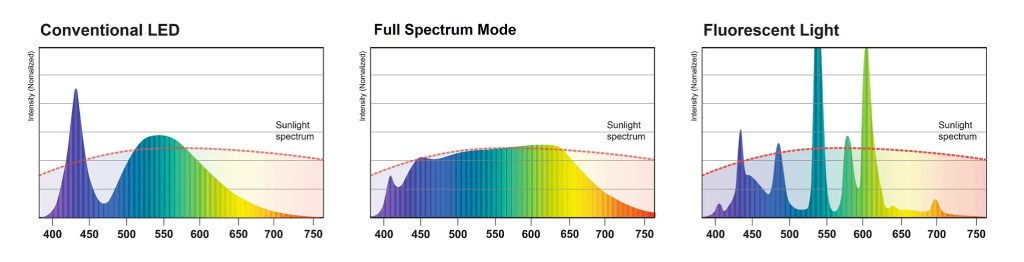
This is primarily due to their robust design that allows more light emission per unit of electric power consumed. LEDs are intrinsically more energy-efficient because they generate light through electroluminescence – a highly efficient process that produces minimal heat waste.
Conversely, fluorescent tubes rely on gas ionization – a process fraught with significant heat loss, translating into wasted energy. Therefore, when compared side-by-side, LEDs are indisputably superior in reducing power costs and promoting environment-friendly lighting solutions.
Lifespan: A Comparative Analysis
Another pivotal factor favoring LEDs over fluorescents is their impressive lifespan. On average, an LED strip light can last up to 50,000 hours – a substantial leap from the 10,000-hour average life expectancy of a standard fluorescent tube. Essentially this means five fluorescent tube replacements before one LED strip light burns out.
The long lifespan also makes LEDs a lucrative choice for landscape lighting purposes, where frequent replacement can be cumbersome and expensive. The inherent durability of LEDs, coupled with their lengthy lifespan, ensures that landscape strip lights continue to provide reliable lighting without incessant maintenance or replacement needs.
Quantifying Light Output
Fluorescent tubes have traditionally been favored for their high brightness levels – though this comparison becomes complex when considering several intricacies involved in quantifying light output accurately. Termed as luminous efficacy (light output per watt), it’s clear that LED technology has made incredible strides in recent years, surpassing even the best fluorescent tubes.
LEDs produce directional light – meaning the light emitted is highly focused. This property makes them ideal for landscape lighting where you want to highlight specific architectural or natural features. In contrast, fluorescent tubes emit light in all directions, resulting in some degree of wasted light output.
The evaluation of both energy consumption and lifespan overwhelmingly endorses LED strip lights over traditional fluorescent tubes. The superior efficiency and advanced technology of LEDs make them a worthy contender in the landscape lighting realm. As for brightness, although fluorescent tubes have their merits, the control and scalability offered by LED strip lights make them a versatile fit for varied lighting applications.
Can LED Strip Lights Replace Fluorescent Tubes?
Feasibility Analysis: Energy Efficiency, Lifespan, Light Output
When one contemplates substituting traditional fluorescent tubes with LED strip lights, the key considerations encompass aspects like energy efficiency, lifespan, and light output.
The morphology of landscape lighting is transforming with the advent of these LED strip lights. They have emerged as a remarkable solution for landscape strip lights due to their lower energy utilization and superior operational longevity.
LED strip lights are renowned for their exceptional energy efficiency. Unlike fluorescent tubes that waste about 30% to 50% of energy in the form of heat, LEDs convert almost all their power into light with negligible heat waste. Ergo, this makes them significantly more efficient than traditional lighting solutions.
Moreover, when it comes to their lifespan, LED strips again demonstrate an edge over fluorescent tubes. Standard fluorescent tubes typically last between 10,000 and 20,000 hours before they deplete into inefficiency; meanwhile, an average LED strip light can easily survive for up to 50,000 hours or more before diminishing its brightness output. This stark difference amplifies the cost-effectiveness benefit offered by LEDs in the long run.
The third critical factor is light output, or luminosity, which is measured in lumens per watt (lm/W). On this front too, LEDs show superiority over fluorescents, as they provide a higher lm/W ratio, meaning they produce more light using less power, which directly correlates with increased energy efficiency.
However, there are variations in individual product quality and performance even within LED technology-based offerings, so it’s imperative to research and select high-quality products from reputable manufacturers, ensuring maximum benefits.
The Prospective Scenarios: Where is Replacement Beneficial?
While it’s clear that on many fronts – energy efficiency, longevity, and luminosity – LEDs outperform fluorescents significantly, the practicality of their replacement in various scenarios needs to be evaluated.
In residential settings, switching to LED strip lights can be a significant enhancement. They not only render superior lighting, but their slim, flexible nature allows for convenient installation in confined spaces, under cabinets or around mirrors, and provides an aesthetic edge for interior decoration too.
Commercial premises, too, stand to gain tremendously from this transition. Office buildings, for instance, which operate for extended hours, can save substantially on their energy bills by switching over to LED lighting as landscape lighting. Their longer lifespan implies fewer disruptions due to maintenance and replacement downtime.
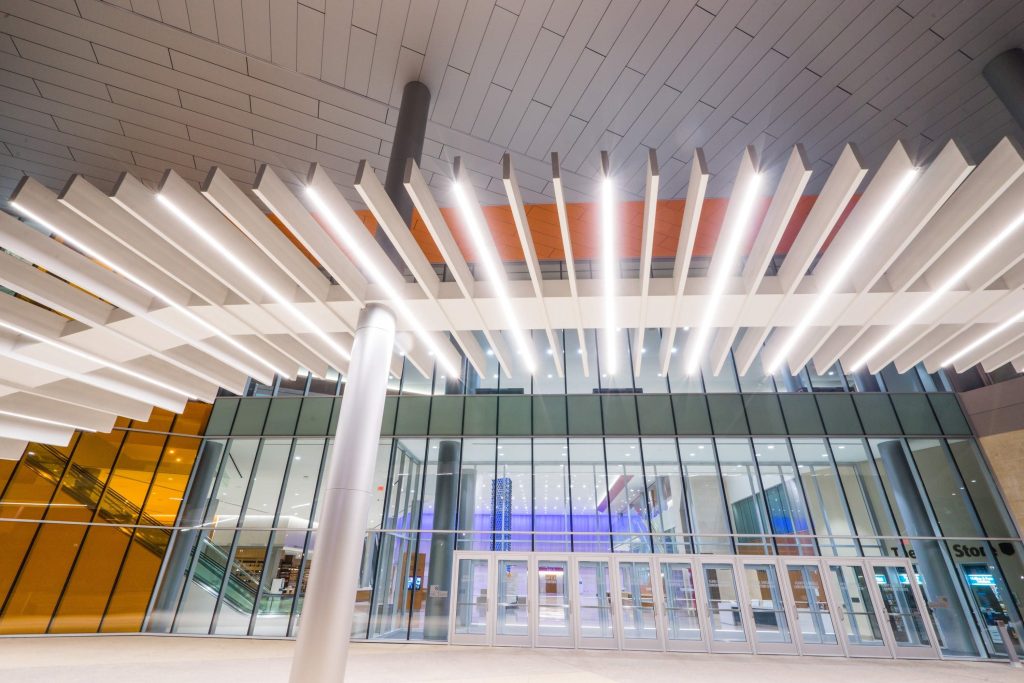
Outdoor landscape strip lights, like pathway markers or garden accent lights, are other areas where LEDs bring immense value. Fluorescent tubes are not ideal for outdoor applications due to durability issues and sub-optimal performance in cold temperatures, while LEDs are immune to these challenges, providing reliable lighting regardless of the weather conditions or temperature fluctuations.
However, one must consider that initially LEDs present a higher upfront cost compared to fluorescent tubes, but their long lifespan and energy efficiency render them a more economical choice over time. Therefore, any scenario where long-term usage is anticipated would greatly benefit from LED adoption despite initial investments.
It is always wise to contemplate the environmental implications as well while making such decisions. Unlike fluorescent tubes that contain mercury – a hazardous substance – LEDs are completely safe, making them an environmentally friendly option besides all other benefits.
Case Studies: Successful Replacement of Fluorescent Tubes with LEDs
Residential Case Studies: Transforming Home Lighting
In our first exploration of residential upgrades, we delve into a kitchen lighting replacement project. The homeowner had been using fluorescent tubes for the primary lighting source but was frustrated by the flickering and dull quality of light they produced. The decision to replace these traditional fixtures with LED strip lights yielded significant improvements.
They chose landscape strip lights running underneath cabinets to provide a strong task light for the countertops while also creating an aesthetically pleasing glow that gently illuminated the entire kitchen. The energy consumption dropped dramatically post-installation, and the quality of light was remarkably improved.
Our second example spotlights a garage lighting replacement project where landscape lighting was significantly improved with LED technology. Previously, this area had been dimly lit by several large fluorescent tubes, which were both inefficient and costly to run. Following their replacement with LED strip lights, there was an immediate transformation; it became as bright as daylight even at night, significantly enhancing visibility and safety in this often-neglected space.
Commercial Case Studies: Improving Business Productivity
An office building retrofitting project serves as our first commercial case study where LED strip lights replaced old fluorescent fixtures. The building management wanted to reduce energy costs while promoting a better work environment for employees. Post-retrofitting, not only did they notice a substantial decrease in energy bills, but they also reported enhanced productivity due to the improved quality of light provided by LEDs.
We delve into a retail store lighting upgrade that proved particularly transformative for displaying products attractively. Initially relying heavily on fluorescent tubes for general and accent lighting created stark shadows that detracted from their displays’ appeal. After replacing these tubes with strategically placed LED strip lights, they were able to create invitingly lit displays that highlighted their products effectively. Landscape strip lights were specifically used to illuminate signage outside, making the shopfront more noticeable and appealing.
Each of these case studies, both residential and commercial in nature, underlines the advantages of replacing traditional fluorescent lighting with energy-efficient LED strip lights. In all instances, light quality improved dramatically alongside a significant reduction in energy consumption, indicating that this transition is not just feasible but also highly beneficial.
How to Replace Fluorescent Tubes with LED Strip Lights
Embracing Innovation: A Guide to Replacing Fluorescent Fixtures with LED Strip Lights
Replacing fluorescent tubes with LED strip lights may seem like a daunting task at first glance, but rest assured, it is a process that is relatively straightforward and can bring a myriad of benefits.
The first step is to turn off the power at the main switchboard to ensure safety. Following this, remove the fluorescent tube from its fixture and disconnect any starters or ballasts that are part of the setup.
The second step requires some technical knowledge, as you will need to rewire your light fixture for it to be compatible with an LED strip light. This usually involves bypassing the ballast or removing it altogether and directly connecting the power supply to the sockets. Be sure to always follow manufacturer instructions when performing this task.
Upon successful rewiring, you’re ready for installation of your chosen LED strip light. These come in various forms, such as flexible strips ideal for landscape lighting or rigid strips that can be used in more formal settings like offices or retail outlets. Landscape strip lights particularly add texture and depth, creating scenic aesthetics in outdoor spaces.
After installation, power on your new lighting system and evaluate its performance. You may wish to make some adjustments, such as dimming if your LED strip lights have this functionality or repositioning for better light coverage.
Conclusion: Can LED Strip Lights Replace Fluorescent Tubes?
Replacing fluorescent tubes with LED strip lights offers more than just energy efficiency; they offer a pathway towards innovative spaces. Whether it’s revamping interior spaces or enhancing landscape lighting through impressive landscape strip lights, LEDs improve life beyond what we’ve known traditional lighting could offer.
There’s no denying there may be initial challenges in making this transition – particularly when it comes to rewiring fixtures – but their long-term advantages make the LED strip lights a shining candidate for our future lighting needs. The age of LEDs signals an era where we become architects of not just our spaces, but also of the light that dances within them, fueling a sense of optimism about the possibilities that lie ahead.
You may also be interested in the following posts: