
Is It Possible to Dim Strip Lights?
A Brief Overview of Strip Lights
In brightening our surroundings, an assortment of lighting devices is utilized, one of which is the strip light. These elongated lighting sources are ideally efficient for casting consistent brightness over vast expanses or highlighting specific areas. In essence, these lights come in long strips embedded with numerous miniature light bulbs, typically light-emitting diodes (LEDs).
The ubiquity and utility of strip lights have skyrocketed in recent years, owing to their versatility and efficiency. They offer a broad spectrum of applications ranging from residential interior decor to commercial signage and even industrial lighting.
One feature that has been rapidly gaining popularity among lighting aficionados is the use of landscape strip lights. These devices provide an innovative solution for outdoor lighting, casting a warm glow onto garden paths, patios, or architectural features, thereby enhancing aesthetic appeal and functionality.
The Importance and Versatility of Strip Lights in Various Settings
Strip lights are celebrated for their multipurpose usage across diverse environments. Residentially, they spruce up spaces with dramatic accent lighting – subtly illuminating kitchen cabinets or stairways; commercially, they serve as vibrant signage or display lighting; industrially, they cater to large-scale lighting needs where uniform brightness is requisite.
A particular application worth noting is landscape lighting, where landscape strip lights come into play. Casting a soft aura onto gardens at dusk or dawn’s break highlights their natural beauty while also promoting safety by marking out path edges distinctly.
These applications underscore the significance and versatility inherent in strip lights. They proffer flexible installation options due to their thinness and adaptability – features that contribute significantly towards their popularity across domestic and professional spaces alike.
An Introduction to the Concept of Dimmable Strip Lights
Now more than ever before, there’s an increasing demand for customizable lighting solutions as society advances towards personalization-centric lifestyles. This is where dimmable strip lights step into the spotlight.
Dimming capability in lighting systems refers to the adjustment of light intensity, as per user preference. It’s this feature that allows for a spectrum of ambient possibilities – from a soft glow for relaxed evenings to brighter light levels for task-oriented activities.

Dimmable landscape strip lights are especially renowned in landscape lighting since they allow users to orchestrate outdoor lighting in sync with their mood or event requirement. From casting a faint moonlit glow for an intimate gathering to blazing radiance for lively parties, they offer unparalleled control over the desired ambiance.
These aforementioned insights serve as an introductory panorama into the world of strip lights and their dimmable alternatives – a niche within the vast lighting industry that has revolutionized not only how we view our surroundings but also how we interact with them.
Understanding Strip Lights
A Comprehensive Look into the World of Strip Lights
Strip lights, also known as LED tape or ribbon, are a flexible circuit board dotted with light-emitting diodes (LEDs) and adhesive backing. They serve as an excellent source of light, often used in places where traditional bulbs cannot fit or reach. Their minimalistic structure and versatile application make them a popular choice for various lighting needs.
Classifications of Strip Lights: Beyond the Ordinary
Delving deeper into the realm of strip lights reveals three primary types: LED strip lights, RGB strip lights, and neon flex strips. LED strip lights, often employed in landscape lighting, are energy-efficient alternatives to traditional incandescent bulbs. They offer superior brightness levels while consuming significantly less power.
RGB strip lights, on the other hand, stand out from their counterparts due to their color-changing abilities. Equipped with red, green, and blue diodes that can be controlled to produce a wide palette of colors. RGB strip lights have found particular use in enhancing aesthetic appeal in settings such as restaurants or clubs.
Neon flex strips mimic the look of vintage neon signs without high voltage requirements or fragile glass components. These provide a continuous bright light that’s perfect for bold architectural accents or attention-grabbing signage.
A Versatile Solution: Strip Lights across Various Domains
Strip light applications extend across residential use, commercial use, and industrial use. In residential settings, they frequently appear under kitchen cabinets for task lighting or behind televisions for bias lighting. Their ease of installation makes them ideal for DIY projects at home like creating mood lighting around mirrors or landscape strip lights along garden paths.
In commercial spaces, they can transform ordinary interiors into visually stunning environments. Whether it’s illuminating merchandise in a retail store, highlighting architectural features in a hotel, or adding vibrancy to a restaurant’s ambiance – commercial lighting greatly benefits from the versatility of strip lights.
For industrial use, strip lights fulfill an essential role in ensuring safety and enhancing productivity. They often provide lighting in large warehouses or factories where traditional lighting might not be sufficient. The longevity and minimal maintenance requirements of LED strip lights make them ideal for these settings.
Strip lights offer an impressive blend of flexibility, energy efficiency, and aesthetic appeal that makes them desirable for various applications. From residential to commercial and industrial domains, their impact on modern lighting cannot be understated.
Unraveling the Luminous Spectrum: The Concept of Dimmability in Lighting Systems
In its simplest form, dimmability in the context of lighting refers to the ability to adjust the light output or brightness of a light source. This characteristic allows users to modify and control their lighting environment more precisely. Dimming can be achieved by lowering the voltage or pulse width modulation, where light output is controlled by rapidly turning the LEDs on and off.
Dimmable lights have several key advantages. At a practical level, they offer flexibility in controlling the amount of light in a space, thereby enhancing comfort and productivity. From an aesthetic standpoint, they can add depth and warmth to an area, transforming it from starkly lit to softly lit at a touch.
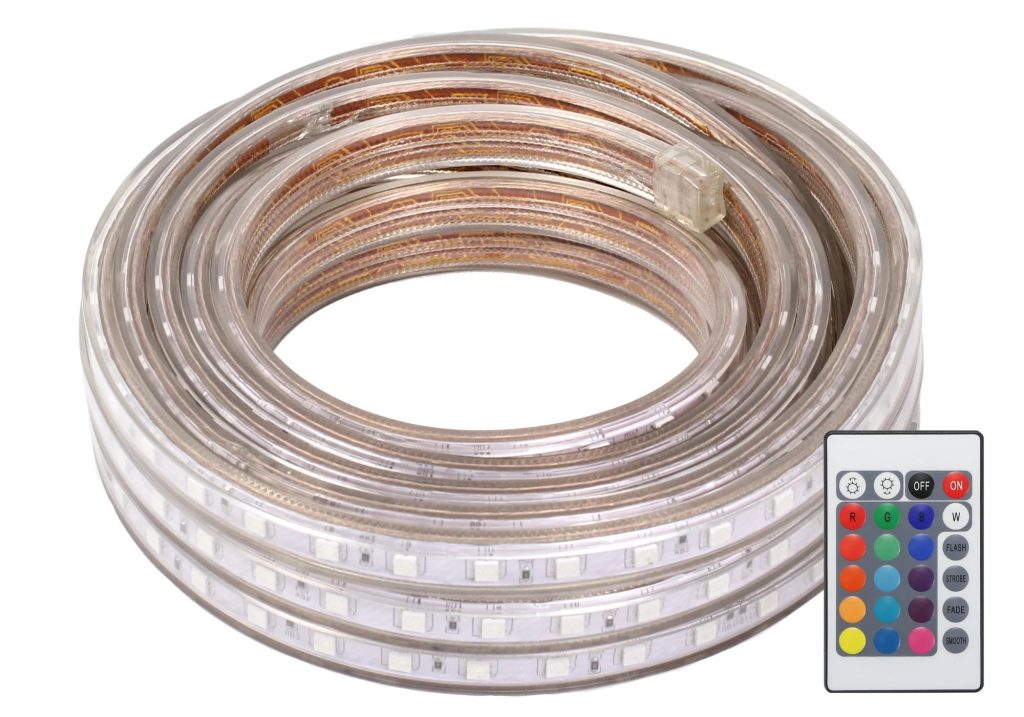
Energy efficiency is one salient advantage manifested by dimmable lighting technologies. By reducing brightness when full light is not required, energy consumption is significantly curtailed – a boon not just for personal utility bills but also for global conservation efforts. Creating ambiance with landscape strip lights becomes remarkably easy with dimmers.
The power lies with you to decide your preferred lighting mood – whether that’s soothingly low-key for intimate gatherings or vibrant and energetic for parties. Moreover, the lifespan of LEDs increases as they are dimmed because lower energy usage results in less heat generation, which consequently reduces wear and tear on these devices over time.
Lights On or Off? The Dimming Potential of Strip Lights
The dimming potential of strip lights offers a versatile solution for any space, allowing homeowners to customize their environment effortlessly. By integrating smart technology, you can even control these lights remotely or set schedules, further enhancing your ability to tailor the ambiance to fit your lifestyle.
The Soft Glow: Types and Features of Dimmable Strip Lights
Various types of dimmable strip lights are available in the market today, each with its unique features: single-color LED strips, LED strip lights (SMD & COB), RGB & RGBW LED strips, tunable white LED strips, and smart LED strip lights. Notably, RGBW strips allow for color temperature adjustments alongside brightness changes, offering even more customization potential.
Dimming control options can include remote control: handheld remotes with brightness adjustment; wall dimmer switches compatible with TRIAC, PWM, or 0-10V dimmers; and smart app control that adjusts brightness via mobile apps or voice commands.
When purchasing a dimmable strip light, look for high-quality LEDs with a good color rendering index (CRI), and ensure that your chosen driver is compatible with your dimmer switch. Another key feature is smooth dimming capability, which ensures there are no sudden jumps in light output as you adjust brightness levels.
Lighting Up Your Life: How to Install and Use Dimmable Strip Lights
Installation of a dimmable LED lighting system may sound complicated, but it needn’t be so if approached methodically. First off, carefully plan out where your strip lights will go and measure the length needed accordingly.
Next, attach your strips – many come with adhesive backings for easy placement – and connect them to your power supply or LED driver.
Connecting the system to a compatible LED dimmer switch forms the final step before you can revel in the full glory of customized lighting brought by landscape lighting control at your fingertips! Always remember, though, to follow safety guidelines during installation and use.
Troubleshooting Potential Problems with Dimming Strip Lights
Safety Precautions when Installing Strip Lighting Systems
Ensure that all power sources are turned off before beginning any installation work to prevent electrical shocks. Additionally, use appropriate tools and wear safety gear, such as gloves and goggles, to protect yourself while handling electrical components.
By prioritizing safety measures, you can minimize risks and ensure a smoother installation process. Taking these precautions not only protects you but also enhances the longevity and performance of your lighting system.
Different Dimmer Switch Types affect LED Strip Performance and Lifespan
Different dimmer switch types can impact LED performance and lifespan significantly, as not all dimmers are compatible with LED technology. Using an incompatible dimmer may result in flickering, buzzing, or a shorter overall lifespan for the lights, so it’s crucial to select dimmers specifically designed for LED bulbs to ensure optimal performance.
Choosing the right dimmer is essential for maintaining both the functionality and durability of LED lights. This ensures that users can enjoy a stable lighting experience without compromising on energy efficiency or bulb longevity.
Conclusion: Are Strip Lights Dimmable?
Adding dimmable strip lights can dramatically enhance the versatility and beauty of your spaces. It’s a worthwhile investment that combines aesthetics, efficiency, and customization, as well as extends the lifespan of your lighting system. So, go ahead and highlight every aspect of your life – from special events to everyday living – with these remarkable light sources.
You may also be interested in the following posts: