
Do LED Tubes Have Directional Light?
Demystifying LED Tube Lights
LED tube lights are a quintessential component of modern lighting solutions, transforming the lighting landscape through their efficient design and versatile applications. These luminaries are long, cylindrical structures packed with numerous light-emitting diodes, a type of semiconductor that emits light when an electric current is applied.
The advent of LED tube lights has revolutionized several sectors, including residential and commercial lighting. The reason for their widespread popularity lies in their robust performance, longevity, energy efficiency, and environmentally friendly nature compared to traditional incandescent and fluorescent lights.
Beyond these general benefits, LED tube lights come in diverse variants to cater to specific needs. For instance, solar LED tube lights elegantly merge renewable energy technology with LED innovation for sustainable outdoor lighting solutions. On another end of the spectrum, RGB (red-green-blue) LED tube lights enable customizable color output by combining these three primary colors at varying intensity levels.
The Lure of Specialty LED Tubes
The appeal of LED technology extends beyond standard models thanks to specialty variants such as smart LED tube lights and UV LED tube lights. Smart LED tubes provide the advantage of remote control access via Wi-Fi or Bluetooth connectivity. They integrate well with home automation systems for seamless control over light intensity and color temperature adjustment.
On the other hand, UV LED tube lights find utility in medical environments or applications requiring sterilization, as they emit ultraviolet radiation capable of killing bacteria and other microorganisms. In the realm of horticulture too, innovation has sprouted in the form of LED tube grow lights – a boon for indoor plant growers due to their improved photosynthetically active radiation spectrum that optimizes plant growth.
Retrofitting & Restoration: A Nod to Versatility
A unique facet of these tubular LEDs is their adaptability when it comes to retrofitting older lighting fixtures. LED tube retrofit lights allow users to replace their inefficient fluorescent tubes with energy-saving LEDs without having to revamp the entire lighting fixture.
For those seeking a blend of vintage aesthetics and modern technology, LED tube vintage lights offer the perfect solution. These luminaries mimic the timeless charm of old incandescent bulbs while encapsulating the benefits of LED technology.
A Symphony of Lights: Exploring Creative Applications
LED technology doesn’t just perform; it also provides avenues for creativity. This aspect shines brightly in LED tube strip lights and LED tube string lights, both offering an intriguing avenue for decorative landscape lighting. These flexible and customizable light sources are widely used for accent lighting, architectural detailing, or simply adding a festive touch during holiday seasons.
The Emergence & Significance of LED Tube Lights
From being employed in sophisticated laboratories to brightening up homes during festivities, LED tube lights have effectively permeated every facet of our lives with their versatility. Their relevance today cannot be overstated, as they represent not just technological advancement but also a conscious step towards energy conservation and environmental sustainability. As we delve into understanding their directionality in subsequent sections – another defining characteristic – we realize that there is more to these glowing cylinders than meets the eye.
Demystifying LED Technology: A Revealing Discourse
The ABCs of Light-Emitting Diodes (LEDs)
LED, an acronym for light-emitting diode, is a semiconductor device that emits light when an electric current passes through it. Functional and highly efficient, it represents a quantum leap from traditional forms of lighting like incandescent and fluorescent bulbs. LEDs are the cornerstones of modern lighting, found in everything from smart LED tube lights that can be controlled via smartphone apps to energy-saving solar LED tube lights used in landscape lighting.
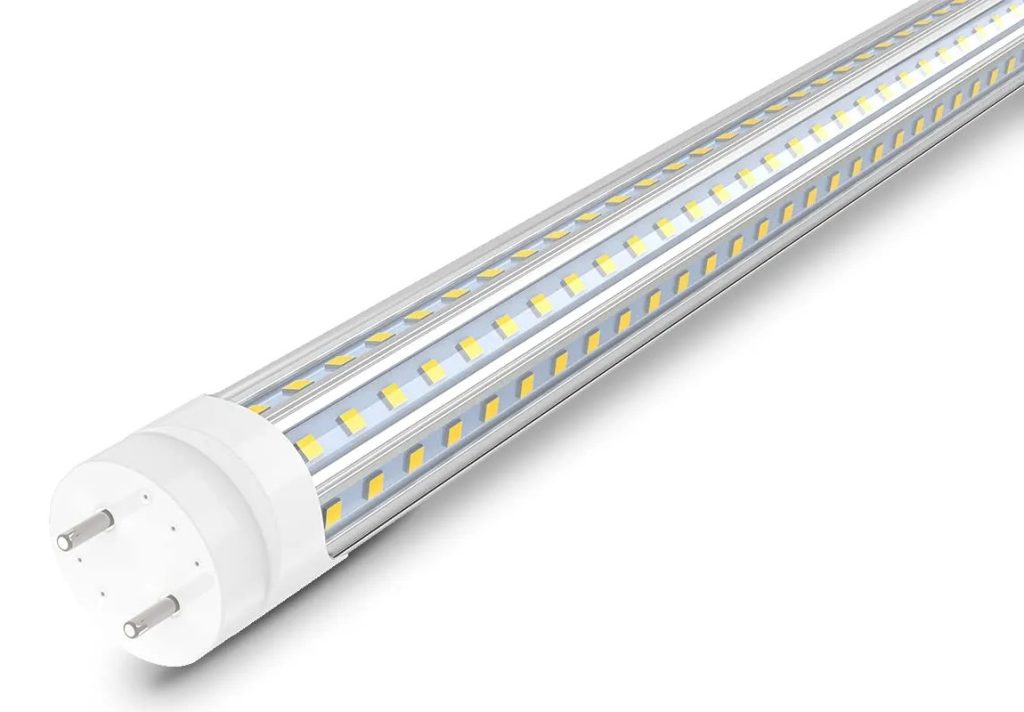
Unlike traditional light sources that generate light by heating a filament or gas, LEDs produce light through a process known as electroluminescence. This process involves the movement of electrons in the diode’s semiconductor material, which subsequently produces photons, or units of light. It’s this unique mechanism that makes LED tube lights popular for an array of applications ranging from LED tube vintage lights to LED tube grow lights.
Imagine having a party in your backyard with RGB LED tube lights creating dynamic color effects or using UV LED tube lights for some artistic night photography. With LEDs’ versatility and adaptability, such scenarios are not just possible but positively easy to achieve! Moreover, you have environmentally friendly options like solar-powered LED tube strip lights brightening up your gardens or paths without adding to your electricity bill.
The Fascinating Science Behind LEDs
Peering beneath the physical exterior of the humble LED reveals a fascinating world driven by physics and chemistry. The core component of an LED is its semiconductor material – typically composed of gallium arsenide or silicon carbide – whose unique properties enable it to emit light when energized by electric current.
As current flows into the positive layer (the ‘p-type’), where there are ‘holes’, it meets with negatively charged electrons from the negative layer (the ‘n-type’). The subsequent ‘recombination’ of these opposites releases energy in the form of light. A fascinating aspect of this process is that the color of the emitted light hinges on the type of semiconductor material used.
This crystal-clear science is what makes RGB LED tube lights possible, creating brilliant, multi-colored displays. Furthermore, it’s why specific types like LED tube grow lights can generate the exact spectrum needed to support photosynthesis in plants.
LEDs: A Journey through Time
The story of LEDs began in 1907 when British scientist H.J. Round first discovered electroluminescence. However, it wasn’t until 1962 that a commercially viable LED was created by Nick Holonyak Jr., then working for General Electric. These earliest LEDs were red and primarily used as indicator lights on electronic devices. Fast forward to today, and you’ll find LEDs in a dizzying array of applications.
LED vintage tube lights are bringing an old-world charm to modern interiors, while LED retrofit tube lights are transforming traditional lighting systems into energy-efficient marvels. On a grander scale, advancements have led to RGB LED tube lights used for spectacular architectural lighting displays and UV LED tube lights aiding in scientific research and medical therapy.
In our homes or outdoors, whether as humble LED tube string lights twinkling on festive occasions or as crucial components enabling smart homes, the evolution and advancement in LED technology continue unabated. It’s fair to say that our world today – lighted by LEDs – reflects not just our technological progress but also our commitment to energy conservation and environmental sustainability.
The Bright World of Directionality in Lighting
Shedding Light on Directionality
The concept of directionality in lighting is not merely a technical term relegated to the language of physicists and electrical engineers. Understanding the essence of its importance can be enlightening to everyone, from interior designers and photographers to manufacturers and regular consumers.
Light directionality refers to the path or trajectory that light adopts when it emanates from a source. This phenomenon is determined by the design and structure of that source. LED tube lights, for instance, have a distinct structure compared to traditional incandescent bulbs or halogen lamps.
The configuration of these tubes allows for better control over their emitted light’s directionality. This makes them an ideal choice for landscape lighting or settings where accurate control over illumination is necessary. Directional lighting is what makes a picture aesthetically pleasing in photography or an interior space warm and inviting. It ensures that light reaches where it’s needed most, augmenting practicality and visual appeal.
Why Direction Matters: Unraveling the Importance of Light Directionality
To truly appreciate why direction matters in lighting, consider this simple example: reading a novel under the warm glow of vintage LED tube lights. The focused lighting enhances visibility without casting unnecessary shadows – this is the brilliance of directional lighting.
LED tube grow lights demonstrate the importance of directed light even more clearly. Essential for indoor plant cultivation, these lights concentrate rays on targeted areas, promoting growth without wasting energy. Similarly, UV LED tube lights, often used in sterilization and industrial processes, rely on precision direction for effective results.
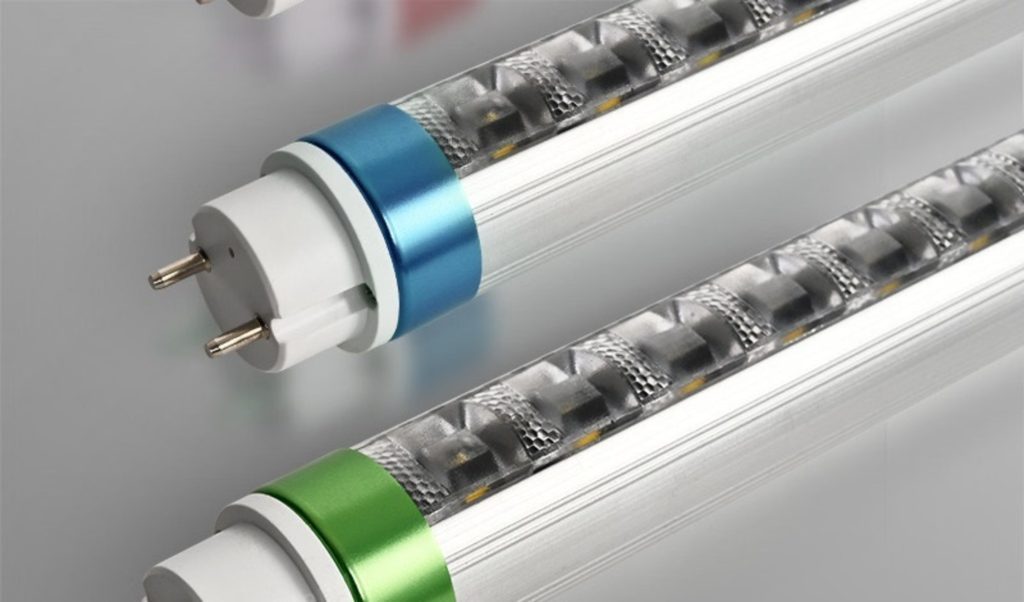
In an era of customization, understanding how to direct light becomes crucial. RGB and solar LED tube lights also rely heavily on directionality. RGB lights bring vibrant ambiance to parties, while solar LED tubes illuminate garden paths. In both cases, their visual impact depends largely on where and how the light is aimed.
Clearly, lighting isn’t just about brightness – it’s also about strategic placement. The rise of smart LED tube lights highlights how users now expect control over not just brightness but also direction. As consumers become more demanding, manufacturers innovate with products like LED tube retrofit lights, which offer enhanced control over light direction.
From LED tube string lights on your patio to strip lights beneath your kitchen cabinets, directionality transforms lighting from functional to exceptional. It ensures maximum efficiency, utility, and aesthetic appeal.
Are LED Tube Lights Directional?
Detailed Examination of the Directionality of LED Tube Lights
LED tube lights, also known as LED tube strip lights, have become a staple in modern lighting, owing to their numerous benefits over traditional lighting. One attribute that often raises questions is whether these lights are directional. To answer this, we need to delve into the inherent properties that define LED lighting.
Light-emitting diodes emit light in a specific direction, inherently making them directional to some extent. This attribute distinguishes them from other light sources like incandescent and compact fluorescent bulbs, which disperse light spherically. The focal direction of an LED tube light mainly depends on its design and the lens used.
Factors Influencing the Directionality of LED Tube Lights
A key factor determining the directionality of LED tube lights is their fixture design. For instance, landscape lighting often requires concentrated brightness in specific areas; hence, manufacturers build fixtures that direct light downwards or towards a particular angle for maximum impact.
The type of diode used also influences directionality. UV LED tube lights and smart LED tube lights may vary in their emission patterns due to differences in diode structure and configuration within the bulb.
Furthermore, special types such as LED tube grow lights or RGB LED tube lights may possess distinctive directionality due to their unique usage scenarios. Grow lights need to focus light directly on plants, while RGB ones might seek wider dispersion for effective color mixing.
Influence of Design on Light Direction
Design elements greatly influence how an LED’s directional output manifests itself physically. For instance, manufacturers can modify a simple component like the bulb’s shape – cylindrical designs have different dispersion patterns compared to globe-shaped ones.
LED tube strip lights are another example where design plays a significant part in determining output directionality; arranged linearly with diodes pointing in the same direction, these lights produce a more focused lighting compared to their spherical counterparts. In more complex configurations, like LED tube retrofit lights and LED tube vintage lights, the directionality can be manipulated further by incorporating reflective surfaces or using multiple diodes with different orientations.
The Role of Diffusers in Controlling Light Direction
Diffusers are an essential component in controlling light directionality. These ingenious devices scatter the emitted light, reducing its inherent directionality and creating a softer, more dispersed glow. They are especially useful for solar LED tube lights that need to distribute light over a broad area uniformly. Diffusers also play crucial roles in smart LED tube lights where dimmable or adjustable brightness is required.
By manipulating the diffuser design and material, manufacturers can produce varying levels of diffusion across the LED range – from highly directional spotlights to wide-angled ambient lighting. While LED tube lights do inherently possess directional properties due to their diode-based technology, various factors such as fixture design and auxiliary components like diffusers can significantly influence this characteristic.
Comparison with Other Lighting Technologies
The Directionality of Various Lighting Technologies
When it comes to landscape lighting, traditional incandescent bulbs have been popular. However, their directionality is dictated by the fixture as opposed to the bulb itself. Incandescent lights emit light in all directions, often requiring additional hardware such as reflectors and diffusers to manage the light’s direction.

Fluorescent tube lights, on the other hand, have a cylindrical design that naturally disperses light 360 degrees around the tube. While this provides an even spread of lighting, controlling their directionality can be problematic without proper fixtures.
LED tube string lights are in stark contrast to these traditional technologies. They offer enhanced control over their directionality directly from the bulb’s design. LED technology utilizes diodes that specifically emit light in one direction only, increasing efficiency and reducing the need for additional equipment.
Comparative Analysis: LED Tubes vs Traditional Technologies
A comparison between LED tube retrofit lights and established lighting options reveals some substantial differences. Owing much to their inherent directional nature, LED retrofit tubes require fewer resources for directing light where needed – a feature less prevalent in incandescent and fluorescent lights due to their omnidirectional emission patterns.
Solar LED tube lights further extend this advantage by harnessing renewable energy sources for power, thereby creating a synergy of efficiency both in energy consumption and lighting focus. RGB LED tube lights offer another advantage through not just improved directionality but also color versatility – an attribute difficult to achieve with traditional lighting solutions without using filters or multiple bulbs.
Exploring Specifics: Varieties of LED Tube Technology
The world of LEDs is abundant with variety, allowing diverse applications from LED tube strip lights, perfect for under-cabinet kitchen lighting due to their slim profile and directional ability, to UV LED tube lights, used widely in sterilization processes thanks to their ability to emit specific ultraviolet wavelengths.
LED tube vintage lights showcase how LEDs can mimic the warm glow of traditional incandescent bulbs yet maintain the strong directionality that LED technology offers, providing both aesthetic and functional appeal.
LED tube grow lights present yet another application where customizability of light spectrum and directionality find utility. They are used in indoor gardening setups where precise control over light is key for plant growth.
Smart Lighting: LED Tube Lights Step into the Future
Incorporating smart technology, smart LED tube lights take directionality control a step further. With features that allow users to adjust color temperature and intensity remotely, these technological marvels also offer enhanced capabilities in controlling light direction – a testament to the versatility and adaptability that LED technology brings to lighting.
The Directional Superiority of LED Tube Lights
When considering technologies for their directional properties, LEDs unmistakably lead the field with their inherent one-direction emission design. Whether it’s LED tube strip lights for sleek under-cabinet lighting or UV LED tubes for sterilization processes, all demonstrate this directional superiority.
From retrofitting older fixtures with more efficient options to tapping into renewable energy sources with solar LED tubes, their practicality is unmatched. Not forgetting smart LED tubes that push the boundaries of what is possible in lighting control and customization.
Practical Implications and Applications of LED Tube Lights
The Impact of Light Directionality on Energy Efficiency
A key advantage of LED tube lights, including specialized variants such as solar LED tube lights or smart LED tube lights, is energy efficiency. This efficiency is often enhanced by the directionality of light emission. Unlike traditional lighting systems, which disperse light in all directions, LED tubes emit light in a specific orientation, thus minimizing wasted light and maximizing energy efficacy.
The directionality also means less heat production – a common problem with incandescent and fluorescent bulbs. This lower heat output lends to extended longevity for LED tube retrofit lights or UV LED tube lights that are used in environments sensitive to thermal outputs.
In addition, because LEDs don’t require reflectors to direct their light, they avoid the energy loss associated with these devices. This contributes to their high lumen-per-watt ratios as compared to other lighting technologies.
Directional Lighting: A Critical Element in Various Fields
In several fields, such as photography, stage lighting, or landscape lighting, the use or non-use of directional lighting can be critical. For instance, photographers often prefer LED tube strip lights because they offer controllable directionality that aids in creating desired shadows and highlights on their subjects.

In interior design too, directional lighting plays a significant role in highlighting features or creating ambiance within a space; RGB LED tube lights can add colorful elements, while directional smart LED tube lights can emphasize artwork or architectural details.
Stage lighting professionals often employ UV LED tubes or RGB LED tube string lights for dramatic effects with controlled light-throwing capabilities. Even horticulturists are leveraging the benefits of directional illumination provided by specific smart LED grow tubes that can optimize plant growth without wasting light energy on non-photosynthetic areas.
Relevance to Consumers: Making Informed Purchasing Decisions
Understanding the aspect of light directionality can enable consumers to make more informed choices when purchasing LED tube lights. For instance, a homeowner considering an LED tube retrofit in their workshop might choose directional LED tubes to focus light exactly where it’s needed.
Consumers looking for atmospheric or decorative lighting might opt for LED tube vintage lights or LED tube strip lights, which offer a warm glow without the harsh direct illumination of more directional options. In an outdoor setting, landscape lighting may benefit from solar LED tube lights that ensure sustainable and efficient illumination with a specific direction, enhancing security and aesthetics at the same time.
For those intrigued by technology trends, smart RGB LED tube lights offer both color range and controlled directionality for mood setting. Whether it’s LED grow tubes for indoor plants or UV LED tubes to add an edge to a party ambiance, understanding the directional properties of these products can significantly assist in aligning purchase decisions with actual needs.
Conclusion: Are LED Tube Lights Directional?
Final Remarks on LED Tube Lights’ Directionality
We have embarked on an enlightening journey to discern whether LED tube lights are directional, extending our knowledge into the realm of lighting and its various complex aspects. To recapitulate, LED tube lights are inherently not directional. However, with proper design and structure of LED tubes, as well as the integration of diffusers and optical lenses, their light can be directed and manipulated according to the desired requirements.
LED tube lights exhibit far greater energy efficiency compared to traditional lighting technologies due to their ability to control light directionality effectively. Moreover, this advantage isn’t confined merely within the bounds of power consumption but extends further into diverse applications such as photography, interior design, and stage lighting, where precision in light direction is paramount.
Looking Towards a Bright Future
The future holds exciting prospects for LED technology. With rapid advancements in research and development, we can anticipate further improvements in terms of light output efficiency, versatility of use, and environmental sustainability.
In particular, we foresee an increasing demand for specialized LED tube lights catering to unique needs: LED tube grow lights that optimize plant growth; UV LED tube lights used for disinfection purposes; smart LED tube lights that integrate with home automation systems; solar LED tube lights utilizing renewable energy sources; and RGB LED tube lights offering a plethora of color options for decorative purposes – all these illuminating the endless possibilities provided by LEDs.
Moreover, retrofitting with LED technology is becoming a popular trend due to its cost-effective nature. The increased demand for LED tube retrofit lights signals how consumers are gradually shifting towards more eco-friendly alternatives from traditional incandescent or fluorescent bulbs.
The Radiance Spreads: Landscape Lighting
Landscape lighting is another domain where we predict substantial growth in the usage of LEDs. Given their longevity and low-maintenance characteristics, along with their superior control over directionality, they make ideal choices for outdoor applications like garden paths or architectural highlights.

Also gaining momentum in popularity are LED tube strip lights and LED tube string lights, bestowing on public spaces and homes alike an enchanting aura with their soft, diffused lighting. These decorative LED fixtures are increasingly preferred for their energy efficiency, longer lifespan, and aesthetic appeal.
A Nostalgic Glow: LED Tube Vintage Lights
The increasing fondness for vintage aesthetics has led to a surge in demand for LED tube vintage lights. These lights combine the charm of classic design with the efficiency of modern technology, indicating a future where tradition meets innovation.
While LED tube lights may not naturally be directional in their emission of light, advancements in technology have made it possible to direct this light where it is needed most. As we deepen our understanding of these fascinating devices and continue to refine them for various applications – from smart home systems to landscape lighting – the future appears bright indeed.
References
Navigating the Luminous Landscape of LED Tube Lights
LED tube lights are ubiquitous in today’s lighting landscape, both indoor and outdoor. These energy-efficient luminaries have found applications in myriad fields, from complementary aesthetics to primary sources of light. The body of credible resources providing supportive insights is extensive.
A comprehensive understanding of LED tube lights was derived from “Innovations in Solid-State Lighting” (Ducharme, 2015). This book details the science behind LEDs, their evolution, and advancements, which was useful for expounding on the history and technical aspects of LED technology. It delves into the component-level intricacies with a poignant portrayal that transforms complex electrical jargon into comprehensible vernacular.
Unraveling the Directionality Dilemma
The directionality aspect was elucidated extensively by “Performance analysis on directionality control methods used in LED lighting systems” (Zhang et al., 2016). This paper examines the factors influencing the directionality of LED tube lights, like LED vintage tube lights or UV LED tube lights. It also sheds light on how design plays a pivotal role in controlling light direction.
The article “LEDs: Fighting Flicker” (Poplawski & Miller, 2013) underscores the importance and influence of diffusers on altering light patterns, thus impacting directionality significantly. Also worth mentioning is “Directional Output Characteristics of White LEDs” (Narendran et al., 2005), which compares traditional lighting technologies such as incandescent and fluorescent with LEDs considering their directional properties.
Lighting Up Practical Implications
The work by Guo & Chen titled “Energy savings potential for street lighting in China” (2014) outlines how directional properties could impact energy efficiency, making it an essential resource when discussing practical implications.
Meanwhile, the narrative “LED Lighting Guide” (Levinson, 2013) provides a comprehensive view on how LED tube grow lights and LED tube strip lights are used in practical applications and why directionality plays a pivotal role here.
Another handy tool was the report by Zhang et al. titled “The photobiological safety of LED lighting” (2016), which discusses the potential risks and benefits of using smart LED tube lights or solar LED tube lights in various scenarios.
Retrofitting with LEDs: A Brighter Future
For future trends and predictions regarding directional LEDs like LED tube retrofit lights or RGB LED tube lights, we turned to the report “The Future of Lighting – Solid-State Lighting” (Narendran & Gu, 2005). It also discusses how aspects like LED strip lighting technologies will transform the way we perceive and utilize light in the future.
By browsing through an array of credible sources spanning books, academic papers, industry reports, and reputable online articles about LED technology like landscape lighting or LED tube strip lights, among others, this article aimed to present a well-researched discussion about whether or not LED tube lights are directional.
Appendix: A Deeper Dive into the Multifaceted World of LED Tube Lights
In the world of lighting, LED tube lights have emerged as a highly versatile and efficient option. However, beyond what meets the eye, there are several fascinating aspects that make them truly unique.
The first variant we can explore further is the LED tube string lights. These types of lights are often used for decorative purposes, especially during festivities or in entertainment venues. They come in a variety of hues, adding to their appeal. They contain miniature LED bulbs threaded on a wire, thus allowing flexibility in their arrangement.
Solar LED tube lights are another interesting type that capitalizes on renewable energy sources for power. These eco-friendly solutions have solar panels integrated within them to harness solar energy during daylight hours and store it for later use. This makes them an excellent choice for outdoor landscape lighting where regular power sources might not be accessible or economical.
Moving onto LED tube strip lights, these variants offer a wider beam angle compared to traditional ones due to their design structure with multiple diodes spread across a strip. Consequently, they provide broader illumination ideal for accentuating architectural details or creating ambient lighting in various settings.
Exploring More Variations: From Practicality to Aesthetics
For indoor gardening enthusiasts or commercial cultivators alike, LED tube grow lights offer an effective solution by providing optimal light wavelengths that promote plant growth without the heat generated by traditional grow lamps.
RGB (red, green, blue) LED tube lights allow color customization, offering multicolor options, making them popular choices for mood lighting purposes or special events where dynamic lighting effects are desired.
The smart LED tube lights are Wi-Fi enabled and can be controlled through smartphone apps, which allows users to change brightness levels and colors according to their needs – another leap towards personalization and convenience in lighting.
LED Tube Lights: Vintage Appeal and Advanced Options
For those with a penchant for a retro aesthetic, LED tube vintage lights are available, which combine the energy efficiency of LEDs with the timeless attraction of antique filament bulbs. They offer warm, diffused light that can add a charming touch to any setting.
An additional variant, UV LED tube lights, which emit ultraviolet light, finds applications in various fields like forensic science, art restoration, and sterilization processes due to their ability to cause fluorescent materials to glow and kill bacteria, respectively.
Last but not least, LED tube retrofit lights allow for easy replacement of traditional fluorescent tubes with modern LED versions without requiring significant modifications to the existing fixtures, combining utility with superior performance.
This appendix aims to provide an even deeper understanding of the vast range of possibilities offered by different types of LED tube lights beyond their directional properties. With such a panoply available at our disposal, it becomes increasingly evident that LED tubes represent not just an energy-efficient alternative but also a versatile solution capable of meeting diverse lighting needs across various scenarios.
You may also be interested in the following posts: