
An Easy Guide to Installing LED Strip Lights Around Pools
Lighting the Basics of LED Strip Lights
LED strip lights, also known as LED tape or ribbon lights, have become a popular choice for various lighting projects due to their efficiency, versatility, and easy installation. Comprising a long strip filled with small light-emitting diodes, they offer bright lighting in an impressively compact package.
Making it all even more worthwhile is their renowned energy efficiency – LEDs are known to consume less power than traditional incandescent lights, making them a more eco-friendly and cost-effective option. Their flexibility and adhesive backing make LED strip lights ideal for use in various applications ranging from under-cabinet lighting to landscape lighting.
However, one of the most captivating uses of these little gems of brilliance can be found at the edge of or underwater in swimming pools. The transformation they bring about as landscape strip lights is truly breathtaking.
The Luminary Appeal: The Importance & Benefits of Installing LED Strip Lights Around Pools
The installation of LED strip lights around pools amplifies not just the aesthetic appeal but also enhances safety measures often overlooked during nighttime swimming sessions. The gentle glow around pools provides sufficient lighting for safe navigation around the poolside area while creating an ethereal ambience that elevates any nighttime swim into an enchanting experience.
One cannot overstate the benefits inherent in using LED strip lights as landscape lighting around pools. Firstly, they are incredibly durable and resistant to harsh weather conditions due to their high ingress protection rating – this makes them perfect for outdoor installations where exposure to elements such as water is inevitable.
Additionally, these outdoor-ready LEDs don’t require any significant structural modifications during installation, making them highly versatile and ideal for those who love DIY projects. Their low-voltage operation also ensures safety when used near water besides being energy-efficient.
Moreover, many models feature color-changing capabilities or dimmable options, allowing users to customize their poolside ambiance as per their mood or occasion. Imagine the ability to transform your poolscape into a tranquil blue haven on a quiet night or an animated, energetic party scene with vibrant colors at the flick of a switch!
The installation of LED strip lights around pools as landscape lighting contributes significantly to property value. Prospective home buyers often perceive such installations as high-end features, thereby increasing your home’s appeal and market value.
The use of LED strip lights around swimming pools is more than just an upgrade; it’s an investment in safety, energy efficiency, and aesthetic enhancement that pays off enormously over time. Their attractiveness extends beyond their illuminating prowess – they are heralds of style, safety, and sophistication.
Understanding the Basics
A Glimpse into the World of LED Strip Lights for Pools
The world of LED strip lights is as vast as it is captivating. When it comes to pools, these lights do not just amplify their aesthetic appeal but also enhance safety. Discerning homeowners and landscaping professionals often prefer two types of LED strip lights for pools: red-green-blue and white LEDs.
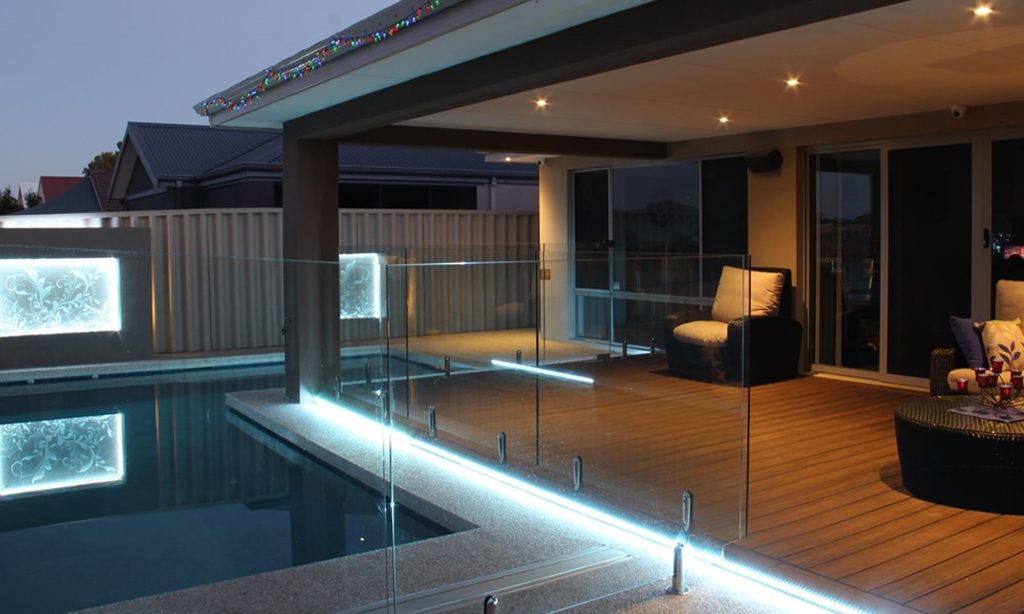
RGB LEDs are programmable, and they can emit light in various colors by combining red, green, and blue hues at different intensities. This makes them ideal for creating dramatic landscape lighting scenarios or setting a mood to match an event theme at your poolside gathering.
On the other hand are white LEDs – warm white ones generate a cozy ambiance akin to traditional incandescent bulbs, while cool white ones project a modernistic look with their crisp light. They’re ideal for those who prefer classic lighting without the playful effects of RGB.
Diving Deeper: IP Ratings, Voltage, and Color Temperatures
When selecting your landscape strip lights, several technical aspects require your attention. First on this list is the ‘IP’ or ‘ingress protection’ rating – a standard that defines how resistant an LED strip is to solids and liquids. For any poolside or underwater application where the strips will be exposed to water splashes if not completely submerged, an IP68-rated waterproof LED strip light would be ideal.
Next up is voltage – an important factor that determines how much energy your LED strips will consume. Most outdoor LED strips operate on 12V or 24V power supplies; higher voltage can cover longer distances without experiencing notorious voltage drop issues.
Color temperature deserves due consideration too since it influences the ambiance created by your landscape lighting profoundly. Measured in Kelvins (K), lower values like 2000-3000K reproduce warm, soothing light, while higher values around 5000-6500K render a cool, daylight-like effect.
The Intricacies of LED Strip Lights for Pools
Now that you’re acquainted with the basics, let’s delve deeper into understanding LED strip lights suitable for pools. Several attributes come into play here – brightness, beam angle, density of LEDs on the strip, and even the color rendering index (CRI). Brightness is dictated by lumen output, where higher values translate to more light.
Beam angle determines how wide an area gets illuminated – wider angles work best for accent or landscape lighting. The density of LEDs per meter on the strip impacts both brightness and power consumption – a balance is crucial here. CRI gauges how accurately colors appear under a light source – a high CRI above 90 guarantees vibrant and true-to-life hues that can make your pool area visually stunning.
Practical Aspects: Compatibility and Control
Beyond technical specifications, practical elements like compatibility with your existing electrical system and control options matter too. The voltage of your chosen LED strips should align with your available power supply to avoid any electrical mishaps. Moreover, control options define how you interact with your landscape strip lights. Options range from simple on/off switches to advanced DMX controllers capable of orchestrating complex light shows using RGB LEDs.
Sustainability Matters: Energy Efficiency
Last but not least comes energy efficiency – an aspect where LEDs shine brightly! With their low power consumption and long lifespans often exceeding 50,000 hours or more depending on usage patterns and environmental conditions, they are the epitome of sustainability in lighting technology without compromising aesthetic appeal or functionality in landscape lighting applications around pools.
Pre-Installation Steps: Preparing for Brilliance
Assessing the Pool Area: Size, Shape, and Location Considerations
Before commencing the installation of LED landscape strip lights around your pool, it’s crucial to assess the area meticulously. First, you ought to consider the size of your pool. The dimensions of the poolside area will determine how many LED strips you will need to illuminate it efficiently.
Additionally, the shape of your swimming pool is another critical consideration. Pools come in various forms – rectangular, L-shaped, kidney, or free-form. Landscape lighting for each of these shapes requires a different approach to ensure optimal lighting and aesthetic appeal.
The location is equally important when installing LED strip lights around pools. If your spot is surrounded by trees or buildings that cast shadows at night or if it’s exposed to harsh weather conditions frequently, you may need a more robust type of landscape lighting.
Choosing the Right LED Strip Light for a Pool: Factors to Consider
Upon understanding your needs from assessing your pool area comes the task of choosing suitable LED strip lights for your specific situation. There are several key factors that should guide you in making this decision.
Firstly, consider waterproof ratings since these landscape strip lights are going to be installed near water; it’s advisable to select those with high ingress protection (IP) ratings. This rating signifies its resistance level against dust and water – an IP68 rating being ideal for this application.
Secondly, take into account color temperature and brightness according to your preference. If you want a calming ambiance with softer light output, go for warmer shades, whereas if you want a vibrant party atmosphere, choose cooler tones instead.
Thirdly, choose between regular white LEDs and RGB LEDs depending on whether you require various color options for creating dynamic lighting effects on occasions or just warm white lighting on a regular basis.
Tools and Materials Needed for Installation
Once you’ve evaluated the area and chosen the ideal LED strip light, it’s time to equip yourself with the necessary tools and materials for installation. These typically include a roll of your chosen LED strip lights, adhesive or mounting brackets for attaching lights to surfaces around your pool, wire connections for linking strips together if necessary, waterproof connectors if installation is underwater or exposed to frequent splashes, an adequate power supply unit that matches your LEDs’ voltage requirements, and a controller if you are installing RGB/RGBW LEDs.
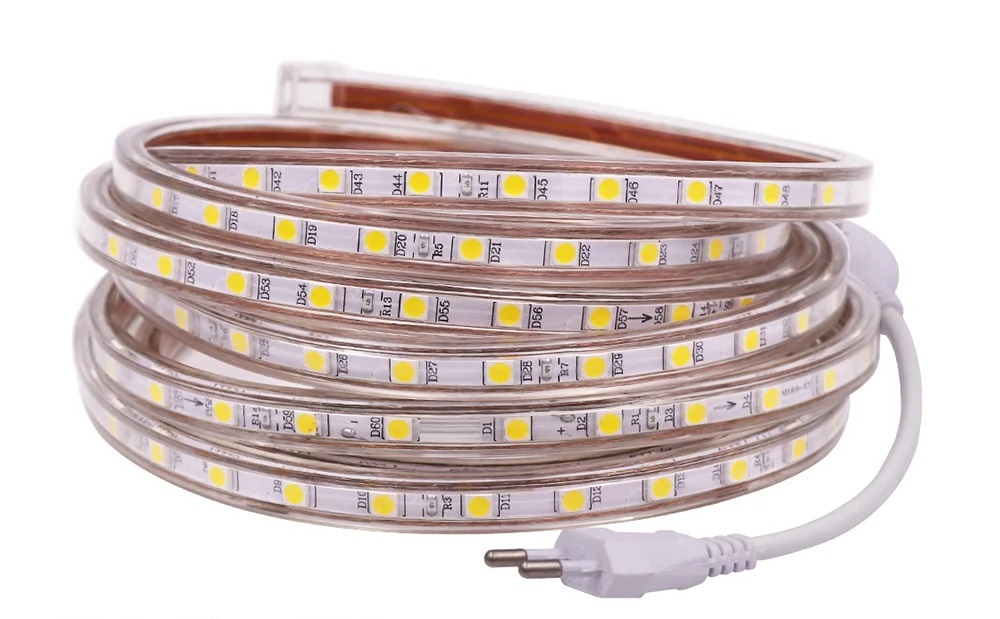
Common tools needed for this task include a tape measure for precise measurements during installation, a pair of scissors or cutting tool for customizing lengths of LED strips at cut points marked on them, and screwdrivers or a drill for attaching mounting brackets. Careful preparation will ensure smooth implementation of your project, leading to an enchanting poolside atmosphere imbued with transformative radiance from your newly installed landscape lighting.
Detailed Installation Guide
Pre-Eminent Safety Precautions
Before you embark on this electrifying adventure, it’s vital to adhere to several key safety precautions. Remember, water and electricity are a lethal combination, and prudence is paramount when working with landscape strip lights.
The pool should be drained or covered properly to prevent any accidental electrical contact with water during the installation process. Ensure all power supplies are switched off before commencing work. This might seem like an obvious step, but it is often overlooked in the excitement of new projects.
Always wear rubber-soled shoes for additional protection against electrical shocks. Do not attempt this project during damp or rainy conditions. Not only does this increase the risk of electrocution, but moisture can also affect the adhesive backing of LED strip lights, jeopardizing their longevity and luminosity.
It is also recommended that you use a ground fault circuit interrupter (GFCI) outlet for additional safety while using electronic devices near pools. Don’t hesitate to hire a professional if you feel uncomfortable or unsure at any point during the installation process – safety always comes first!
Measured Markings: Precision for Perfect Placement
The initial stage of installing your landscape lighting involves meticulously measuring and marking the desired location for your LED strip lights around your pool. It is essential that these measurements are accurate to ensure even light distribution and visually pleasing aesthetics. Use a measuring tape to calculate the periphery of your pool where you intend to install your landscape strip lights.
Be cognizant of corners and curves, which may require additional flexibility from your LED strips or necessitate cutting them into suitable lengths. Once measured, mark these dimensions on your chosen installation surface using chalk or masking tape – something temporary yet visible enough for easy reference throughout this endeavor.
Surface Preparation: Purity Promotes Adherence
The efficacy of LED strip light installation heavily relies on the cleanliness of the surface. Any dirt, dust, or grime can impede the adhesive backing of landscape strip lights from bonding securely with the surface, leading to potential future problems such as strip detachment.
Start by removing any debris from your chosen installation area using a broom or vacuum cleaner. Follow this with a thorough wipe-down using a damp cloth to remove any residual dust. If there is stubborn grime, make use of an alcohol-based cleaning solution to fully sanitize and degrease your surface. Allow sufficient time for the area to dry completely before proceeding to secure maximum adhesion.
Mounting Brackets/Channels: The Framework Foundations
Depending on your pool’s structure and personal preference, you might require mounting brackets or channels for your LED strip lights. These can provide additional support and protection for your lights while also facilitating a streamlined installation process. Begin by aligning these brackets or channels along your previously marked measurements, ensuring they follow the curvature contours of your pool accurately.
Use suitable fasteners such as screws or strong adhesive (depending on material type) to securely affix these frameworks onto their assigned surfaces. Ensure that these are placed at regular intervals and are sturdy enough to hold the weight of LED light strips once installed.
LED Strip Positioning: Adherence for Lighting
With preparations complete, it’s time to position and attach your LED landscape lighting strips. Begin at one end of your marked area, peeling off some protective layer from the adhesive backing, then firmly press it onto either the direct surface or into the mounting channel if used.
It’s suggested that you peel off small sections at a time while gradually pressing down on them along the entire length of the marking rather than exposing the full adhesive backing at once – this prevents potential misalignments as well as contamination from dust particles, which may compromise adhesion strength over time.
For corners or curved areas, ensure not to bend LED strip lights at sharp angles, as it might damage internal wiring circuits. Instead, create small accordion folds or cut and rejoin strips with appropriate connectors for a seamless light display.
Wiring Connections: Powering the Lights
Once the LED strips have been positioned satisfactorily, move on to the critical process of making wiring connections to connect the power supply and controllers. Identify the proper power source requirements for your specific LED lighting strips in terms of voltage and amperage. Connect your power supply wires to the designated terminals on your LED strip lights after passing through a suitable controller if desired for advanced light settings.
Use wire nuts or soldering techniques (only if you are comfortable) to make secure connections, followed by insulating them using electrical tape to prevent potential short circuits and extend durability. Ensure that any exposed wires are neatly concealed or housed within conduit pipes for additional safety, especially when installing near pools where water splashes could occur frequently.
Testing the Set-Up: Final Flourishes
Once everything is connected, it’s time for the paramount moment: testing the setup! First, visually inspect everything once again, confirming secure mounting of landscape strip lights, tidy wiring connections, etc., then proceed cautiously to switch on the power supply. Your LEDs should light up, instantly transforming your pool into an enchanting oasis.
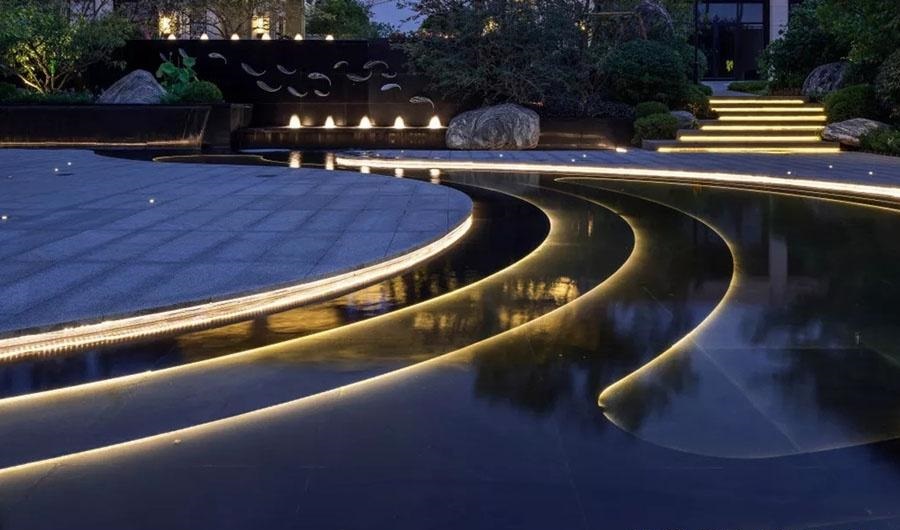
If some sections are not lighting up properly or appear dimmer than others, check those specific wiring connections and ensure that LED strips are properly attached in these areas. Take a step back and marvel at how these radiant undulations of light redefine your pool’s aesthetics while providing functional visibility, thus encapsulating dual aspects of opulence in exterior space illumination.
Advanced Installation Techniques
Adapting to Special Scenarios: Underwater Lighting and Landscape Integration
The installation of LED strip lights around pools becomes a tad more intricate when you venture into special scenarios like underwater lighting or integrating with existing landscape lighting. Both these settings require a meticulous approach, but the end result is worth the effort.
Underwater lighting is an impressive way to amplify the aesthetic appeal of your pool. For this, it’s crucial to select marine-grade LED strip lights that come with the highest IP rating (IP68), ensuring they are fully waterproof. Proper sealing of both ends of the strip light after cutting is also important to maintain this waterproof rating. Additionally, using a silicone-filled channel can offer an extra layer of protection for your LED strip lights.
Connecting your pool’s lighting system with existing landscape strip lights requires careful planning and execution. You may need to ensure that both systems use compatible voltage and have similar IP ratings if they are outdoor rated.
Furthermore, synchronizing your landscape lighting with pool lighting can create a harmonious nighttime ambiance in your backyard. An option for seamlessly integrating these two systems could involve using controllers that allow grouping multiple zones together so that they can be controlled simultaneously or independently as needed.
Such controllers often connect via Wi-Fi or RF signals, offering remote control over several zones in your landscape. Installing LED lights underwater or integrating them with landscape lighting requires attention to detail and careful selection of compatible devices but allows for enhanced visual appeal and overall functionality.
Leveraging Smart Controls for RGB/RGBW LEDs
Smart controls open up a world of possibilities when it comes to dynamic light effects around pools. They bring out the true potential of RGB (red-green-blue) and RGBW (red-green-blue-white) LEDs, making your poolside truly stand out.
With smart controllers and compatible smartphone apps, you can customize the color output of your LEDs. This means you can set the mood for any occasion. Whether it’s a calm blue ambiance for a serene swim or a vibrant multicolor setup for a lively pool party, modifying your landscape lighting has never been so easy.
Smart controls also empower you with advanced features like scheduling and automation. With these features, you can program your LED strip lights to turn on at sunset or switch off at sunrise automatically. Some systems even sync with local weather services to illuminate in response to changing weather conditions.
To take full advantage of RGB/RGBW LEDs’ potential, consider integrating them with existing home automation platforms like Amazon Alexa or Google Home. Imagine being able to change the color scheme of your poolside lighting just by voice commands! Smart controls for RGB/RGBW LEDs are powerful tools that transform poolside lighting from ordinary landscape lighting into an immersive light show tailored to your preferences.
Special Tips and Tricks: Achieving Brilliance with Landscape Strip Lights
In the realm of landscape lighting, LED strip lights around pools can dramatically enhance the ambiance. However, to truly unlock their potential and ensure their longevity, there are specific tips and tricks to consider. Foremost among these is considering the use of dimmers.
Dimmers allow you to modulate the brightness of your LED strip lights according to your preferences or the occasion. This not only adds a dynamic element to your landscape lighting but can also extend the lifespan of your LEDs by reducing power consumption during less busy pool hours.
Another valuable tip is incorporating motion sensors with your LED strip lights. Having lights that automatically turn on upon detecting movement can provide added safety for nighttime swimming while conserving energy when the pool area is not in use.
Additionally, consider using color-changing LEDs for a more customizable setup. Through smart controllers or dedicated apps, you can alter the shade and intensity of your landscape strip lights, adding an enchanting touch to special occasions or parties.
It’s wise to install your LED strip lights in areas where they won’t be subjected to constant foot traffic or splashes from pool water. This will help prevent damage and unnecessary wear on your LED setup.
Maintenance Tips for Long-Lasting LEDs Around Pools: Preserving Poolside Luminescence
LEDs are renowned for their durability and longevity; nevertheless, maintenance plays a pivotal role in ensuring that they last as long as possible – especially when installed around pools where they’re exposed to moisture and chlorine.
Firstly, regular cleaning is vital; dust and dirt particles can accumulate over time on any outdoor light fixtures, including LED strips. This buildup may block light output and cause overheating, which could degrade chipsets over time.
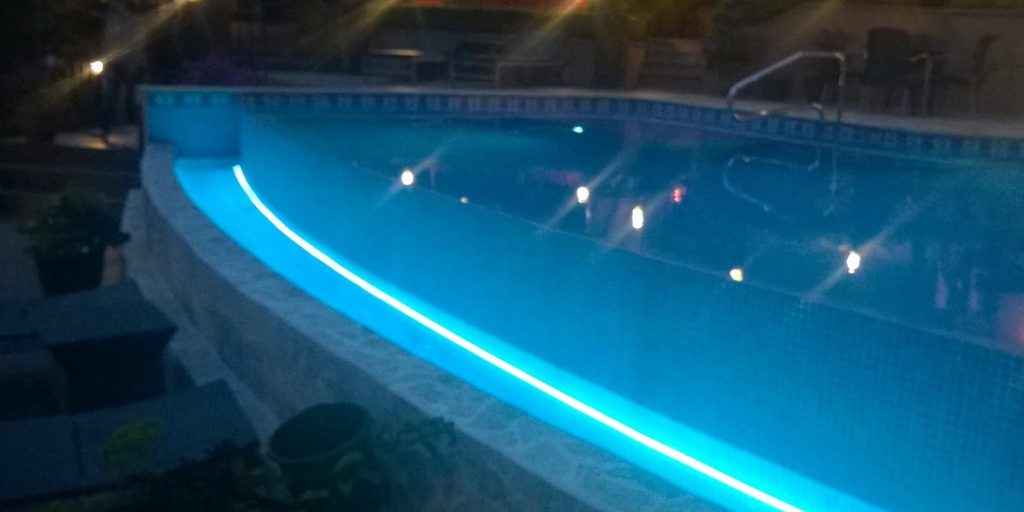
Secondly, periodically inspect all connections for any signs of corrosion due to moisture exposure – this includes connectors, power supplies, and controllers. If you discover any corrosion, replace the affected parts immediately to prevent further damage.
Furthermore, if your pool area is regularly subjected to harsh weather conditions like heavy rains or extreme temperatures, consider investing in protective covers for your strip lights. These covers will provide an additional layer of protection against the elements and ensure that your landscape lighting remains functional and vibrant.
Moreover, make sure to check your LED strip lights for any dimming or flickering. These could be signs of impending failure and might necessitate a replacement. It’s worth mentioning that even LEDs have a lifespan. When you notice that a significant number of LEDs have dimmed or failed on a single strip, it may be time to replace the entire strip.
Troubleshooting Common Issues with LED Strip Light Installation: Navigating Luminary Dilemmas
Even with meticulous installation procedures and maintenance routines, you may encounter issues with your LED strip lights over time. Here’s how to troubleshoot some common problems:
If your landscape strip lights aren’t lighting up at all after installation, check all connections along with the power supply first. Ensure everything is correctly linked and receiving power; often times loose connections are the root cause.
For flickering strips – this usually suggests an issue with voltage drop over long runs of strips or incompatible power supplies/controllers. Ensure you’re using components rated for use with each other; consult manufacturer guidelines if necessary.
In instances where only part of an LED strip lights up, this could be due to damaged sections from excess bending during installation or water ingress in non-waterproof strips. Replacing the affected part of the strip should rectify this issue. Should individual LEDs fail while others remain lit, this typically points towards faulty LEDs within the strip itself, which would require replacing that section of LED strips.
Experiencing irregular color changes on RGB/RGBW strips may indicate problems with color calibration or controller issues; resetting controller settings can usually solve this predicament. Remember that troubleshooting can sometimes involve a process of elimination. Don’t be disheartened if the first solution you try doesn’t work; persistence is key in resolving most LED strip light issues.
Conclusion: How To Install LED Strip Lights Around Pools?
The Luminous Advantage of LED Strip Lights Around Pools
The installation of landscape strip lights around your pool not only enhances the aesthetic appeal of your backyard but also serves a multitude of practical purposes as well. These lights, with their ethereal glow, breathe life into the nocturnal landscape in a motion that is both enthralling and comforting.
The ambient lighting provides a blanket of security, highlighting potential trip hazards and making swimming safer during the darker hours. But beyond these immediate advantages, LED strip lights installed around pools are an investment.
They consume significantly less energy compared to traditional incandescent or halogen bulbs, which means reduced utility bills over time. Moreover, they have an impressive lifespan – lasting for tens of thousands of hours before requiring replacement.
Illuminate Your Nightscape: The Landscape Lighting Revolution
Landscape lighting has been transformed by the advent of LED technology. Strips of tiny diodes emitting crisp and vivid light now allow homeowners to accentuate architectural features, highlight plantings, and create dramatic effects in water features, including pools. The versatility and durability offered by these modern landscape strip lights are peerless.
These fixtures can withstand diverse weather conditions, from scorching heat to freezing snow, without losing their brilliance or functionality. Reiterate that LEDs are also more environmentally friendly as they do not contain hazardous materials like mercury or emit harmful UV radiation.
Encouragement for DIY Enthusiasts
Become the Architect of Your Poolside Ambiance: A Challenge to DIY Enthusiasts
For those who revel in creating their own spaces and personalizing each corner of their homes, installing LED strip lights around pools is a highly rewarding project. It allows you ample room for creativity while also introducing you to new skills such as basic electric circuitry and practical problem-solving. There is a certain satisfaction that comes from seeing your pool glow with lights installed by your own hand.
This is not a task reserved for the technically advanced or professional landscape lighting companies. With careful planning, the right tools and materials, and patience, any DIY enthusiast can successfully complete this project.
Unleashing Your Potential: Embrace the DIY Spirit
Don’t be deterred if this seems like an overwhelming task at first glance. Remember, every expert was once a beginner. Allow yourself to learn, to ask questions, and to make mistakes – it’s part of the process. Take pride in your ability to enhance and transform your landscape lighting on your own terms. Let this be a testament to what you can achieve when you combine determination with creativity.
The journey towards installing LED strip lights around your pool may indeed be filled with challenges, but remember that each hurdle is an opportunity for growth. There are abundant resources available online, including detailed guides, video tutorials, and forums where you can ask for advice from those who have already accomplished this task.
So go ahead – embrace the DIY spirit! Let it inspire you to create a stunningly lit poolside haven that mirrors not just home aesthetics but also bears testimony to your perseverance and skill.
Appendix
An Abecedary of Lighting Terms
Encountering technical jargon can often be a stumbling block in comprehending guidelines, especially when it concerns a niche subject like landscape strip lights or landscape lighting. In light of this, an appendix is provided to clarify these terms and facilitate a smoother understanding.
Landscape Strip Lights
Landscape strip lights refer to the flexible light-emitting diode (LED) tape or strips that are often used to illuminate outdoor settings such as gardens, patios, and, in this context, swimming pools. These LED strips are specifically designed for outdoor use; hence, they come with waterproof capabilities and resistance towards external elements like heat, cold, and dust.
Landscape Lighting
Landscape lighting signifies a significant concept within the sphere of outdoor aesthetics. It involves the strategic placement and usage of light sources in your exterior environment – be it gardens, yards, or pools – to enhance its appeal after dusk. It plays a dual role – one that combines safety by illuminating dark areas and highlighting beauty by showcasing certain features.
IP Rating
Ingress protection rating, or IP rating, is an international standard that defines the level of sealing effectiveness of electrical enclosures against intrusion from foreign bodies (dust, dirt, etc.) and moisture. When we talk about IP rating in context with LED strip lights around pools, it essentially means how protected the LEDs are from water ingress.
Glossary of Terms
LEDs (Light Emitting Diodes)
LEDs are semiconductor devices that produce visible light when an electrical current passes through them. They are energy-efficient light sources widely used for various purposes – from small electronics to large area illumination – including landscape strip lights around pools.
RGB/RGBW LEDs
RGB stands for red, green, and blue – the primary colors of light. In lighting terminology, RGB LEDs are those that can generate a wide spectrum of colors by combining different intensities of these three primary ones. When a “W” is added (RGBW), it means that an additional white LED is incorporated to create a broader range of more pastel colors.
Mounting Brackets
As the name suggests, mounting brackets are used to support and secure the LED strip lights in place. They ensure that your landscape lighting setup remains intact, regardless of weather conditions or any disturbance.
Voltage
In simple terms, voltage is the electrical force that drives electric current between two points. It’s crucial to make sure your LED strip lights match with your power supply’s voltage to avoid any potential damage or malfunctions.
Color Temperature
Color temperature refers to the warmth or coolness of light emitted from a light source. It’s measured in Kelvin (K). Lower temperatures (2000K – 3000K) produce warm colors like reds and yellows; mid-range temperatures (3000K – 4500K) generate cool whites; higher temperatures (>4500K) create bright blues.
You may also be interested in the following posts: