
A Glimpse into the Shadows: The Mystery of the Went Out Lights
As the winter frost settles and the joyful melodies of seasonal songs fill the air, one sight that is ubiquitous across neighborhoods is that of vibrant landscape string lights bravely warding off the darkness. They paint a picture of warmth, celebration, and merriment.
However, there’s a common phenomenon that often puzzles many – why does an entire string of lights go out all at once? This scenario often plunges your meticulously adorned house into unexpected gloominess.
This conundrum isn’t restricted to holiday decorations alone – it also baffles owners of landscape lighting setups where a single malfunctioning light can potentially darken an entire series. Considering how widely these charming networks of miniature luminaries are used in different settings, understanding this occurrence becomes crucial.
The Enlightened Relevance
The importance and relevance lie in more than just restoring your festive or landscape lighting to its full glory; it extends further to encompass aspects like saving energy, preventing potential electrical hazards, and improving longevity.
Primarily, when you’re faced with a whole string going out, you’re left with two options – replacing the entire unit or attempting to identify and fix the issue. If you choose replacement without exploring possible fixes first, it can lead to unnecessary expense as well as wastage.
By understanding what causes this issue and how to address it effectively, you can save both money and resources. Further on safety parameters, while most modern string lights come with built-in fuses and shunts to prevent electrical mishaps due to a burnt-out bulb or overloaded circuitry, they are not foolproof systems.
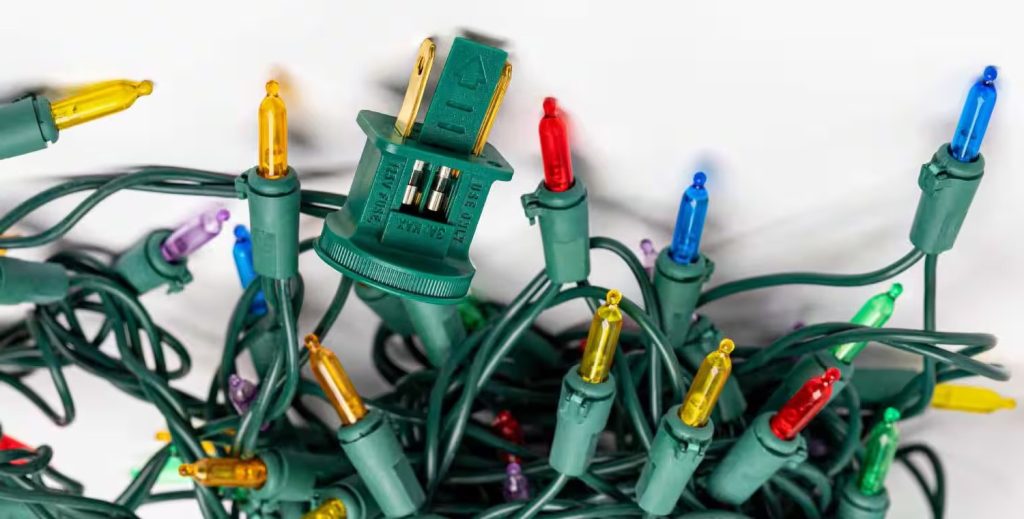
Understanding how these work will equip you better in case things go awry. When we talk about longevity, having knowledge about why strings fail will help in making informed choices while purchasing new units as well as maintaining them effectively.
For instance, landscape string lights have to endure varying weather conditions and physical damage from animals or landscaping activities. Awareness about their intricate design and functioning can help in choosing more robust models and implementing protective measures.
The learning of why an entire string of lights goes out doesn’t just satiate curiosity but also empowers you to manage your decorative lighting setups efficiently. So let’s embark on this enlightening journey towards unraveling this peculiar phenomenon.
Background Information: Highlighting the Past and Present of String Lights
History and Evolution of String Lights
The Emergence of Early Incandescent String Lights
The evolution of string lights began with the advent of incandescent bulbs in the late 19th century. Devised by Sir Hiram Maxim, these were a revolutionary improvement over gas lamps, providing safer, more dependable light. Equipped with filamentary paths, these bulbs amplified electricity into radiant heat and light.
However, when one bulb burnt out in this series circuit, it would interrupt the entire electrical flow, causing the whole string to extinguish. This was often a common sight during early Christmas celebrations or in landscape lighting, where such strings were profusely used.
Towards the mid-20th century, miniature incandescent bulbs entered into mainstream use for decorative purposes. Improvements were made to ensure that if one bulb burnt out or broke off from its socket in a string circuit setup – akin to landscape string lights – the rest would continue to glow.
The Advent of LED String Lights
With technology’s relentless march forward arrived light-emitting diodes (LEDs) in the 1960s. Offering more energy efficiency and longevity than their incandescent counterparts, LED bulbs have gradually become a preferred choice for both indoor and outdoor lighting designs, including landscape lighting.
LED landscape string lights are not only resilient against individual bulb failures but also offer more vibrant color options due to their unique semiconductor properties that generate diverse visible light spectra. This technological transition has positively influenced not just our festive decorations but also everyday lighting needs such as pathway or patio lighting.
Uncovering Basic Components: The Building Blocks of String Lights
Bulbs: The Light Source
In any type of string lighting – be it incandescent or LED – the bulb stands as the primary source of light. The incandescent bulb operates by directing an electric current through a thin filament, usually tungsten, causing it to glow with heat.
On the other hand, an LED bulb uses a semiconductor diode that emits light when charged with electricity. The color of light emitted is determined by the type of semiconductor material used. In terms of energy efficiency and durability, LED bulbs outshine their incandescent counterparts, making them a favorite for landscape string lights.
The Role of Wiring
Wiring plays a critical role in providing an unbroken path for electrical currents to flow from one bulb to another within string lights. Any disruption in this network – through fraying or snapping – can lead to partial or complete malfunctioning. Considering the susceptibility to external conditions like weather or physical damage, especially in outdoor settings such as landscape lighting, high-quality and durable wiring is imperative for reliable functioning.
Connectors: Keeping Everything Linked
The connectors form the backbone of any string light setup by firmly holding each bulb in place and ensuring seamless connection between wires. These components also act as protectors against loose contacts, which can lead to flickering lights and potential short-circuit risks.
With increasingly sophisticated designs today – including waterproof ones for landscape lighting – a failure at one connector does not necessarily cause an entire blackout anymore; instead, it reduces just the brightness proportionate to the number of non-functioning connectors in a series.
Understanding the ‘Whole String Out’ Phenomenon
An Insight into Series and Parallel Circuits in String Lights
In our quest to comprehend why a whole string of lights goes out, it’s integral to grasp the difference between series and parallel circuits in string lights.
A series circuit is akin to a daisy chain where each bulb is connected sequentially, one after the other. The electricity navigates through each bulb in order before completing the circuit. Consequently, if one light goes out, the entire circuit becomes open and ceases operation, resulting in the entire string going dark.
On the contrary, parallel circuits operate on a different principle. Herein, multiple paths are available for electricity to flow through. Even if one bulb burns out or gets removed, it doesn’t affect the remaining bulbs as they still have their independent path for current flow. Thusly, an outage of one does not prompt an entire system failure.
The Impact of Circuitry on Functionality
The series circuit design was commonly used in early incandescent landscape string lights due to its simplicity and affordability but came with its notorious whole-string-out problem whenever a single bulb failed or was removed. However, modern landscape lighting mostly utilizes parallel circuits that ensure continued operation even if individual bulbs fail.
The Role of Shunts in Modern String Lights
In many recent designs of landscape string lights employing series circuits have incorporated shunt wires – metallic bypasses that get activated when a bulb burns out. These shunts form an alternative path for electricity around the burnt-out bulb, thereby preventing a break in the circuit.
Unveiling Common Reasons Why Whole Strings Go Out
Burnt-Out Bulbs: The Silent Circuit Breakers
Burnt-out bulbs are often guilty culprits behind an entire set of landscape lighting going out. In a series circuit, a burnt-out bulb creates an open circuit, causing the entire string to go dark. Identifying and replacing such bulbs promptly can restore the string lights to their former glory.
Wire Damage: An Undermining Factor
Many factors can result in wire damage, including weather conditions, animals, or even unintentional mishandling during installation or removal. Damaged wires disrupt the electrical pathways within your landscape lighting system and can lead to whole strings going out. Regular inspection for any visible damage or frayed wires is crucial for maintaining functionality.
Fuse Issues: Hidden Hindrances
Fuses are critical components of your landscape string lights; they protect from potential overcurrent situations, which could cause bulb failure or even more catastrophic results. A blown fuse will prevent electricity from reaching bulbs, thus turning off the whole string.
Poor Quality or Defective Products: The Unfortunate Reality
Sometimes, despite our best efforts and care, whole strings of lights might fail due to inherent product quality issues or defects. This reality underscores the importance of purchasing high-quality landscape lighting from reputable manufacturers.
Troubleshooting & Solutions to Fix a Whole String Outage
A Guided Journey through Troubleshooting
When faced with a non-functioning string light set, start by checking for any obvious signs of damage followed by testing each bulb individually in a known working socket.
Safety Matters: Handling Electrical Components with Care
Always ensure safety first when handling electrical components; unplug before inspecting and wear appropriate protective gear if necessary.
Seeking Professional Help: When to Call in the Experts?
If after all troubleshooting efforts are exhausted and the problem still persists, it’s time to seek professional help; an electrician specializing in landscape lighting can diagnose and resolve intricate issues.
Preventive Measures and Maintenance Tips for Long-Lasting String Lights
To enhance the lifespan of your landscape string lights, regular inspection and prompt replacement of burnt-out bulbs or damaged parts are essential. Adhering to manufacturer-recommended usage guidelines can also go a long way in preventing whole string outages. Understanding why an entire string of landscape lights goes out requires a rudimentary understanding of their underlying circuit designs and component functionalities.
Conclusion: Why Does the Whole String of Lights Go Out?
Although encountering such a situation can be frustrating, with cautious troubleshooting and adherence to proper maintenance practices, you’ll be able to restore the luminous nighttime beauty of your outdoor setting in no time. The science behind these twinkling marvels notwithstanding, they remain symbolic emblems of joy and warmth that envelop our homes during festive times or add an ethereal charm to everyday nights.
You may also be interested in the following posts: