
An Easy Guide to Hanging Outdoor String Lights over Pools
Lighting the Night: The Power of Outdoor Pool Lighting
Outdoor string lights, often referred to as landscape string lights, have undergone a resurgence in recent decades, with homeowners and property managers recognizing their aesthetic and practical benefits. As dusk falls and the world is bathed in soft twilight, these inviting twinkles of light create an ambiance that is both enticing and magical.
Suspended around a pool or draped across a pool enclosure, they not only provide lighting but also transform the space into a cozy extension of your indoor living area. The allure of landscape string lighting over swimming pools lies not just in its enchanting visual appeal but also in its practicality.
For those who enjoy nighttime swimming, these lights provide sufficient visibility to ensure safety while maintaining an intimate atmosphere. They light up walkways around pool areas preventing accidental slips or falls while offering a warm glow that’s perfect for evening get-togethers and parties.
More Than Just Aesthetic: Safety Advantages of Outdoor Pool Lighting
While the aesthetic appeal of landscape string lights might be what first catches your eye, their importance in maintaining safety around pool areas cannot be understated. By adequately lighting your outdoor space, you decrease the risk of accidents like trips or falls that could happen due to low visibility. Moreover, when hung directly over pools or around pool enclosures, they allow for safer late-night swims by increasing underwater visibility.
In addition to personal safety enhancements provided by these luminous guardians of the night, outdoor lighting can also act as a deterrent against potential intruders. A well-lit backyard often discourages unwanted visitors from stepping onto your property uninvited, thus providing you with an additional layer of security.
A Matter of Importance: Proper Installation of Landscape String Lights
Getting swept away by the charm and benefits offered by landscape lighting is easy; however, one must not overlook the importance of proper installation. Hanging string lights over a pool area might seem like a straightforward task, but it entails more than just stringing lights on supports.

The process requires careful planning, safety considerations, and an understanding of how various elements, such as windy conditions or weather changes, could affect the setup. Ensuring that your landscape lighting is installed appropriately not only safeguards its longevity but also significantly reduces potential hazards.
Incorrectly hung string lights can loosen or lead to electrical faults, presenting both safety risks and functional issues. So let us embark on this journey of transforming your pool area into a spectacular beacon of light, beauty, and safety under the night sky.
Understanding Different Types of Outdoor String Lights: A Luminary Lexicon
Choosing the perfect outdoor string lights to illuminate your pool enclosure requires an understanding of the different types available. There are three primary variants, each with its own unique features and advantages: incandescent lights, LED lights, and solar-powered lights. Let’s explore each in detail.
The Classic Glow: Incandescent Lights
Incandescent lights emanate a warm and inviting glow that has graced many landscapes for over a century. Their filament-based design emits a luminous radiance, which can transform any vicinity into an enchanting paradise.
They are available in a variety of color temperatures, offering both soft whites reminiscent of candlelight to brighter hues suitable for vivid lighting around pool enclosures. However, every type of light comes with its own set of pros and cons.
Incandescent bulbs are inexpensive and readily available; their warm light can create an appealing ambiance around pools at night. But they are not without flaws; incandescent bulbs consume more energy than other types and have a shorter lifespan – often needing replacing after 1,000 hours of use.
Energy-Efficient Brilliance: LED Lights
Light-emitting diode landscape string lights offer modern efficiency coupled with longevity. These lights consist of small semiconductors that emit light when an electrical current passes through them. Unlike their incandescent counterparts, they do not rely on heat to produce light, which drastically reduces their energy consumption.
LEDs shine brightly in the pros column; they boast impressive longevity, living up to 50,000 hours or more while consuming significantly less energy than incandescents – making them eco-friendly options for your landscape lighting needs around your pool enclosure.
The initial cost may be higher than other lighting options, but you recoup this expense over time due to their durability and energy efficiency. However, they produce a cooler light, which may not be as cozy or inviting as the warm glow of incandescent bulbs.
Harnessing Nature’s Bounty: Solar-Powered Lights
Solar-powered lights provide an innovative solution to landscape lighting by harnessing the power of the Sun. These lights consist of photovoltaic cells that convert sunlight into electrical energy, stored in rechargeable batteries for use when dusk falls.
As far as advantages go, solar-powered string lights are the epitome of sustainability. They require no external electricity – a boon to both your utility bill and Mother Earth. Additional benefits include ease of installation with no wiring needed and automatic operation at sunset via built-in light sensors.
They perform exceptionally well around pool enclosures where ample sunlight is regularly available during daylight hours. However, their brightness and operation duration can be limited on overcast days or in areas with short daylight hours during certain periods of the year.
Evaluating the Pool Area for Light Installation: A Roadmap to Radiance
Before embarking on the task of installing landscape string lights, it is imperative to undertake a comprehensive evaluation of the pool area. The size and shape of your pool will greatly influence the arrangement and quantity of lights required. A larger, irregularly shaped pool may necessitate multiple strands of lights, while a smaller, more uniformly shaped pool may only require one strand.
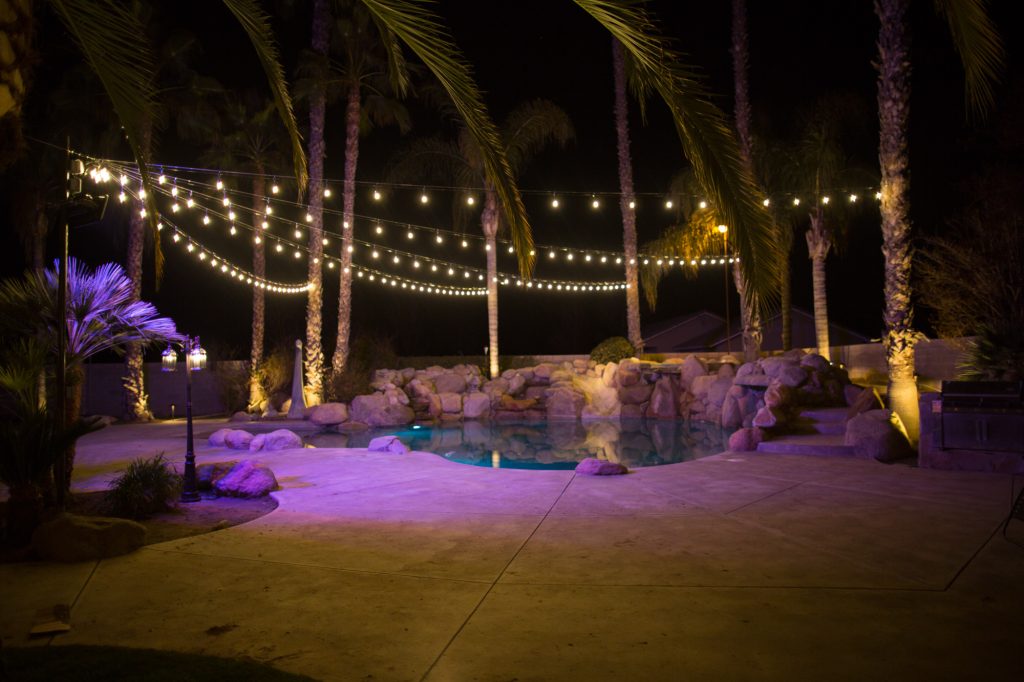
The presence and position of surrounding structures are also crucial factors in your evaluation. Trees, gazebos, or pergolas can provide natural points for affixing landscape lighting. Perhaps you have an around-pool enclosure that could serve as a support structure for lights or create an enchanting caged effect that enhances aesthetics and safety alike.
If no such structures exist within your vicinity, freestanding poles might be necessary to hold up your landscape string lights. Furthermore, consider whether you want your lighting to simply encompass the perimeter of the pool or if you desire a crisscross pattern over the water’s surface itself. This decision will affect both your choice in lighting type and the installation process.
Selecting String Lights: Lighting Choices
Bolstered by your evaluation results, selecting suitable landscape string lights becomes an effortless task. You must align this selection with not only aesthetic preferences but also practical considerations such as durability against outdoor elements and ease of installation.
Incandescent bulbs offer warm lighting with a pleasingly nostalgic vibe; however, they consume more power and are less durable than other options available nowadays.
LED string lights are energy-efficient and durable but might lack in terms of radiance when compared to their incandescent counterparts. Solar-powered outdoor string lights eliminate reliance on electricity entirely, but their performance is predicated on sunny weather for the recharge.
For pools under constant shade or in areas prone to cloudy weather, solar-powered lights may not be the best choice. The ambiance you wish to create is also pivotal in your selection.
For a festive, playful atmosphere, colored LED lights are an excellent way to infuse vibrancy into your pool area. Meanwhile, warm white incandescent bulbs can evoke a more relaxed and romantic ambiance.
Purchasing Tools & Equipment: Preparing for Installation
With your landscape string lights selected, it’s time to procure the necessary tools and equipment for installation. A basic toolkit should suffice for most installations – this includes a hammer, screwdriver set, pliers, and potentially a ladder if your chosen points of attachment are high up.
If you’re installing freestanding poles around pool enclosures or other areas without existing support structures, you’ll need additional materials like concrete or sturdy mounts and hardware to ensure they remain secure.
In the case that any wiring needs adjusting or extending – fairly common when working with electricity outdoors – it may be prudent to have wire cutters and electrical tape on hand as well.
Always remember safety first. It is recommended that you keep a fire extinguisher nearby when dealing with electrical installations of any kind, especially near water bodies like swimming pools.
Safety Considerations Before Installing Outdoor String Lights over Pools
Sparkling Safety: Electrical Tips and Insights
Electricity, as we are all aware, is not a force to be trifled with. When installing landscape string lights around a pool, it is absolutely paramount to prioritize safety. Always ensure that your hands are dry before handling any electrical equipment. Also remember to unplug or switch off the lights when replacing bulbs or doing maintenance work.
If you have an existing outdoor outlet, make sure it includes a ground fault circuit interrupter (GFCI) feature to prevent electrical shocks. Moreover, consider hiring an electrician if the power source seems too far from your desired light layout or if there isn’t an accessible outdoor outlet nearby. This will ensure that the setup for your landscape lighting is safe and up to code.
Another noteworthy point is the use of extension cords for powering landscape string lights around pools. Extension cords should ideally be avoided, but if necessary, only weather-resistant and heavy-duty ones must be used, complying with the outdoor rating criteria.
The Importance of Weather-Proofing: Ensuring Resilient Lighting
Weather conditions pose another consideration when setting up string lights around a pool enclosure. Opting for waterproof or at least weather-resistant light fixtures can save you from unnecessary hassle and potential damage costs in the long run.
Waterproof ratings vary, but look for fixtures rated IP65 or higher – this means they’re dust-tight and protected against jets of water from any direction – perfect for surviving rainy seasons and more than sufficient for installations around pools.
Furthermore, protection from sun damage should also be considered, especially in regions with high UV exposure levels, which can degrade housing materials over time, causing them to crack and fail eventually.
Legal Luminance: Understanding Local Regulations Around Pool Lighting
Before embarking on setting up landscape lighting around your pool enclosure, be sure to familiarize yourself with any local laws or Homeowners Association (HOA) rules that pertain to outdoor lighting. This information can generally be found on your local government or HOA website.
Some common stipulations may relate to light pollution, where excessive or misdirected artificial light is prohibited due to its potential negative impact on the environment. Moreover, there might be restrictions regarding the color or brightness of lights used around pools. Certain areas might also require permits for setting up outdoor string lights.
Hence, it’s important to ensure compliance with all these regulations before initiating the project. By keeping in mind these safety considerations and regulatory frameworks, you can create a well-lit pool area that’s not just beautiful but also safe and compliant with all local requirements.
Step-by-Step Guide to Installing Outdoor String Lights over Pools
Planning the Layout: The Blueprint for Beauty
The key to achieving a stunning spectacle of landscape lighting begins with meticulous planning. First, you must determine where your string of lights will begin and end. This decision is primarily dictated by the location of your power source, which ideally should be close to the starting point of your light strand.
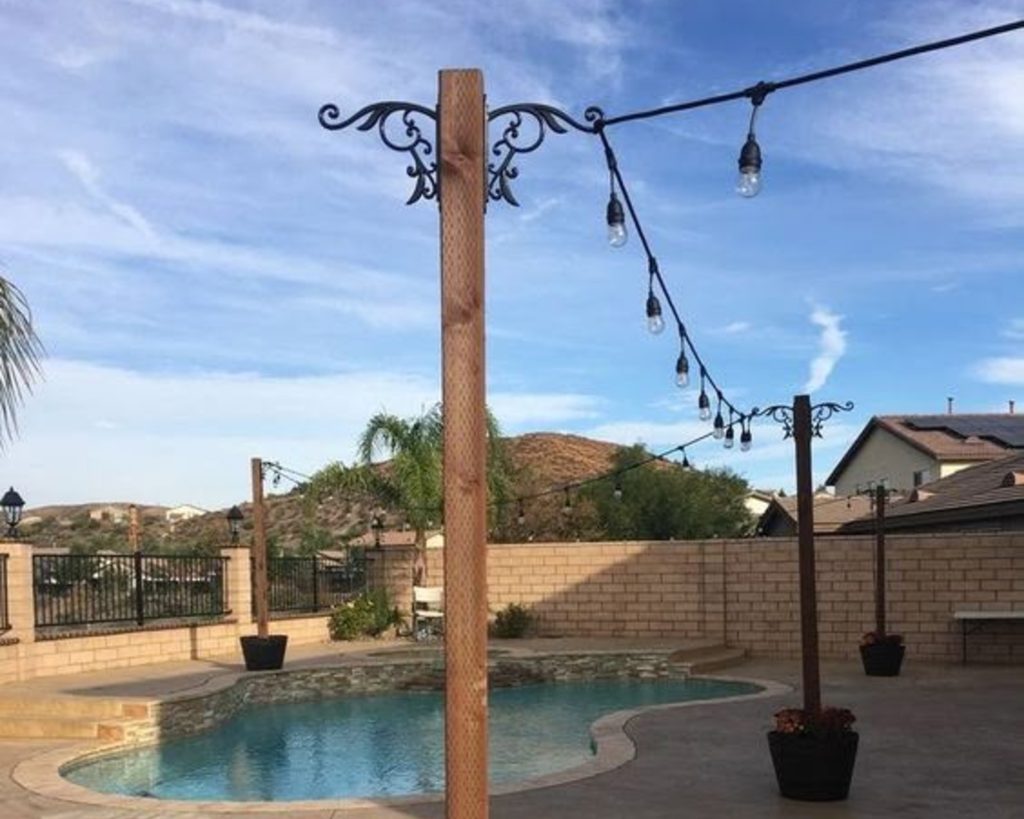
The path in between should embellish the most visually appealing aspects of your pool enclosure. The height at which you hang your lights can significantly affect the ambiance generated by your lighting setup. Hanging them too high might diminish their impact on immediate surroundings, while hanging them too low may obstruct pool users’ sightlines or movements.
Striking an optimal balance is pivotal; consider a height that accentuates both practicality and aesthetics. Moreover, as you plan around pool enclosures and landscapes, remember that safety should always be paramount. Never compromise on safety for visual appeal; both can coexist harmoniously with careful planning.
Installing Support Structures: Securely Anchoring the Ambiance
After outlining your vision, it’s time to bring it to life. This involves installing support structures or anchors for securely hanging your landscape string lights.
Before proceeding with this step, ensure that you have all necessary equipment for installation and familiarize yourself with their proper usage. With safety gloves on and power tools in hand, commence installing poles or hooks at designated spots according to your layout plan.
It’s crucial that these supports are sturdy enough to bear the weight of the string lights over time without yielding under any external pressure from elements like wind or rain. You might need assistance while setting up these structures, as precision is key here – inaccuracies could lead to unevenly hung lights or even potential hazards later on.
Stringing the Lights: The Artful Balance between Taut and Loose
Upon finishing the setup of support structures, you can now begin to string your lights. As you proceed with this task, it’s essential to ensure that the lights are taut but not overly tight. Over-tightening can induce unnecessary strain on the bulbs and wires, potentially shortening their lifespan or causing damage.
When dealing with excess wire or gaps in coverage around pool enclosures, it might be tempting to cluster these extra lengths together or stretch them out forcibly. Instead, consider spacing out your lights a bit more evenly along the support structure or adding an additional pole if permissible within your layout plan.
Connecting to Power: Safely Energizing Your Landscape Lighting
Then comes the time for the true magic: connecting your landscape string lights to their power source. Given that electricity is involved, this step requires particular caution and adherence to safety guidelines. Always turn off any connected power switches while setting up your lighting system.
Before plugging in your fixtures, double-check if all connections are secure and that wires are not frayed or exposed. If using extension cords outdoors, ensure they’re specifically designed for outdoor use and have a grounding feature for added safety; remember to never run cords through water when placing them around pool areas.
Conclusion: How to Hang Outdoor String Lights over Pools?
Successfully installing outdoor string lights over pools can be an intricate process that demands careful planning, precise execution, and keen attention to safety details. However, once complete, you will have transformed your ordinary pool enclosure into a magical nightly escape drenched in warm hues of twinkling light. It’s indeed an achievement worth every drop of effort spent to brighten up those bewitching summer evenings ahead!
You may also be interested in the following posts: