
Revealing the Truth: Are All String Lights Dimmable?
The Luminous World of String Lights
String lights, often seen twinkling in the midst of outdoor gatherings and festive celebrations, have been a beloved part of our visual landscape for many years. They drape romantically over garden patios, dance around dining halls, and are often the chosen luminaries for seasonal decorations. These ensembles of small bulbs connected by a flexible wire offer an appealing glow that adds enchantment to any setting.
Landscape string lights, in particular, have been an increasingly popular choice among homeowners for their ability to accentuate the aesthetic appeal of their outdoor spaces. Despite their seemingly simple design, string lights are more than just a series of bulbs on a wire. They are available in a vast array of styles and configurations, from vintage Edison-style bulbs to colorful fairy versions, each offering its own unique charm.
The advancement in lighting technology has also led to the introduction of LED and solar-powered variants that lend themselves well to energy efficiency and durability. Though they serve as aesthetically pleasing decor elements on their own, highlighting architectural features or evoking warmth in wintry landscapes, they can also complement other forms of landscape lighting by providing ambient or accent lighting depending on their brightness levels.
The Luminary Allure: Embracing Dimmable Lights
The beauty and utility associated with dimmable lights cannot be overstated. In essence, dimmable light sources provide users with the ability to control the light intensity emitted from the bulb or set of bulbs – enabling a transition from bright task lighting to a soft ambient glow at the slide or turn of a switch.
This ability uncovers myriad new possibilities for lighting design across both residential and commercial environments. As we dive deeper into this modern age defined by customization and personalization – where comfort is no longer considered luxury but rather necessity – dimmable lights have become increasingly valued for their flexibility.
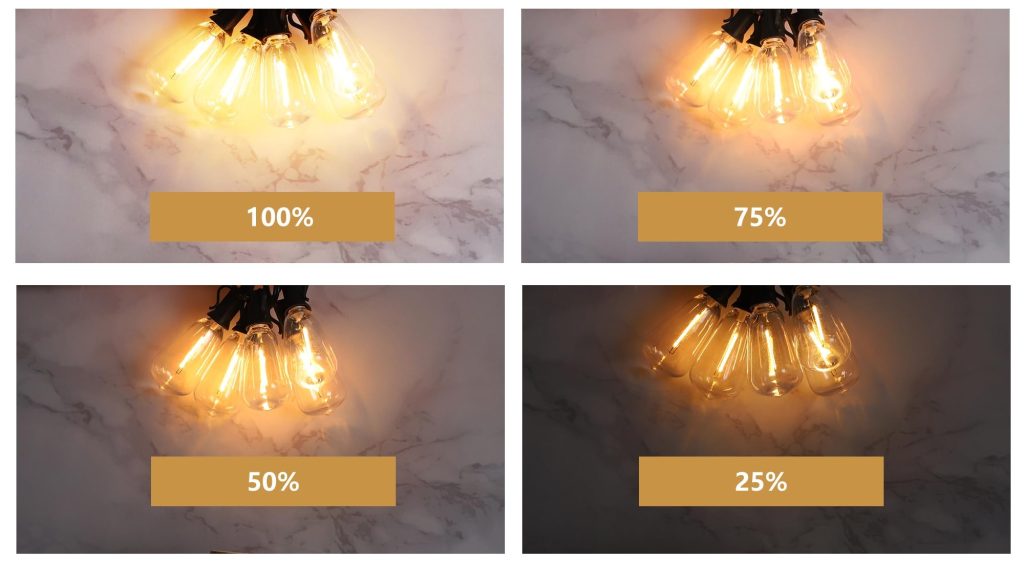
Lighting a space is no longer just about visibility; it’s also about creating ambiance, setting the mood, and enhancing visual comfort. The functionality of dimmable lights extends beyond mere illumination – they become an integral part of the overall design narrative.
Moreover, with dimmable lighting technology, we can experience energy conservation benefits too. By adjusting brightness to lower levels when full illumination is not needed, we reduce power consumption and prolong the lifespan of our bulbs – making this feature both economically efficient and environmentally responsible.
Practical Guide: Dimmable Lights Applications
The applications of dimmable lights are many and varied – from creating a comfy atmosphere at home or a lively one in hospitality settings to controlling glare in office spaces or accentuating merchandise in retail establishments. One area where they shine particularly brightly is as landscape string lights – offering a captivating way to highlight specific features within your outdoor space while also enabling the modulation of brightness based on time of day or occasion.
While string lights add charm to any setting they grace with their presence, incorporating the potential for dimming into these luminaries makes them even more appealing – catering not only to aesthetic considerations but also functional ones. Henceforth, we venture into exploring whether our beloved string lights come with this versatile capability.
Shedding Light on Dimmable Lights: An Insight into the World of Dimming
Demystifying Dimmable Lights: Unearthing Their Essence and Functionality
Dimmable lights, as their name suggests, are luminous devices whose brightness can be adjusted based on user preference. This versatility enables them to cater to a wide range of lighting needs, making them an integral part of modern lighting solutions. When incorporated in landscape string lights or other forms of landscape lighting, they offer the flexibility to create various moods and atmospheres.
The defining feature of dimmable lights lies in their ability to alter their light intensity without distorting the color quality. This distinguishes them from general-purpose lights that merely offer an ‘on’ or ‘off’ state with no in-between. By allowing users to modulate brightness levels, dimmable lights provide a personalized user experience.
What sets dimmable lights apart is their capacity for energy efficiency. By enabling variable light output, they allow for considerable energy conservation. This variable output also extends the lifespan of the bulbs since lower light intensities reduce wear and tear.
Dimming capabilities are not only vital for indoor lighting but also prove instrumental in outdoor lighting scenarios such as landscape string lights or walkway lamps. These types of landscape lighting deliver both functional and aesthetic value by offering customizable brightness levels suitable for different occasions.
Additionally, dimmable lights offer a high degree of control over visual comfort. By mitigating harsh contrasts between light and dark areas, they alleviate eye strain while enhancing visibility – a feature particularly beneficial in both interior spaces and exterior landscape lighting applications.
The Fascinating Science behind Dimmed Lights: A Journey Through Their Mechanics
The science behind dimming is founded on two fundamental principles – voltage reduction and pulse-width modulation (PWM).
Voltage reduction involves decreasing the voltage supply to the light source, resulting in a decrease in luminous output. This method, however, may lead to an alteration in the light color temperature; hence it is less preferred for landscape lighting where color quality is paramount.
PWM, on the other hand, involves turning the light on and off at such a high frequency that human eyes perceive it as a continuous but dimmed light. PWM not only maintains the original color quality but also enhances energy efficiency – a key reason behind its widespread adoption in landscaping string lights.
It’s important to note that not all lights are naturally dimmable. The ability of a bulb to dim depends primarily on its design and circuitry. For instance, traditional incandescent bulbs are typically dimmable due to their simple resistive nature.
LED lights present a more complex scenario due to their diode-based functioning, which doesn’t naturally allow for dimming. However, advancements in LED technology have led to the development of specific designs that incorporate PWM capability, making them suitable for use in adjustable landscape lighting setups.
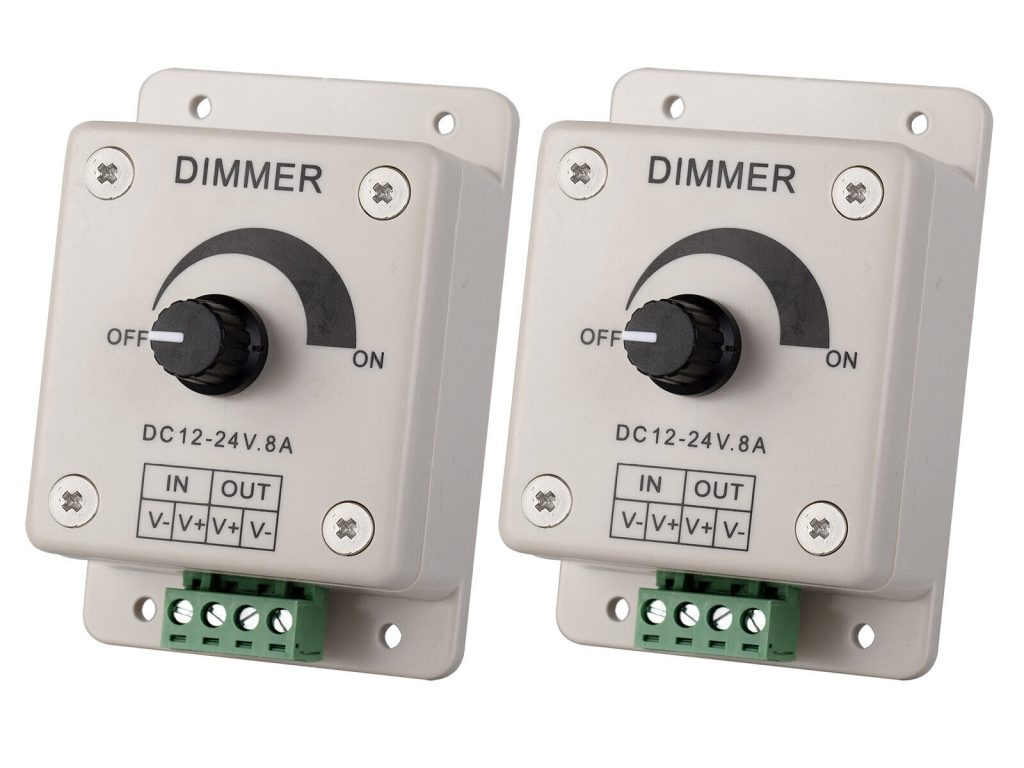
The dimming process also relies heavily on appropriate controlling devices or ‘dimmers‘. These devices modify voltage supply or manipulate pulse frequencies according to user input – thereby controlling light intensity.
Various types of dimmers exist – from rotary dials and slide controls to sophisticated touch-sensitive panels and even voice-activated systems. While it may seem straightforward on the surface level, the science behind how string lights create an immersive visual experience through brightness adjustment is intricate and fascinating.
Are String Lights Dimmable?
The Impending Dichotomy: Are All String Lights Dimmable?
Though the realm of string lights is vast and varied, it is not an unabridged truth to proclaim that all string lights are dimmable. The dimming capability of string lights is contingent upon specific criteria that, when met, allow for their luminosity to be methodically altered.
Primarily, the types of bulbs used and the intricacy of the circuitry are two quintessential factors contributing to whether or not a particular set of string lights can be dimmed. Understanding these aspects in detail provides invaluable insight into the world of dimmable landscape lighting.
The Influencing Factors: What Determines if a String Light is Dimmable
When investigating whether your landscape string lights are indeed capable of fluctuating in brightness, one must consider two fundamental constituents: the type of bulb utilized and the design intricacies within its circuitry.
Let There Be Less Light: The Role of Bulb Type in Dimming
The bulb type lays down an instrumental foundation determining whether a set of string lights allows for modulated brightness. Traditional incandescent bulbs readily permit such alterations by virtue of nature’s course. However, LED technology has also evolved tremendously over time to integrate this feature seamlessly into its functionality.
For instance, specific variations such as ‘dimmable LEDs’ have been introduced to cater precisely to this demand. Therefore, while it’s true that traditional incandescent bulbs readily afford dimming options, certain types of LED landscape lighting also offer similar versatility.
A Circuitous Path to Dimness: Circuit Design and Its Impact on Dimming
Alongside bulb type, another influential determinant lies discreetly hidden away within each light – its circuit design. A critical point to note here is that not all LED or incandescent bulbs are inherently dimmable from the outset. Instead, the circuit design must be congruous with the dimming requirement.

The incorporation of specific elements known as ‘dimming modules‘ within the circuit allows for manipulating light intensity. Consequently, even if a bulb is technically capable of being dimmed, its potential would remain untapped in the absence of such a supportive circuit design.
The Lighting Interplay: Bulb Type and Circuit Design Working Together
Considering these insights, it becomes crucial to understand that both bulb type and circuit design work harmoniously together in facilitating variations in brightness. While the correct bulb type provides an initial stepping stone towards achieving dimmability, without a compatible circuit design to drive this feature, it remains inert and underutilized. Thus, discerning whether your landscape string lights are indeed dimmable requires thorough comprehension and careful consideration of both these factors.
Types of Dimmable String Lights
A Closer Look at Incandescent String Lights
The traditional choice for lighting, incandescent string lights, also known as fairy lights or Christmas lights, are indeed dimmable. Their inherent design allows the filament to glow less brightly when the voltage is reduced, offering a beautiful warmth that’s perfect for a serene ambience. These landscape string lights offer aesthetically pleasing lighting suitable for various events and settings.
Incandescent bulbs function by heating a tungsten filament until it glows. The brightness can be controlled by varying the voltage supplied to the bulb. This makes them inherently dimmable and a popular choice among consumers seeking this feature in their landscape lighting.
However, it’s worth noting that while incandescent string lights can be dimmed easily, they are not particularly energy efficient compared to other types of lighting sources. They convert most of their energy into heat rather than light, which can lead to increased utility costs over time.
Incandescent string lights are ideal for those desiring a classic warm glow for outdoor spaces or festive occasions. While they may not be as efficient or long-lasting as their modern counterparts, such as LEDs, they nonetheless offer an affordable and effective way to bring soft lighting to any space. If you’re looking for flexibility in controlling light intensity without particular concern about energy efficiency, incandescent string lights may serve your needs well.
Sector Spotlight: LED String Lights
LED (light-emitting diode) technology has revolutionized the world of lighting with its high efficiency and longevity. Initially, though, early LED designs were incompatible with traditional dimming technology due to their different operating mechanisms compared with incandescent bulbs.
However, innovations in this field have led to the advent of dimmable LED string lights. LEDs function by passing electrons through a semiconductor material, which emits light. The brightness of an LED bulb is determined by the current passing through it.
Recent advancements in technology have made it possible to control this current to vary light intensity, leading to the evolution of dimmable LED string lights. Landscape string lights using LEDs can offer energy savings of up to 80% compared with their incandescent counterparts, all while lasting up to 25 times longer. This efficiency makes them an excellent choice for those looking for eco-friendly lighting solutions.
One popular example of dimmable LED string lights is the Enbrighten Vintage Series Cafe String Lights. These are designed for both indoor and outdoor use and can be adjusted from a warm, soft glow to bright task lighting at will. While they may be more expensive initially, the long-term benefits and flexibility offered by dimmable LED string lights make them an appealing option for diverse lighting needs.
Transforming the Ordinary: Making Non-Dimmable String Lights Dimmable
Modifying the circuitry of non-dimmable string lights to make them dimmable is not a task for the faint-hearted. It requires a solid understanding of electrical circuits and meticulous attention to detail.
The primary step involves changing the power supply or transformer and sometimes even altering the LED driver module. These changes aim to accommodate a lower voltage or different current flow that enables dimming.
Firstly, it’s crucial to understand that non-dimmable LED lights usually operate on a precise current level. Any slight deviation could lead to erratic behavior or even damage. To avoid this, one must replace the existing driver with one specifically designed with dimming capabilities.
Secondly, it’s important to mention that all components should match in terms of voltage requirements; mismatched parts can cause system failure.
However, embarking on this modification journey is not without its challenges – and these extend beyond technical know-how. For example, tampering with LED lamp circuitry voids any warranty attached to your landscape string lights – a factor worth considering beforehand.
Revamping Landscape Lighting: Possible Modifications to Circuitry
One possible modification is replacing the standard driver in your LED string light circuitry with a constant current reduction (CCR) driver. This type of driver allows for smooth and efficient dimming by regulating current flow when voltage changes – a feature absent in standard drivers.

Another feasible adjustment could be using pulse-width modulation (PWM) drivers instead of CCR ones in certain scenarios. PWM drivers work by flickering light output at such rapid rates that human eyes perceive it as consistent lighting but at reduced brightness – an ingenious way of achieving a dimming effect.
The last potential adjustment would involve incorporating an external low-voltage dimmer switch into your landscape lighting setup before connecting it into your main power supply – offering you direct control over brightness levels. However, this method requires careful selection of compatible dimmers to prevent flickering or premature burnout.
Pros and Cons: Advantages and Disadvantages
Despite the work involved, there are notable advantages to modifying your landscape string lights. First, you gain greater control over your outdoor ambient lighting. You can regulate the brightness of your landscape lighting depending on the atmosphere you wish to create – whether for a tranquil evening or a vibrant party.
Secondly, dimmable lights tend to consume less power compared to their non-dimmable counterparts – thus potentially reducing energy costs in the long run. However, as previously highlighted, these benefits do not come without drawbacks.
The most glaring is the voiding of any existing product warranties upon modification – a significant disadvantage if unforeseen technical issues arise later on. Additionally, incorrect or poor-quality modifications could lead to safety risks such as electrical shorts or fires.
Therefore it’s crucial that any alterations are performed by competent individuals knowledgeable in electrical circuitry. Modifying LED string lights could result in inconsistent light output across different bulbs – an aesthetic drawback that might be noticeable and undesirable for many homeowners who use landscape string lights to enhance their outdoor spaces’ visual appeal.
The Quintessential Conductor: The Role and Importance of a Good Quality Light Switch or Controller for Effective Dimming
The function of a light switch or controller in the context of dimmable string lights is paramount. Just as an orchestra relies on the precision and expertise of its conductor, so does the landscape lighting rely on a good quality light switch or controller for effective dimming. Without it, we lose control over the luminosity and tone that our lights provide.
A well-chosen light switch or controller allows us to alter the mood and ambience in our space at will. It gives us the ability to manipulate brightness levels, providing an opportunity not just for customization but also for energy efficiency. Through effective dimming, we decrease energy consumption, which can contribute to a more sustainable environment.
Moreover, a superior quality switch ensures longevity in operation without risk of malfunctioning. It also minimizes any potential electrical hazards associated with landscape string lights, given that they are often exposed to external weather conditions.
From Commonplace to Custom: Types of Switches or Controllers Suitable for Different Types of Bulbs
The choice between various types of switches or controllers largely depends on the type of bulb utilized in your string light assembly. For incandescent bulbs, traditional rheostat-based dimmers are typically used due to their compatibility with resistive loads.

On the other hand, light-emitting diodes (LEDs) require more sophisticated controllers such as pulse-width modulation (PWM) dimmers due to their low voltage nature. These facilitate rapid switching between full-on and full-off states, creating an impression of lower-intensity light.
For those seeking advanced controls, such as changes in color temperature alongside brightness adjustments, then digital controllers may be most suitable. These often come with remote functionality, allowing seamless manipulation from afar.
Mastering Lighting Elegance: How to Choose the Right Switch or Controller
The selection of the right switch or controller for your landscape string lights is not merely a matter of compatibility. It’s a dance between functionality, aesthetics, ease of use, and budget.
Start by understanding the specifications of your bulbs. Know whether they are incandescent or LEDs, their voltage requirements, and their dimming capabilities. This information will guide you towards compatible switches or controllers.
Next, consider the level of control you desire. If you want to simply dim your lights, a basic rheostat-based dimmer may suffice. However, if you’re looking to create an elaborate light show with color changes and varying brightness levels, then a digital controller would be ideal.
Bear in mind the cost and installation complexities associated with different types of switches or controllers. While some may offer sophisticated functionalities, they might also come with steeper price tags and require professional installation. Striking a balance between your lighting ambitions and practical considerations will lead to an enlightened selection.
Benefits & Applications of Using Dimmable String Lights
Saving Energy One Light At A Time
Dimmable string lights, in their multifaceted nature, offer substantial benefits that extend beyond mere aesthetics. Among these, the capacity for energy conservation stands as a major driving factor behind their growing popularity.
The fundamental principle of dimming lights reduces the quantum of electricity consumed by reducing brightness levels. This creates an immediate impact on one’s utility bills, creating a ripple effect of cost savings across time and significantly reducing the carbon footprint.
Delving deeper into its workings, landscape lighting technologies such as LED string lights operate at reduced wattage while dimmed without compromising on longevity or performance quality. In fact, they are known to outlive their non-dimmable counterparts owing to less thermal stress endured during operation.
Furthering the cause of sustainability and efficiency, the latest designs in landscape string lights are equipped with advanced sensors that adjust brightness depending on ambient light conditions. This smart technology not only curtails unnecessary power usage but also adds an element of dynamic adaptability to your lighting setup.
The unique advantage of dimmable string lights lies in their ability to provide proportional energy savings; for instance, a 20% reduction in brightness translates to almost equal percent energy conserved. Therefore, adopting these ingenious illuminators indubitably contributes towards creating greener homes and spaces.
Painting with Lights: Creating Ambience & Mood Lighting
Beyond pure functionality, lighting stands as an exceptionally powerful tool to craft atmosphere and mood within a space or event.
Dimmable string lights have carved out their own niche in this arena with remarkable versatility. The quintessential charm woven by landscape string lights lies in their ability to provide variable intensity control, which helps create distinct moods at different times or events, be it a serene dinner under soft light radiating nostalgia or vibrant gatherings basking in warm light.
Well-curated landscape lighting can transform spaces, adding depth and character while enhancing architectural elements. For instance, dimmable string lights can highlight garden paths or accentuate water bodies with a soft glow, providing an enchanting nighttime aesthetic to your outdoors.
In commercial spaces such as restaurants, hotels, or event venues, the ability to manipulate lighting intensity plays a crucial role in crafting unique experiences for patrons. From creating a sense of intimacy in private dining rooms to energizing dance floors with dynamic light levels, the applications are virtually boundless.
Mood lighting is not merely about visual appeal but also influences psychological and emotional states. Studies suggest that gentle dimming of lights during evenings can help regulate body rhythms and promote relaxation, whereas brighter settings can stimulate alertness and productivity. The potency of dimmable string lights extends far beyond illumination – they stand as paramount players in fashioning ambiance, conserving energy, and enriching lives with their brilliance.
Safety Precautions when Using Dimmable String Lights
The Imperative of Safe Installation Practices
An aspect of safety that should never be compromised with dimmable string lights, or indeed any form of lighting, is the installation process. The initial step in achieving safe landscape lighting involves a thorough understanding of the product’s user manual. This document often contains comprehensive instructions about the proper handling and installation processes specific to the product.
The second vital point is to ensure that your string lights are specifically designed for outdoor use if they are being used as landscape string lights. This design feature shields them from adverse weather elements that could cause short circuits and subsequent electrical accidents.
The third consideration during installation is regarding the power source. String lights should be plugged into ground fault circuit interrupter (GFCI) outlets, which significantly reduce the risk of electrocution by cutting off power when an imbalance in electrical current is detected.
While it may seem a minor detail, correctly securing your string lights can greatly enhance their safety. Use appropriate hanging fixtures such as hooks or clips to keep them firmly in place and prevent accidental entanglement or damage.
The Significance of Proper Usage and Maintenance
Once installed securely and correctly, maintaining your dimmable landscape string lights also requires periodic attention to ensure continued operation without hazards. Begin with regular inspections; look for signs of damage – any frayed wires, cracked bulbs, or loose connections – these can all pose safety risks if left unattended.
Secondly, consider carefully where you choose to position your landscape lighting in relation to other objects in your yard. Avoid placing lights near highly flammable materials such as dried leaves or wood structures, as overheating bulbs could incite fires.
In addition to their placement in the landscape design, how you use these lights can also impact their longevity and overall safety. It’s crucial not to overload the circuit by connecting too many string lights together. Always follow the manufacturer’s guidelines regarding this to avoid overheating or other electrical issues.
When it comes to their upkeep, ensure that your dimmable string lights are cleaned routinely, but only when they are switched off and cooled down. Dust and grime can accumulate on the bulbs over time, which can cause them to overheat and potentially become a fire hazard.
Aligning with today’s need for environmental consciousness, responsibly disposing of old or faulty bulbs protects our surroundings from harmful substances often contained in these items. Follow local waste management guidelines on how to dispose of or recycle these products correctly. These steps blend safety with sustainability, creating a harmonious balance between enjoyable landscape lighting and responsible usage.
Conclusion: Are String Lights Dimmable?
The exquisiteness of string lights lies in their ability to accentuate the beauty of a space, indoors or outdoors, subtly yet effectively. As we have detailed throughout this post, not all string lights are dimmable. However, with the right knowledge and approach, it’s possible to have dimmable string lights that add charm to your landscape lighting.
The key factors determining whether a string light can be dimmed include the type of bulbs used and the complexity of its circuitry design. Incandescent bulbs can easily be dimmed due to their simple resistive nature, while LED technology has evolved considerably over time to offer dimming capabilities in specific models.
Dimmable string lights bring several benefits, including energy conservation due to lower brightness levels when full intensity is not required. This makes them an eco-friendly choice for landscape string lights.
Additionally, they aid in creating mood lighting for different events or ambiances thanks to their adjustable brightness levels. It is also crucially important to choose a high-quality switch or controller for effective dimming; each type of bulb responds differently and requires a compatible controller for optimal functioning.
While it may require initial effort and investment, making non-dimmable lights dimmable could be rewarding in terms of versatility and customization. However, one needs to weigh the pros against the cons because it might lead to potential risks if not done properly.
A Future Lit Bright with Dimmability
To conclude this enlightening exploration into the realm of dimmable string lights – yes, they indeed exist! The future looks bright as more innovations are made within this space, allowing us greater control over our environment’s lighting intensity.
The use of such adaptable lighting, especially in landscape lighting, could transform our living spaces into more energy-efficient and mood-enhancing environments. Having dimmable string lights in your arsenal of home decor could prove to be an element that provides both functionality and aesthetic appeal to your surroundings.
Embrace the elegance of dimmable string lights and shed a new light on your landscape. Whether it’s for setting the mood during festive seasons or adding a touch of warmth to a quiet evening at home, these dimmable wonders are here to stay, brightening our lives one dimmed bulb at a time.
You may also be interested in the following posts: