
Introduction to Landscape Moonlighting: A Night Sky Dispersed at Ground Level
As the sun gives way to the moon, and darkness covers the earth, there arises an immaculate opportunity to transmute outdoor spaces into charming, nocturnal landscapes. This is achieved through a specific style of landscape lighting known as moonlighting.
Moonlighting, in the context of landscape lighting, is a unique technique where fixtures are installed high up in trees or other structural elements like eaves or pergolas. The light is then directed downward, giving off a naturalistic glow that mimics real moonlight filtering down through branches. It bathes the area beneath with a gentle shower of light and shadow that evokes feelings of tranquility and serenity.
The artistry and subtlety that characterize the technique can elevate any piece of land into a splendid nighttime vista. The trickles of light breaking through leaves and branches create alluring patterns on floors or walls nearby, creating an enchanting ambiance reminiscent of calm moonlit nights.
This distinct lighting strategy not only enhances beauty but also adds to safety by gently illuminating paths without imposing harsh glare. It provides ample visibility without sacrificing comfort or aesthetics, creating an outdoor environment that welcomes visitors even after dusk.
A Brief Excursion Through Time: The Evolution of Moonlighting in Landscape Lighting
Landscape lighting itself has seen remarkable evolution throughout history. From flickering fire pits adorning ancient settlements to grand Victorian garden lamps in 19th-century Europe, our pursuit for outdoor illumination has transformed significantly over centuries. And within this rich narrative lies our focal point – moonlighting.
Although it’s challenging to pinpoint exactly when moonlighting first emerged as a distinct technique, it has its roots firmly anchored in human fascination with celestial bodies – particularly the moon’s ethereal glow on clear nights.
As technologies improved towards the late 20th century, particularly with the invention of low-voltage lighting and LED technology, moonlighting started to become a more viable option for landscape designers. Skilled lighting designers began to exploit the possibilities of creating a ‘natural night’ environment that was safe, inviting, and enchanting.
The effects of moon shadows dancing across lawns and gardens fascinate and inspire homeowners to this day. In modern times, moonlighting has emerged as a sophisticated method that balances aesthetic appeal with functional necessity. As our understanding of light’s impact on mood, safety, and visual appeal deepens, so too does our appreciation for masterfully executed moonlighting techniques in landscape design.
Driven by technological advancements and artistic innovations alike, moonlighting in landscape lighting continues to evolve. It invites us into an eternal dance between darkness and dappled light under the open nocturnal sky – a testament to human ingenuity that connects us with nature in her most mesmerizing avatar.
Understanding the Concept of Moonlighting
The Enigma of Ephemeral Brilliance
Moonlighting, in the context of landscape lighting, is an artful technique that produces a naturalistic nocturnal ambiance. This method employs strategically placed down-lights, typically nestled high amongst tree branches, to cast cascading shadows upon the ground below.

The primary objective is to mimic the ethereal glow and dappled light patterns presented by a full moonlit night. The resulting tableau is one imbued with mystery and tranquility. A well-implemented moonlighting setup can transform mundane landscapes into enchanted realms that echo nature’s own artwork.
This concept requires a fundamental understanding of both scientific aspects of light dynamics and artistic principles of mood creation. It holds substantial potential for beautifying outdoor spaces if implemented correctly and with thorough consideration.
The Science Behind Moonlighting: How it Mimics Natural Moonlight
Simulating Lunar Luminescence
In essence, moonlighting revolves around skillfully duplicating the effects produced by natural moonlight falling on an outdoor landscape. To achieve this phenomenon artificially requires comprehension of certain scientific principles.
Natural moonlight creates a patterned carpet of soft light and shadow on the earth’s surface due to its interaction with objects that obstruct its path – trees, buildings, or even atmospheric conditions such as cloud cover. Recreating this effect necessitates strategic placement of artificial light sources at an elevated position akin to celestial bodies.
These sources need to be diffused or dispersed appropriately to mimic lunar illumination’s gentle touch rather than swathing areas in intense light. Another pivotal aspect lies in choosing appropriate color temperatures for bulbs used in moonlighting fixtures – favorably towards cooler tones within the 4000K-4500K range that align closely with qualities exhibited by natural moonlight.
The Artistic Aspect: Enhancing Beauty and Creating Mood
Painting with Light and Shadows
Moonlighting, beyond its scientific side, is an art form that dramatically alters a landscape’s character and ambiance. The skillful manipulation of light and shadow brings a depth and nuance to outdoor spaces that static lighting techniques find challenging to match.
A well-executed moonlighting setup can accentuate the beauty of architectural features, highlight the texture of foliage or water bodies, delineate pathways, or simply paint dramatic pictures on outdoor canvasses. The interplay of light and shadow defines spaces while lending them an element of mystique.
The artistry lies in understanding how different elements interact under this unique lighting – how leaves cast intricate shadow patterns on the ground, how surfaces react differently depending upon their color or texture. Each choice contributes to the overall mood – tranquil serenity or ethereal mystery.
Importance & Benefits of Using Moonlighting in Landscape Lighting
The Luminous Advantages
Moonlighting offers myriad benefits beyond its aesthetic appeal. It enhances safety by illuminating paths and potential hazards without resorting to harsh spotlighting. It also expands usable living space by effectively ‘bringing the outdoors in’ during evening hours.
Additionally, moonlighting augments property value by elevating curb appeal through tastefully executed lighting design that highlights the property’s best features. Moreover, this technique respects nocturnal wildlife habitats as it uses soft, diffused light rather than intense fixtures, which can disrupt natural behaviors.
Moonlighting bolsters security by ensuring visibility across landscapes without creating glare or intrusive lighting that may disturb inhabitants within homes. In essence, embracing moonlighting is a thoughtful approach towards landscape lighting reflective of one’s respect for nature’s subtlety while offering practical solutions for utilizing outdoor space effectively after dark.
Unveiling the Moonlighting Techniques
When it comes to mastering the technique of moonlighting in landscape lighting, there are two crucial areas to focus on: placement of lights and choice of light source.
The Artistry in Light Placement
The first step towards successful moonlighting involves a meticulous evaluation of your landscape to determine the optimal positions for light placement.
Ascending to Optimal Heights
Start by considering the height at which your lights will be installed. Ideally, for a believable replication of natural moonlight, fixtures should be positioned 20-30 feet off the ground, usually within trees. The higher you place your fixtures, the more ground you can cover and the larger your shadows will become.
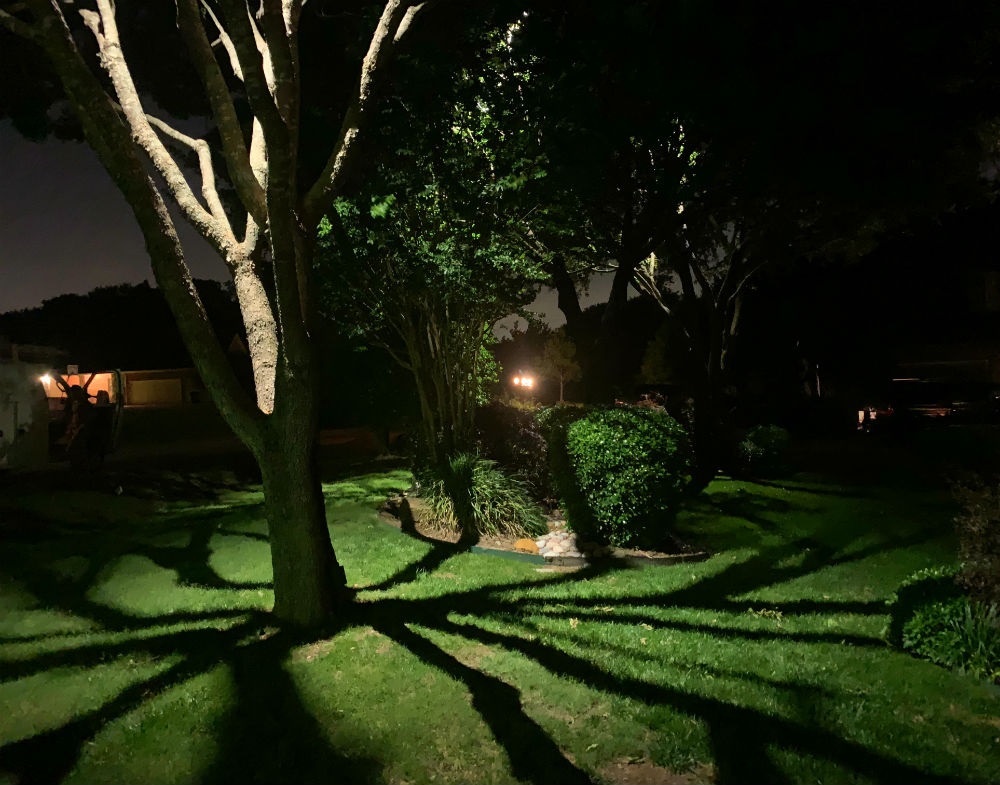
In circumstances where trees are not available or are too small, one might consider utilizing poles or structures that can serve as stable artificial mounting spots. However, discretion is advised so as not to compromise the natural aesthetics of the environment.
Navigating Angles for Optimal Lighting
Next is understanding how angle plays into creating realistic shadows and diffused light effects characteristic of actual moonlight. Here we dive into some geometry: angle is key as it determines how broadly or directly a beam illuminates an area.
Downward angles between 30-45 degrees often generate optimal results by striking a comfortable balance between coverage and intensity. Strive for an arrangement that sprinkles soft pools of light interspersed with deeper shadows – much like what one would observe on a night graced by a full moon.
Gauging Distance for Exquisite Lighting
We must consider distance – both between individual lights and from lights to areas they illuminate. While tree-mounted fixtures should ideally be placed at least 10 feet apart to avoid overlapping beams leading to unnatural brightness levels, the distance from lights to the ground or the illuminated object should be enough to allow for proper light spread and soft shadow generation.
Choosing Your Light: The Luminous Companions
Once you’ve decoded the placement conundrum, it’s time to consider your light sources.
Returns on Bulb Types: LED vs Halogen
LED lamps and halogen bulbs are commonly used in moonlighting. While halogen bulbs have long been used due to their warm light and high CRI (color rendering index), they typically have shorter lifespans and consume more energy than LEDs.
LED lights, on the other hand, provide longer lifespans, energy savings, excellent color rendering capabilities, and run cooler, which makes them safe for tree installations. Thus, many lighting professionals lean towards LEDs for their sustainable benefits without compromising aesthetics.
Hues of Night: Color Temperature Selections
The color temperature of your chosen bulb can remarkably influence the effectiveness of the moonlighting effect. Measured in Kelvins (K), lower values give a warm yellowish light while higher values produce a cool bluish glow.
Moonlight has a color temperature around 4000K – an intrinsically cool-colored lighting – but slightly warmer temperatures between 2700K and 3000K are often favored in landscape lighting as they tend to blend well with existing ambient lighting while complementing most landscape elements effectively.
The key here is flexibility – most modern lighting systems allow you to easily adjust color temperatures to suit different moods or occasions. So don’t hesitate to experiment until you find what best amplifies beauty in your specific setting.
Design Principles for Effective Moonlighting
The Art of Understanding Shadows and Silhouettes
Moonlighting in landscape lighting is not just about illumination; it’s more about creating an atmospheric ambiance. The key to achieving this lies in the understanding of shadows and silhouettes.
Shadows play a significant role in moonlighting because they add depth and dimension to the nighttime landscape. A tree lit from above can cast intriguing shadow patterns on the ground, making ordinary scenes look extraordinary.
In moonlighting, shadows can give different forms a sense of solidity or substance. They bring out textures that might be overlooked during daylight hours, such as the rough bark on a tree or ripples on a water surface.
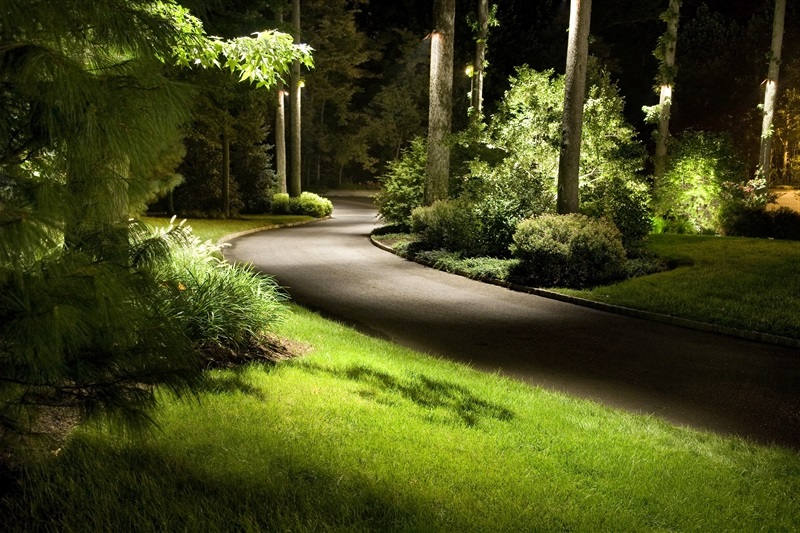
A well-placed light source casting intriguing silhouettes can turn an ordinary plant into a dramatic focal point. Understanding how different objects cast shadows or silhouettes will allow for effective designing.
Silhouettes are created when objects are backlit, creating a dark shape against a lighter backdrop. In landscape lighting design, you can create silhouetted effects by placing lights between the primary viewing position and the object being lit. This creates an artistic interplay between light and form, producing dramatic results that accentuate shapes, lines, and forms in your garden.
The manipulation of shadows and silhouettes requires both science – understanding how light works – and art – knowing what aesthetic effect you want to create. Each object will react differently to various lighting approaches, making it vital to experiment with light placement until you achieve your desired effect.
Ultimately, mastering shadows involves knowing when less means more. Over-illumination can flatten your landscape into monotonous brightness, whereas restrained use of light preserves mystery while revealing enough details for appreciation.
Achieving Balance between Light and Dark Areas
Just as music is not merely sound but also silence between notes, effective moonlighting is not about brightness but the balance between light and dark. This equilibrium creates ‘visual music’, leading the eye through a harmonious symphony of illuminated and shadowed areas. The aim should be to mimic natural moonlight as closely as possible.
Observing how actual moonlight interacts with your landscape can provide valuable insights. Notice how certain areas remain in shadow while others are gently washed with a soft, diffused glow. This delicate balance is what you should strive to create with your artificial lighting.
Contrast can be used effectively to highlight or conceal different elements within your landscape. A brightly lit statue against a shadowy backdrop would stand out, drawing attention to itself. Conversely, casting shadows over unsightly features can help detract attention from them.
Balance also involves the management of color temperatures across different lights. Warmer lights can create an intimate atmosphere in seating areas while cooler lights might better suit walkways and more functional spaces.
Successful lighting design will harmoniously blend these varying temperatures into one cohesive visual experience. It’s worth noting that achieving balance is not an exact science but rather an art form that may require some experimentation and adjustments over time.
Consideration for Safety and Security
Moonlighting doesn’t just serve aesthetic purposes; it also contributes significantly towards safety and security within your property. Properly implemented, it can deter potential intruders by eliminating dark corners where they could lurk unseen.
For safety reasons, paths, stairs, and changes in elevation should be correctly lit to prevent accidents during nighttime navigation around the property. However, care should be taken not to over-illuminate these spaces, as that could result in harsh glare or disorienting shadows, which are counterproductive towards safety objectives.
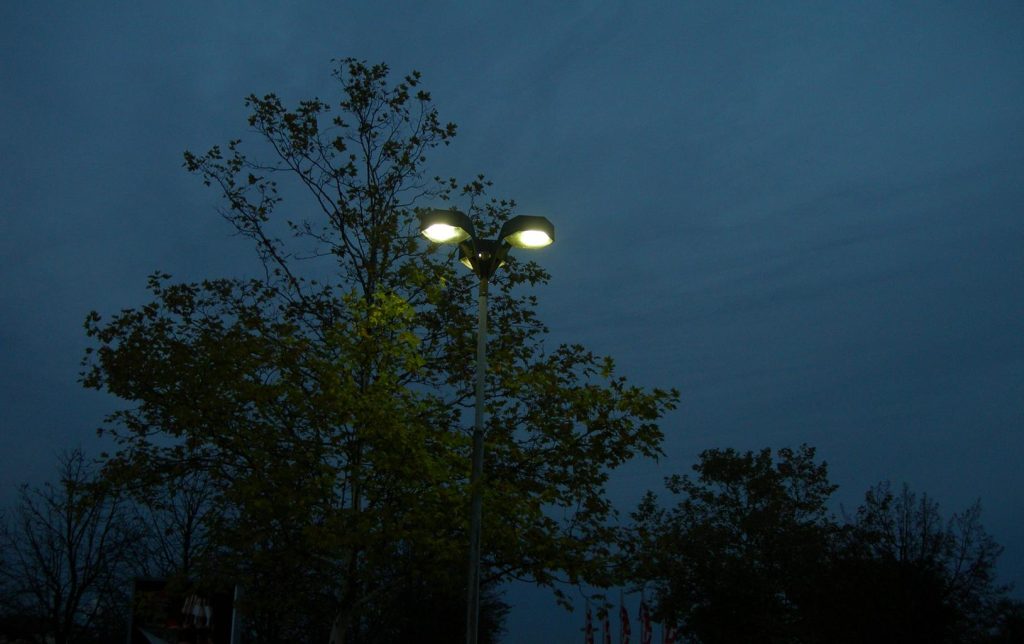
Lighting for security involves illuminating potential entry points into buildings, like doors or windows, without causing light pollution or disturbing neighbors with overly bright lights. Motion sensors coupled with dimmed lighting can be particularly effective for security purposes. They only brighten when movement is detected, deterring potential intruders while providing functional lighting for occupants.
A well-lit landscape also provides a sense of reassurance and welcoming warmth to occupants and guests alike. Therefore, while designing moonlighting in landscape lighting, safety and security considerations should form an integral part of the planning process. The art of moonlighting is a delicate balance between creativity and functionality that harnesses the interplay between light and dark to create safe, secure, and visually captivating nocturnal landscapes.
Detailed Case Studies on Successful Implementation of Moonlighting
The Luminescent Harmony: Traditional Home Garden
In a traditional home garden setting, moonlighting has been proficiently used to cast a soft glow over the entire landscape. In one particular instance, an assortment of deciduous and evergreen trees was utilized as natural light stands.
The lights are placed high up in these trees, mimicking the effect of a full moon casting its gleaming rays down through the tree leaves and branches, creating an enchanting play of light and shadow on the ground below. This strategic placement of lights in combination with careful selection of color temperature created a magical milieu that was both mesmerizing and cozy.
The homeowner achieved an ideal balance between lighting for visibility and maintaining the sanctity of nighttime darkness. The result was a serene nocturnal garden that was not only visually appealing but also safe for evening strolls.
The beauty extended beyond just visual impact; it enhanced the textures of foliage, highlighted architectural elements such as water features or statues, and even underscored areas where specific plants were located. This moonlit landscape thus nurtured an atmosphere perfect for quiet contemplation or intimate gatherings under the stars.
Blending Tradition with Modernity: Modern Architectural Home
Moving from traditional to modern settings, let’s consider another case study where a mid-century modern home successfully implemented moonlighting in their landscape lighting plan. Here, strong geometric lines characteristic of modern architecture were skillfully accentuated by using innovative lighting techniques.
Lights were placed strategically at differing heights across various trees around the property. This ensured that light fell at different angles onto walkways, patio areas, and exterior walls – enhancing depth perception while augmenting aesthetic appeal. Not only did this approach bring out architectural details vividly, but it also emphasized outdoor features like swimming pools or sculptural elements in garden areas.
It is worth noting that these homeowners used smart lighting technology. This allowed them to control color, intensity, and even pattern of the light through their smartphones, thereby adjusting the ambiance as per their mood or occasion.
Public Spaces Transformed: Public Park or Garden
Switching gears from residential to commercial settings, an exemplary implementation of moonlighting can be seen in a popular public park. Here, the landscape architects had to ensure safety and visibility for visitors while maintaining aesthetics.
In this scenario, they opted for LED lights due to their energy efficiency and long lifespan. These lights were installed at higher positions on large trees scattered throughout the park. The resulting diffused light effect created an illusion of natural moonlight gently filtering down through tree canopies.
The ingenious use of moonlighting not only made pathways and seating areas safe for public use but also highlighted features like water fountains, flower beds, and statues in a subtle way. Most importantly, it maintained the tranquil essence a public garden should offer its visitors after sunset.
Inviting Ambience: Hotel or Resort Grounds
Let’s explore how moonlighting has been used effectively in a luxury hotel resort setup. Given that such places aim at providing a relaxing environment to their guests coupled with visual delight, lighting plays a pivotal role in setting up ambiance.
In this case study, lights were nestled high within palm trees around the resort pool area, casting soft lighting over lounges whilst mimicking natural moonlight streaming through tropical foliage. The resulting patterned shadows dancing on the ground surface enhanced visual depth, providing an immersive experience for guests.
This gentle lighting technique not only beautified exteriors but also ensured guests could move around safely during evening hours without feeling overwhelmed by harsh artificial lights, thus creating an inviting outdoor space where guests could unwind under the subtle glow of a ‘moonlit’ night.
Common Challenges & Solutions with Implementing Moonlighting
Eclipsed by the Canopy: Navigating Dense Foliage in Moonlighting
Implementing moonlighting can be an arduous endeavor, especially when dealing with landscapes that boast dense foliage or heavy tree canopy coverage. These factors can obstruct light, casting indiscriminate shadows and producing an underwhelming effect.
To surmount this challenge, it is imperative to consider the type of trees involved. Deciduous trees, for example, offer a dynamic lighting scenario due to their seasonal leaf-shedding attribute. The strategic positioning of fixtures is another pivotal aspect in overcoming this obstacle.

For optimal results, fixtures should be positioned high within the tree’s canopy to allow a natural downward spread of light. Furthermore, taking advantage of the tree’s branches by carefully weaving lights through them not only illuminates your yard but also creates enchantingly intricate shadow patterns.
Another common technique used by professionals involves layering different intensities of light to mimic the natural variation seen under moonlit conditions. This calls for a judicious choice and arrangement of lights – typically a combination of spotlights and diffused lights – that would accentuate specific landscape features while maintaining the overall ambiance.
Just as importantly, maintaining your landscape is paramount in ensuring your moonlit garden remains picturesque throughout changing seasons. Regular pruning not only aids in controlling growth but also ensures your lights are unobstructed, thus enhancing their lifespan and efficiency.
Weathering the Storm: Addressing Weather Elements Impact on Outdoor Lighting
Outdoor lighting installations are inevitably exposed to various weather elements such as rain, snow, wind, or even extreme heat, which can significantly impact their performance and durability. Therefore, it’s crucial that all components, including bulbs, fixtures, and wiring, are able to withstand these environmental challenges.
The first step towards achieving this lies in selecting weather-resistant materials for your fixtures. Opting for robust materials like high-grade aluminum, brass, or copper not only ensures longevity but also minimal maintenance requirements.
Furthermore, integrating smart technology allows you to control the lighting system remotely. In the event of extreme weather conditions that might cause damage to the lights, for instance, it would be possible to switch off the system, thus preventing any potential accidents or malfunctions.
Another critical factor is proper sealing of your lighting fixtures and wiring connections. This prevents water from seeping into them and causing short circuits, which would not only render them dysfunctional but also pose safety risks.
Professional installation is key in ensuring your outdoor lighting system can stand up to varying weather conditions. Certified technicians have the expertise and knowledge needed to assess potential threats posed by local weather patterns and integrate mitigation measures into their installation process.
Lighting Efficiency: Strategies for Energy-Efficient Moonlighting
As much as achieving a picturesque moonlit landscape is paramount, it should not be attained at the expense of energy efficiency. Fortunately, there are several strategies you can employ to ensure your moonlighting project upholds ecological sustainability.
Firstly, opting for LED bulbs over halogen bulbs significantly lowers energy consumption without compromising on light quality or intensity. LED bulbs boast an impressive lifespan and are known for their low heat emission property, thus making them safer options, particularly in dry climates where fire hazards may be a concern.
Secondly, integrating timers or motion sensors into your outdoor lighting setup can help manage when lights will be active, thereby reducing unnecessary energy wastage. Some innovative systems even include lux sensors that adjust light intensity depending on natural ambient light levels – these prove especially useful during full moon nights when additional artificial illumination may not be necessary.
Another strategic approach involves incorporating solar-powered lights into your setup. Although they may require higher initial investment costs compared to traditional electric-powered lights, they offer long-term benefits such as reduced electricity bills and a lower carbon footprint.
Ensure regular maintenance of your lighting system. This includes cleaning fixtures to maintain their optimal light output and replacing any outdated components that could be draining excessive energy.
While implementing moonlighting within dense foliage or volatile weather conditions may present certain challenges, with the right knowledge and strategic planning, these can be surmounted effectively. Moreover, keeping in view the essentiality of energy conservation today, it is quite possible to achieve this picturesque lighting effect without compromising on efficiency or sustainability.
Advanced Techniques & Innovations in Landscape Moonlighting
Future Lighting: The Next Generation of Landscaping
The landscape lighting industry continues to evolve, introducing more advanced techniques and innovations that are revolutionizing the way we perceive moonlighting. One such innovation is the introduction of adjustable lighting fixtures, which allow for a higher degree of customization. These versatile devices, often remotely controlled, enable homeowners to adjust the intensity, color temperature, and directionality of their outdoor lights with ease.
Another remarkable advancement is the advent of motion-sensor activated lights. Infused with advanced sensors, these lights only illuminate when they detect movement within a predetermined range, thereby enhancing security while conserving energy. Moreover, they can be programmed to cast varying degrees and types of light depending on the detected motion’s nature – a subtle glow for small animals versus brighter illumination for humans.

In addition to these practical innovations, there are also aesthetic advancements that continue to redefine moonlighting’s artistic potential. Techniques like backlighting are becoming increasingly popular as they add depth and dramatic effect by casting shadows against surfaces or objects. Similarly, other techniques, such as cross-lighting, can highlight specific architectural features or plants in your landscape using intersecting beams of light at different intensities.
These advancements not only offer unlimited possibilities for creating stunning landscapes but also pave the way towards eco-friendly solutions, as many employ LED technology known for its lower power consumption and longevity compared to traditional lighting options.
Use of Smart Lighting Technology
Dazzling Future: The Dawn of Smart Landscape Lighting
Smart technology has made a significant impact on every aspect of modern life; it’s no surprise that it has found its way into landscape lighting too. In recent years we’ve seen an increasing adoption of smart bulbs in moonlighting – programmable bulbs that can be controlled remotely using smartphones or integrated home systems. These bulbs offer a spectrum of color temperatures and intensities, thus providing dynamic lighting options for all scenarios.
Further enhancing the appeal of smart technology in landscape lighting is the facility to schedule lighting routines. This feature ensures that your yard is properly lit at the right times, enhancing security while saving on energy costs. Similarly, it can adapt to changes in daylight hours throughout the year, automatically adjusting timings accordingly.
Smart landscape lights also come equipped with weather prediction capabilities by integrating local weather data. This allows them to adjust their operation based on environmental conditions – for instance, turning on earlier during cloudy or rainy days when natural light fades faster.
Moreover, smart lights often support voice control via popular virtual assistants like Alexa or Google Assistant, adding another layer of convenience for homeowners. And with continued technological advancements, we can anticipate even more refined intelligent features in landscape moonlighting, making it an incredibly exciting field to watch.
Conclusion: What is Moonlighting in Landscape Lighting?
From its humble beginnings as a creative yet practical solution for outdoor lighting to its current status as a highly sophisticated industry leveraging advanced technology, landscape moonlighting has come a long way. As we’ve seen through this exploration of its intricacies and advancements, moonlighting offers more than simple illumination; it’s an art form that enhances our outdoor living experiences and transforms ordinary landscapes into extraordinary nocturnal wonderlands.
In the face of such rapid progress and innovation, one thing remains certain: no matter how technology evolves and changes our lives, the human desire for beauty will always persist. And with these incredible advancements in moonlighting techniques and smart technologies at our disposal, now more than ever before, we are poised to create awe-inspiring landscapes that not only mirror nature’s enchantment but amplify it manifold under the gentle glow of artificial moonlight.
You may also be interested in the following posts: