
A Luminous Aesthetics: An Overview of Landscape Lighting
Landscape lighting, as the term suggests, is the art and science of lighting outdoor spaces to enhance aesthetics, safety, and usability. This form of lighting can dramatically transform a mundane garden into an enchanting nighttime wonderland or a simple patio into an inviting entertainment area.
It serves to highlight architectural features of your home, accentuate your favorite plants, and illuminate paths for safe navigation. The magic of landscape lighting lies in its ability to not only illuminate but also create shadows, depth, and mood.
It can lend an entirely new dimension to your outdoor space once twilight descends. Depending on the desired effect, various types of lights are used, such as spotlights for highlighting focal points, path lights for walkways and driveways, and underwater lights for pools and ponds, among others.
A significant aspect often overlooked in landscape lighting is its potential to increase security. Properly placed lights can deter trespassers by eliminating dark corners where intruders could potentially hide.
Furthermore, it contributes to reducing potential hazards such as stairs or tripping obstacles that might go unnoticed in poor lighting conditions. Yet importantly, landscape lighting augments the value of your property both aesthetically and monetarily.
It enhances visual appeal, which is crucial if you’re considering selling your property at any point. With all these advantages it offers, it’s no surprise that many homeowners are opting to invest in professional landscape lighting design and installation.
Lighting the Way: The Importance of Transformers in Landscape Lighting
In essence, transformers are integral cogwheels in the machinery called landscape lighting systems; their task is simple yet vital: they convert high-voltage electricity from home outlets into low-voltage power suitable for outdoor lights. Transformers essentially act as guardians that ensure all landscape fixtures receive adequate power without endangering them with electrical overdose, which could result in serious damages.
The transformer’s role is to ‘step down’ the voltage from a standard 110 volts to a more manageable 12 or 24 volts, thus making it safe for outdoor use. However, the role of the transformer isn’t solely technical. It also influences the aesthetic outcome of your landscape lighting design.
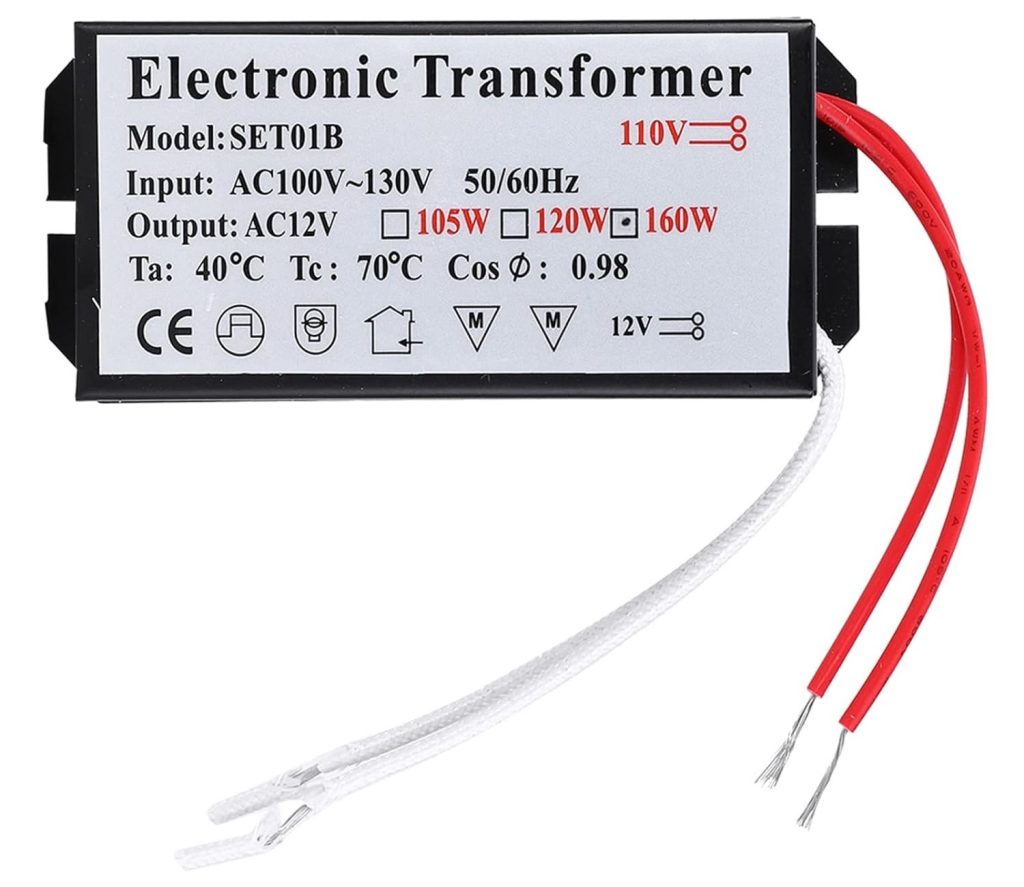
A well-calculated choice of transformers can provide an evenly distributed optimal amount of light, thereby contributing to the overall visual appeal and functionality of your outdoor space. It’s worth noting that transformers also act as energy regulators. They help conserve energy by minimizing voltage waste and optimizing consumption based on load requirements. This not only contributes to responsible energy usage but can also curtail your electricity bills over time.
Transformers play a crucial part in ensuring safety by reducing electrical accidents like short-circuits and potential fires caused by high-voltage currents. This is especially important in outdoor settings where conditions like moisture and weather changes can pose significant risks.
From Darkness Into Light: Decoding How Many Landscape Lights per Transformer
Understanding how many landscape lights each transformer can handle is crucial for efficient operation and longevity of your lighting system. Overloading a transformer with too many lights could lead to overheating or failure, which could be both dangerous and costly.
The number of lights per transformer depends on several factors, such as the power capacity of the transformer, the wattage consumed by each light fixture, and desired brightness levels, among others. Neglecting any one factor could lead to issues such as poor lighting quality or premature system failure.
This post attempts to delineate this enigma in a systematic manner that’s easy for homeowners planning their own landscape lighting project as well as professional landscapers seeking better understanding about balancing loads.
By shedding light on key factors like understanding transformers’ functionalities, calculating the total wattage required, and deciphering how these elements interact with each other, we aim to equip you with the knowledge needed to gauge how many landscape lights per transformer is ideal in your specific situation.
To further illustrate these concepts, we will also delve into a few hypothetical scenarios that embody diverse lighting requirements. These case studies will address a variety of power situations to provide practical insight for real-world applications.
Understanding Transformers in Landscape Lighting
The Power Behind Lighting: Defining and Understanding the Role of a Transformer
A transformer, in its simplest explanation, is an electrical device that manipulates voltage. Its primary role is to either increase (step up) or decrease (step down) an electrical voltage and then pass it on to your electronic devices – in this case, landscape lights.
In landscape lighting, transformers serve as the system’s power source, controlling and distributing power to each light fixture. They convert 120-volt household current to a safer 12 volts or occasionally 24 volts for outdoor use. The reason behind this step-down process is safety – the lower voltages are much less hazardous than house voltages in wet conditions or if cable damage occurs.
An Array of Choices: Types of Transformers Used in Landscape Lighting
Landscape lighting systems can utilize a variety of transformer types based on their needs and specifications. The choice depends on factors such as load size (or total wattage), installation setting, and desired functionality features, amongst others.
Step-Down Transformers
Step-down transformers are commonly utilized because they reduce the dangerous household voltage to a safe level suitable for outdoor use. They work by utilizing two coils – primary and secondary – that are wound around a magnetic core. The input voltage (120V) passes through the primary coil, inducing an electromotive force that transfers energy to the secondary coil, which produces the safer, reduced output voltage.
Electronic Low-Voltage Transformers (ELVTs)
Electronic low-voltage transformers operate using electronic circuitry, which uses frequency oscillation to transform electricity from higher voltage to lower voltage. They’re compact, lightweight, and offer excellent compatibility with newer types of bulbs like LEDs due to their ability to handle minimum loads effectively.
Magnetic Low-Voltage Transformers (MLVTs)
Magnetic low-voltage transformers, as the name suggests, employ a magnetic core and coil construction. This type of transformer is better suited to larger systems, as they can handle higher wattage loads and have an overall longer lifespan. Moreover, MLVTs deliver more consistent voltage over longer distances and are less likely to fail when exposed to extreme conditions.
The Art of the Right Choice: Factors Affecting Selection of Transformer
Selecting a proper transformer for a landscape lighting system is not just about choosing any available device – it’s a calculated decision based on several factors. The first consideration should be “load size”, or the total wattage of all the fixtures in your lighting system. Selecting a transformer with adequate capacity ensures that the system will function optimally without risk of failure.
The type of lights being used in the setup also influences the choice of transformer. For instance, systems using LED lights often benefit from ELVTs due to their ability to manage low minimum loads effectively.

Distance or length of cable runs also plays a significant role in choosing a proper transformer – the voltage drop-off over distance could cause some lights at far ends not receiving adequate power if not properly considered.
Take into account any potential future expansion plans for your landscape lighting setup – opt for transformers that offer room for additional wattages so you don’t have to replace them should you decide to add more light fixtures.
Calculating the Number of Lights per Transformer: A Foolproof Formula
The process of determining the number of landscape lights per transformer necessitates a clear understanding of wattage. Wattage signifies power and is a unit of electrical consumption employed in every electrical device, including landscape lights. It is crucial to note that each transformer possesses a maximum wattage capacity, which should not be exceeded.
Understanding your lighting system’s total wattage is vital to ensuring that you are not overloading your transformer. This can be calculated by simply adding up the respective wattage for all your lights in the system. For instance, if you have ten lights each consuming 12 watts, then the total wattage would be 120 watts. Once you have determined your total wattage, it will inform how many lights your transformer can handle.
For example, if you possess a 300-watt transformer and each light consumes 20 watts, then you could technically connect up to fifteen lights (300 divided by 20). However, it is advisable to only utilize approximately 80% of your transformer’s capacity for optimal performance and longevity.
Navigating Landscape Lighting Needs: Case Study Examples
When dealing with different lighting scenarios in landscape design, considerations about wattage range become paramount. In a low-wattage scenario where LED lights are employed – known for their energy efficiency – you could connect significantly more lights to one single transformer due to their lower consumption.
Conversely, in high-wattage scenarios where incandescent bulbs are used due to their richer color tone despite higher energy use, fewer bulbs could be connected to one single transformer because they consume more power.
In mixed-wattage scenarios employing both LED and incandescent bulbs, calculating how many landscape lights per transformer would require balancing between these two types, considering factors like brightness desired and energy conservation levels expected from the lighting layout.
Advanced Considerations in Landscape Lighting Design: Beyond Wattage Alone
While wattage is a crucial factor, other considerations such as distance and voltage drop also play a significant role in determining the number of lights per transformer. The further a light is from the transformer, the more voltage drop it experiences – this necessitates apt planning to prevent uneven lighting. Safety concerns when installing multiple lights on one transformer should not be glossed over either.
Overloading or even coming close to maxing out a transformer’s capacity can lead to overheating and potential fire hazards. In addition, energy efficiency should be at the forefront of your landscape lighting design, ensuring that excessive power is not wasted; this could be achieved by choosing energy-efficient bulbs and making judicious use of timers or sensors.
Untangling Common Queries: Frequently Asked Questions about Landscape Lights and Transformers
One common query revolves around overloading transformers with too many lights. Indeed, it’s possible to overload a transformer, leading to its premature failure or even posing potential safety risks.
What happens if you exceed the maximum wattage on a transformer? Simply put, this could result in overheating of your system, reduced lifespan of both bulbs and transformers, and may pose a fire risk.
A frequent dilemma faced by many is whether it’s better to use fewer high-watt bulbs or more low-watt bulbs. The answer depends entirely upon personal preference; fewer high-watt bulbs give brighter light but will require larger (or more) transformers, while more low-watt bulbs give softer illumination but allow for more fixtures per transformer.
Conclusion: How Many Landscape Lights per Transformer?
Whether you’re meticulously plotting landscape lighting for aesthetic appeal or functional reasons, understanding how many landscape lights per transformer is fundamentally important. Careful planning that factors in wattage calculations alongside considerations for safety measures, energy efficiency goals, and an understanding of how distance impacts your layout can ensure the longevity of your system while giving you the desired lighting effect. May your landscape lighting journey be marked by a harmonious balance of luminary efficiency and aesthetic brilliance!
You may also be interested in the following posts: