
Basic Information about LED Landscape Lights
The Emergence of LED Landscape Lights
In the realm of outdoor illumination, light-emitting diodes (LEDs) have carved a significant niche for themselves. These innovative lighting solutions have revolutionized the way we light our patios, gardens, and outdoor walkways. LEDs are known for their energy efficiency and longevity compared to their incandescent or halogen counterparts.
Outdoor lighting has evolved from being a mere source of light to an important element in landscape design. With the advent of LED technology, this evolution has taken a giant leap forward. LED landscape lights enrich our exterior spaces, providing not only functionality in terms of visibility but also enhancing aesthetics.
Highlighting Advantages: The Importance of LED Landscape Lights
The significance and benefits associated with LED landscape lights cannot be overstated. They play a pivotal role in creating a warm ambiance for social gatherings or serene solitude for those seeking tranquility amid nature after sundown.
A well-lit landscape can deter unwanted nocturnal visitors and prevent potential accidents by clearly defining paths and walkways. More importantly, it emphasizes architectural features, highlights landscaping elements like specimen trees or flower beds, and provides an overall sense of security during the dark hours.
A Bright Investment: The Benefits of Using LED Landscape Lights
As we delve deeper into the advantages that come with using LED landscape lights, their cost-effectiveness takes center stage. LEDs are remarkably energy efficient – they consume less power yet produce brighter light compared to traditional lighting options. This efficiency translates into tangible savings on electricity bills over time.
Besides being economical in terms of energy consumption, LEDs offer another significant advantage: longevity. They can last up to 30 times longer than incandescent lights and 6 times longer than compact fluorescent lights (CFLs), thus reducing replacement costs significantly over their lifespan.
Fulfilling Diverse Needs: The Versatility of LED Landscape Lights
LED landscape lights offer a vast range of colors and brightness levels, which can be manipulated to create desired effects. They can add a touch of drama to your yard or produce soft illumination for a soothing effect. Their versatility extends to their form factors too; from spotlights that highlight specific features to path lights that guide the way, LED lights cater to diverse lighting requirements.
Paving the Way for Sustainable Lighting: The Environmental Impact of LED Landscape Lights
Apart from the monetary savings and versatile design options, another key benefit of LED landscape lights is their low environmental impact. LEDs are free from harmful substances like mercury, thus reducing potential harm to the environment when they reach their end-of-life stage.
Moreover, given their long life span and lower energy consumption, they contribute significantly towards reducing carbon footprint. LED landscape lights have emerged as an indispensable tool in modern outdoor lighting design due to their numerous advantages, such as cost-effectiveness, longevity, versatility in design options, and minimal environmental impact.
Understanding LED Landscape Lights
An Enlightening Overview of LEDs
LED stands for Light Emitting Diodes. They are a type of solid-state lighting, which means they don’t use a filament or a gas to create light. Instead, an electric current passes through a microchip, causing the tiny junctions inside to produce visible light. The heat produced in this process is absorbed into a heat sink, which prevents the LEDs from overheating and burning out.

With their remarkable efficiency and durability, LED lights have proven to be superior to traditional lighting systems such as incandescent bulbs or halogen lamps. Unlike these conventional lighting sources, LED lights do not waste energy in the form of radiated heat and hence can operate at relatively low electrical power while providing the same level of brightness or higher.
The Intricate Design of LED Lights
One distinctive attribute of an LED is its compactness – it’s compact yet powerful. The design allows proper diffusion of light without compromising on its quality or intensity. Furthermore, LEDs offer flexibility in terms of color variation since they can produce light across the entire color spectrum, including white.
LEDs are also known for their exceptional lifespan. They can last typically 30 times longer than incandescent lighting and about 2-4 times longer than fluorescent lighting. This longevity not only reduces maintenance workload but also contributes significantly towards cost savings over time.
A Look Behind the Luminosity: How Do LEDs Work?
The functioning mechanism behind an LED involves some fascinating principles from quantum physics. It begins when an electric charge is applied to the semiconductor material contained within the LED, usually composed of elemental compounds like gallium arsenide (GaAs), aluminum gallium indium phosphide (AlInGaP), or indium gallium nitride (InGaN).
Electrons within these materials get excited and move from a lower energy level to a higher one. Once the electron returns to its original energy state, it releases a photon – a particle of light. This phenomenon is known as electroluminescence. The color of the light emitted depends on the specific energy gap that the electron traverses.
Exploring the Variety of LED Landscape Lights
Setting the Stage: Spotlight LEDs
LED spotlights are particularly effective for highlighting distinctive features in your landscape like statues, water features, or trellises. They create a focused beam of light that can be directed at any object, enhancing its prominence and visual appeal during the nighttime. Spotlights further allow customization through an adjustable beam angle; from narrow pin spots to wide flood lighting, they can dramatically alter the appearance and ambiance of your landscape.
Walking the Path: Pathway LED Lights
Pathway LED lights are designed to illuminate walkways, driveways, or garden paths in your landscape. They come in various design options, from traditional tier-style lights to modern bollards, providing not only safety but also contributing towards the aesthetic appeal of your outdoor spaces. One primary advantage with pathway LED lights is their low-voltage operation, making them an economical yet effective solution for long-lasting lighting along landscape pathways.
The Ambient Glow: Accent LED Lights
Accent LED lights primarily focus on creating an aesthetically pleasing atmosphere rather than illuminating specific objects or areas. They can be used effectively for soft uplighting of trees or architectural features, casting shadows for dramatic effects, and even providing uniform background lighting for spaces like patios or decks. Accent LEDs often offer dimming capabilities that allow you to adjust their brightness according to mood or occasion, offering versatility in creating desired ambiances across different outdoor settings.
The Underwater Brilliance: Submersible LED Lights
Submersible LED lights are waterproof lighting fixtures designed for use in water features like ponds, fountains, or swimming pools. They create shimmering patterns of light on the water surface while illuminating underwater elements – adding a magical touch to your landscape. Being engineered for underwater use, these light fixtures are highly resistant to corrosion and other damaging effects of continuous water exposure, thereby ensuring durability and longevity even in challenging environments.
On the Edge: Hardscape LED Lights
Hardscape LED lights are designed to be integrated into structures such as walls, steps, or decks in your landscape. They provide a subtle glow that accentuates the architectural elements while ensuring safety by preventing trip hazards in low-light conditions. One exclusive feature with hardscape LEDs is their compact and sleek design; they can be easily fitted into tight spaces or concealed within masonry without compromising on the light output quality, making them an ideal choice for seamless integration into various hardscape designs.
Maximizing Distance: Running LED Landscape Lights Effectively
The Impact of Power Source and Voltage Drop on LED Landscape Lighting
The distance an LED landscape light can run greatly hinges on the power source and the inevitable voltage drop that occurs over distance. The efficiency of your power source directly impacts the performance and longevity of your lights. A low-voltage transformer is conventionally used in residential landscape lighting, typically delivering 12 or 24 volts.
Voltage drop refers to the decrease in electrical potential as electricity travels along a wire. It is a significant factor when planning longer runs because it can result in lights at the end of the run being dimmer than those closer to the power source. To mitigate this issue, care needs to be taken in calculating voltage drop and ensuring that it does not exceed the manufacturer’s recommendations, which are usually around 15%.
An understanding of Ohm’s law is beneficial when considering voltage drop. This fundamental rule of physics states that voltage equals current times resistance (V = I x R). The longer or thinner a wire, or higher its resistance, the greater will be the voltage drop.
Wire Type and Size: Critical Considerations for Long-Distance LED Lighting
The type and size (gauge) of wire you use for your LED lighting circuit play an indispensable role in determining how far you can effectively run your lights. In essence, heavier gauges – those with a lower gauge number like 10 or 12 – are thick wires that suffer less from voltage loss over long distances.
Conductivity also influences wire choice; copper is often used because it has excellent conductivity properties while being tolerant to environmental conditions commonly found outside. Aluminum, although cheaper than copper, has only about 61% electrical conductivity, making it less suitable for longer runs.
Wire length should ideally be kept as short as possible since increasing length results in higher resistance leading to greater voltage drop. Where longer wire runs are unavoidable, using thicker wire or splitting the run to reduce load can help maintain brightness across all fixtures.
Calculating the Impact of Total Wattage of Light Fixtures on LED Run Length
The total wattage of your light fixtures is another essential factor to consider when determining the distance you can run LED landscape lights. The total wattage directly correlates with the amount of current that flows through the circuit; more wattage means more current.
It’s pivotal to ensure that the total power consumed by your LED fixtures doesn’t outstrip the power supply’s capacity. Overloading can not only lead to dimmer lights but may also cause damage over time.
LEDs use less power than traditional bulbs for a given level of brightness, so they offer more flexibility in terms of how many fixtures you can run from a single transformer. However, it’s still crucial to calculate the total load and keep it within safe limits.
Each manufacturer will provide a maximum wattage rating for their transformers; this guideline should be strictly adhered to ensure optimal performance and longevity. It needs mentioning that while higher-wattage bulbs produce brighter light, they also generate more heat – another factor you must plan for during installation.
The Science behind Running LED Landscape Lights: Illuminating the Darkness
Understanding the Luminary Wonders: How LEDs Work
LEDs, or light-emitting diodes, work on a principle quite distinct from conventional light bulbs. In essence, an LED is a semiconductor device that emits light when an electric current is applied to it. It involves an intricate dance of electrons within a semiconductor material – usually composed of specific elements from the periodic table.
The luminescent process begins when an electrical charge is applied to the LED’s semiconductor material. The energy released by this movement of electrons across the semiconductor creates particles of light known as photons. This phenomenon is called electroluminescence. Interestingly, by adjusting the material properties initially used in the construction of these semiconductors, manufacturers are able to control and fine-tune not only the color but also the brightness levels emitted by these LEDs.
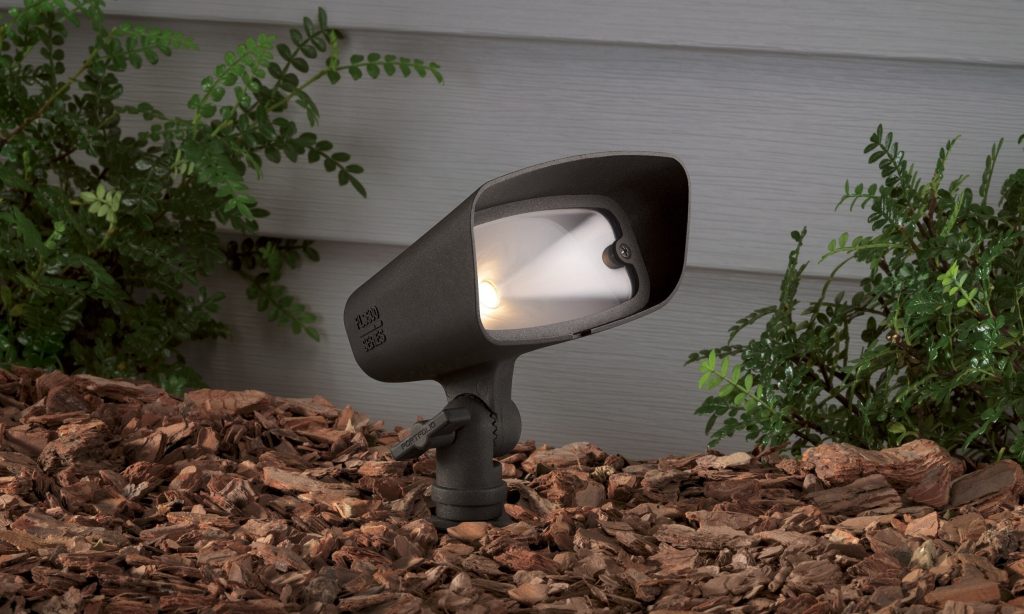
LEDs differ significantly from traditional incandescent and fluorescent lights in several ways. For one, they don’t have filaments that can burn out or get excessively hot; they are incredibly energy-efficient and long-lasting.
Furthermore, unlike incandescent bulbs, which emit a broad spectrum of light, LEDs emit light in a specific direction, reducing wasted energy and making them especially useful for certain types of lighting applications. In addition to performance efficiency, LEDs offer substantial benefits such as operational safety due to low heat emission and environmental friendliness with their lack of mercury content – a harmful compound found in many conventional lighting solutions.
From Brightness to Distance: The Role Energy Efficiency Plays
One might wonder how energy efficiency plays into running LED landscape lights over long distances; after all, isn’t it simply a matter of plugging into sufficient power outlets? However, it’s not always that simple – particularly with low-voltage lighting systems where voltage drop becomes an important consideration.
Essentially, the distance you can run LED landscape lights may be influenced by energy efficiency and brightness levels. LEDs with high energy efficiency consume less power for the same amount of light output, which means they also generate less heat. This has two key implications: firstly, these LEDs place a lower demand on your power supply, extending the potential reach of your lighting installation; secondly, due to their lower heat output, they are subject to less thermal stress and hence may last longer.
Brightness levels also play a crucial role in determining how far you can run your LED landscape lights. Brighter lights consume more power, which implies that if you desire higher brightness levels over large distances, you would need a substantial increase in power supply or have to deal with decreased brightness as distance increases due to voltage drop.
This complex interplay between energy efficiency and brightness forms an essential part of the science behind running LED landscape lights over long distances. Therefore, while planning such installations, it’s crucial that both these aspects are given due consideration in order to ensure optimal performance over desired distances.
Calculating Maximum Distance for Running LED Landscape Lights
A Comprehensive Guide to Calculating the Maximum Run Length for Low Voltage LEDs
The arithmetic behind determining the maximum run length for low-voltage LEDs is indeed a paramount factor in optimizing their utility. Begin by ascertaining the total wattage of your LED fixtures. This can be calculated by multiplying the number of lights you are using by their wattage. Here, it is imperative to note that each light should be calculated at its maximum wattage, even if it operates at a lower setting.
Secondly, evaluate the wire size you plan on using. Wire size plays an integral part in determining how far electricity can travel before it begins to experience significant voltage drop-offs. For instance, a 12-gauge wire typically supports up to 120 watts at a distance of 100 feet while retaining acceptable volt levels.
From here, it’s critical to establish your transformer’s rating. These usually range from 100W to 1200W and determine how much power can be drawn from them without causing overheating or overloading issues.
Now with these parameters in place, you can determine the maximum run length. A simple rule employed by most lighting professionals is observing a total voltage drop not exceeding three volts per run (for a typical system running on 12 volts).
If it exceeds this level, your lights may start dimming, as most are designed to operate optimally between 9 and 15 volts. It’s essential to consider that these calculations are theoretical and actual results may vary based on variable factors like terrain or quality of materials used.
Delving into Considerations for High Voltage LEDs
When dealing with high-voltage LED landscape lights (120V-277V), different considerations come into play due largely to their unique characteristics compared to their low-voltage counterparts.
Primarily among these differences is that high-voltage LEDs are far less susceptible to voltage drop, allowing them to run longer distances without the need for a transformer. The first consideration should be safety. High voltages can be hazardous, and proper cautionary measures such as suitable wiring insulation and employing GFCI (ground-fault circuit interrupter) outlets for protection against electrical shock should be put in place.
Secondly, high-voltage LEDs require a higher initial investment compared to low-voltage ones because they necessitate specific fixtures designed to handle high voltage. However, the elimination of transformers and the ability to cover longer distances may offset this cost in large-scale installations.
The third factor is energy efficiency. High-voltage LED lights are as energy efficient as low-voltage ones, making them an excellent choice for expansive landscape lighting projects that demand long cable runs. Additionally, their bright light output makes them ideal for highlighting architectural features or larger areas of landscaping.
It’s always prudent to consider municipal electrical codes when installing high-voltage LED landscape lights because they often necessitate professional installation due to their complexity and safety concerns. Calculating the maximum run length for both types of LEDs requires an understanding of their individual characteristics while considering factors like wattage usage, wire size, or type of fixtures used, among others.
Practical Tips for Extending the Run Length of your LED Landscape Lights
Embracing Higher Voltage Power Supplies
The journey to extending the run length of your LED landscape lights may begin with a seemingly simple adjustment: utilizing a higher voltage power supply. The reason behind this lies in the fundamental physics of energy transfer. Electrical energy dissipates as it travels along wires, particularly when those wires are long, leading to what is known as ‘voltage drop’.
This can result in your LEDs not receiving adequate power, hence reducing their brightness or even preventing them from working at all. By opting to use a higher voltage power supply, say 24 volts instead of 12, you effectively reduce this voltage drop over distance.
The increased initial voltage provides a buffer for any energy that might be lost during transit along your wiring. Beyond maintaining optimal brightness levels throughout your lighting setup, this also promises an expanded lifespan for your LEDs since they are not being starved of requisite electrical nourishment.
Of course, caution should be exercised when considering this approach. It’s crucial to ensure that your LEDs and any other components within the circuit can safely handle the higher voltage. Additionally, measures should be adopted to prevent overheating and potential fire hazards. Consulting with an experienced electrician is always recommended before making such changes.
The Art of Splitting your Lighting Runs
Another strategic approach towards overcoming distance limitations involves splitting your lighting into several shorter runs connected to multiple transformers. This method circumnavigates problems arising from too much load on one single run by distributing it across several transformations.
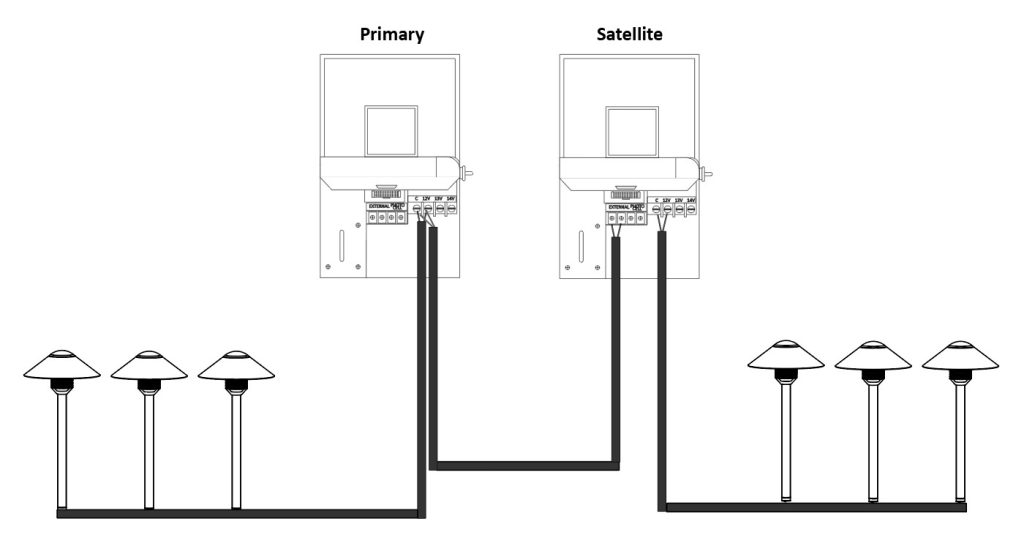
Creating separate runs helps ensure each section has adequate power without being compromised by the total distance covered or number of fixtures used. You essentially create distinct zones within your landscape that can independently maintain optimal luminance despite their collective coverage area.
Implementing this strategy requires careful planning and may increase the complexity of your landscape lighting setup. You’ll need to consider where best to place your transformers and how to manage potential cable clutter. However, the payoff in terms of light quality and system resilience is often well worth the effort.
Opting for Thicker Wire to Reduce Resistance
The choice of wire for your LED landscape lights can play a crucial role in determining how far you can run them. In essence, thicker wires offer less electrical resistance than their thinner counterparts, allowing more power to reach its destination without significant loss.
By choosing a wire gauge larger than what might be standardly recommended for an LED circuit, you effectively broaden the electrical ‘highway’ along which energy travels. With less resistance encountered along this pathway, more power reaches your LEDs regardless of distance.
It’s important to remember that using thicker wires will increase material costs and may present physical installation challenges given their harder-to-bend nature. They also require compatible connectors that can accommodate their size while ensuring secure and safe connections. However, when we consider these factors as investments towards achieving our goal – extending the run length of our LED landscape lights – they transform from being obstacles into stepping stones towards superior lighting.
Case Studies: Real-Life Examples of Long-Distance Runs with LED Landscape Lighting
Exemplifying Success: Showcasing Instances of Extended LED Light Runs
The practicality of extending the run length of LED landscape lights often becomes more comprehensible when discussed within the context of real-world implementations.
One successful example can be found in a high-end residential project in Beverly Hills, California. Here, an expanse of nearly half a mile was effectively illuminated using strategically placed and expertly wired LED landscape lights. The property’s extensive driveway and sprawling gardens were bathed in soft, reliable light, achieved by combining multiple runs from different transformers.
An equally impressive demonstration comes from a commercial scenario in New York’s Central Park. The park’s famous Bethesda Terrace, stretching over several hundred yards, is lit entirely by energy-efficient LEDs. This feat is accomplished by distributing power load among distinct lighting circuits to prevent voltage drop and maintain consistent brightness throughout the area.
In another instance, a public park in Sydney, Australia, utilized LED landscape lights to accentuate its beautiful walkways and gardens spanning over one kilometer. This accomplishment was achieved by segmenting the lighting system into various shorter runs connected to different transformers to ensure an efficient power distribution.
Additionally noteworthy is the town council of Stratford-upon-Avon in England. They used LED floodlights to illuminate their historic architecture across considerable distances without compromising brightness or longevity. Their strategy included utilizing higher-voltage power supplies and thicker gauge wires for minimal power loss.
In each case study presented here, it should be noted that meticulous planning was undertaken considering factors such as total wattage requirement, wire size, and type used for installations, along with appropriate transformers’ capacity selection.
Gleaning Insights: Lessons Drawn from Extensive Lighting Installations
These case studies highlight critical lessons for those looking to implement long-distance runs with LED landscape lighting. The most prominent lesson is the importance of planning. Understanding the scope of the area to be lit, the total wattage requirement, and the layout for placing lights and transformers are crucial aspects.
Secondly, these examples underline that using a higher-voltage power supply can significantly reduce power loss over distance. This allows longer runs without compromising the brightness or performance of LEDs.
A third insight we can glean is that splitting your lighting into several shorter runs connected to multiple transformers can prevent issues like dimming or flickering due to voltage drop. This configuration ensures an evenly distributed power load across all fixtures. In addition, using thicker wire in installations helps reduce resistance and hence power loss, enabling further extension in run length while maintaining consistent light output.
Each case underscores that although extending the run length of LED landscape lights is certainly feasible, it may require professional guidance to ensure proper implementation without any technical glitches. Hence, relying upon expert advice should be considered as a part of the overall execution strategy.
Potential Issues with Long-Distance Runs of LED Landscape Lights
Common Challenges in Implementing Long-Range LED Lighting
In the quest to illuminate vast landscapes using LED lights, one might encounter several snags. Among these issues are dimming, flickering, and, in certain cases, complete non-functioning of lights. These challenges are primarily a consequence of voltage drop, which becomes increasingly significant as the length of the run increases.
Dimming is typically a manifestation of an insufficient power supply reaching the LEDs. This often occurs when the distance from the power source increases, causing a voltage drop. The furthest bulbs on your string receive less voltage and therefore emit less light.
Flickering can also be attributed to suboptimal power supply levels or inconsistent distribution thereof across your LED landscape lighting system. It tends to occur when inadequate wiring systems strain to deliver necessary energy levels across extended distances.
Non-functioning lights often result from significant deficits in power supply as well. Profound voltage drops may render some lights completely unable to function. This usually impacts those fixtures at the farthest reaches of your lighting installation.
The Nemesis of Long-Distance Runs: Voltage Drop
Voltage drop is indeed an insidious enemy of long-distance runs for LED landscape lights. It increases linearly with increasing distance from the power source due to wiring resistance, as well as with increasing overall power on a single running line. The consequences can be dire: insufficiently powered LEDs may have significantly shortened lifespans or fail altogether prematurely – not to mention dull or inconsistent lighting failing to achieve desired aesthetic effects.
Overcoming Challenges in Extending LED Lighting Range
Integrating Amplifiers, Repeaters and Regenerators into your Lighting System
To circumvent these challenges brought about by long runs in PWM circuits, one viable solution involves employing devices known as amplifiers, repeaters or regenerators. These ingenious tools effectively boost the power supply across your lighting system, compensating for voltage drops over distance.
Amplifiers and repeaters essentially take low-voltage signals and intensify or ‘amplify’ them back to their original levels. A regenerator cleans up the signal and makes it stronger, removing the noise. By strategically placing these devices along your long-distance run, you can ensure a consistent, suitable level of electricity reaches every LED light fixture, irrespective of its position relative to the power source.
Optimal Wiring Configurations for Long-Distance LED Lighting
In addition to using repeaters and amplifiers, another approach involves adopting different wiring configurations. For instance, where possible, creating a looped circuit rather than a straight-line run can help ensure each light receives an equivalent amount of power. This makes it less likely that lights at the end of the run will be noticeably dimmer than those closer to the source.
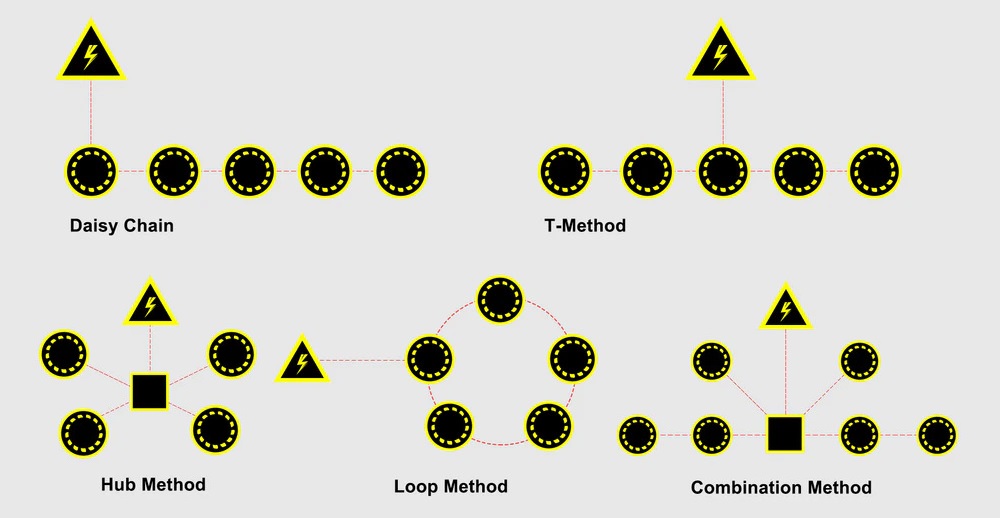
Furthermore, using thicker wires can significantly reduce resistance and consequently diminish voltage drop over distance. It’s also worth noting that aluminum wires have higher resistance than copper ones; hence, if feasible, opt for copper wire for longer runs. Ultimately, overcoming obstacles accompanying long-distance LED landscape lighting demands savvy design choices coupled with strategic use of technology available, such as amplifiers, repeaters, regenerators, and optimal wiring configurations.
The New Dawn: Innovations Paving the Way for Extended LED Landscape Lighting
As we look towards the horizon, recent breakthroughs in technology are ushering in a new era for extended-range LED landscape lighting. Rapid advancements in semiconductor and battery technology have made it possible to empower LEDs with greater luminosity and longevity, effectively extending their run length without significant power loss.
The development of higher-efficiency power semiconductors has led to lower energy consumption and heat output, which means less energy loss over distance. This will enable LED landscape lights to continue shining brightly over longer distances without risk of flickering or dimming.
Innovation is not only limited to semiconductors; research into advanced conductor materials promises more efficient wiring systems capable of reducing resistance and voltage drops. Simultaneously, improvements in battery technology are set to revolutionize how we power our LEDs.
Lithium-ion batteries have paved the way for more compact, high-capacity power sources that enable greater portability and flexibility for landscape lighting setups. On top of this, the advent of wireless charging technologies holds promise for eliminating physical wiring altogether, offering an exciting vision of clean and seamless landscaping aesthetics.
Equally promising is the rise of smart home technologies that could potentially integrate seamlessly with LED landscape lighting systems. Imagine a future where your lights can automatically adjust their brightness based on environmental conditions like time of day or weather patterns – all while being powered efficiently, minimizing energy waste.
While current technological limitations may pose challenges for long-distance runs with LED landscape lights today, ongoing developments offer numerous reasons to be optimistic about future prospects. Progression is unstoppable; it’s just a matter of time before these challenges become obsolete as we march forward towards an exciting new dawn in outdoor lighting.
Conclusion: How Far Can We Run LED Landscape Lights?
The distance we can run LED landscape lights is influenced by various factors, including the power source, wire type and size, total wattage of lighting fixtures, and energy efficiency of the LEDs. Although certain limitations exist today, continual advancements in technology promise to address these challenges in the future. With optimism and persistence, we should soon be able to transform our landscapes into luminous oases that defy spatial limitations.
You may also be interested in the following posts: