
The Dawn of LEDs: A Modern Lighting Revolution
Despite their recent advent, light-emitting diodes (LEDs) have made an indelible mark in the global lighting industry. As a powerful symbol of the rapidly evolving technology landscape, LEDs have ascended to worldwide acceptance; their ubiquity stretches from humble household applications to grandiose architectural masterpieces that light up our city skylines.
This unprecedented popularity can be attributed to a variety of factors. LEDs are renowned for their energy efficiency, with an ability to convert over 80% of their energy into light, contrasting starkly with traditional incandescent bulbs, which waste a significant portion as heat.
Coupled with a lifespan that far outstrips its conventional counterparts and versatile design possibilities, it’s little wonder that LED lights have experienced such exponential proliferation. However, their ascendancy has not been without questions and concerns.
One particular query stands out due to its ecological implications: do LED lights attract bugs? It’s a question that merges technological pragmatism with biological curiosity – an intersection where engineering meets entomology.
Shedding Light on the Issue: The Insect-LED Conundrum
The question may seem slightly inconsequential initially, but it carries immense weight when considering broader environmental considerations. Our artificial sources of light interrupt the nocturnal rhythms of many insect species and can thus drastically affect ecosystems’ delicate equilibrium. The allure of artificial light for insects is well documented and observable in our everyday lives when we see moths fluttering around nighttime lamps or clusters of bugs around streetlights.
Yet this seemingly universal characteristic has been put into question by LED lights’ emergence. So do these cutting-edge symbols of human ingenuity hold the same fascination for our six-legged companions? Or does this revolutionary technology impact our bug-filled summer nights differently? It is this intriguing query – whether or not LED lights attract bugs – that this post aims to explore in depth.
Understanding LED Lights
An Introduction to LED Lights
Light-emitting diodes, or LEDs, as they are colloquially known, are small bulbs that fit easily into an electrical circuit. The salient nature of these bulbs is that they don’t contain a filament that will burn out, making them invulnerable to the frailties that redundant incandescent bulbs suffer.
The resilience sets LED lights apart from their counterparts. They manage their longevity by being efficient conductors of electricity, a notable attribute of semiconductors. LEDs emit light when certain particles in the semiconductor material, excited by the electric current, release excess energy in the form of photons. This phenomenon of luminescence bestows upon LEDs their fundamental properties: efficiency, long life-span, and safe operation.
LED lights come in myriads of shapes and sizes; every type is catered to explicitly for its unique purpose. From lighting large spaces such as stadiums and auditoriums with high-intensity floodlights to rendering ambiance with smaller accent lighting in homes and restaurants, LED lights have revolutionized lighting practices around the world.
The Science Behind LED Lights
To understand how these petite powerhouses function, one must delve into the realm of semiconductors and quantum mechanics. At its core, an LED is essentially a diode – it’s an electrical component that permits current flow strictly in one direction. When voltage is applied to a diode (forward bias condition), electrons are capable of recombining with holes within the device, thus releasing energy in the form of photons – effect called electroluminescence – which produces different colors depending on the energy gap present in the semiconductor material used within the diode design.

The process through which LEDs generate light involves intricate movement at atomic levels – it’s about electrons jumping between different energy levels, or ‘bands’. When a suitable voltage is applied, electrons from the negative semiconductor layer (n-type) leap towards the positive one (p-type). As they fill vacancies or ‘holes’ in the p-type layer, they shed energy. This released energy manifests as packets of light called photons, creating the gentle glow we associate with LEDs.
The Spectrum of Light They Emit
LED lights stand out in their ability to emit highly specified colors. Traditional incandescent bulbs produce light by heating a wire filament, resulting in a broad spectrum of light that needs to be filtered for specific applications. LEDs, on the other hand, generate light within a narrow band of wavelengths.
The color produced by an LED light is determined by its semiconductor materials and not by any external filters; it is intrinsic to its design. The emitted wavelengths can be precisely controlled during manufacture to produce virtually any color on the visible spectrum without any significant loss in efficiency or increase in heat production.
LED lights have truly transformed our world with their versatility and efficiency. Understanding how they operate and emit light offers insight into why these bulbs are far superior to traditional lighting options and gives insight into how they might interact with our environment, including how bugs may perceive them.
Insects’ Attraction to Light: An Overview
Why are Insects Drawn to Light Sources?
Intrinsically, the phenomenon of insects being attracted to light sources has fascinated and puzzled scientists for centuries. The nocturnal dance of moths around a burning candle, the swarm of bugs under a streetlamp – it all draws us into one fundamental question: why are insects drawn towards light? Often this attraction is so strong that it overrides their survival instincts, leading them to their peril. To understand this perplexing behavior, we must delve deeper into the world of insects and shed light on phototaxis.
Deciphering Phototaxis: Positive versus Negative
Phototaxis is the scientific term used to describe organismal movement that occurs in response to light stimulus. Insects exhibit two types of phototactic responses: positive and negative phototaxis. An insect is said to exhibit positive phototaxis when it moves towards a source of light, while negative phototaxis is observed when an insect moves away from the light.
Interestingly, not all bugs are attracted to lights; many seek darkness or display indifference toward illumination, an indication of negative or neutral phototaxis, respectively. It’s particularly nocturnal bugs – those that are active during the night – that manifest positive phototaxis.
Unraveling Theories Behind Luminary Allurement
Several theories have been proposed in an attempt to elucidate why certain insects display such relentless allure towards light sources. One commonly accepted theory is based on navigation. For millions of years before artificial lights existed, insects navigated by using natural lights (moon and stars) as compasses – they maintained a constant angle relative to a distant celestial body for flight orientation.
This strategy works well with distant celestial bodies because even if you move quite some distance away, the angle remains virtually the same – this is not the case with artificial lights, which are a lot closer. When insects apply this navigation method to an artificial light source, they get misled, spiraling closer and closer towards it.
Another theory suggests that certain insects perceive artificial light as pheromones being emitted by potential mates. Different species of insects communicate using bioluminescent signals. When this signaling is mimicked by an artificial light source, it can attract these bugs.
A third theory proposes that ultraviolet lights resemble sunlight to these nocturnal insects, and hence they get attracted to it as they believe it’s daytime. This might also explain why some bugs are seen to be less active or occasionally motionless under bright lights.
More research is needed to fully comprehend the exact reasons behind this behavior, as most of these theories are based on observations and still need empirical testing. Irrespective of the specific reasons, what we do know for sure is that artificial light at night affects insect behavior significantly.
The Luminous Spectrum: A Comparative Study of Light Sources
Shedding Light on Different Types of Lighting
The world of artificial lighting is diverse, featuring an array of light sources each with their own distinct characteristics. Incandescent lights, popular for their warm, yellowish glow, work by passing electric current through a wire filament until it heats up and starts to glow.
Conversely, fluorescent lamps create light by passing an electric charge through mercury vapor to produce ultraviolet light that then illuminates a phosphor coating inside the lamp. Halogen lights operate under the same principle as incandescent bulbs but with a slight modification; they contain a small amount of halogen gas, which lengthens the lifespan of the heated filament.

LED lights, or light-emitting diodes, generate light when electricity passes through them due to their ability to convert electrical energy into light energy. In terms of practical usage and efficiency, each type has its benefits and drawbacks.
Incandescent bulbs are inexpensive and emit warm light but are less energy-efficient compared to others. Fluorescent lamps offer better energy conservation than incandescents but may lack in providing natural-looking light. Halogens present improved efficiency over incandescents and give off bright white light but generate more heat than other types. LEDs emerge superior in terms of longevity and energy efficiency while offering a wider range for color temperatures.
An Invisible Pull: The Spectrum Emitted by Each Type
Every lighting source emits a particular spectrum visible to humans as different ‘colors’ or ‘temperatures’ of light ranging from warm (reddish) tones to cool (bluish) ones. But beyond this visible range lies an invisible spectrum that can attract insects.
Incandescent lamps radiate towards the red end of the visible spectrum along with some infrared radiation, which is perceived as heat by humans but also attracts many nocturnal insects. Fluorescent lamps emit light across a broad spectrum, including some UV radiation, making them quite appealing to bugs.
Halogen lights share similarities with incandescents in their spectrum, but with a stronger infrared component due to greater heat production. LEDs, on the other hand, have a narrower spectrum, which typically excludes ultraviolet and infrared, thus potentially making them less enticing to insects.
Heat Production of Different Light Sources
Insects perceive heat as an indicator of potential food sources or mates. The amount of heat produced by different light sources varies significantly. Incandescent bulbs and halogens generate a substantial amount of heat due to their operational mechanism involving heated filaments. This can make them highly attractive to certain classes of insects.
Fluorescent lamps produce less warmth than both incandescent and halogen bulbs since they do not rely on heating a filament but instead excite mercury vapor to produce light. This lower heat emission could potentially lessen their attractiveness to bugs sensitive to temperature cues. LEDs are renowned for their remarkably low heat output – resulting from their efficient conversion of electricity into light – which can notably reduce insect attraction caused by thermal cues.
The Lure of the Glow: The Relative Attractiveness of Light Sources
Differing spectral emissions and varying degrees of heat output contribute considerably in determining how attractive each light source is for nocturnal insects. Incandescent bulbs are generally found alluring by many bugs due to their extensive emission in the infrared region and associated thermal output, which mimics natural bug attractors like warm-blooded animals or decomposing organic matter.
Fluorescents, with their broader visible range, including UV radiation – which is irresistibly attractive for numerous bugs – alongside lower thermal output compared to incandescents or halogens, may exhibit moderate bug attraction properties. Halogens tend to be highly appealing because they combine strong infrared emission with significant heat output.
Given their lack of UV and infrared emissions, along with lower heat production, LEDs could potentially be the least attractive to bugs among all aforementioned light types. However, the actual bug-attractiveness of LEDs may also depend on other factors like color temperature, which necessitates further investigation.
The Enigmatic Dance: Bugs and LED Lights
The enigma of whether LED lights attract bugs or not is one that has sparked a myriad of discussions, debates, and research. It’s a pertinent question, especially considering the current global shift towards more sustainable lighting options – LED lights being at the forefront. The majority consensus from various experiments and observations tilts towards LEDs being less attractive to bugs compared to traditional incandescent or fluorescent bulbs.

Contrary to common belief, insects aren’t attracted to light primarily due to heat production. Instead, it’s the type of light spectrum that dictates their attraction level. Studies have shown that bugs are mostly attracted by short-wavelength light (UV-blue range) and less by long-wavelength light (yellow-red range). In essence, when compared with other lights like incandescent bulbs, which emit a full spectrum of light inclusive of UVs, an LED light specifically designed not to emit UV light would indeed be less attractive to bugs.
But not all LEDs are made equal; some do emit in ranges that are more appealing to our six-legged friends. You might wonder why this is important. Well, understanding this nuance can help us design outdoor lighting strategies in ways that minimally impact ecosystems while also reducing human-bug interactions. Ultimately, though, while certain types of LEDs may indeed attract fewer insects than other types of artificial lighting, that does not imply they are entirely bug-free solutions.
Color Temperature: The Unseen Beacon for Bugs
Beyond just whether an LED attracts bugs or not lies another essential factor: color temperature. Color temperature generally refers to how “warm” or “cool” the color of the emitted light appears. It’s typically measured in Kelvin (K), with higher values indicating cooler (bluish) colors and lower values indicating warmer (yellowish) colors.
Research suggests that LEDs with cooler color temperatures (higher Kelvin values), which emit more blue and UV light, are likely to attract more bugs compared to those with warmer color temperatures. A study by the American Association for the Advancement of Science found that LED lights with a warmer color temperature attracted 20% fewer bugs than their cooler counterparts did.
In practice, this means that opting for ‘warm white’ LEDs with a lower Kelvin value could potentially result in fewer unwanted bug guests at your evening garden party compared to ‘cool white’ or ‘daylight’ options. This isn’t limited to just residential implications; it has significant potential applications in commercial settings too.
For instance, creating bug-reducing lighting schemes for outdoor restaurants or venues – the goal being to create a welcoming environment for humans but not so much for insects! However, before we brand all cool color temperature lights as bug magnets and discard them entirely, it’s important to note that other factors such as brightness and location can also impact how attractive lights are to insects.
The Enigma of Ultraviolet Emission in LEDs
Ultraviolet (UV) light is an invisible form of light present at one end of the light spectrum. Although invisible to human eyes, many insects are highly attuned to UV light; they use it for various activities like locating food and mates. An important point about LED lighting remains its emission of UV light.
Most regular LEDs used for residential lighting do not emit UV radiation. This is because they’re designed such that their semiconductor material doesn’t emit any UV radiation during its operation, unlike other sources like fluorescent or compact fluorescent lamps (CFLs). It’s important, though, not just from an insect perspective but also from a health one – excessive exposure to UV light isn’t good for human health. That’s another tick in the pro column for LED lights!
However, certain LEDs, especially white LEDs, can emit a small fraction of their radiation in the UV region. This is typically not enough to pose any health threats but could be enough to attract insects. The reality remains somewhat complicated though – just because an LED doesn’t emit UV light doesn’t automatically mean it won’t attract any bugs at all. Other factors like color temperature and brightness still play significant roles.
Shedding Light on Research: Bugs and LED Love Affair
Various studies have delved into this topic over the years, trying to understand how different characteristics of artificial light sources influence bug attraction. A notable study titled ‘Reduced Insect Abundance in High-Intensity Street Lighting’ published in ‘Journal of Applied Ecology’ found that high-intensity LED street lighting led to decreased insect abundance compared with traditional high-pressure sodium lamps. The researchers suggested that while bugs are attracted to all types of lights, they might find high-intensity LED lighting more intimidating or disorienting.
In another research study by Michael Justice et al., it was found that commercially available LEDs attracted fewer nocturnal insects than did compact fluorescent lights (CFLs). The results were attributed mainly to LEDs generally emitting less light in the spectrum attractive to most insects (short wavelength).
Moving forward, it’s likely we will continue seeing such research being conducted as societies globally are shifting towards more eco-friendly lighting options like LEDs; understanding their impact becomes increasingly important not only on our quality of life but also on wider biodiversity. While the science isn’t definitive or absolute yet, there seems to be a discernible trend indicating that wisely chosen LEDs could indeed result in less bug attraction compared to other more traditional artificial light sources.
Effective Strategies for Reducing Bug Attraction to Lights: A Light in the Dark
The dilemma of how to effectively use lighting without becoming a magnet for insects is one that has likely perplexed anyone who has ever enjoyed an evening outdoors. While it’s clear that certain types of lights, like LEDs, can reduce bug attraction, there are further steps you can take to minimize the issue. These strategies range from simple adjustments in your light usage to more complex changes in your choice of lighting technology.
Tips for Using Outdoor Lighting Without Attracting Bugs: A New Dawn of Enlightenment
The first and perhaps most fundamental strategy is simply using light more judiciously. Limiting the number of lights you have on, as well as their brightness and duration of use, can greatly reduce their attractiveness to insects. Consider using motion sensor lights or timers to ensure that outdoor lights are only on when necessary.
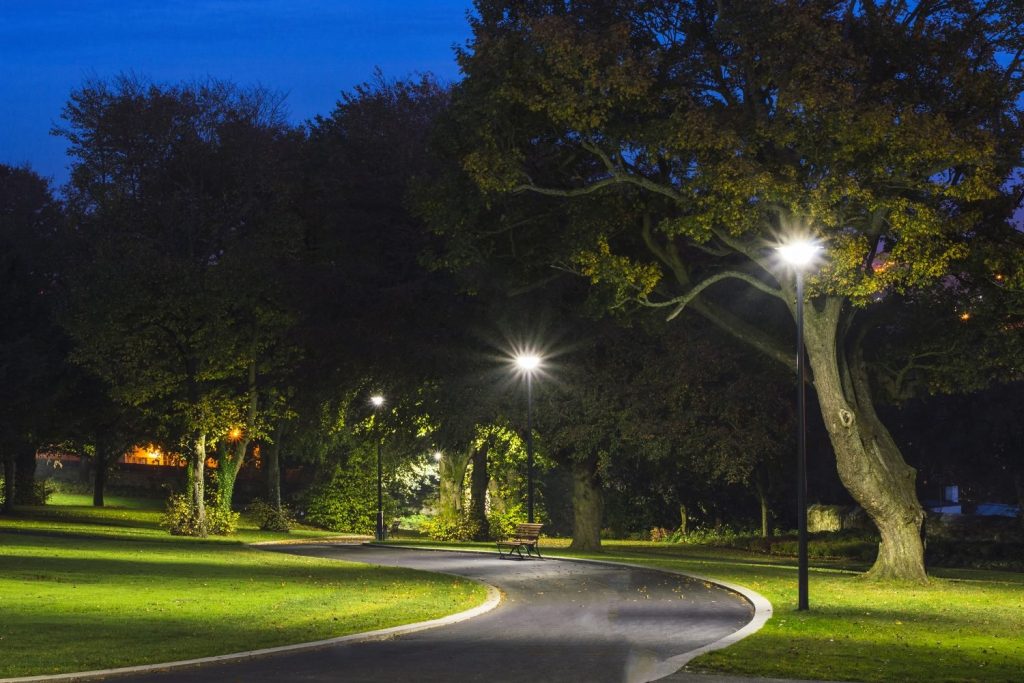
In addition to limiting the amount of light used, consider its placement. Positioning lights farther away from areas where people congregate can help draw bugs away. Rather than placing a light directly over a patio or deck, for instance, position it at the perimeter of your yard.
Another strategy involves manipulating the color and intensity of your light sources. We’ve already noted that bugs are less attracted to LED lights with lower color temperatures – those emitting warmer colors like yellow and red – compared with cooler colors like white or blue.
Choosing the Right Color Temperature for Your LEDs: Charting the Spectrum
LEDs offer a wide range of color temperatures – from warm (under 3000K), which gives off a reddish-yellow hue – all the way up to cool white (above 5000K), which emits a bright blue-white light akin to daylight. Insects tend not to be attracted to warmer-colored LEDs as compared with cooler ones; in fact, research suggests they have a much lesser tendency to fly towards red or yellow-colored lights.
Opting for LEDs that emit light in warmer color temperatures can therefore be an effective strategy for reducing bug attraction. Moreover, LED lights, unlike conventional incandescent bulbs, emit minimal UV light – a wavelength highly attractive to many insect species. The absence of the UV spectrum makes LEDs, particularly those of warmer color temperatures, even less enchanting to our six-legged foes.
Positioning Your Outdoor Lighting Correctly: Mastering The Art of Illumination
The placement of your outdoor lighting can play a significant role in governing the insect traffic in your vicinity. Lights positioned closer to the ground will attract fewer flying insects than those mounted higher up. You should also position lights as far away from sitting areas as possible.
Consider using pole-mounted lights directed downwards – this not only minimizes attraction but reduces light pollution as well. Using shields on your outdoor lighting is another strategy – this serves dual purposes: it directs light where it’s needed and restricts its spillage into areas where it’s not necessarily required, thereby limiting the sphere of attraction for nocturnal insects.
Advancements in Bug-Repelling Technology with regards to Lighting: Bright Sparks in Insect Deterrence
As technology progresses, there are increasingly innovative solutions available for keeping bugs at bay. Certain companies have started producing LED lights that are specifically designed to be unattractive to insects. These bulbs often combine heat dissipation techniques with specific color temperatures proven to deter insects.
Infrared (IR) and ultraviolet (UV) technologies are also being explored as potential bug deterrents – certain frequencies within these spectra have been found repulsive by various insect species and hold promise in future designs. Thus, while nighttime illumination may inevitably draw some level of insect interest, by implementing the above strategies, you can significantly reduce their unwelcome gatherings around your porch or garden.
Conclusion: Do LED Lights Attract Bugs?
Reviewing the prevalent question, it is discernable that LED lights do not draw in bugs to the same degree as other light sources. This is fundamentally due to the particular characteristics of LED lights. Uniquely, they emit a less broad spectrum of light and generate significantly less heat, two factors that reduce their allure to insects.
Reflecting upon the scientific properties of LED lights, we can appreciate their versatility and efficiency. The very mechanics that allow LED bulbs to have such longevity and energy-saving capabilities inadvertently render them less attractive to bugs. Given that insects are more lured towards UVs and cooler temperatures – elements that are diminished in LEDs – it makes sense why these lights would be comparatively less appealing.
The phenomenon of phototaxis was highlighted as a primary reason for bugs’ propensity towards light sources. We’ve dissected common theories behind this behavior while noting that not all insect species exhibit an attraction to light. This examination added depth to our understanding of why certain types of lighting are more bug-friendly than others.
We also ventured into a comparative analysis between various types of lighting, including incandescent, fluorescent, halogen bulbs, and LEDs. Each radiates a unique light spectrum and generates distinct amounts of heat – factors instrumental in determining their attractiveness to bugs. LEDs emerged as the least enticing lighting option for insects due largely to their lower heat output and narrower spectrum range.
We explored effective strategies for minimizing bug attraction when using outdoor lighting. Beyond simply opting for LEDs over other types, choosing correctly colored temperature bulbs can further deter insects from buzzing around our space on warm evenings out on the patio or deck. While no artificial light source can claim total immunity from attracting some amount of bugs, opting for LEDs seems to give us the best chance of minimizing unwanted insect guests.
LEDs provide an efficient, environmentally friendly option that inadvertently also helps us enjoy our outdoor spaces more fully without the incessant buzz and bite of bugs. So as we continue to evolve our understanding of light and its effects on the world around us, let’s bask in the soft glow of an LED bulb, confident in its role as a silent defender in our battle against bothersome bugs.
You may also be interested in the following posts: